SHRI SHIVAJI SCIENCE COLLEGE, AMRAVATI
DBT STAR COLLEGE PROJECT ACTIVITY
ACTIVITY REPORT
Milestone in Floristic Exploration and Documentation
Activity Dates: 04/10/2025
Type of Activity: Other
Organizing Department: Department of Botany & Bioinformatics
Program Coordinators: Dr. A. N. Darsimbe
Head of the Department: Dr. D. D. Khedkar
External Collaborator (if any): No
Objectives:
- To study diversity of Andaman and Nicobar
- Floral Diversity of Andaman and Nicobar
- Fruit Diversity of Andaman and Nicobar
- How to identify plants
- Applications of Plant identifications
No of Beneficieries: 55
Classes Involved: M.Sc.
Venue of the Activity: A. V. Theater, Shri Shivaji Science College Amravati
Activity Report:
The “Botanical Society” of Department of Botany, Shri Shivaji Science College, Amravati is working since 2006 in the field of Botany with a common intention to motivate young Students of PG and Ph.D. to research in botany in order to address socio-economic problems in the region.
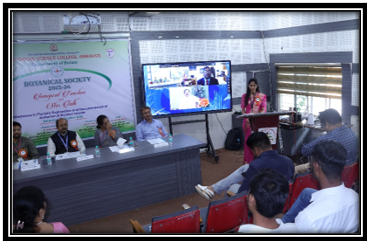
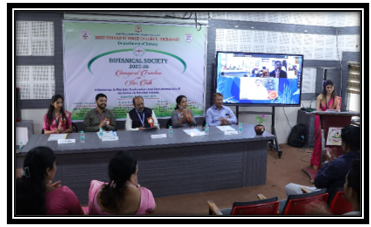
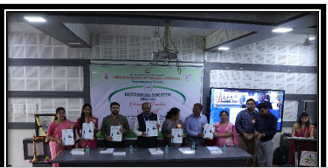
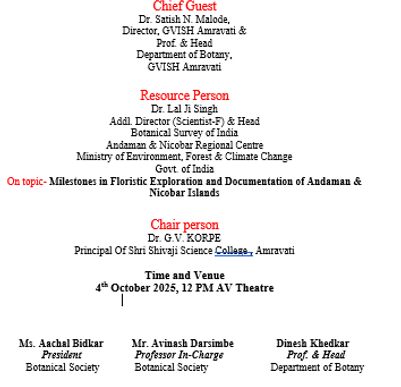
The Inauguration of Botanical Society 2025-26 was done by the hands of Dr. Satish N. Malode, Director, GVISH Amravati as a Chief Guest for the Inauguration program on 4th October 2025. The Chair Person Dr. G.V. Korpe Principal of Shri Shivaji Science College, Amravati .The convener of the program was Dr. Dinesh Khedkar, Prof. and Head Department of Botany, Shri Shivaji Science College, Amravati and the In charge of Botanical Society 2025-26, Mr. A. N. Darsimbe along with that all the staff members of Department of Botany Shri Shivaji Science College, Amravati were present.
For the inaugural function all the Head of the departments of different institutes having PG Botany were specially invited along with all staff members and students. For this inaugural function special presence was from Department of Botany, Sant Gadge Baba Amravati University, Amravati, Government Vidarbha Institute of Science and Humanities, Amravati, Brijlal Biyani Science College, Amravati and Vidya Bharati Mahavidyalaya, Amravati.
The inauguration was started with lighting the lamp by the hands of Chief guest Dr. Satish N. Malode, Director, GVISH Amravati & Prof. & Head Department of Botany, GVISH Amravati and all the dignitaries. Following to that an introductory speech about the program was given by Mr. A. N. Darsimbe, In-charge of Botanical Society. Then the felicitation of the guest was done by Chair Person of the inaugural program G.V. Korpe, Principal Shri Shivaji Science College, Amravati. Then the felicitation of all the committee members was done by all the dignitaries present on the dies. After that a motivating speech by given by convener of the program Dr. Dinesh Khedkar, Prof. and Head Department of Botany, Shri Shivaji Science College, Amravati and finally a remarkable speech was given by Chairman of the program Dr. G.V. Korpe Principal of Shri Shivaji Science College, Amravati. All this program was hosted Miss. Nupur Kitukale and vote of thanks was given by Miss. Pratiksha Lande.
The inauguration program was followed by an insightful guest lecture delivered by Dr. Lal Ji Singh, Additional Director (Scientist-F) and Head of the Botanical Survey of India, Andaman & Nicobar Regional Centre, Ministry of Environment, Forest and Climate Change, Government of India. The lecture was organized to provide students and faculty members with an opportunity to gain a deeper understanding of the rich plant diversity of the Andaman and Nicobar Islands and the significant contributions made by botanists towards its exploration, identification, and documentation.
Dr. Lal Ji Singh addressed the audience on the topic “Milestones in Floristic Exploration and Documentation of Andaman & Nicobar Islands.” His lecture highlighted the importance of floristic studies in understanding the distribution, diversity, and ecological significance of plant species. He explained how systematic exploration and documentation of plants form the foundation of botanical research, biodiversity conservation, and sustainable management of natural resources.
During the lecture, Dr. Singh discussed the distinctive geographical and ecological features of the Andaman and Nicobar Islands, which support a remarkable variety of plant species. The islands possess diverse habitats, including tropical evergreen forests, mangroves, littoral vegetation, and other specialized ecosystems. These habitats provide suitable conditions for the growth of numerous flowering plants, ferns, bryophytes, and other plant groups. The lecture emphasized that the study of island flora is particularly important because of the unique distribution patterns, endemic species, and ecological relationships found in these geographically isolated regions.
The resource person elaborated on the historical development of botanical exploration in the Andaman and Nicobar Islands. He explained how early botanical investigations, followed by systematic surveys and taxonomic studies, contributed to the identification and classification of the region’s plant wealth. He also highlighted the role of botanical institutions and researchers in collecting plant specimens, preparing herbarium records, conducting field surveys, and publishing floristic accounts. Such efforts have helped establish a scientific foundation for understanding the diversity and distribution of the island flora.
A significant part of the lecture focused on the role of the Botanical Survey of India in exploring and documenting the country’s plant resources. Dr. Singh explained how the organization contributes to plant exploration, taxonomic research, herbarium development, and the preparation of scientific records of plant diversity. He emphasized the importance of accurate identification, proper preservation of specimens, and the use of scientific literature and herbarium collections in botanical research.
The lecture also drew attention to the importance of conserving the fragile ecosystems of the Andaman and Nicobar Islands. Dr. Singh discussed the need to protect natural habitats and maintain ecological balance while promoting scientific research. He encouraged students to develop an interest in plant taxonomy, field botany, herbarium techniques, and biodiversity conservation. His presentation helped students appreciate the relevance of floristic exploration in addressing contemporary environmental challenges.
The guest lecture was highly informative and engaging, providing valuable academic exposure to the participating students and faculty members. It connected theoretical knowledge of plant diversity and taxonomy with practical aspects of botanical exploration and documentation. The program concluded with an interactive session in which participants had the opportunity to seek clarification and gain further insights into the subject.
Overall, the lecture served as an important academic enrichment activity, inspiring students to explore the diverse fields of botany and recognize the significance of systematic documentation and conservation of plant resources.
Dr. Singh further emphasized the importance of modern approaches in floristic research, including the integration of traditional taxonomic methods with contemporary techniques. He explained that accurate plant identification requires careful observation of morphological characters such as roots, stems, leaves, flowers, fruits, and seeds. He also highlighted the significance of herbarium specimens, field photographs, and detailed collection records in maintaining reliable botanical information. These resources are valuable not only for taxonomic studies but also for monitoring changes in plant distribution and assessing the conservation status of species.
The speaker discussed the role of digital databases and technological advancements in improving the accessibility of floristic information. Digitized herbarium records, geographical information systems, and molecular approaches have enhanced the ability of researchers to study plant diversity and evolutionary relationships. He encouraged students to develop field-based research skills and participate in botanical surveys to gain firsthand experience in observing and documenting plant species.
The lecture also highlighted the importance of collaboration among botanical institutions, universities, researchers, and local communities. Such cooperation can strengthen biodiversity documentation and support conservation initiatives. Dr. Singh motivated the students to pursue careers in plant taxonomy, environmental science, forestry, and biodiversity management. His valuable guidance helped the participants understand how floristic exploration contributes to scientific knowledge, environmental awareness, and the sustainable conservation of India’s unique plant heritage.
Outcomes:
- Students understand how to identify plants.
- Students become aware about plant uses
- Students become known about diversity of Andaman and Nicobar
- Students understand Fruit Diversity of Andaman and Nicobar
- Students become aware about Applications of Plant identifications
Photos:
 1 | 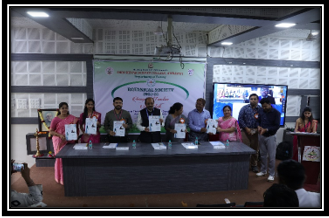 2 |
 3 | 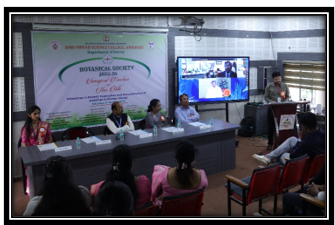 4 |
 5 | 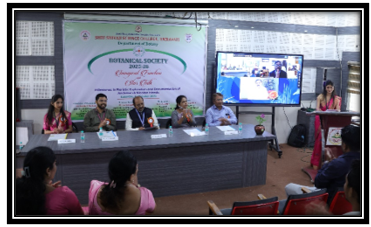 6 |
Attendance Sheet:
 |