SHRI SHIVAJI SCIENCE COLLEGE, AMRAVATI
DBT STAR COLLEGE PROJECT ACTIVITY
ACTIVITY REPORT

“Chemical Risk Assessment of House Hold Products”
Activity Dates: Jan.2026 to March 2026
Type of Activity: Minor Research Project
Organizing Department: Department of Environmental Science
Program Coordinators: Dr. K. J. Gawai
Head of the Department: Dr. S. P. Ingole
External Collaborator (if any): No
Objectives:
- 1. To identify commonly used household products and study their chemical composition.
- 2. To analyze the presence of major chemical constituents in selected products based on label information and literature.
- 3. To assess the potential health risks associated with continuous use of household products.
- 4. To create awareness about safe usage and handling of chemical-based products.
- 5. To promote informed decision-making while selecting household products
No of Beneficieries: 2
Classes Involved: B.Sc. III
Venue of the Activity: Different Houses in different areas of Amravati City
Activity Report:
INTRODUCTION
Chemicals are naturally occurring or artificially synthesized substances that are widely used in modern life to improve the quality, efficiency, appearance, and durability of various products. In daily household environments, chemicals are present in almost every product we use, including personal care items, cleaning agents, food supplements, and air fresheners. These chemicals play an important role in enhancing product performance by providing functions such as preservation, fragrance, cleaning efficiency, and protection from microbial growth. However, despite their benefits, continuous and unregulated exposure to certain chemicals may lead to adverse effects on human health and the environment.
The risk associated with chemicals depends on several factors, including the type of chemical, its concentration, duration of exposure, and the pathway through which it enters the human body. Chemical risk refers to the probability that a chemical substance may cause harm under specific conditions of exposure. In household conditions, exposure to chemicals mainly occurs through three primary pathways: dermal contact (skin exposure), inhalation (breathing), and ingestion (consumption). For instance, products like body lotions and face washes come in direct contact with the skin, room fresheners release chemicals into the air that are inhaled, and food-related products are consumed, leading to ingestion exposure.
Chemical risk assessment is a scientific and systematic process used to evaluate the potential harmful effects of chemical substances. It involves several important steps, including hazard identification (determining whether a chemical can cause harm), dose-response assessment (understanding the relationship between exposure level and effect), exposure assessment (evaluating how much and how often exposure occurs), and risk characterization (estimating the overall risk). Organizations such as the World Health Organization have developed standardized guidelines to assess and manage chemical risks in various environments.
In recent years, there has been growing concern regarding the excessive and uncontrolled use of chemical-based products in households. Rapid urbanization, industrialization, and changing lifestyles have increased the dependency on such products. Although they contribute significantly to hygiene, cleanliness, and convenience, continuous exposure to certain chemicals may lead to health issues such as skin irritation, allergies, respiratory problems, hormonal imbalance, and long-term chronic diseases. One of the major concerns is that many users are not aware of the chemical composition of the products they use daily, which increases the risk of unintentional exposure.
Household consumer products are considered one of the major sources of chemical exposure in everyday life. These products are used repeatedly throughout the day, which increases cumulative exposure. Even if individual exposure levels are low, continuous use over time may lead to significant health risks. Therefore, understanding the nature of these chemicals and their potential effects is essential for ensuring safe usage.
The present study focuses on the chemical risk assessment of selected household products that are commonly used in daily life. The study aims to analyze their chemical composition, identify exposure pathways, and evaluate the associated risk levels. The selected products include a wide range of categories such as personal care items, cleaning agents, food and nutritional products, medicinal products, and air fresheners. This diversity helps in understanding different types of exposure and their combined impact on human health.
Although these products are essential for maintaining hygiene and improving quality of life, they also contain various chemical substances that may pose potential risks. Therefore, it becomes necessary to study these products not only from a functional perspective but also from a health and environmental safety point of view. The present work attempts to provide a simple yet effective approach for understanding chemical risks at the household level and creating awareness among users.
Objectives :
1. To identify commonly used household products and study their chemical composition.
2. To analyze the presence of major chemical constituents in selected products based on label information and literature.
3. To assess the potential health risks associated with continuous use of household products.
4. To create awareness about safe usage and handling of chemical-based products.
5. To promote informed decision-making while selecting household products
REVIEW OF LITERATURE
In the modern era, the use of chemical-based household products has increased significantly due to advancements in technology and changing lifestyles. These products are widely used for maintaining hygiene, improving personal care, and enhancing living conditions. However, along with their benefits, they also contribute to chemical exposure, which may have adverse effects on human health and the environment.
Li et al. (2019) reported that consumer products are one of the major contributors to chemical exposure in daily life. According to their study, chemicals present in these products enter the human body through three main pathways: inhalation, dermal contact, and ingestion. This finding is highly relevant, as different household products correspond to different exposure routes. For example, air fresheners release chemicals into the air, leading to inhalation exposure, while personal care products such as lotions and face washes result in dermal exposure.
Ginsberg et al. (2016) emphasized that children are more vulnerable to chemical exposure due to their developing physiological systems. They are more sensitive to toxic effects and may experience greater health risks compared to adults. This highlights the importance of chemical risk assessment, especially in household environments where people of all age groups are exposed.
Mitro et al. (2016) studied the accumulation of chemicals in indoor environments and found that chemicals from consumer products tend to accumulate in dust and on surfaces. This leads to continuous exposure even when the products are not actively being used. Such findings indicate that chemical exposure is not limited to direct use but also occurs indirectly through the indoor environment.
The role of indoor air quality in chemical exposure has been extensively studied. Nazaroff and Weschler (2004) explained that chemicals released from household products can react with each other to form secondary pollutants, which may be more harmful than the original substances. Similarly, Salonen et al. (2024) found that cleaning products release volatile organic compounds (VOCs), which contribute to indoor air pollution and negatively affect human health.
Steinemann (2015) reported that fragranced products such as air fresheners are associated with various health problems, including headaches, respiratory issues, and allergic reactions. This clearly indicates that inhalation exposure is a significant pathway of chemical risk.
Cleaning products also play a major role in chemical exposure. Bello et al. (2009) stated that cleaning agents contain surfactants, disinfectants, and fragrances, which may cause skin irritation and respiratory problems. Zock et al. (2007) found a strong association between frequent use of cleaning products and the development of asthma. Wolkoff et al. (1998) also emphasized that repeated exposure during cleaning activities increases overall chemical load.
Personal care products have been widely studied due to their direct application on the skin. Nowak et al. (2018) reported that parabens used in cosmetics may affect hormonal balance. Similarly, Koch and Calafat (2009) found that phthalates present in fragrances and lotions are associated with reproductive and developmental issues.
Overall, the literature clearly indicates that household products contribute significantly to chemical exposure through multiple pathways. These studies highlight the need for proper risk assessment and awareness regarding safe usage of such products.
MATERIALS AND METHODS
The present study was conducted to assess the chemical risk associated with selected household products commonly used in daily life. The methodology was designed to be simple, systematic, and suitable for practical understanding at the household level.
The study was carried out in residential areas of Amravati city, representing typical household conditions. A total of ten commonly used products were selected, covering different categories such as personal care, cleaning, food, air freshening, medicinal, and oral care products.
The selected products included almond oil, body lotion, protein powder, air freshener, face wash, dishwash liquid, toothpaste, sunscreen, pain relief roll-on, and groundnut oil. These products were chosen because they represent different modes of exposure, including skin contact, inhalation, and ingestion.
The study was descriptive and analytical in nature and did not involve laboratory testing. Instead, it relied on product labels, ingredient lists, scientific literature, and normal usage patterns.
The methodology involved several steps:
1. Selection of products
2. Recording product details
3. Study of ingredient labels
4. Identification of major chemicals
5. Collection of literature data
6. Identification of exposure pathways
7. Analysis of frequency of use
8. Comparative risk assessment
9. Assignment of risk percentage
10. Classification into risk categories
The products were categorized into low, moderate, high, and very high risk based on their chemical composition, exposure pathway, and frequency of use.
RESULT AND DISCUSSION
The results of the study indicate that household products vary significantly in their chemical risk levels. Most products fall under the moderate risk category, indicating that they are generally safe under normal use but may pose risks with prolonged exposure.
Air fresheners were found to have the highest risk due to continuous inhalation of volatile chemicals. Cleaning products also showed moderate to high risk due to repeated skin contact and the presence of strong surfactants. Personal care products exhibited moderate risk, while food-related products showed comparatively low risk.
The study clearly demonstrates that the route of exposure plays a critical role in determining risk. Inhalation exposure was found to be the most harmful, followed by dermal contact and ingestion.
Another important finding is that frequency of use significantly influences chemical risk. Products used daily contribute more to overall exposure compared to those used occasionally.
Outcomes :
1. The study successfully identified and analyzed the chemical composition of selected household products.
2. The research demonstrated that most household products fall under the moderate risk category, indicating potential health effects with prolonged exposure.
3. Products such as air fresheners and cleaning agents were found to pose higher risk due to inhalation and repeated contact.
4. The study highlighted that frequency of use plays a significant role in determining overall chemical risk.
5. It showed that even products labeled as “natural” or “herbal” may contain additives contributing to chemical exposure.
6. It encouraged the use of safer alternatives and responsible consumption habits.
SUMMARY AND CONCLUSION
The present study assessed the chemical risk associated with commonly used household products. The findings indicate that most products fall under moderate risk, while some products, particularly air fresheners, show higher risk due to inhalation exposure.
The study highlights that chemical risk is influenced by multiple factors, including chemical composition, exposure pathway, and frequency of use. Even products labeled as natural may contain additives that contribute to chemical exposure.
In conclusion, household products are essential for daily life but may pose potential health risks if not used properly. Awareness about chemical composition and safe usage practices is necessary to minimize exposure and protect human health.
Outcomes:
- 1. The study successfully identified and analyzed the chemical composition of selected household products.
- 2. The research demonstrated that most household products fall under the moderate risk category, indicating potential health effects with prolonged exposure.
- 3. Products such as air fresheners and cleaning agents were found to pose higher risk due to inhalation and repeated contact
- 4. The study highlighted that frequency of use plays a significant role in determining overall chemical risk.
- 5. It encouraged the use of safer alternatives and responsible consumption habits.
Photos:
 People showing household product of their house | 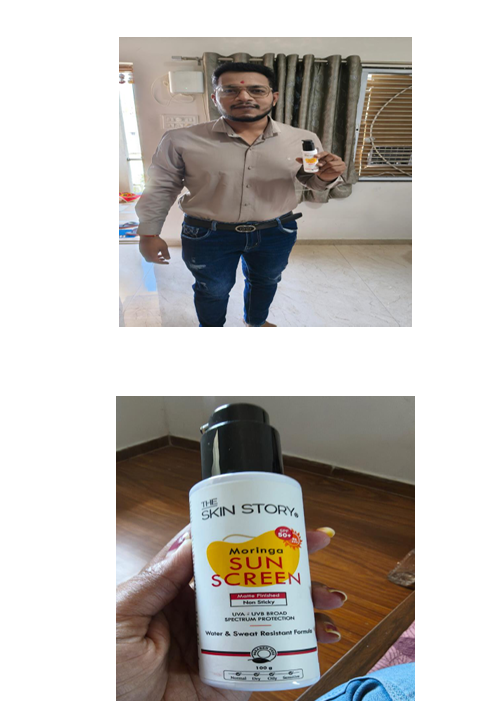 A man showing household product of his house |
 A girl showing product of her house | 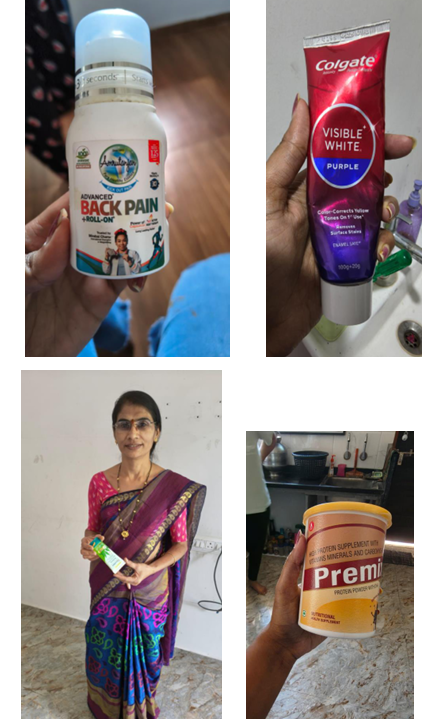 A woman showing products |
 Blank |  Blank |
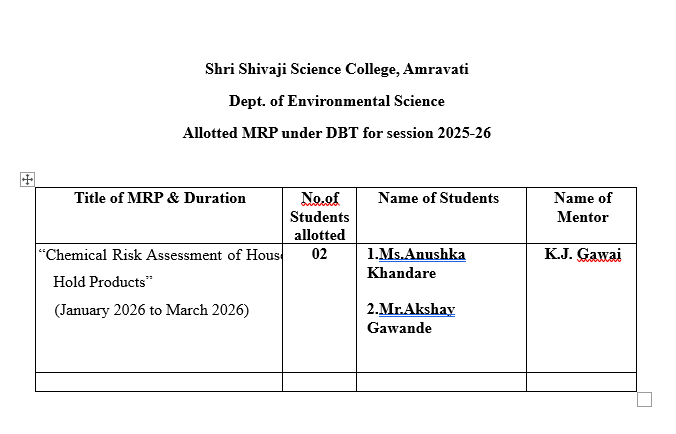
Attendance Sheet:
 |