SHRI SHIVAJI SCIENCE COLLEGE, AMRAVATI
DBT STAR COLLEGE PROJECT ACTIVITY
ACTIVITY REPORT

Wetland Day Celebration -2026
Activity Dates: 28/02/2026
Type of Activity: Outreach Activity
Organizing Department: Department of Zoology
Program Coordinators: Dr. G.A. Wagh Dept. DBT Coordinator ;Activity In charge: Dr. G. D. Hande
Head of the Department: Prof. J.D. Dhote
External Collaborator (if any): -
Objectives:
- 1) To develop a comprehensive understanding of the ecological, environmental, and socio-economic importance of wetlands.
- 2) To create awareness about the urgent need for conservation and sustainable management of wetland ecosystems.
- 3) To develop knowledge about the functions of wetlands such as water purification, flood control, and climate regulation.
- 4) To understand the threats faced by wetlands such as pollution, encroachment, and climate change.
- 5) To develop a sense of responsibility towards protecting natural ecosystems.
No of Beneficieries: 82
Classes Involved: BSc II, BSc III
Venue of the Activity: Wetland Ecosystem Malkhed Lake
Activity Report:
World Wetlands Day is celebrated annually on 2nd February to raise global awareness about the importance of wetlands for ecological balance and human survival. This day marks the anniversary of the signing of the Ramsar Convention in 1971 at Ramsar, Iran. Wetlands are among the most productive ecosystems on Earth and include marshes, swamps, lakes, floodplains, mangroves, and estuaries.World Wetlands Day 2026, under the theme "Wetlands and traditional knowledge: Celebrating cultural heritage" explores the deep-rooted connections between wetlands and cultural practices, traditions and knowledge systems of communities across the world.Wetlands are areas of land that are saturated with water either permanently or seasonally.
A cleanliness drive is an organized, collective effort to improve sanitation and hygiene in a specific area, often involving waste collection, sorting, and awareness campaigns. Common examples include community, school, or corporate initiatives, such as cleaning public parks, beaches, or neighbourhoods, often aligned with broader campaigns like India's Swachh Bharat Abhiyan.Wetland cleanliness drives are organized to remove plastic, pollutants, and waste from vital aquatic ecosystems, particularly to celebrate World Wetland Day. In early 2026, massive cleanups, such as those at Chhatri Lake, India, resulted in clearing hundreds of kilograms of debris. These initiatives (often part of "Swachhata Hi Seva") focus on restoring biodiversity and engaging volunteers in sustainable conservation.
These include marshes, swamps, lakes, rivers, estuaries, mangroves, and even man-made water bodies like reservoirs and rice fields. Wetlands are defined as areas where water covers the soil or is present either at or near the surface for at least part of the year. They include both natural and artificial water bodies.On the occasion of World Wetlands Day, various activities such as field visits, bird watching, awareness campaigns, seminars, and cleanliness drives are organized to educate people about the importance of wetlands. These activities help students and communities understand the ecological value of wetlands and encourage them to participate in conservation efforts.Bird watching is, in itself, a fast-growing recreational pursuit worldwide. Part of the activity's appeal is no doubt its accessibility to the average person, who can find and observe birds almost anywhere on the planet.
Wetlands are among the most productive ecosystems on Earth. They provide numerous ecological, economic, and social benefits. These areas act as natural water filters, improve water quality, and help in groundwater recharge. Wetlands also serve as habitats for a wide variety of flora and fauna, including migratory birds, fish, amphibians, and rare plant species. Additionally, they help in flood control by absorbing excess rainfall and reducing the impact of natural disasters.Wetlands provide habitat for a wide variety of organisms including fish, amphibians, reptiles, birds, and mammals. They are especially important for migratory birds and breeding species.
Each year, World Wetlands Day is celebrated with a specific theme that highlights key issues related to wetlands. Themes often focus on restoration, conservation, biodiversity, climate change, or sustainable use of wetland resources. These themes guide activities and awareness campaigns conducted worldwide. To protect wetlands, it is essential to implement sustainable management practices. This includes controlling pollution, preventing illegal encroachment, promoting eco-friendly agricultural methods, and restoring degraded wetlands. Public awareness and community participation are crucial for successful conservation. Governments and environmental organizations must work together to enforce laws and policies aimed at wetland protection.
Ecologically, wetlands perform several essential functions that are vital for maintaining environmental balance. They act as natural water filters by trapping sediments, nutrients, and pollutants, thereby improving water quality. Wetlands also help in flood control by absorbing excess rainwater and reducing the impact of floods. Additionally, they play a significant role in groundwater recharge, ensuring the availability of water during dry periods. Another important function of wetlands is their role in climate regulation, as they store large amounts of carbon and help reduce greenhouse gases in the atmosphere. Because of these functions, wetlands are often referred to as the “kidneys of the Earth.”Wetlands are characterized by the presence of water, hydric soils, and hydrophytic vegetation that are specially adapted to waterlogged conditions. Due to these features, wetlands support a wide range of plant and animal species, including fish, amphibians, reptiles, birds, and microorganisms. They are especially important for migratory birds, providing breeding, feeding, and resting grounds. A well-known example of such biodiversity-rich habitat is Keoladeo National Park, which attracts thousands of migratory birds every year.Encroachment and urbanization result in the loss of wetland areas, while overexploitation of resources such as fishing and water extraction further damages these ecosystems. Climate change also poses a major threat by altering rainfall patterns, increasing temperatures, and affecting the natural balance of wetland ecosystems. All these factors contribute to the rapid decline of wetlands and loss of biodiversity.
The programme commenced at 7:00 AM with the gathering of students and faculty members at Malkhed Lake, who arrived by bus. Prof. J. D. Dhote, Head of the Department of Zoology, formally introduced the programme and highlighted the significance of World Wetlands Day as an important platform for promoting conservation awareness and encouraging collaborative efforts. The event was conducted under the guidance of Prof. G. A. Wagh, DBT Coordinator, and Dr. G. D. Hande. Faculty members, including Dr. S. V. Gawande, Dr. P. M. Ramteke, Dr. S. J. Kawade, and Dr. A. R. Rajoria, actively participated in the programme along with the non-teaching staff, contributing to its successful organization and execution.Students gained valuable knowledge about wetlands through an informative session conducted by Prof. G. A. Wagh, Department DBT Coordinator. The session highlighted the ecological importance of wetlands, their role in biodiversity conservation, water purification, and climate regulation. Students also learned about various types of wetlands, their flora and fauna, and the need for their protection and sustainable management. The interaction enhanced students’ scientific understanding and encouraged them to develop a sense of responsibility towards environmental conservation.
In conclusion, wetlands are indispensable ecosystems that provide numerous ecological, economic, and environmental benefits. However, increasing human pressure and environmental challenges threaten their existence. Therefore, it is essential to take collective action for their conservation and sustainable use. Protecting wetlands is crucial not only for maintaining biodiversity but also for ensuring a balanced and sustainable environment for future generations. The visit to Malkhed Lake provided valuable insights into wetland ecology and biodiversity. It emphasized the urgent need for conservation efforts to protect these ecosystems. Wetlands are essential for ecological balance and must be preserved for future generations.
Outcomes:
- 1) To increased public understanding of how wetlands support biodiversity, purify water, and help regulate climate.
- 2) Encourages governments and organizations to take stronger conservation measures, including restoration projects and better management practices.2)
- 3) To support for international efforts like the Ramsar Convention, which promotes the protection and sustainable use of wetlands worldwide.
- 4) Communities and schools often participate in activities such as clean-up drives and awareness campaigns, which help people connect directly with nature.
- 5) Wetlands Day promotes environmental awareness, conservation action, and sustainable development.
Photos:
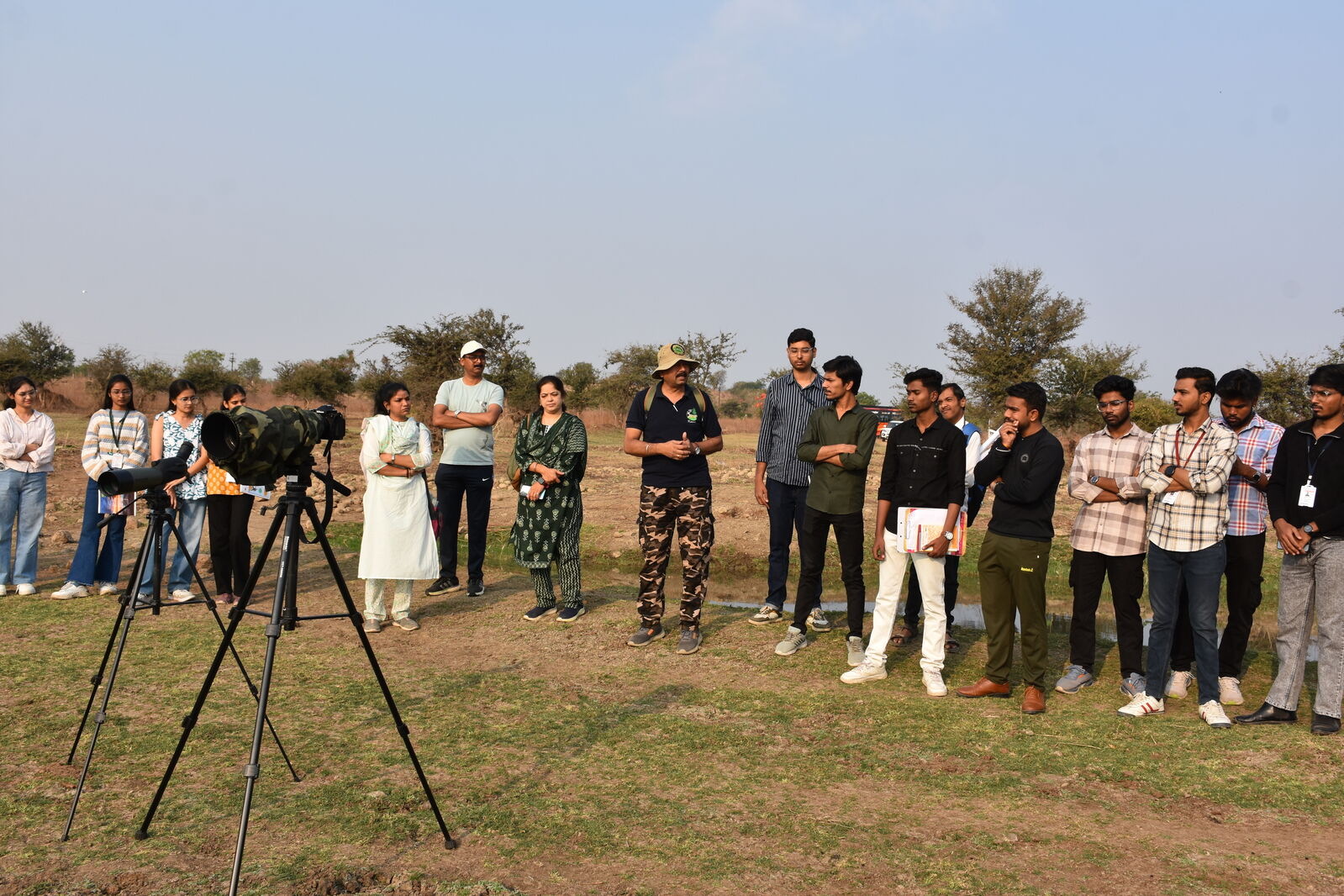 Students gained valuable knowledge about wetlands through an informative session conducted by Prof. G. A. Wagh, Department DBT Coordinator. | 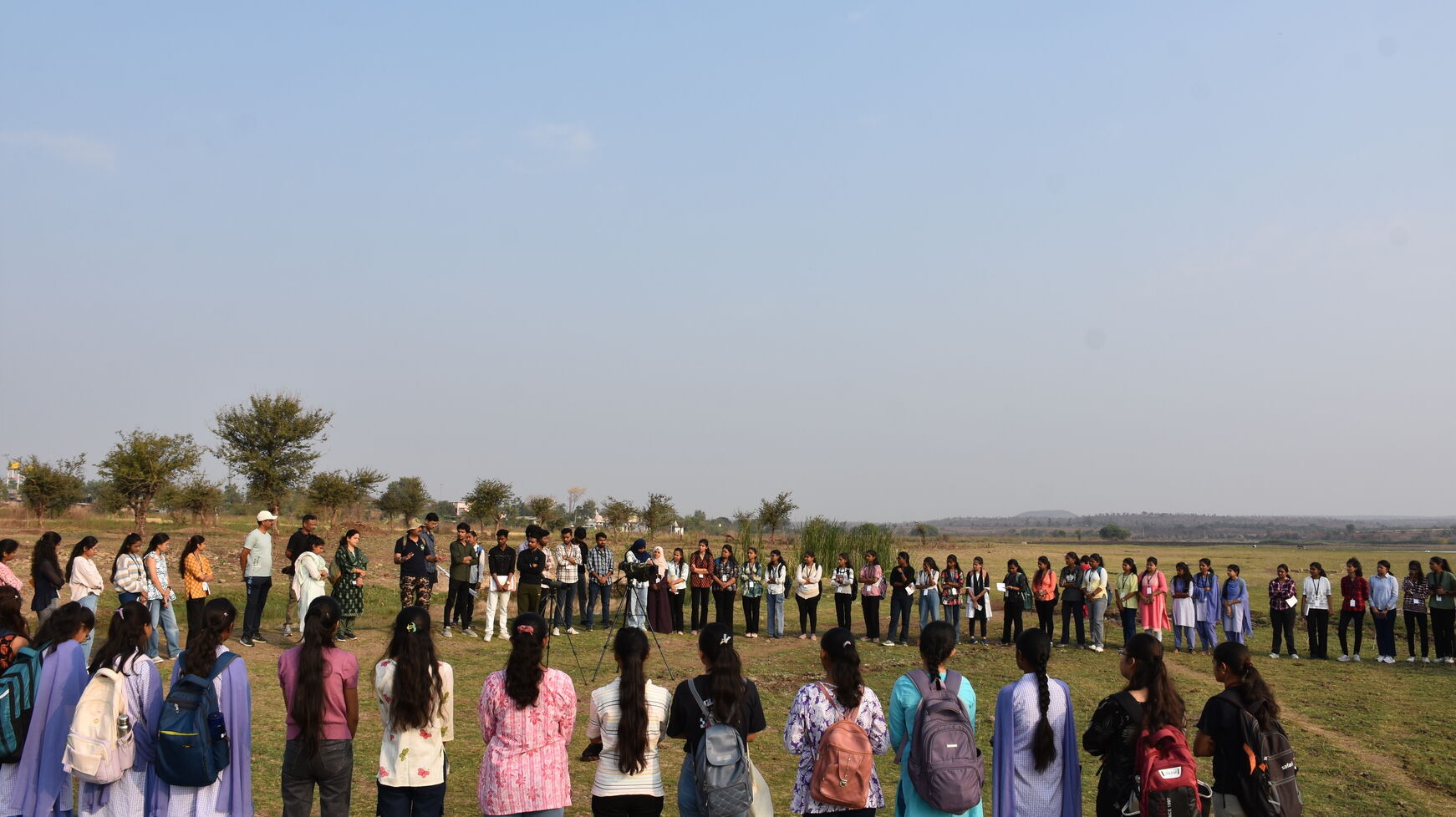 Students actively participated and contributed significantly to the cleanliness drive at the wetland area. |
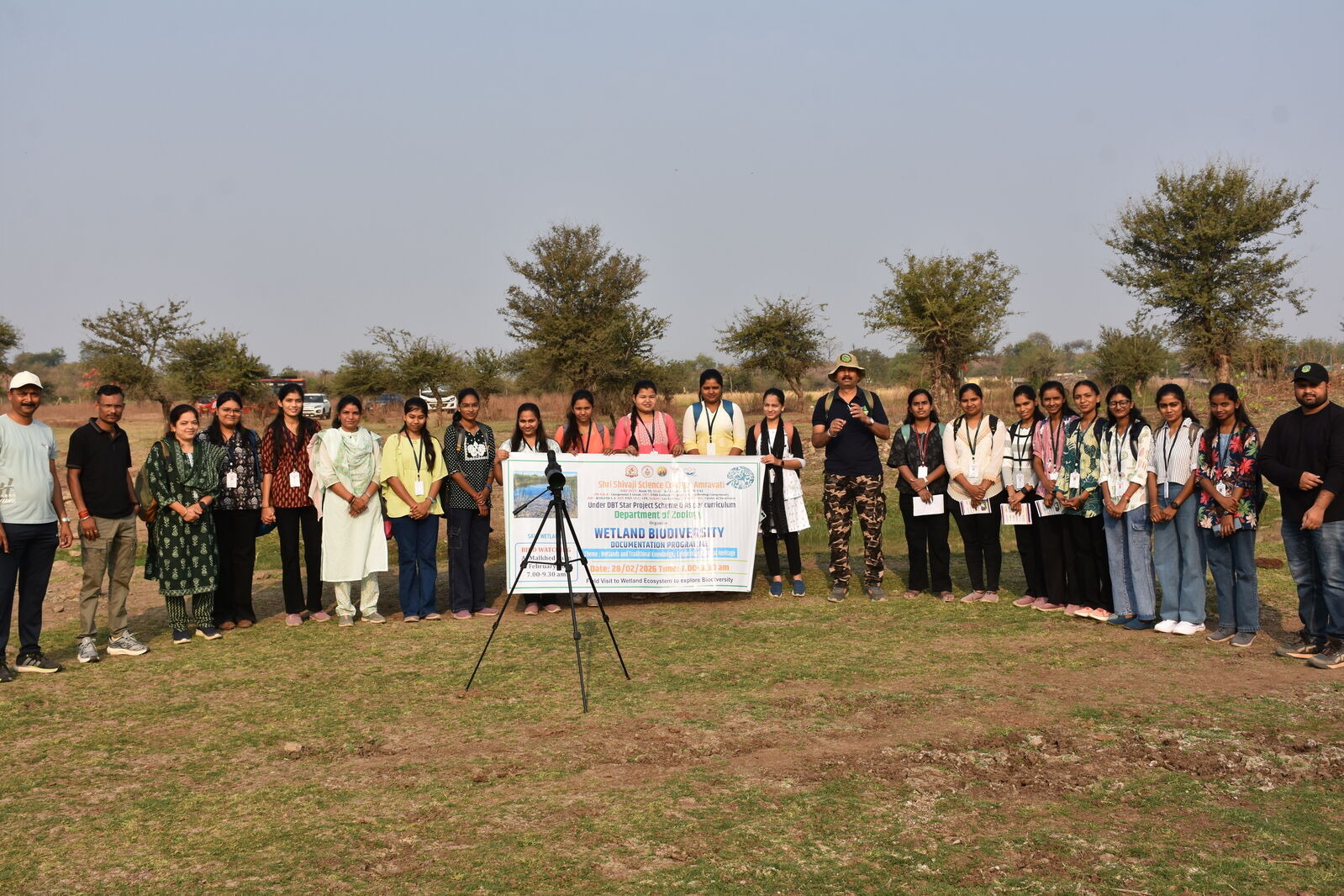 Students developed skills in observing birds, capturing clear images, and documenting avian diversity without disturbing the natural habitat. | 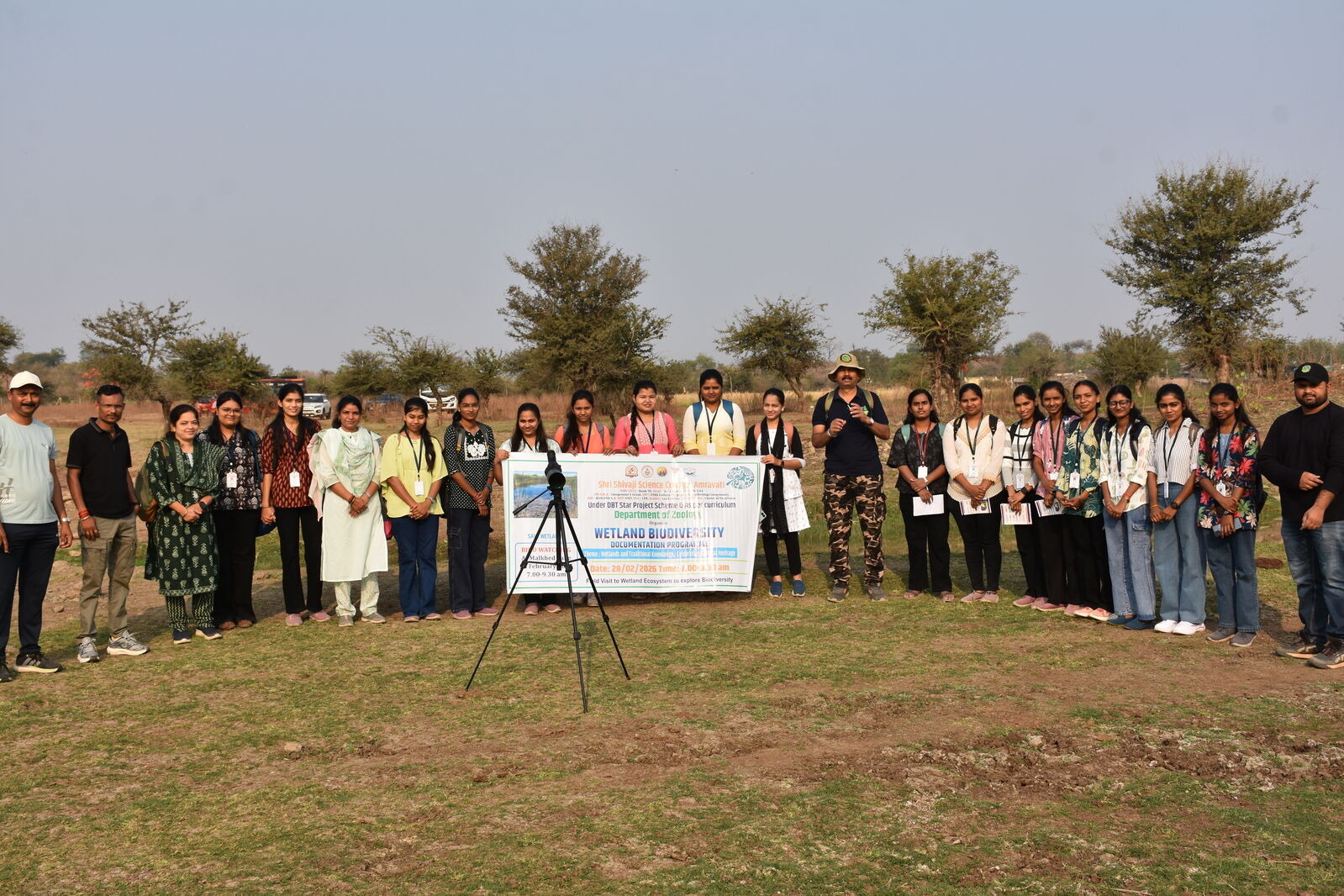 Students gain knowledge about wetland ecosystem |
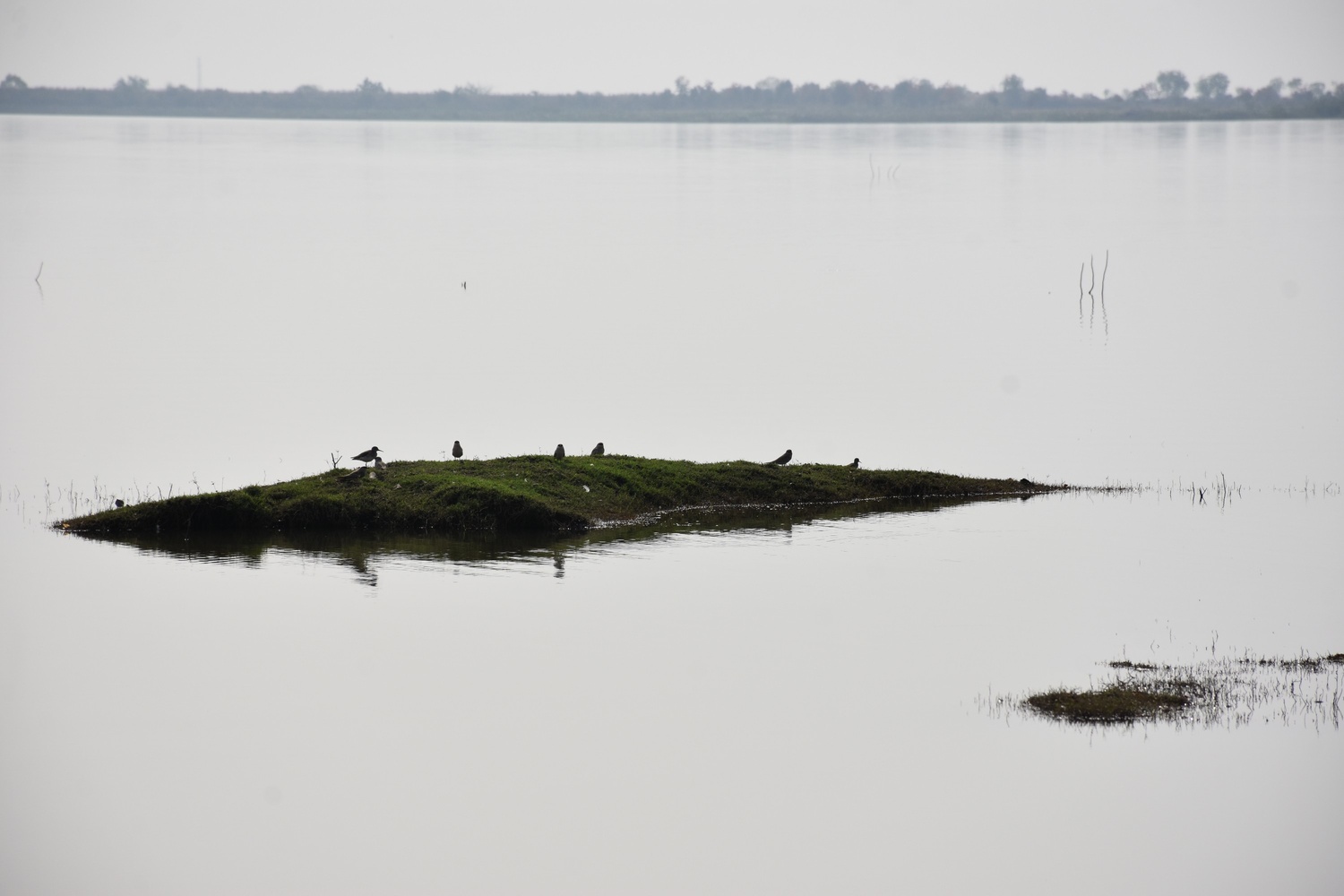 wetland habitat observation | 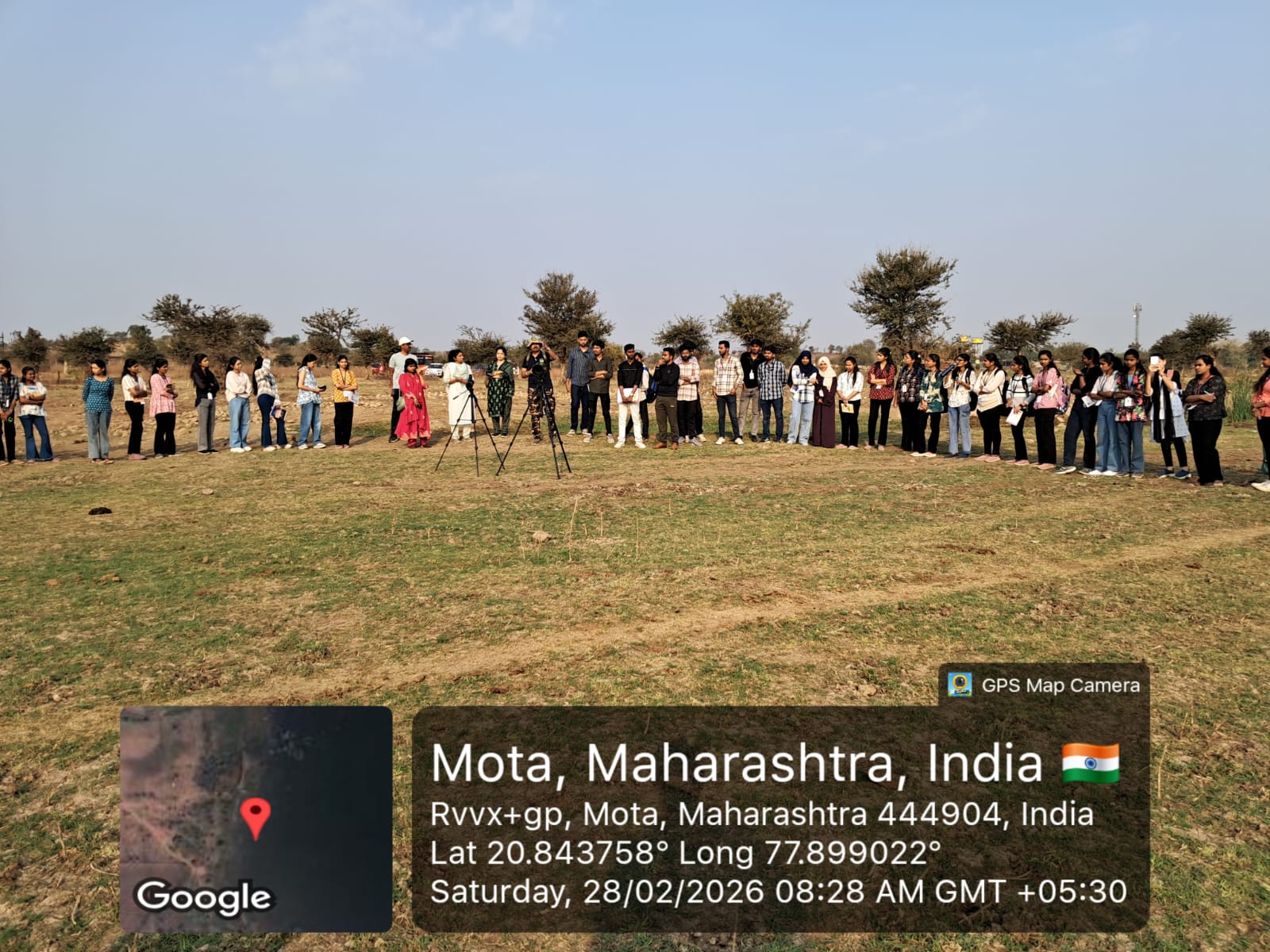 Green research club & cleanliness extension activity |
Attendance Sheet:
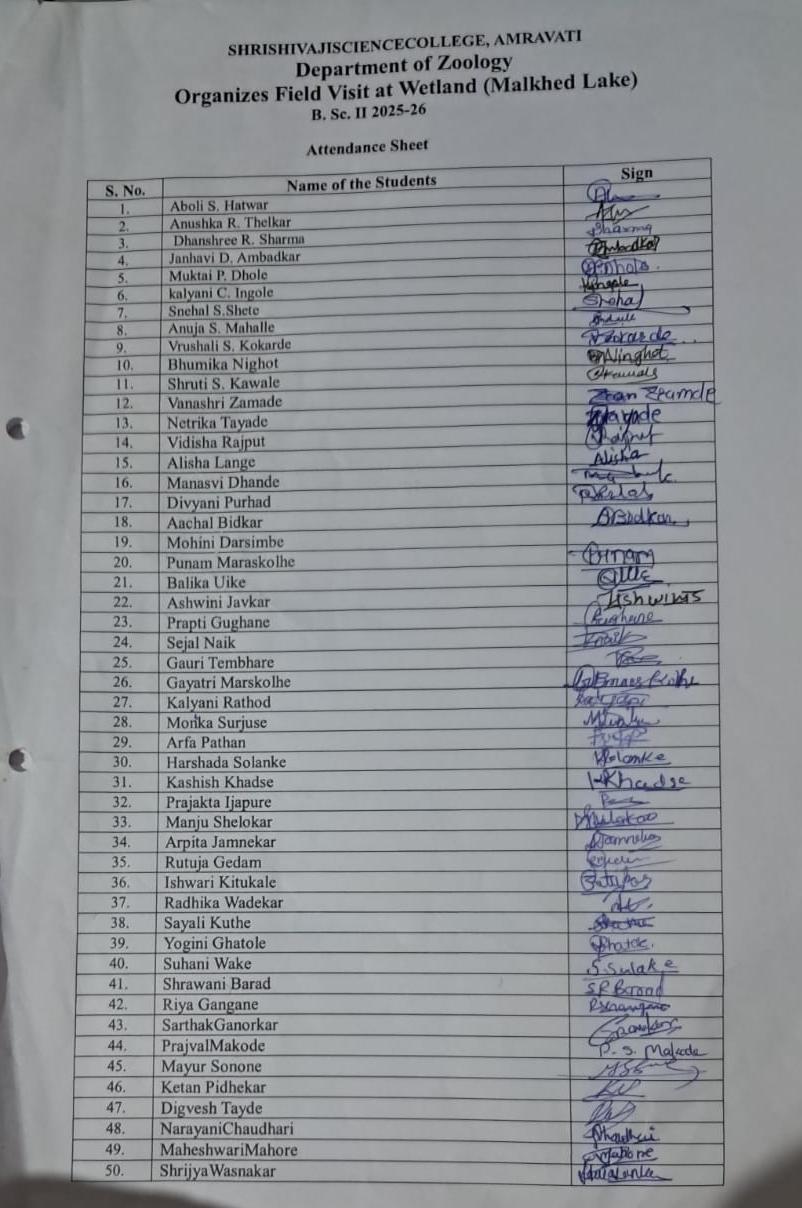 |
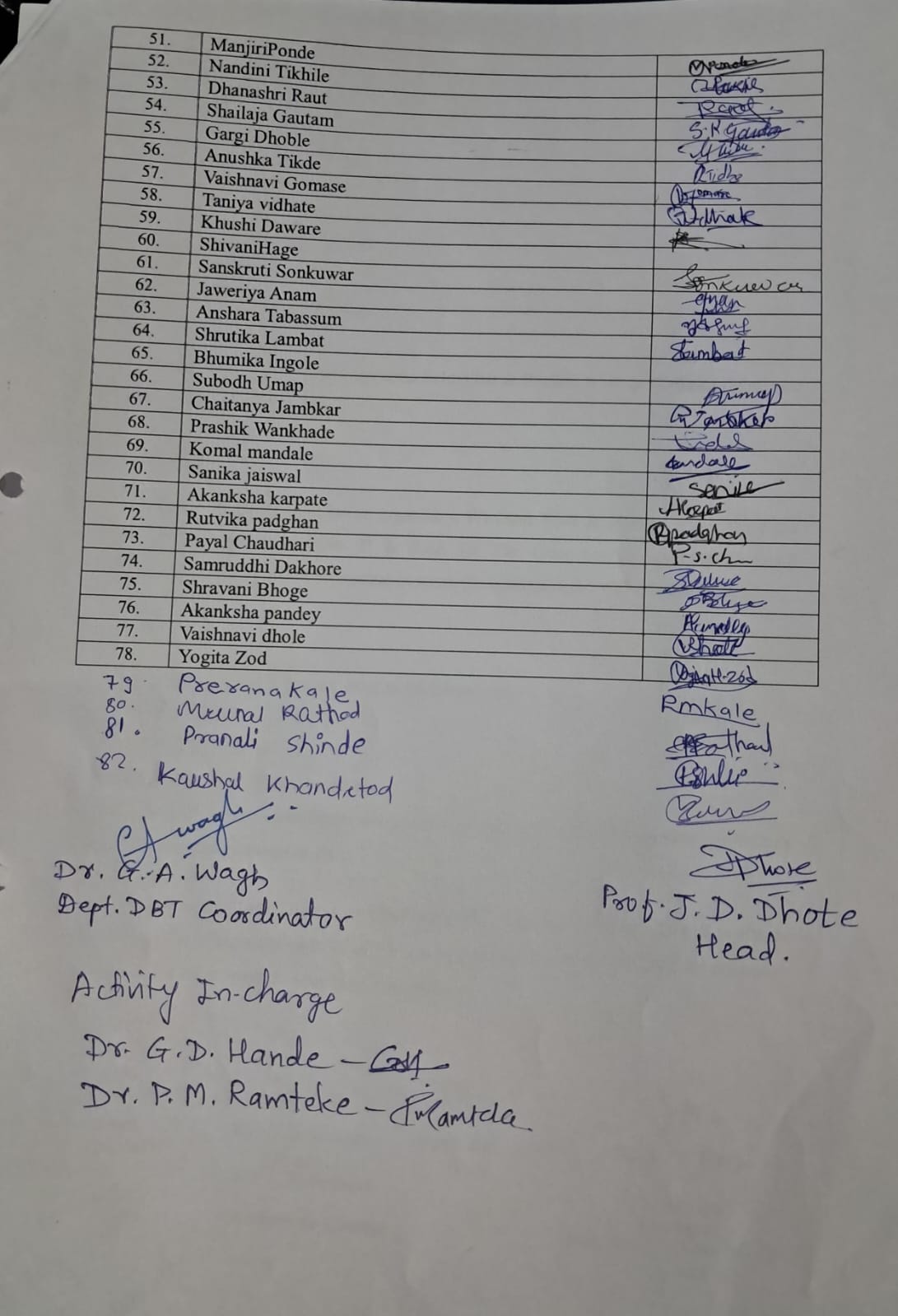 |