SHRI SHIVAJI SCIENCE COLLEGE, AMRAVATI
DBT STAR COLLEGE PROJECT ACTIVITY
ACTIVITY REPORT

Assesement of Environmental Impact of Ratan Power Station, MIDC Amravati on Agro-Ecosystem :A 20 km Radius Questionnair Survey
Activity Dates: 25/01/2026
Type of Activity: Outreach Activity
Organizing Department: Department of Chemistry
Program Coordinators: Dr.N.R.Thakare, Dr.N.A.Kalambe, Ms.R.D.Bankar
Head of the Department: Dr.P.R.Mandlik
External Collaborator (if any): NA
Objectives:
- To study the impact of power station emissions on air quality
- To analyze the effect on soil and water quality
- To observe changes in vegetation and biodiversity
- To assess noise pollution levels
- To understand the effect on human health and nearby communities
No of Beneficieries: 20
Classes Involved: B.Sc II
Venue of the Activity: A 20 km Radius from Ratan Power Station, MIDC Amravati
Activity Report:
The Rattan India Power Limited thermal power station located in the MIDC industrial region of Amravati is one of the major coal-based power plants in Vidarbha. The plant operates in the Additional Industrial Area at Nandgaonpeth and has significantly influenced the nearby environment through industrial activity, transportation, and resource use. Industrialization and power generation play an important role in economic development, but they also affect the surrounding environment. Thermal power stations release pollutants such as sulfur dioxide (SO₂), nitrogen oxides (NOₓ), particulate matter, and fly ash, which may impact air, soil, and water quality.
The Ratan Power Station situated in the MIDC area of Amravati is surrounded by industrial zones, agricultural lands, and residential settlements. This survey aims to study the environmental changes observed in this region. Environmental monitoring and clearance records for the Amravati power plant area are available through Rattan India Power’s environmental reports.
This survey report examines the environmental effects in villages and settlements surrounding the power station by the students of B.Sc II ,Shri Shivaji Science College,Amravati with emphasis on:
• Air quality
• Water quality
• Soil condition
• Noise pollution
• Vegetation and biodiversity
• Human health impacts
2. Study Area
The survey area includes villages such as Mozari, Rahatgaon, and Digargavhan and agricultural land within a 20 km radius of the power station:
• Nandgaonpeth
• MIDC industrial surroundings
• Nearby farmland
• Residential settlements near plant roads
The study area of students includes the 20 km radius region surrounding Ratan Power Station, MIDC, Amravati, covering villages such as Mozari, Rahatgaon, and Digargavhan
• MIDC industrial zone
• Nearby roads and transport corridors
• Agricultural fields
• Open land areas
• Residential settlements
Regional environmental studies in Amravati commonly use a 20 km radius baseline survey area, which is suitable for such environmental assessment. The area is semi-urban and agricultural, with increasing industrial development.
Objectives of the Survey
1. To study the impact of power station emissions on air quality
2. To analyze the effect on soil and water quality
3. To observe changes in vegetation and biodiversity
4. To assess noise pollution levels
5. To understand the effect on human health and nearby communities
Methodology
The students carried out survey using:
• Field visits and direct observations
• Questionnaire survey of local residents
• Observation of dust deposition and vegetation
• Reference to environmental reports and secondary data
• Photographic documentation of the site
Conclusion
The survey indicates that the area surrounding Ratan Power Station, MIDC, Amravati experiences noticeable environmental effects, particularly in air quality, soil condition, and noise levels.
While the power station contributes significantly to regional development, proper pollution control measures such as electrostatic precipitators, ash management systems, wastewater treatment, and green belt development are essential for sustainable environmental protection.
The surrounding environment around the Ratan Power Station in MIDC Amravati shows measurable industrial influence, especially on air, water, and soil quality. Although the plant contributes to regional development, continued environmental monitoring and stronger pollution control measures are necessary to protect local ecosystems and public health.
STATISTICAL REPORT
Summary:
The statistical analysis of survey data from nine villages within a 20 km radius of Rattan Power Station, MIDC Amravati indicates that environmental impacts are unevenly distributed across the region with village-wise variation. Among the parameters studied, soil and agricultural impact emerged as the most significant concern, followed by air quality perception, while water quality issues were comparatively less reported. Villages such as Mozari, Rahatgaon, and Digargavhan showed higher levels of perceived impact. The results highlight a strong association between geographic location and environmental perception, implying that industrial activity is influencing surrounding ecosystems, particularly agricultural land.
Objective:
To identify the key villages influenced by the adverse effect of Rattan Power Station, MIDC Amravati within a 20 km radius of it.
Introduction:
This study evaluates the perceived environmental and socio-economic impacts in 9 villages located within 20 km radius of Rattan Power Station. The survey captures binary responses (Yes/No) across: Air Quality Perception, Water Quality Perception, Soil & Agricultural Impact, Noise & Other Impacts, Socio-economic & Health Status.
Methodology:
The household survey was conducted on 363 families from 9 villages. The binary (Yes = Impact perceived, No = Not perceived) type of data is collected for five parameters mentioned above. The descriptive statistics is used to draw meaningful insights from the data.
Data Summary:
The number of families surveyed in each village was as follows:
Village Name No. of families
Davargaon 30
Rahatgaon 45
Digargavhan 44
Kapustalani 40
Karajgaon 40
Shendola Kh. 39
Shiwangaon 44
Mozari 40
Mahuli Jahagir 41
Total 363
In all total 363 families participated in a survey. In which highest from Rahatgaon village and least from Davargaon village.
Statistical Analysis:
1. Air Quality Perception
From the chart it is clear that almost 76% families of Mozari village perceived impact of the plant in terms of air quality, followed by Rahatgaon, Digargavhan and Mahuli Jahagir, these villages perceive moderate impact, while Davargaon has least affected air quality due to the plant.
2. Water Quality Perception
Overall less "Yes" responses compared to Air quality perception. 70% families of Mozari village perceived significant impact in water quality, while families of Davargaon and Kapustalani villages does not have significant impact in water quality perception. This indicates water contamination perception is less widespread, suggesting either lower actual impact or less noticeable effects.
3. Soil and Agricultural Impact
Very high "Yes" responses among all parameters, which means Kapustalani (75% families) followed by Digargavhan and Rahatgaon villages has significantly high impact on soil. Agriculture appears most affected environmental component in Kapustalani possibly due to fly ash deposition and soil degradation, as it is closest from the plant compared to all villages.
4. Noise level and other Impact
Families from Kapustalani and Davargaon villages are appeared to be most affected by the noise of the plant, while very few families from Rahatgaon village have complain about noise impact, as it is furthest among all villages participated in survey.
5. Socio-Economic and Health status
Almost 83% families from Mahuli Jahagir village have significant health issue as they perceived positive impact due to power plant, while no families from Shendola Kh. reported any health issues, possibly due to its farthest distance from the plant.
Comparative Analysis:
• Soil and Agriculture have highest impact on families
• Air Quality has moderately high impact
• Water Quality has lowest impact.
• The power plant's impact is more land-based than water-based.
Key Insights:
1. Environmental
• Soil degradation is the most critical issue
• Air pollution perception is clustered geographically
• Water impact is less perceived but still present
2. Agricultural
• High soil impact leads to potential decline in crop productivity
• Villages with high soil impact also show moderate air impact
3. Spatial Pattern
Village Name Total Yes Total No
Davargaon 122 358
Rahatgaon 427 293
Digargavhan 422 280
Kapustalani 299 341
Karajgaon 231 409
Shendola Kh. 109 515
Shiwangaon 243 461
Mozari 377 263
Mahuli Jahagir 256 400
• Villages like Mozari, Rahatgaon, Digargavhan are high-impact zones
• Davargaon appears relatively less affected
Conclusion:
• Environmental impact is not uniform across villages
• Soil and agriculture are most affected sectors
• There exists a statistically significant relationship between location and perceived impact
• The findings strongly suggest localized environmental stress due to industrial activity
2. Water Quality Perception
Overall less "Yes" responses compared to Air quality perception. 70% families of Mozari village perceived significant impact in water quality, while families of Davargaon and Kapustalani villages does not have significant impact in water quality perception. This indicates water contamination perception is less widespread, suggesting either lower actual impact or less noticeable effects.
3. Soil and Agricultural Impact
Very high "Yes" responses among all parameters, which means Kapustalani (75% families) followed by Digargavhan and Rahatgaon villages has significantly high impact on soil. Agriculture appears most affected environmental component in Kapustalani possibly due to fly ash deposition and soil degradation, as it is closest from the plant compared to all villages.
4. Noise level and other Impact
Families from Kapustalani and Davargaon villages are appeared to be most affected by the noise of the plant, while very few families from Rahatgaon village have complain about noise impact, as it is furthest among all villages participated in survey.
5. Socio-Economic and Health status
Almost 83% families from Mahuli Jahagir village have significant health issue as they perceived positive impact due to power plant, while no families from Shendola Kh. reported any health issues, possibly due to its farthest distance from the plant.
Comparative Analysis:
• Soil and Agriculture have highest impact on families
• Air Quality has moderately high impact
• Water Quality has lowest impact.
• The power plant's impact is more land-based than water-based.
Key Insights:
1. Environmental
• Soil degradation is the most critical issue
• Air pollution perception is clustered geographically
• Water impact is less perceived but still present
2. Agricultural
• High soil impact leads to potential decline in crop productivity
• Villages with high soil impact also show moderate air impact
3. Spatial Pattern
Village Name Total Yes Total No
Davargaon 122 358
Rahatgaon 427 293
Digargavhan 422 280
Kapustalani 299 341
Karajgaon 231 409
Shendola Kh. 109 515
Shiwangaon 243 461
Mozari 377 263
Mahuli Jahagir 256 400
• Villages like Mozari, Rahatgaon, Digargavhan are high-impact zones
• Davargaon appears relatively less affected
Conclusion:
• Environmental impact is not uniform across villages
• Soil and agriculture are most affected sectors
• There exists a statistically significant relationship between location and perceived impact
• The findings strongly suggest localized environmental stress due to industrial activity
Outcomes:
- TThe survey indicates that the area surrounding Ratan Power Station, MIDC, Amravati experiences noticeable environmental effects, particularly in air quality, soil condition, and noise levels.
- While the power station contributes significantly to regional development, proper pollution control measures such as electrostatic precipitators, ash management systems, wastewater treatment, and green belt development are essential for sustainable environmental protection.
- The surrounding environment around the Ratan Power Station in MIDC Amravati shows measurable industrial influence, especially on air, water, and soil quality.
- Although the plant contributes to regional development, continued environmental monitoring and stronger pollution control measures are necessary to protect local ecosystems and public health.
- Healthy and pure air is essential for sustainable environmental protection.
Photos:
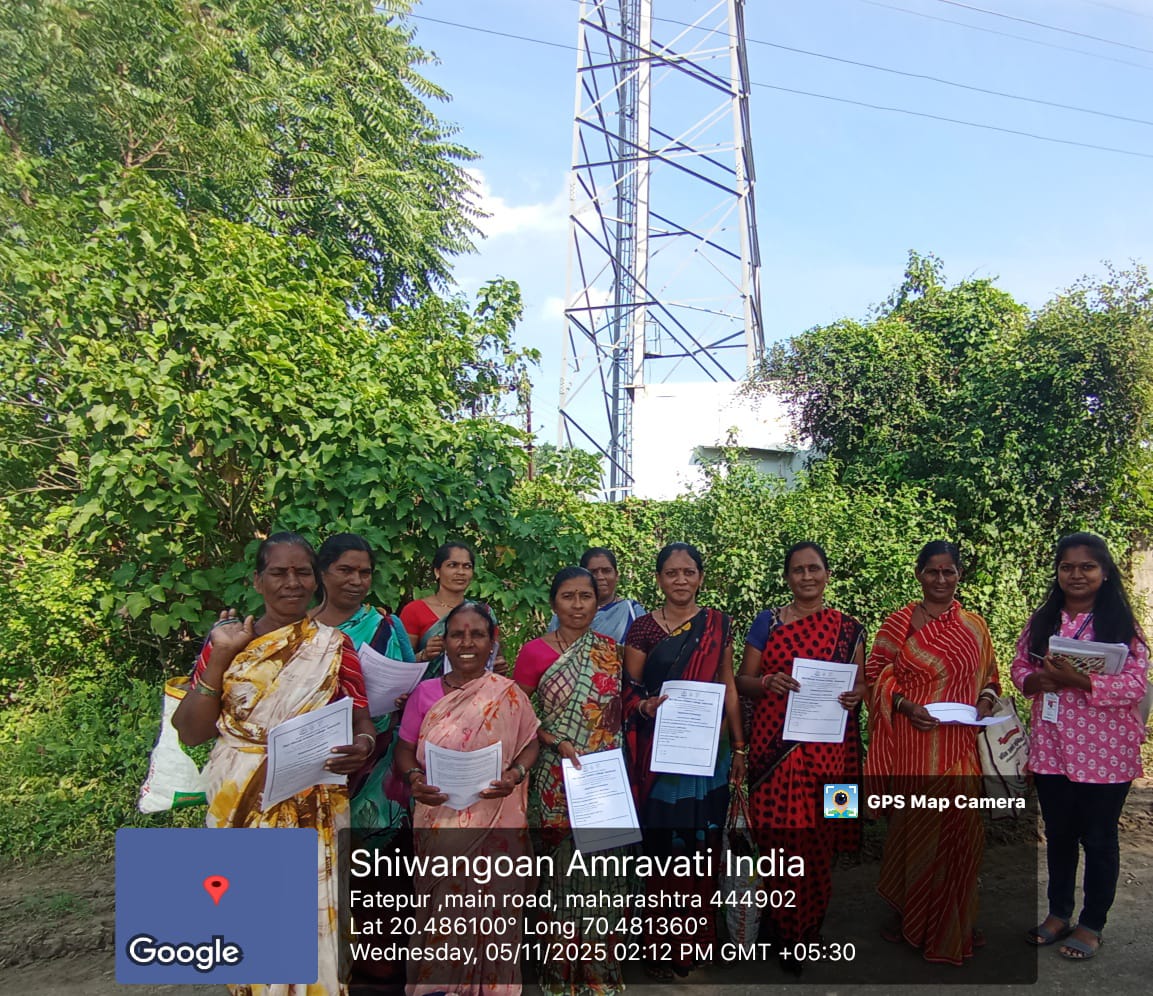 Survey Pic |  Survey Pic |
 Survey Pic | 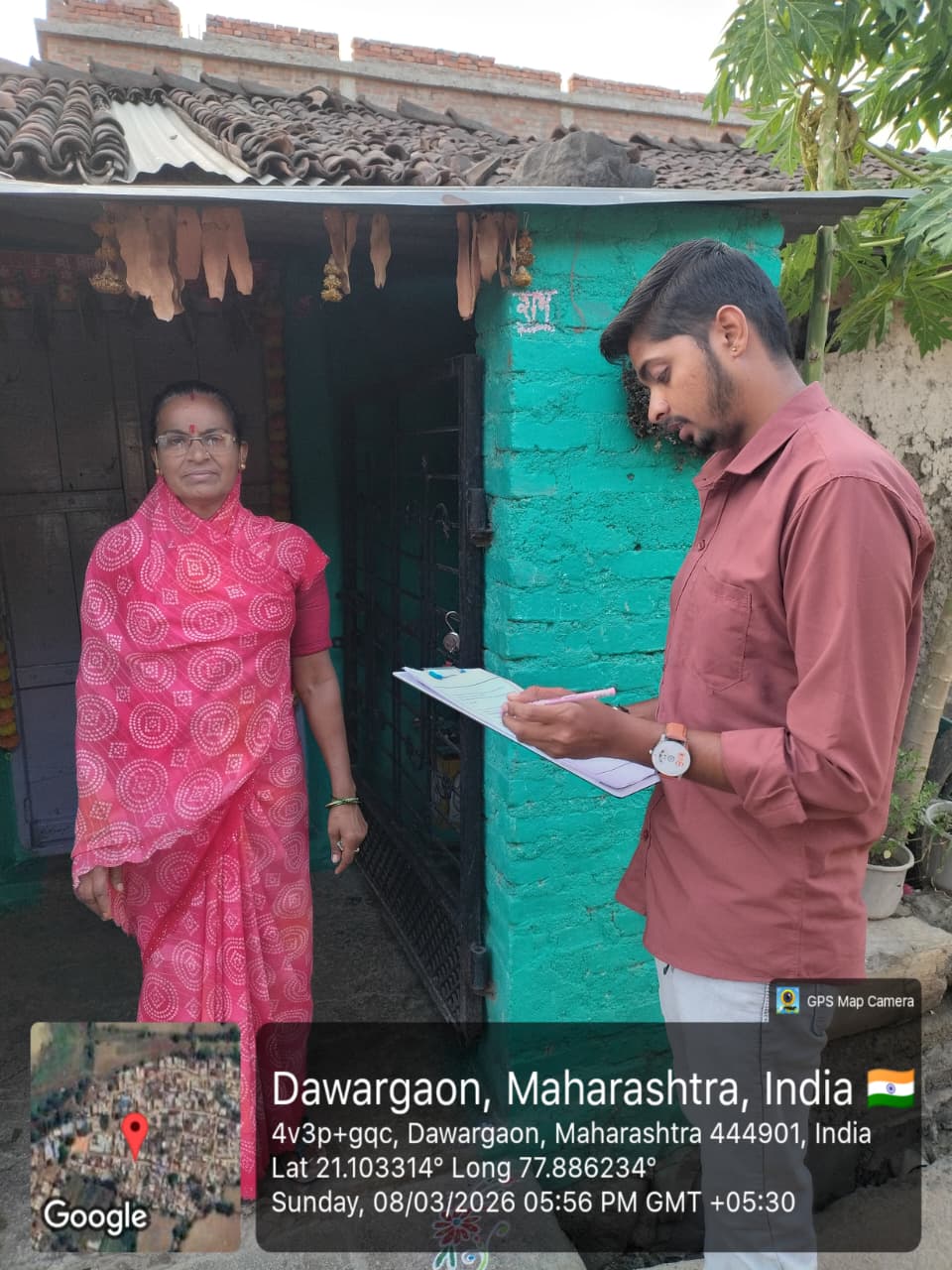 Survey Pic |
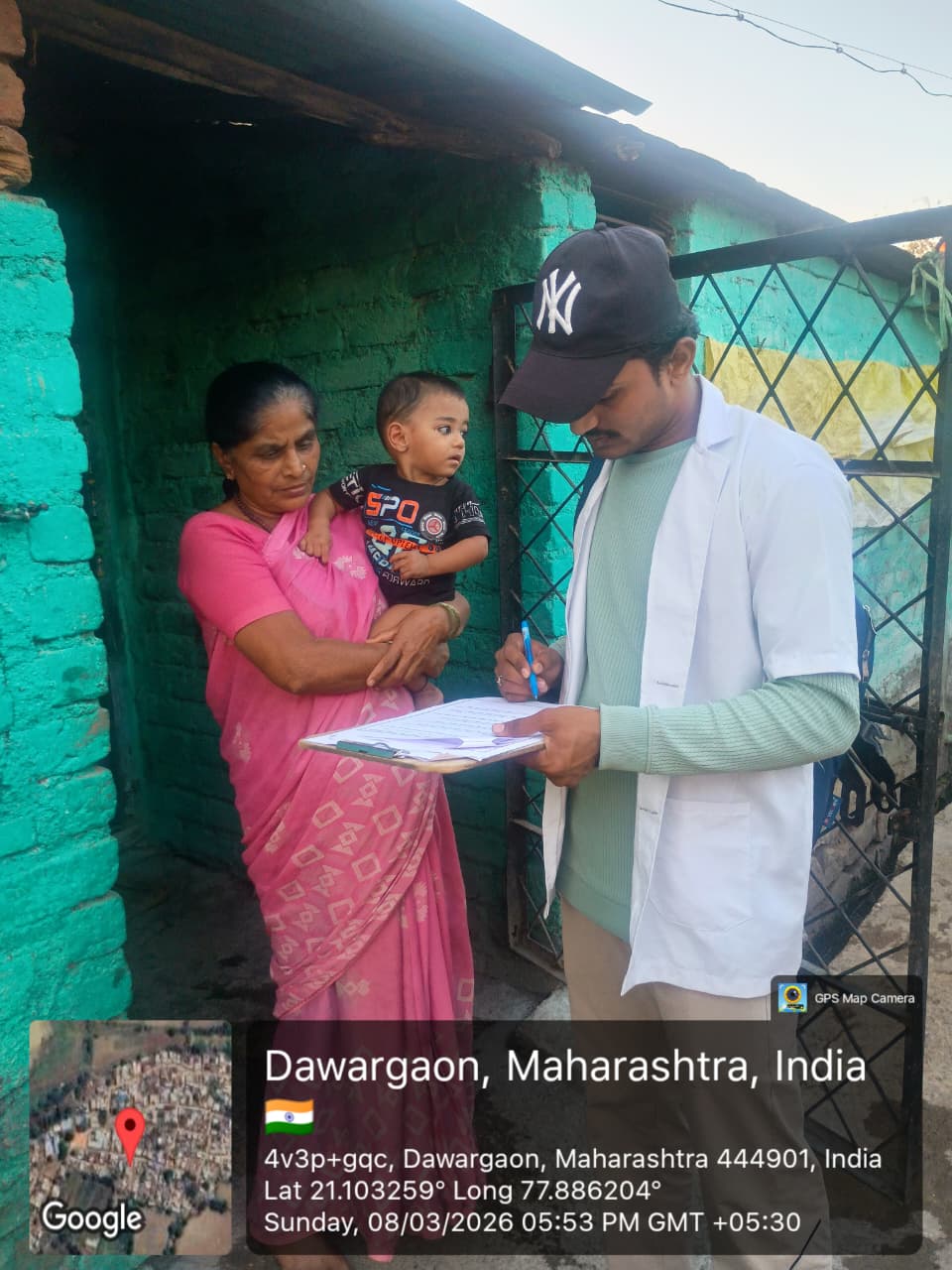 Survey Pic | 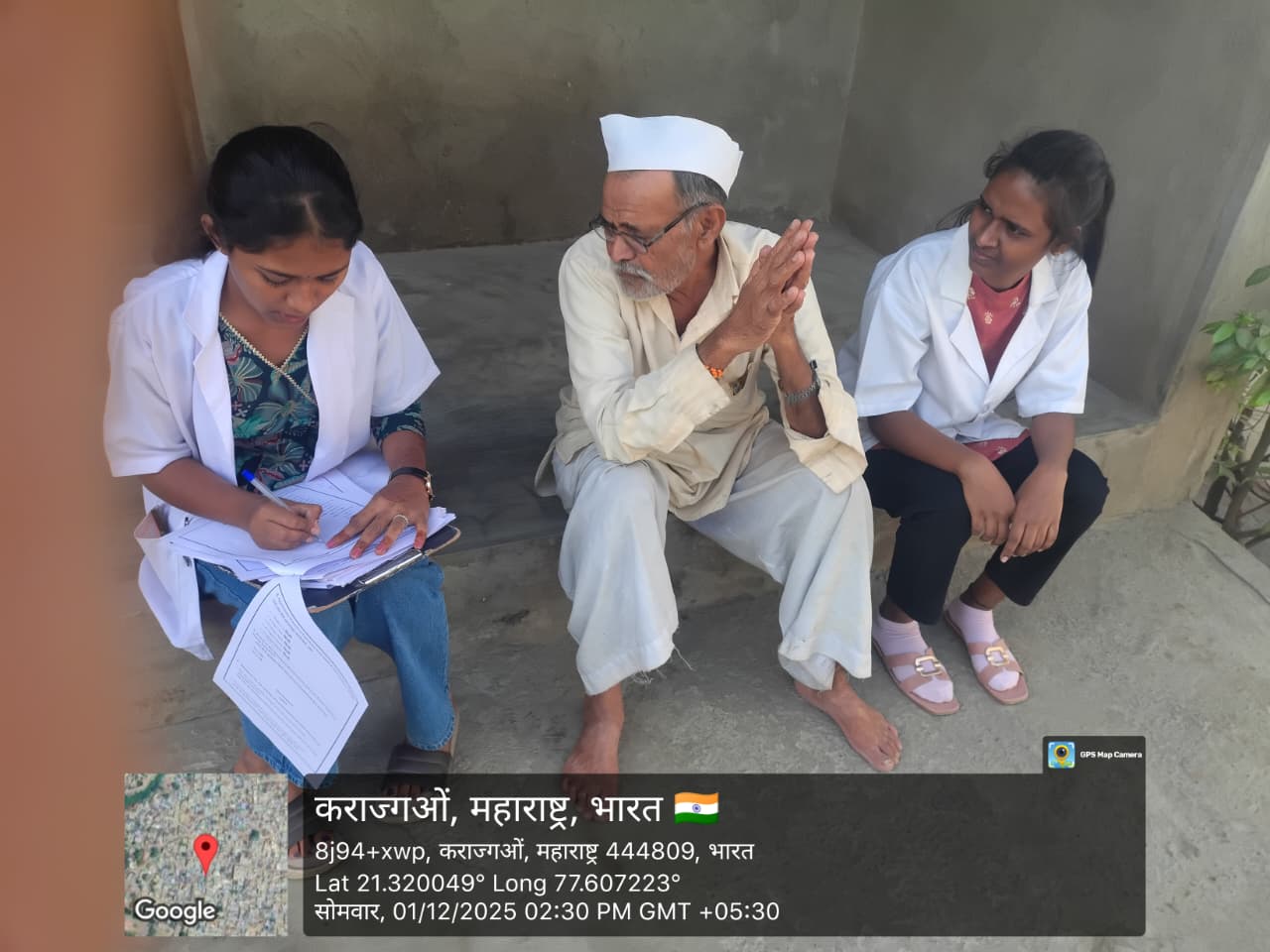 Survey Pic |
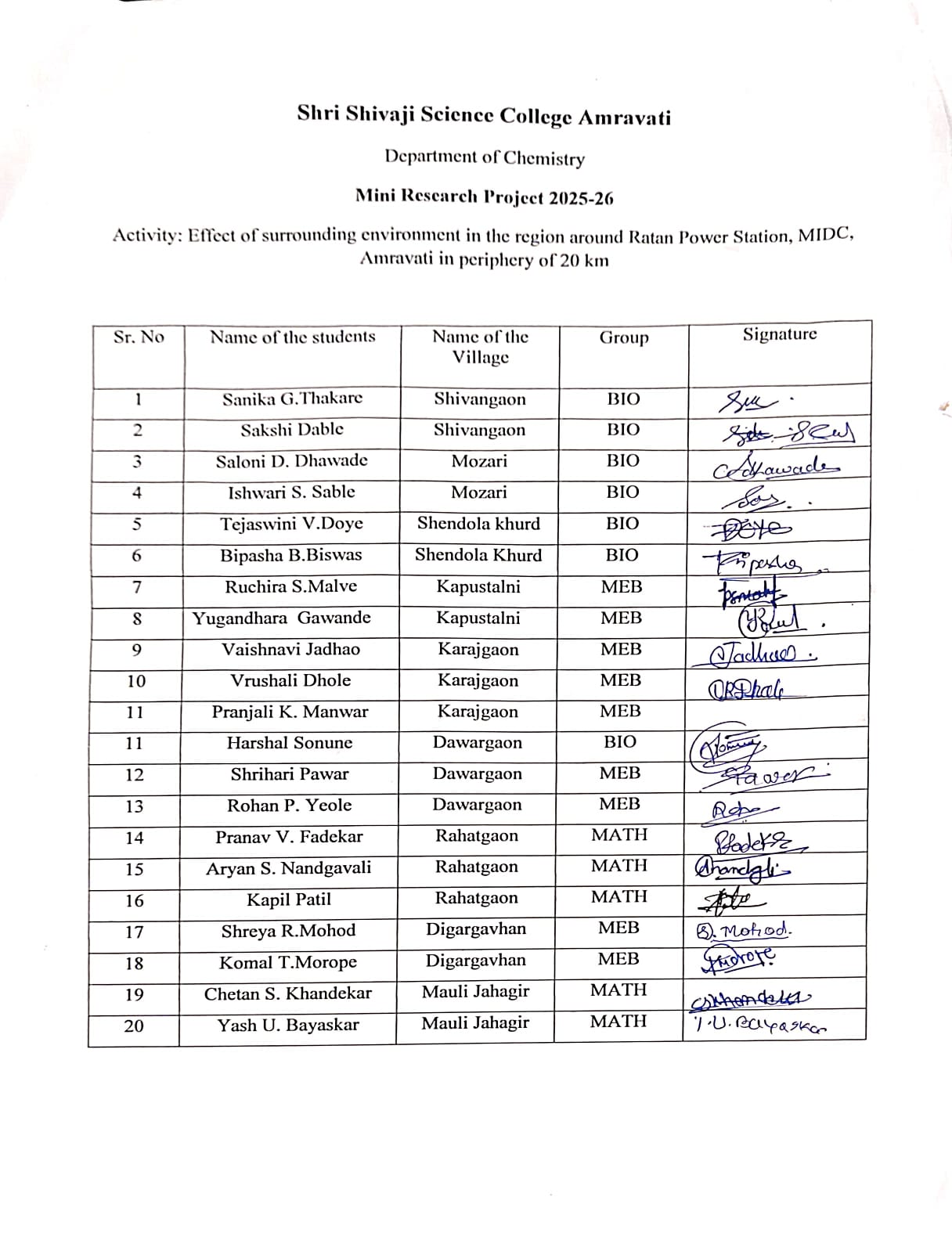
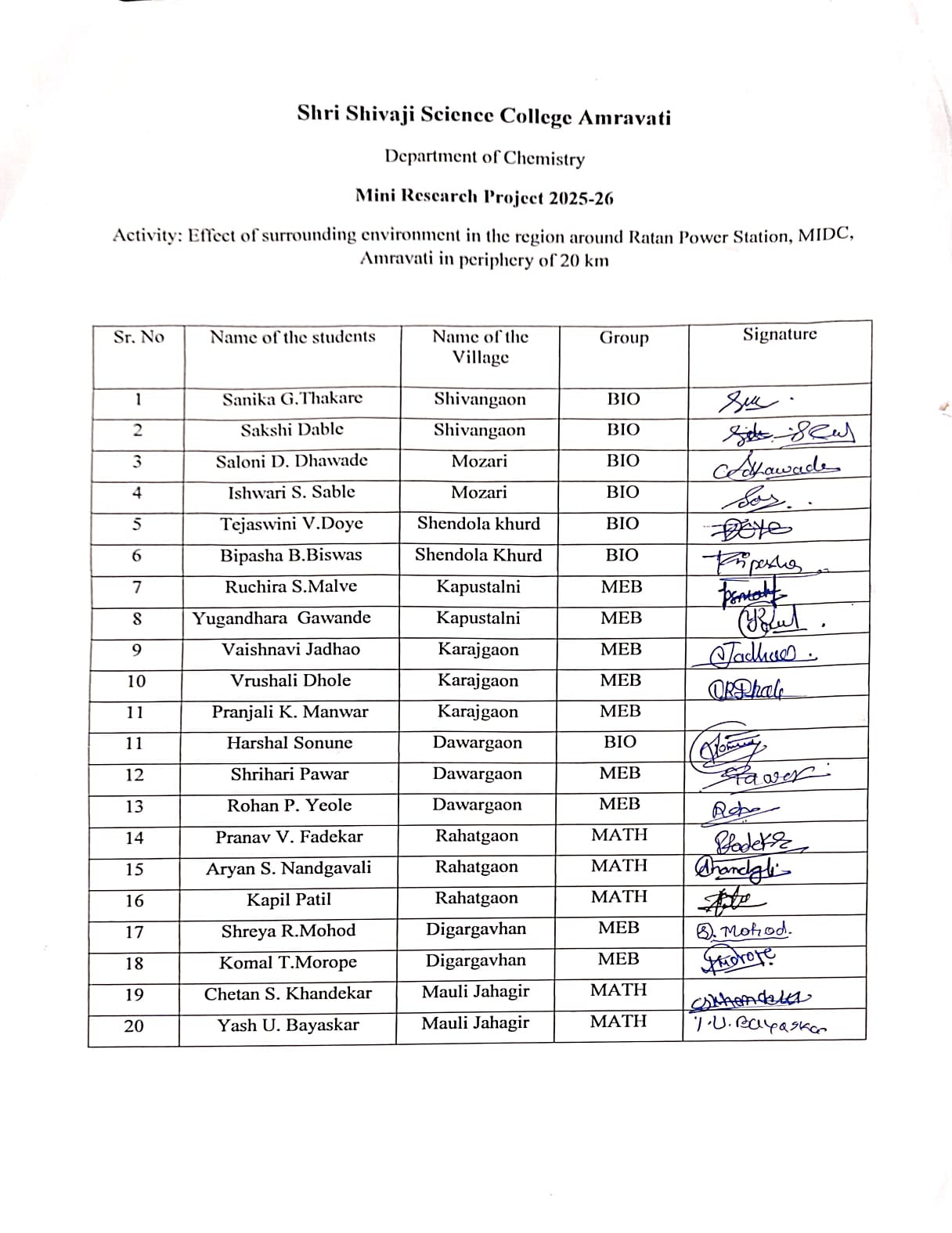
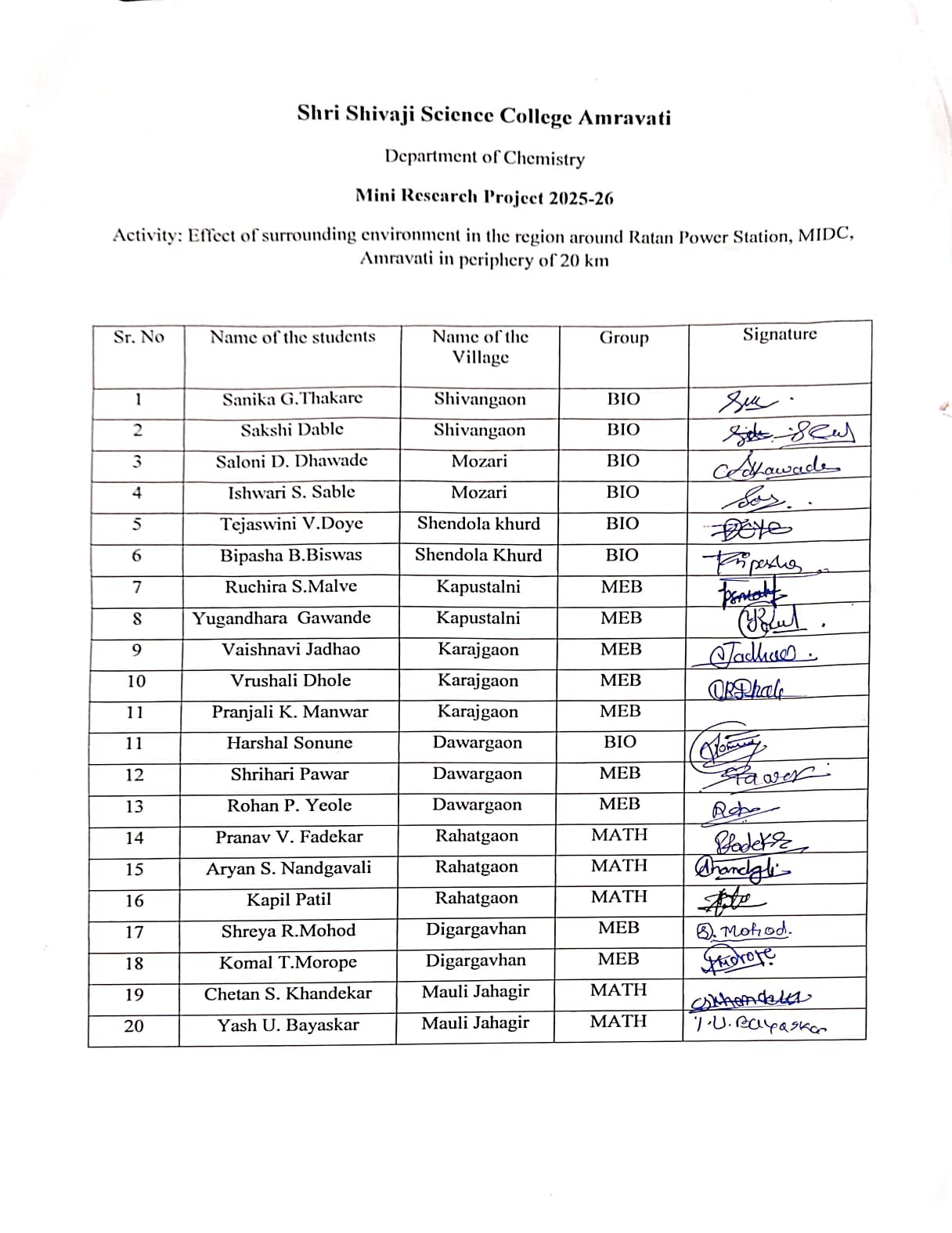
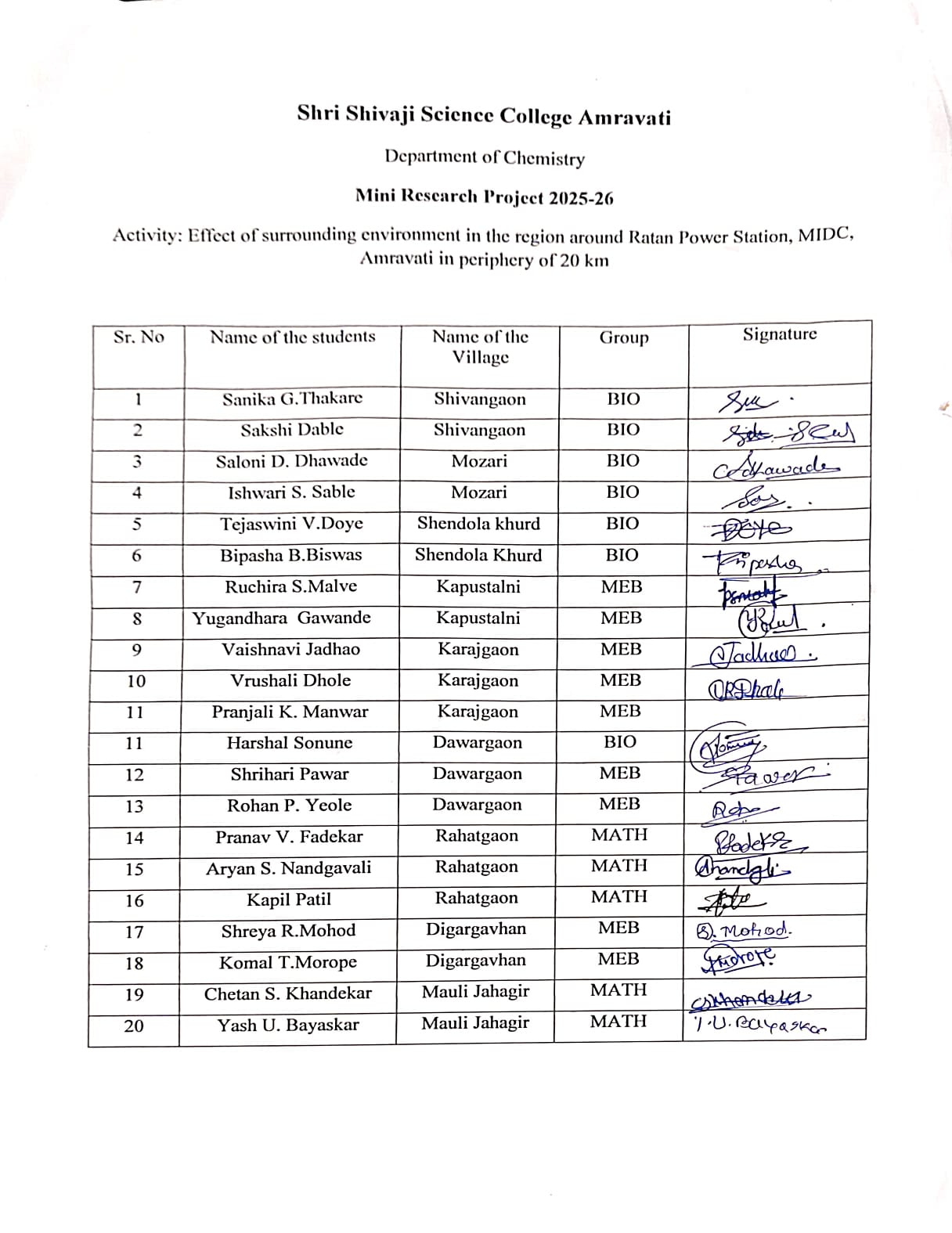
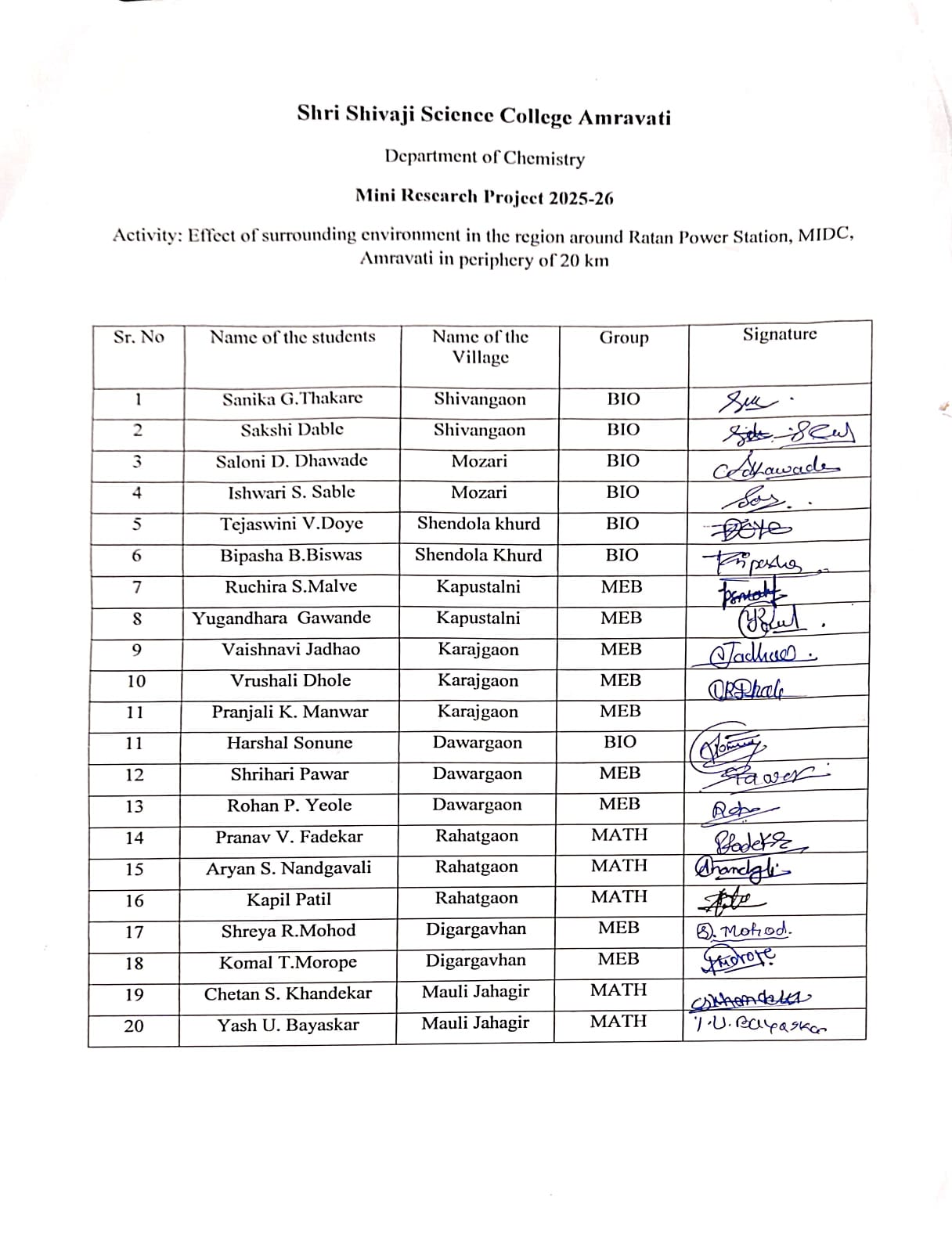
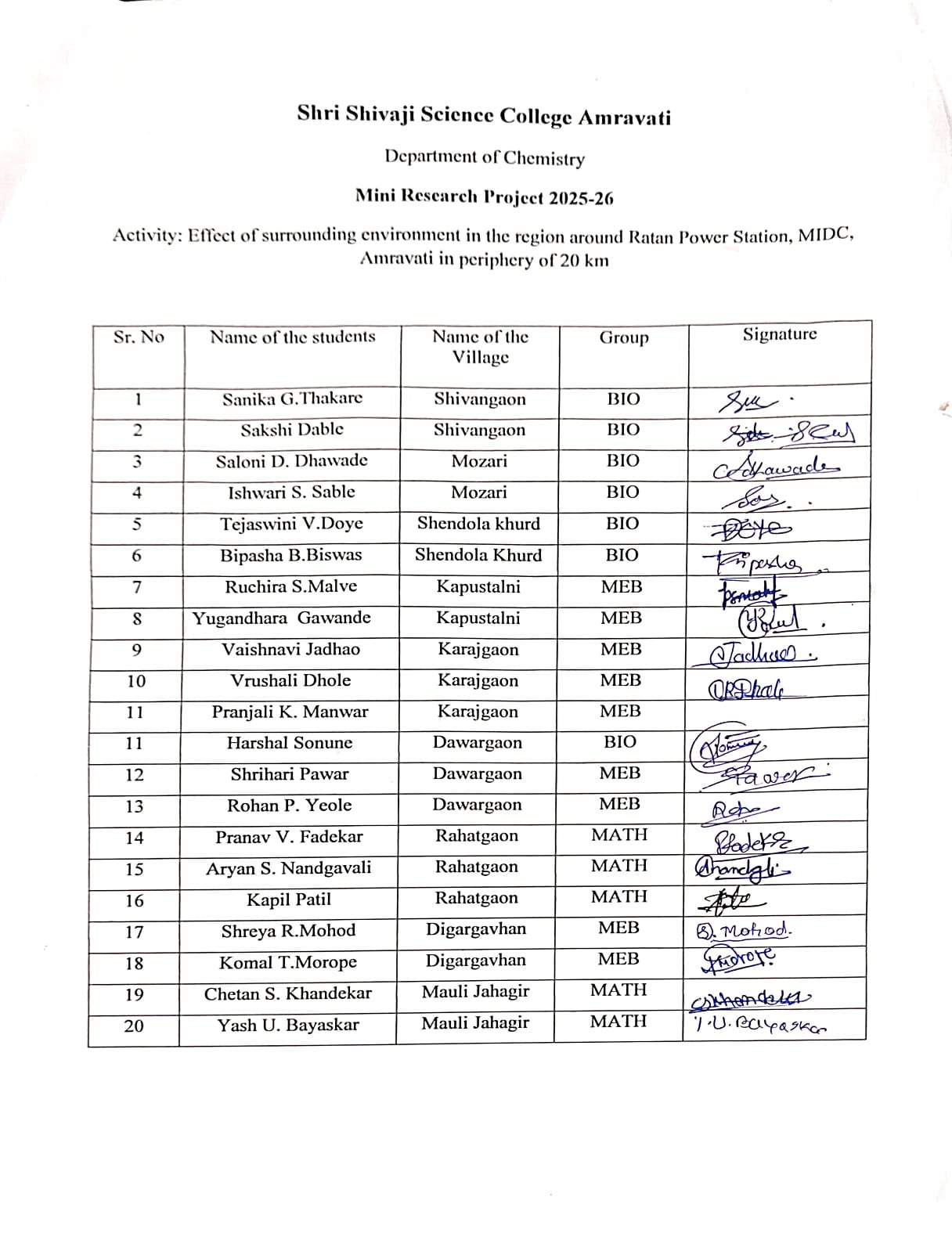
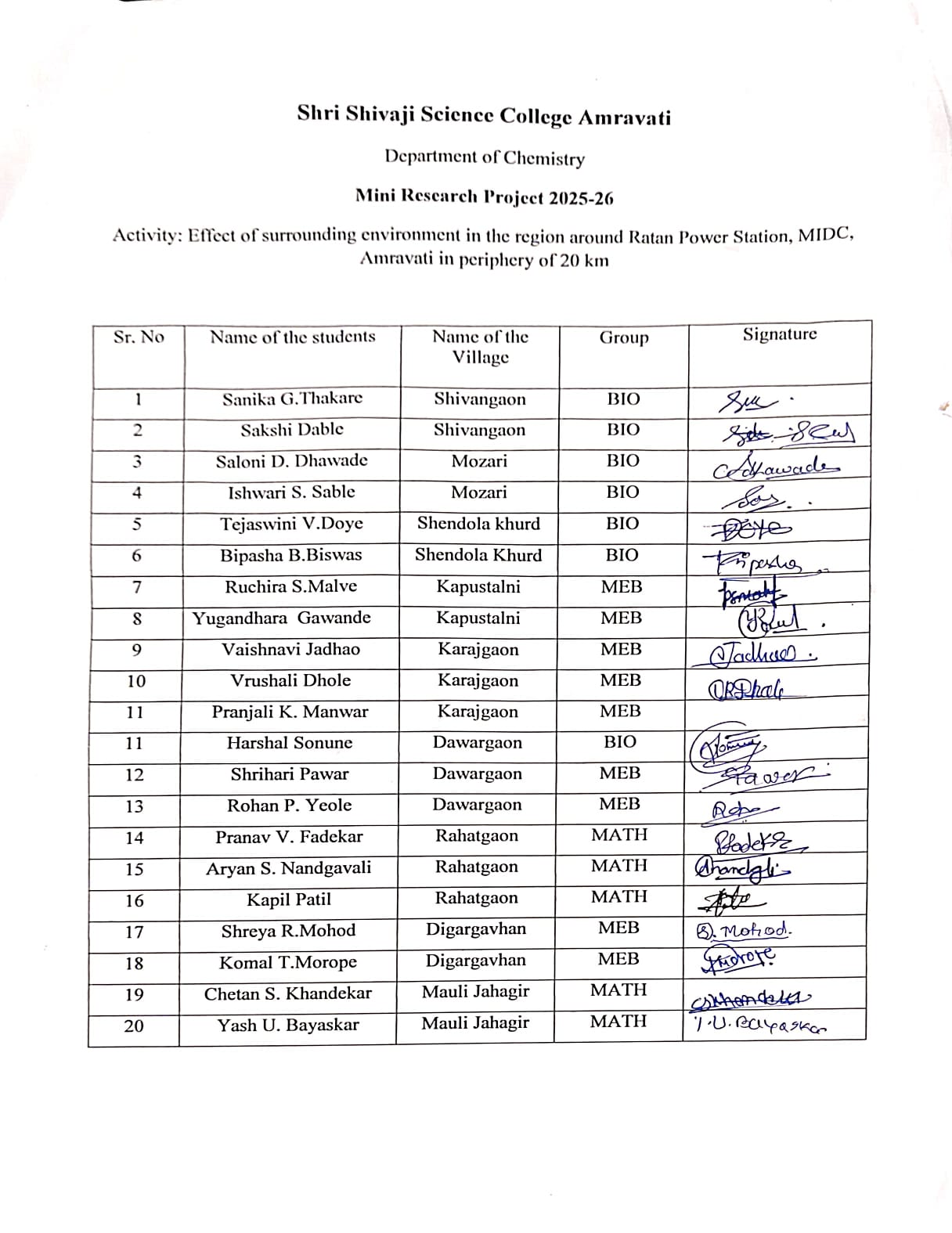
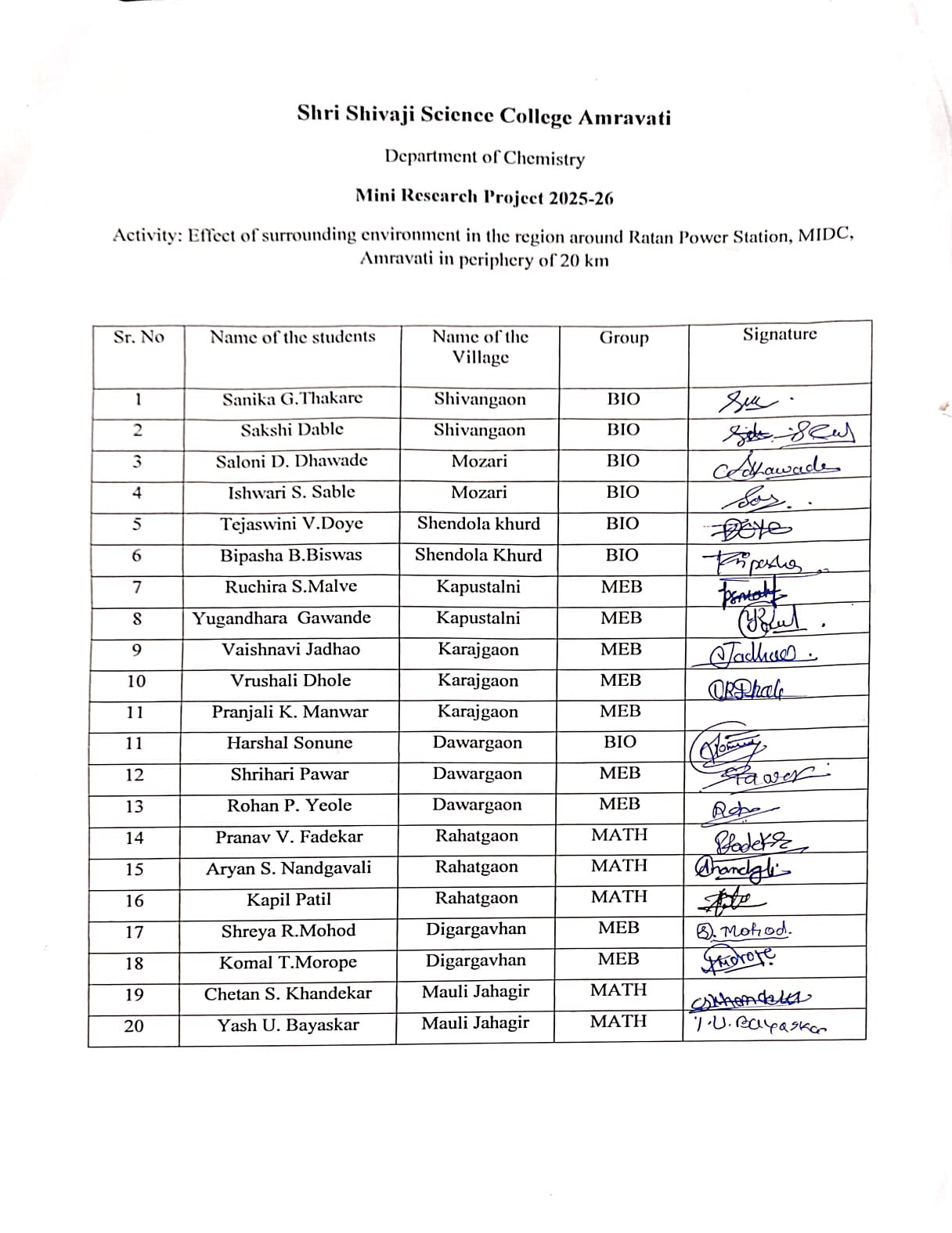
Attendance Sheet:
 Sheet |
 Sheet |
 Sheet |
 Sheet |
 Sheet |
 Sheet |
 Sheet |
 Sheet |