SHRI SHIVAJI SCIENCE COLLEGE, AMRAVATI
DBT STAR COLLEGE PROJECT ACTIVITY
ACTIVITY REPORT

Ozone Day Awareness Campaign
Activity Dates: 16th September 2025
Type of Activity: Outreach Activity
Organizing Department: Department of Zoology
Program Coordinators: Dr. G.A. Wagh Dept. DBT Coordinator ;Activity In charge: Dr. G. D. Hande
Head of the Department: Prof. J.D. Dhote
External Collaborator (if any): --
Objectives:
- 1) To motivate students and citizens to adopt sustainable habits for environmental protection.
- 2) To create awareness about the importance of the ozone layer in protecting life on Earth.
- 3) To educate people about the harmful effects of ozone depletion and ultraviolet (UV) radiation.
- 4)T o increase awareness about the importance of the ozone layer.
- 5 To develop understanding and appreciation towards environmental and faunal conservation.
No of Beneficieries: BSc II-25 ; School Students 250
Classes Involved: BSc II
Venue of the Activity: Department of Zoology UG Laboratory and Five Schools
Activity Report:
Introduction
World Ozone Day is celebrated every year on 16th September to spread awareness about the importance of the ozone layer and its protection. This day commemorates the signing of the Montreal Protocol (1987), an international agreement aimed at phasing out ozone-depleting substances. The ozone layer, located in the stratosphere, acts as a protective shield by absorbing harmful ultraviolet (UV) radiation from the sun. Without this layer, life on Earth would be severely affected. However, ozone at the ground level (troposphere) acts as a harmful pollutant and greenhouse gas.
Ozone has two properties of interest to human health. First, it absorbs UV light, reducing human exposure to harmful UV radiation that causes skin cancer and cataracts. Second, when inhaled, it reacts chemically with many biological molecules in the respiratory tract, leading to a number of adverse health effects. Depletion of the ozone layer. Ozone is a harmful pollutant in the lower atmosphere, damaging plants, human health and the built environment, but is an essential substance in the upper atmosphere, the stratosphere, where it screens out more than 99% of the dangerous ultraviolet radiation from the sun. This category refers to the thinning of the stratospheric ozone layer as a result of various chlorinated and bromated substances, such as CFC’s and halons . New Zealand lies directly beneath a gaping hole in the ozone layer. The ozone is a layer of atmospheric gas that absorbs ultraviolet (UV) radiation from sunlight, acting as a natural barrier between the sun and the earth's surface.
Environmental impact refers to changes in the natural environment—air, water, land, and ecosystems—caused by human activities like industrialization, urbanization, and overconsumption. Key impacts include climate change, biodiversity loss, pollution, and resource depletion, leading to severe consequences such as global warming, habitat destruction, and public health issues. There are two widely used meanings for environmental hazards; one is that they are hazards to the natural environment (biomes or ecosystems, and the other is hazards of an environment that are normally present in the specific environment and are dangerous to people present in that environment.
Well known examples of hazards to the environment include potential oil spills, water pollution, slash and burn deforestation, air pollution, ground fissures, and build-up of atmospheric carbon dioxide. They may apply to a particular part of the environment (slash and burn deforestation) or to the environment as a whole (carbon dioxide buildup in the atmosphere).
The theme for World Ozone Day is “From Science to Global Action”, marking the 40th anniversary of the Vienna Convention for the Protection of the Ozone Layer and emphasizing the importance of translating scientific research into global policy. In December 1994, the United Nations General Assembly declared September 16 as the International Day for the Preservation of the Ozone Layer. Major environmental challenges such as climate change, biodiversity loss, pollution, and resource depletion are largely driven by human activities. The leading contributors to carbon dioxide emissions globally include China, United States, and India.
Execution of the Program- The campaign was conducted across five schools: Shri Shivaji Ideal School, Golden Kids High School, Shivaji Multipurpose High School, Government Girls High School, Kasturba Girls High School, Amravati. The program began with an inaugural address by Dr. J. D. Dhote, Head of the Department of Zoology, who emphasized environmental protection and sustainable living. Prof. G. A. Wagh, DBT Coordinator, highlighted the harmful effects of ozone depletion, including increased UV radiation leading to skin cancer and climate imbalance.
The campaign was organized by Dr. Gayatri D. Hande and conducted through interactive sessions, slogan posters, and awareness activities in different schools.
Activities Conducted
• Awareness lectures, Poster presentations ,Slogan campaigns ,Interactive discussions with students. T
• Scientific Action: Emphasizing the transition from identifying ozone depletion to implementing global action, such as phasing out hydrofluorocarbons (HFCs).
• Climate Protection: Highlighting the link between ozone recovery and climate change mitigation.
• Cooling Solutions: Focusing on sustainable, energy-efficient cooling technologies to reduce greenhouse gas emissions.
Educational materials such as posters and refreshments were distributed to students and teachers.
The program was conducted under the guidance of Prof. J. D. Dhote Head, Department of Zoology, Prof. G. A. Wagh, Dept. DBT Coordinator, Faculty members Dr. S. V. Gawande, Dr. P. M. Ramteke, Dr. S. J. Kawade, Dr. A. R. Rajoria were present for this program.
Significance of Ozone Protection
When humans will be directly exposed to the harmful ultraviolet radiation of the sun due to the depletion of the ozone layer. This might result in serious health issues among humans, such as skin diseases, cancer, sunburns, cataract, quick ageing and weak immune system. Ozone (O₃) is a powerful oxidizing agent. While it protects life in the upper atmosphere, it can be harmful at ground level. Ozone depletion leads to:
• Increased UV radiation
• Skin cancer and health issues
• Environmental imbalance
The success of the Montreal Protocol demonstrates that global cooperation can effectively address environmental challenges, and today, the ozone layer is gradually recovering.
Conclusion
The Ozone Day Awareness Campaign was highly successful in spreading awareness about environmental protection and the importance of the ozone layer. Students actively participated and showed keen interest in adopting eco-friendly practices. Ozone Day serves as a reminder that environmental protection is a continuous responsibility. Simple lifestyle changes such as reducing harmful chemical use, conserving energy, and spreading awareness can create a significant impact. “Protecting the ozone layer is protecting life on Earth.”
The ozone layer protects the Earth against most UVB coming from the sun. It is always important to protect oneself against UVB, even in the absence of ozone depletion, by wearing hats, sunglasses, and sunscreen. However, these precautions will become more important as ozone depletion worsens. Avoid the consumption of gases dangerous to the ozone layer, due to their content or manufacturing process. Some of the most dangerous gases are CFCs (chlorofluorocarbons), halogenated hydrocarbon, methyl bromide and nitrous oxide. Minimize the use of cars. The best transport option is urban, bicycle, or walking.
Let us pledge to act responsibly today to ensure a safe and healthy environment for future generations.
Outcomes:
- 1) Improved understanding of the harmful effects of ozone depletion and UV radiation. .
- 2) Active participation of students, institutions, and communities in environmental protection programs.
- 3) Positive behavioral changes toward environmental conservation.
- 4) Increased awareness about the importance of the ozone layer.
- 5) Promotion of eco-friendly alternatives and sustainable practices.
Photos:
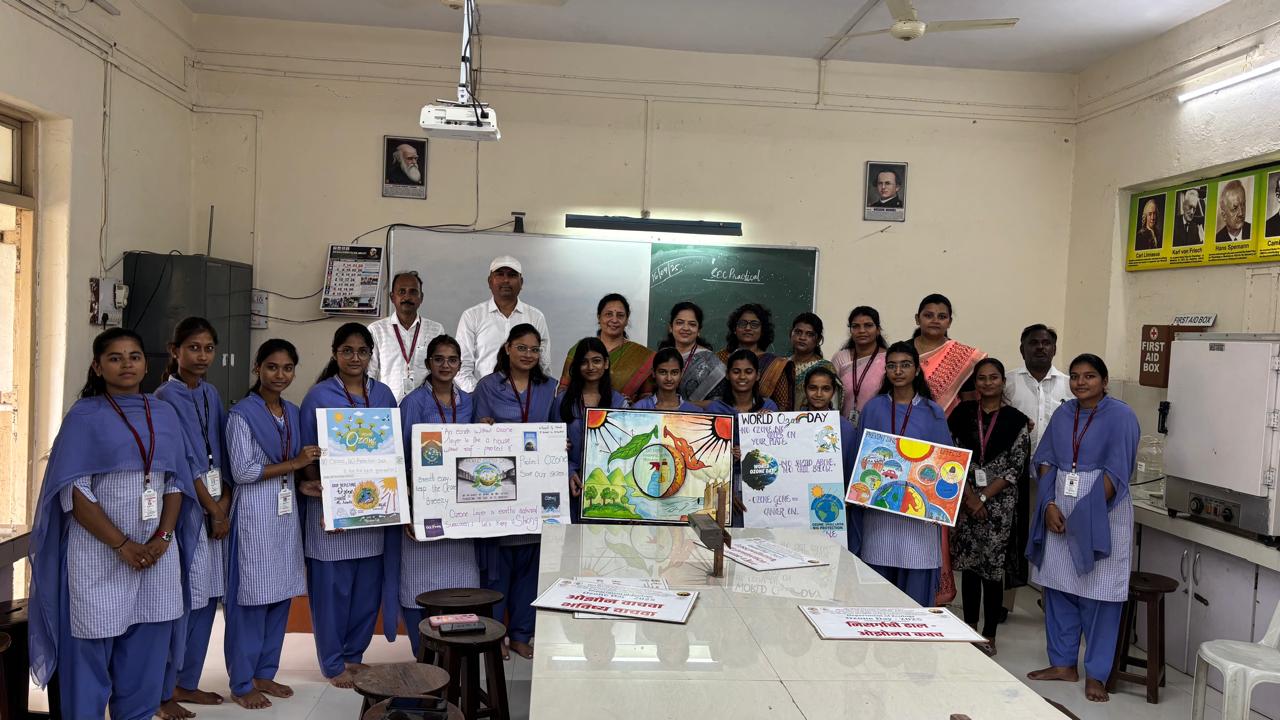 Participants with Department faculty members | 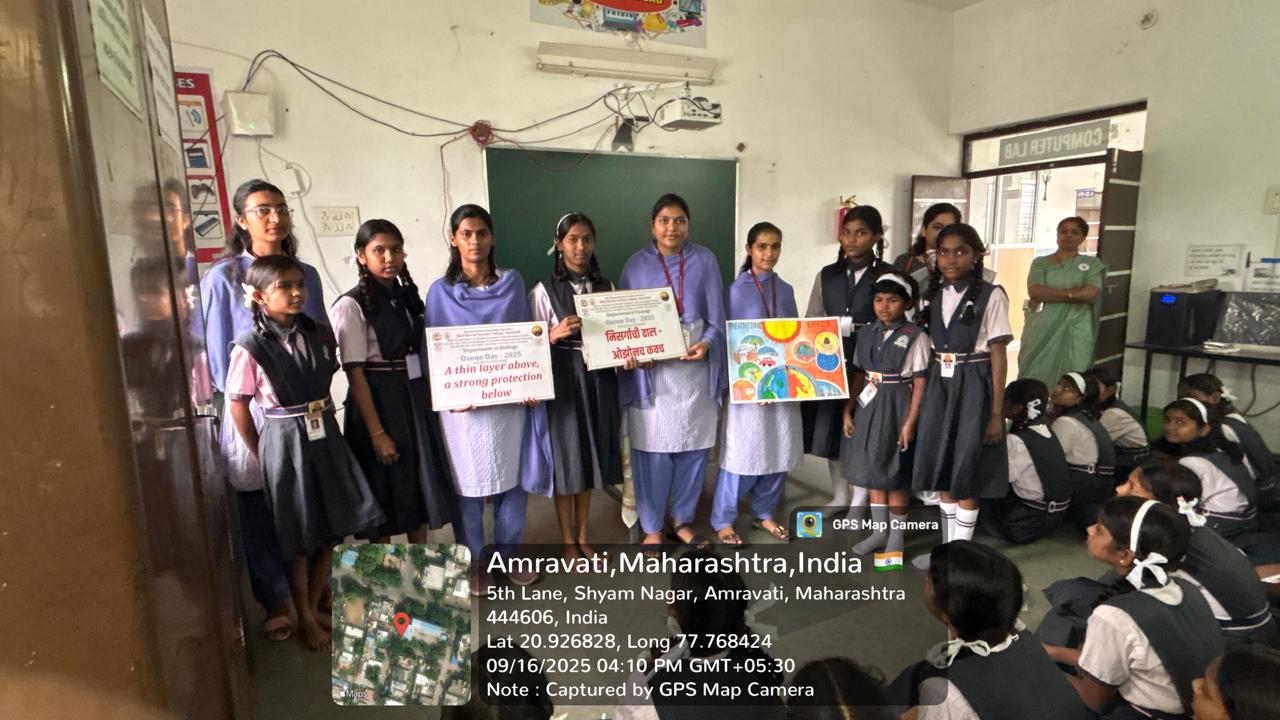 Awareness campaign in School on the occasion of Ozone Day |
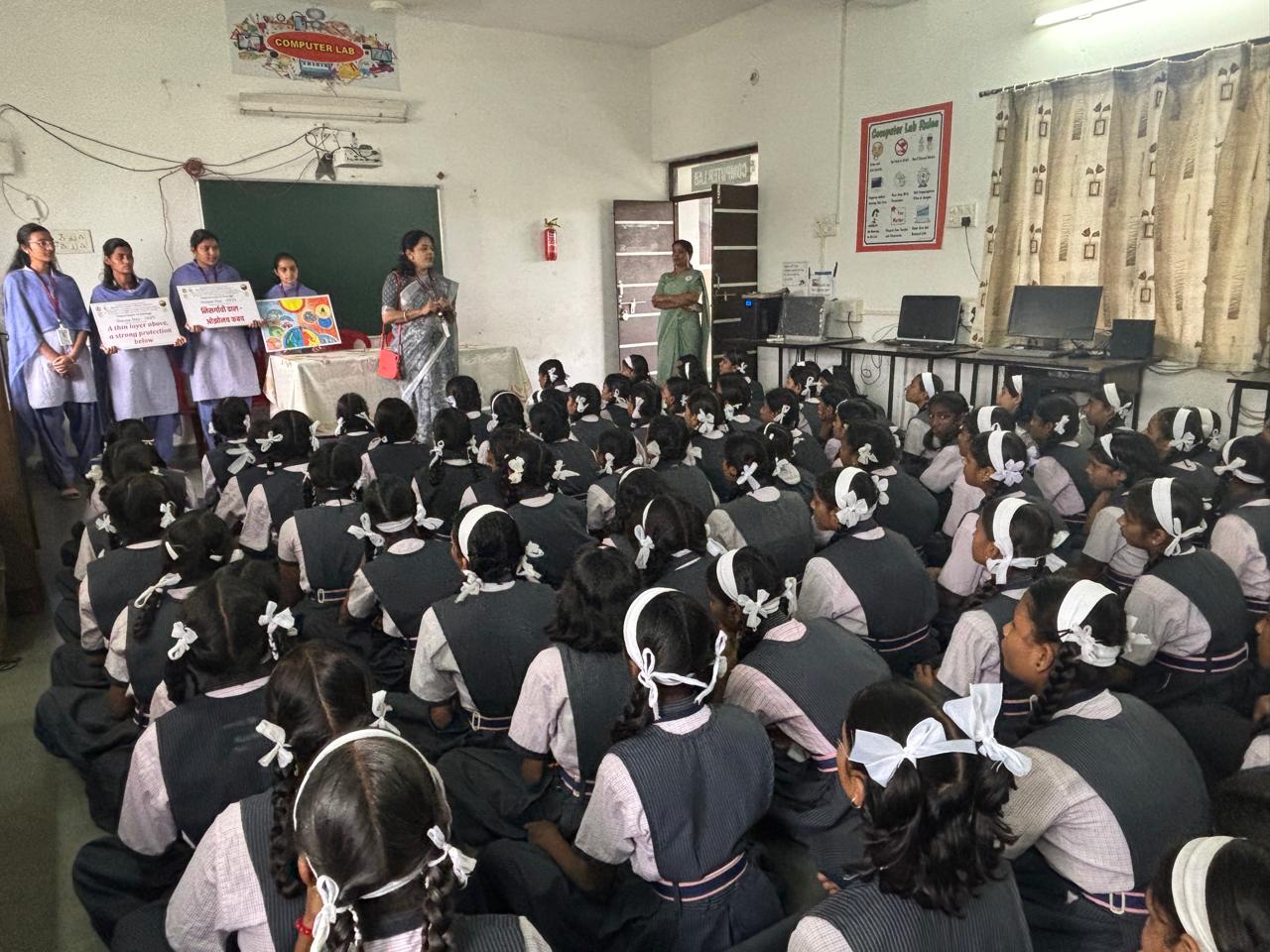 Activity In charge Dr. G.D. Hande giving idea about awareness campaign to the school students | 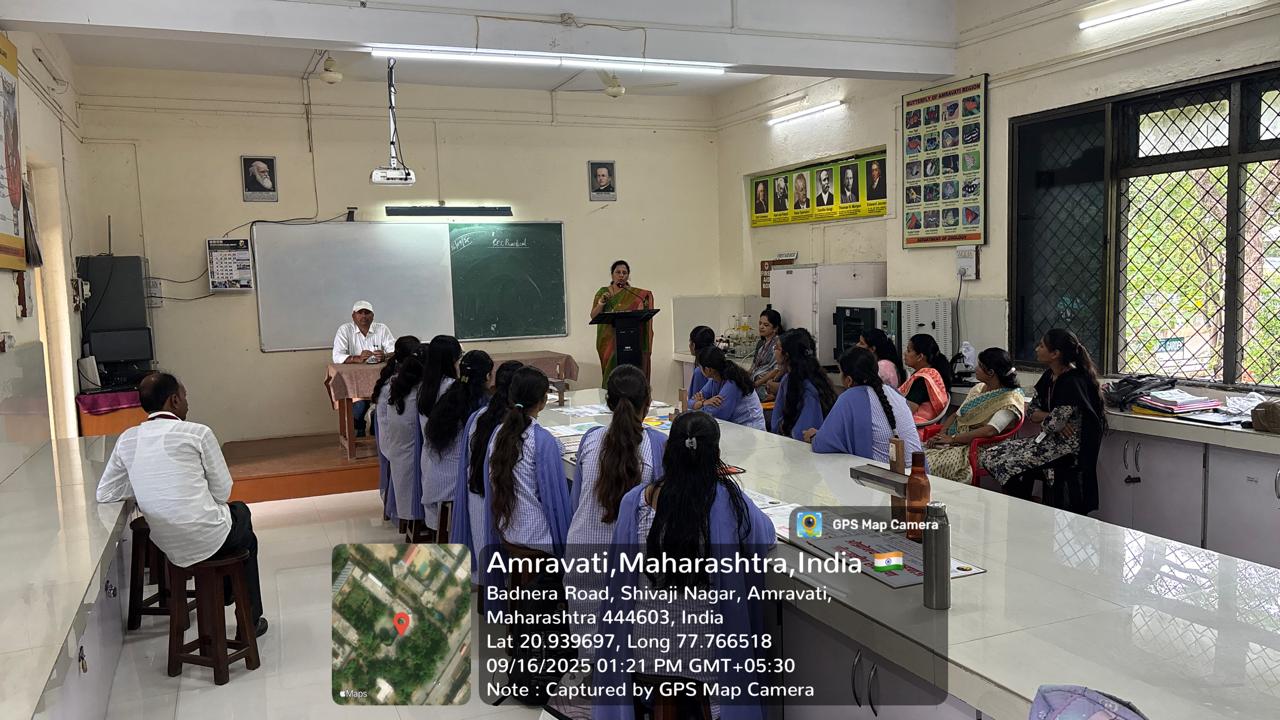 Dr. J.D. Dhote, Prof & Head department of Zoology delivering an inaugural address to participants |
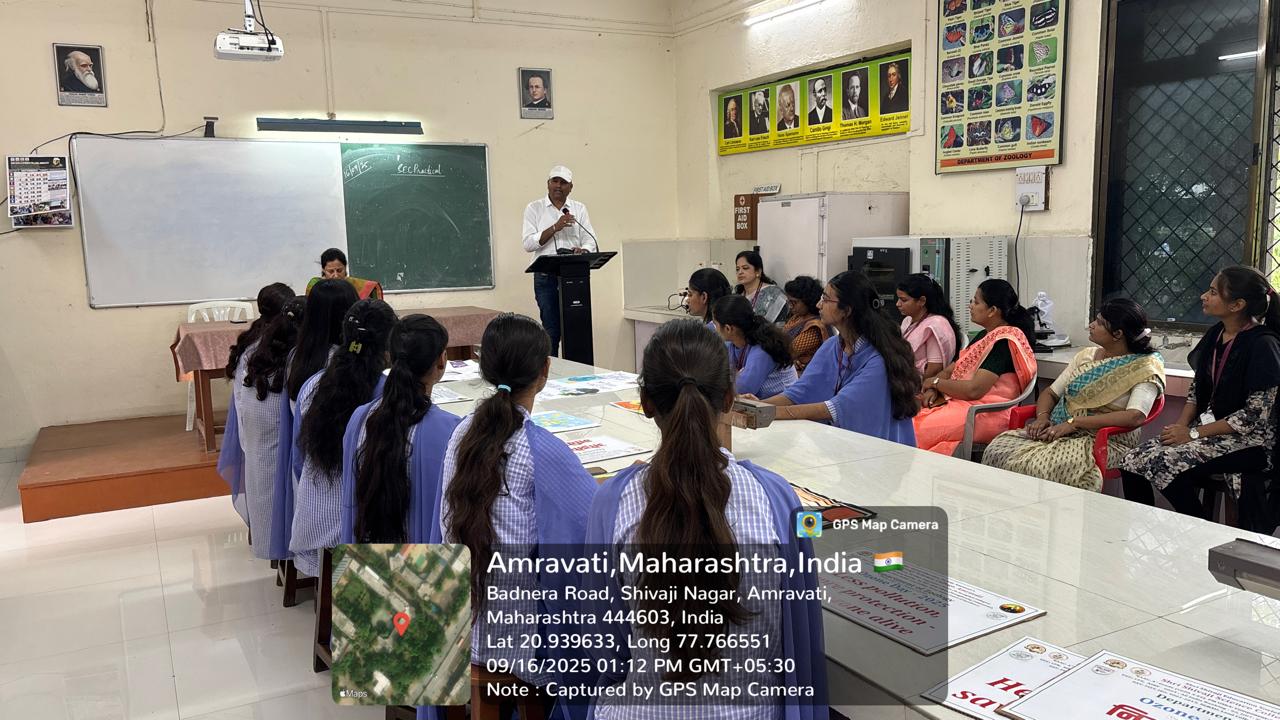 Dr. G.A. Wagh Dept. DBT Coordinator highlighted the harmful effects of Ozone depletion | 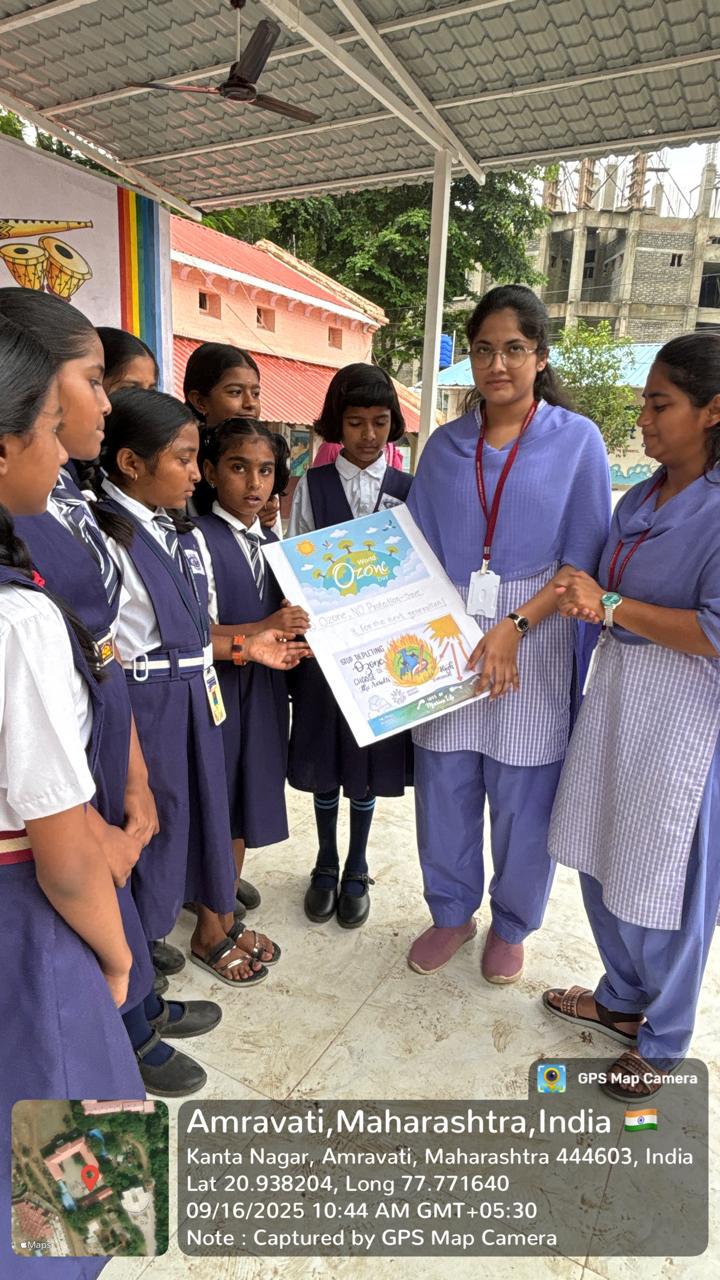 School students gaining knowledge about the importance of Ozone layer |
Attendance Sheet:
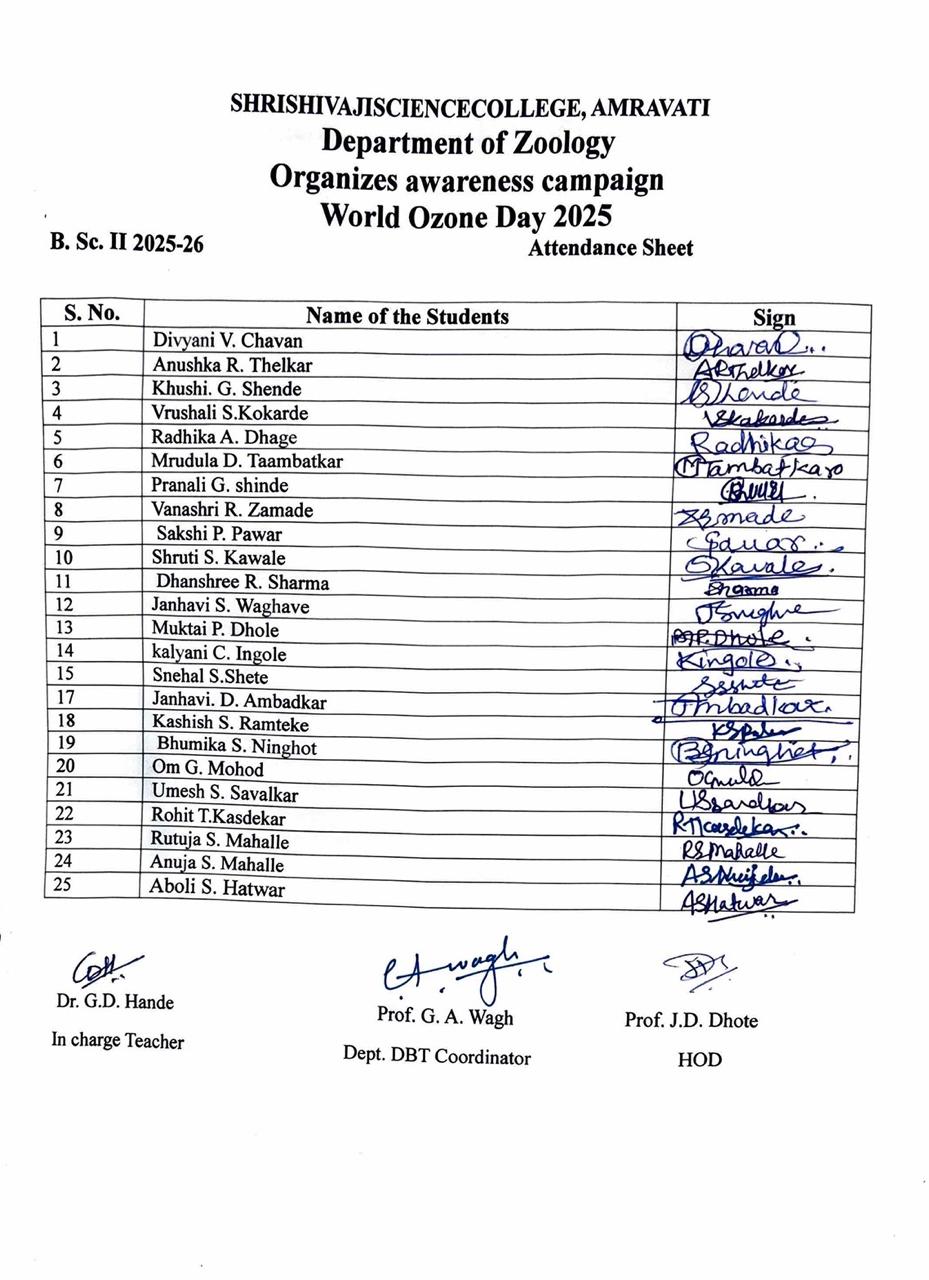 |