SHRI SHIVAJI SCIENCE COLLEGE, AMRAVATI
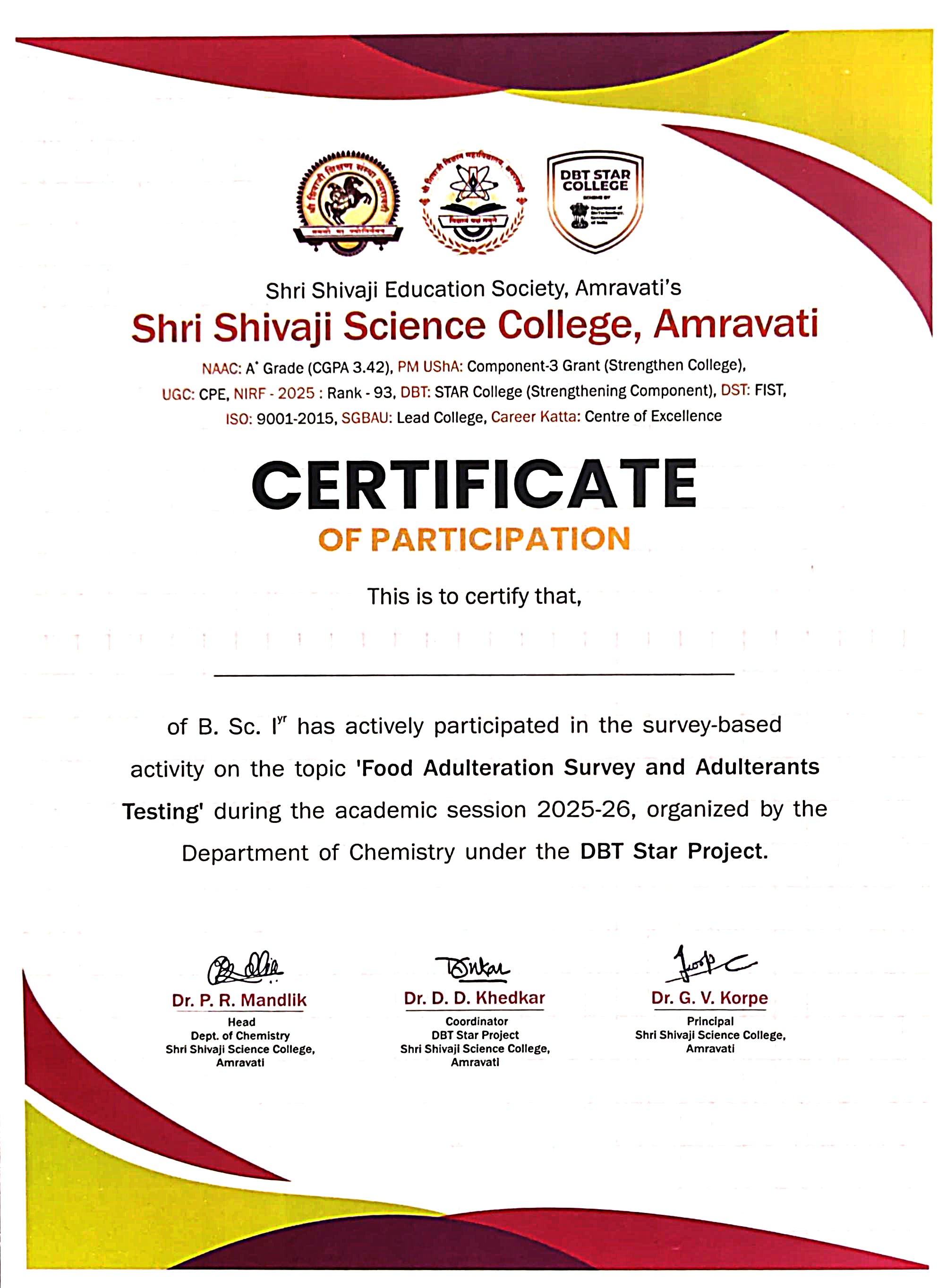
DBT STAR COLLEGE PROJECT ACTIVITY
ACTIVITY REPORT

Preparation of Food Adulteration Kits and Creating Awareness About Food Adulteration in Rural Areas
Activity Dates: Oct-Dec, 2025
Type of Activity: Outreach Activity
Organizing Department: Department of Chemistry
Program Coordinators: , Dr. N. A. Kalambe
Head of the Department: Dr. P. R. Mandlik
External Collaborator (if any): NIL
Objectives:
- To prepare simple and cost-effective food adulteration detection kits using basic chemicals and laboratory techniques.
- To identify common adulterants present in daily food items such as oil, spices, and sugar.
- To create awareness among rural communities about the harmful effects of food adulteration on health.
- To train students and villagers in using adulteration kits for quick and easy detection.
- To promote safe food practices and encourage the consumption of pure and unadulterated food.
No of Beneficieries: 50
Classes Involved: B.Sc-I
Venue of the Activity: Chemistry Lab & Pohrabandhi, Walgaon, Darapur, Murtizapur and Revasa
Activity Report:
Title: Preparation of Food Adulteration Kits and Creating Awareness About Food
Adulteration in Rural Areas
Objective:
To detect common food adulterants using simple testing kits and to create awareness among rural communities about the harmful effects of food adulteration.
Methodology:
Students prepared food adulteration detection kits in the chemistry laboratory using simple and easily available chemicals and materials. Using these kits, they tested common food items such as chilli powder, sugar, oil, turmeric powder, butter, and black pepper for possible adulterants.
Awareness campaigns were conducted in the villages of Pohrabandhi, Walgaon, Darapur, Murtizapur and Revasa through demonstrations and interactive sessions. People were educated about identifying adulterated food, health risks, and preventive measures.
Activities Conducted:
• Preparation of food adulteration testing kits in the laboratory
• Testing of food samples (chilli powder, sugar, oil, turmeric, butter, black pepper)
• Demonstration of adulteration tests
• Interaction with villagers and alert them regarding adulterations
Participants:
A total of 50 participants from B.Sc. First Year students actively participated in the activity.
Results and Impact:
The tests revealed the presence of adulteration in turmeric powder, chilli powder, and oil, while other samples showed no significant adulteration. Students and villagers became aware of the harmful effects of food adulteration on the human body, such as digestive problems, toxicity, and long-term health issues. The campaign increased awareness and encouraged people to check food quality before consumption. The campaign helped rural people to understand the importance of food safety. Participants learned simple methods to detect adulteration at home. Awareness regarding health hazards increased significantly.
Conclusion:
The project successfully combined laboratory learning with community outreach. It enhanced students’ practical knowledge and helped rural communities understand food safety and the health risks associated with adulterated food.
STATISTICALREPORTONFOOD ADULTERATIONSURVEY
1. INTRODUCTION
This academic report presents a comprehensive statistical analysis of food adulteration detected in five villages. The survey covered seven essential food items: Sugar, Turmeric, Chili Powder, Black Pepper, Butter/Fat, Edible Oil, and Ghee. Families from each village were sampled to examine the presence of adulteration using standardized testing procedures.
2. METHODOLOGY
Data were collected from five villages with varying sample sizes. For each family,food items were tested for adulteration. Binary classification (1=adulterated, 0=non-adulterated) was used for each food item. Descriptive statistics, weighted analysis, cross-tabulation, and graphical visualization were applied.
3. DATA SUMMARY
The number of families surveyed in each village was as follows:
Village Name Number of families
Revsa 28
Darapur 11
Pohrabandhi 15
Murtijapur 3
Walgaon 11
A binary adulteration matrix was constructed to evaluate the presence of adulteration across villages and food items.
Village Sugar Turmeric Chili Powder Black Pepper Butter/Fat Edible Oil Ghee
Revsa 0 1 1 0 0 1 0
Darapur 0 1 1 0 0 1 0
Pohrabandhi 1 1 1 0 0 1 0
Murtijapur 0 1 1 0 0 1 0
Walgaon 0 1 1 0 0 1 1
4. STATISTICAL ANALYSIS
Adulteration Frequency
Turmeric, Chili Powder, and Edible Oil were adulterated in all five villages, demonstrating wide spread contamination. Sugar and Ghee were adulterated only in one village each, while Black Pepper and Butter/Fat showed no adulteration.
Survey Distribution
Revsa village had the largest sample size (28families), while Murtijapur village had the smallest(3families). Unequal sample sizes were considered in interpretation to avoid biased conclusions.
Adulteration Profile per Village
Walgaon and Pohrabandhi displayed the highest diversity of adulterated items. The stacked barchart below presents the adulteration burden per village across all food items.
5. CONCLUSION
• Thesurveyrevealssignificantadulterationincommonlyusedspicesandoilsacrossallvillages.A consistent pattern of adulteration in Turmeric, Chili Powder, and Edible Oil highlights systemic issues in local food supply chains.
• Recommendations include stricter monitoring, public education on food testing, and regulatory interventions to ensure consumer safety.
Outcomes:
- Students and participants will gain practical knowledge of detecting food adulteration.
- Increased awareness in rural areas about food safety and health risks associated with adulterated food.
- Ability among villagers to independently test food items using simple kits.
- Reduction in the consumption of adulterated food through informed decision-making.
- Development of scientific thinking and community engagement among students.
Photos:
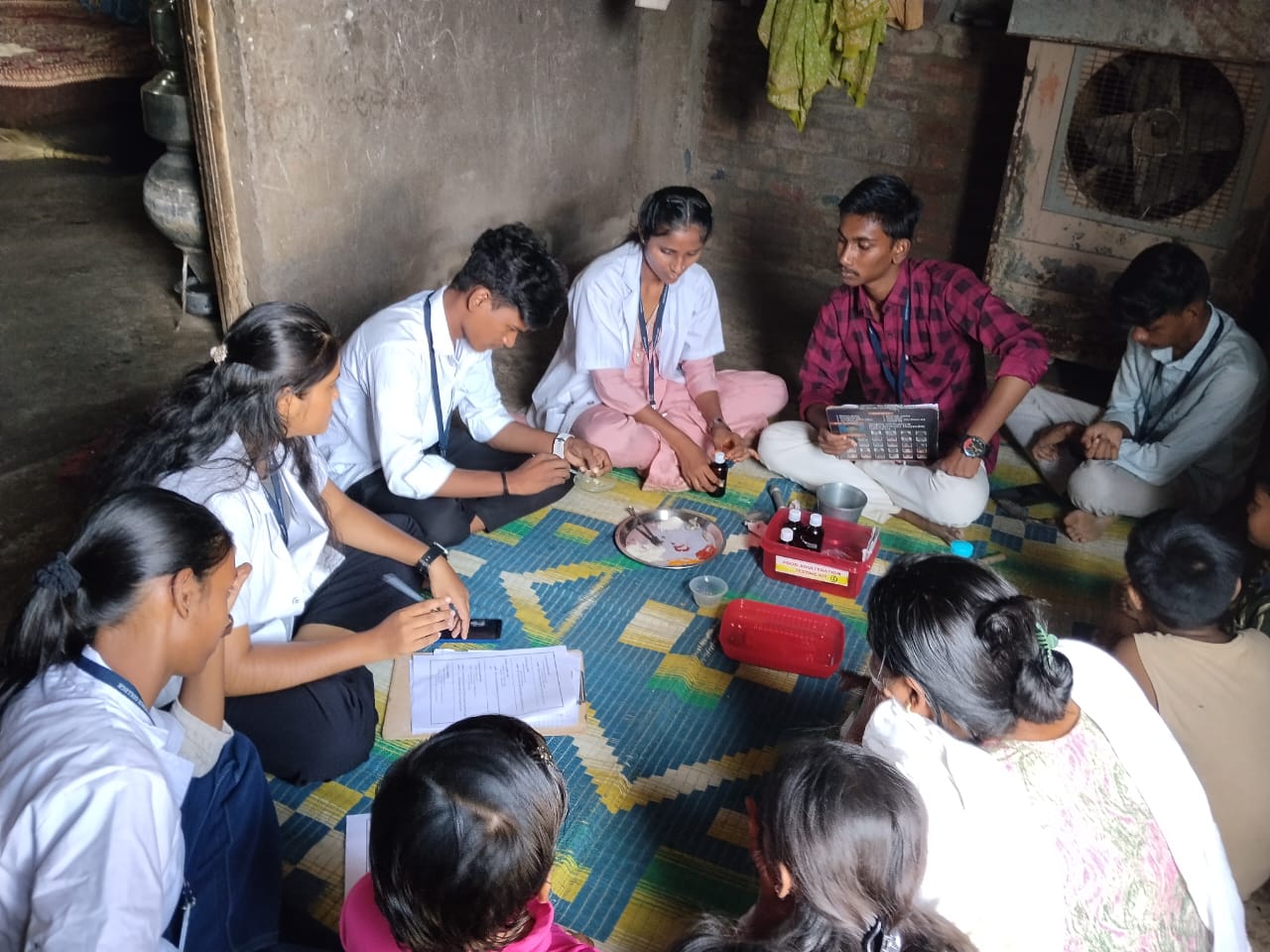 ACTIVITY PIC-1 | 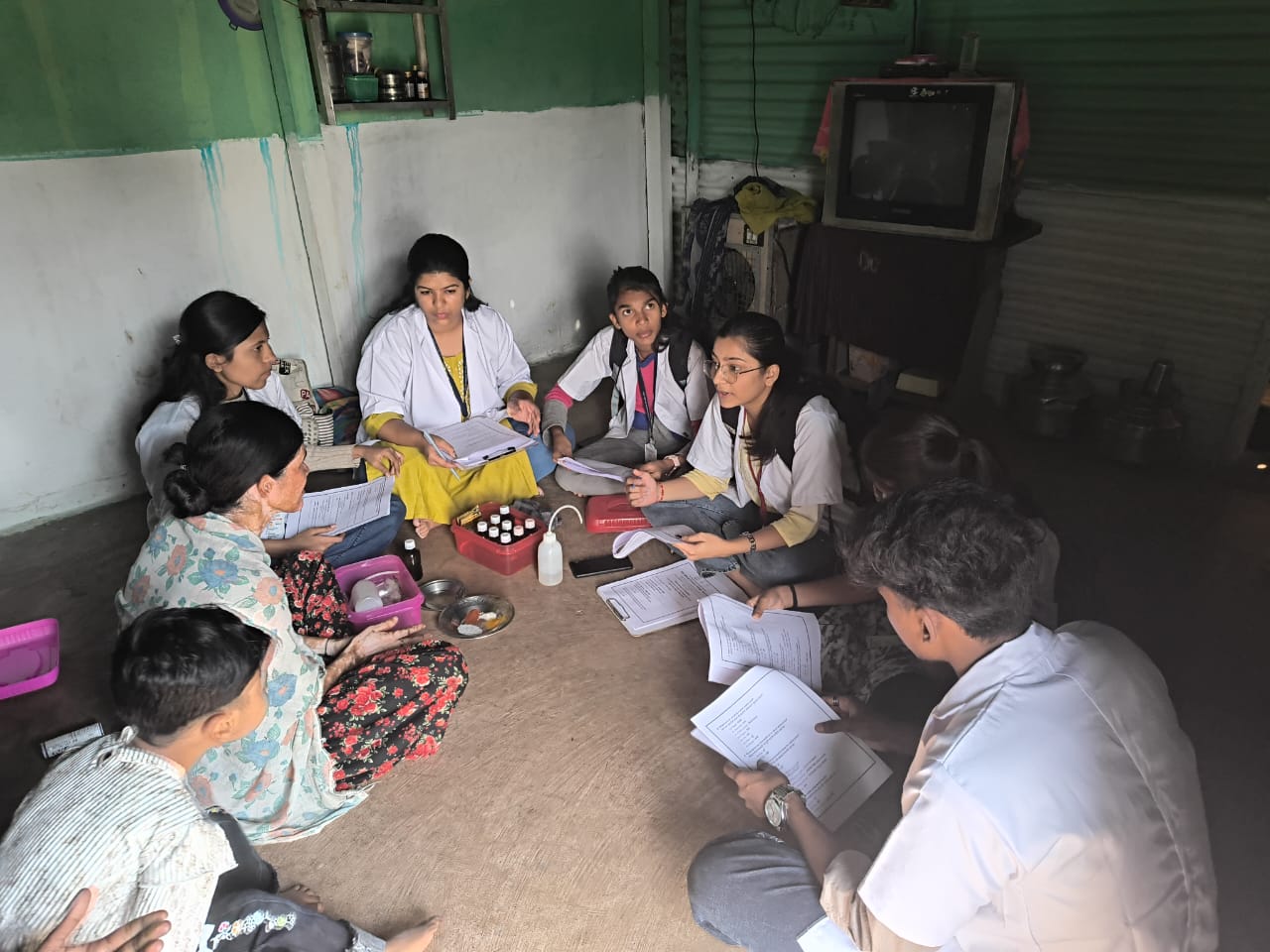 ACTIVITY PIC-2 |
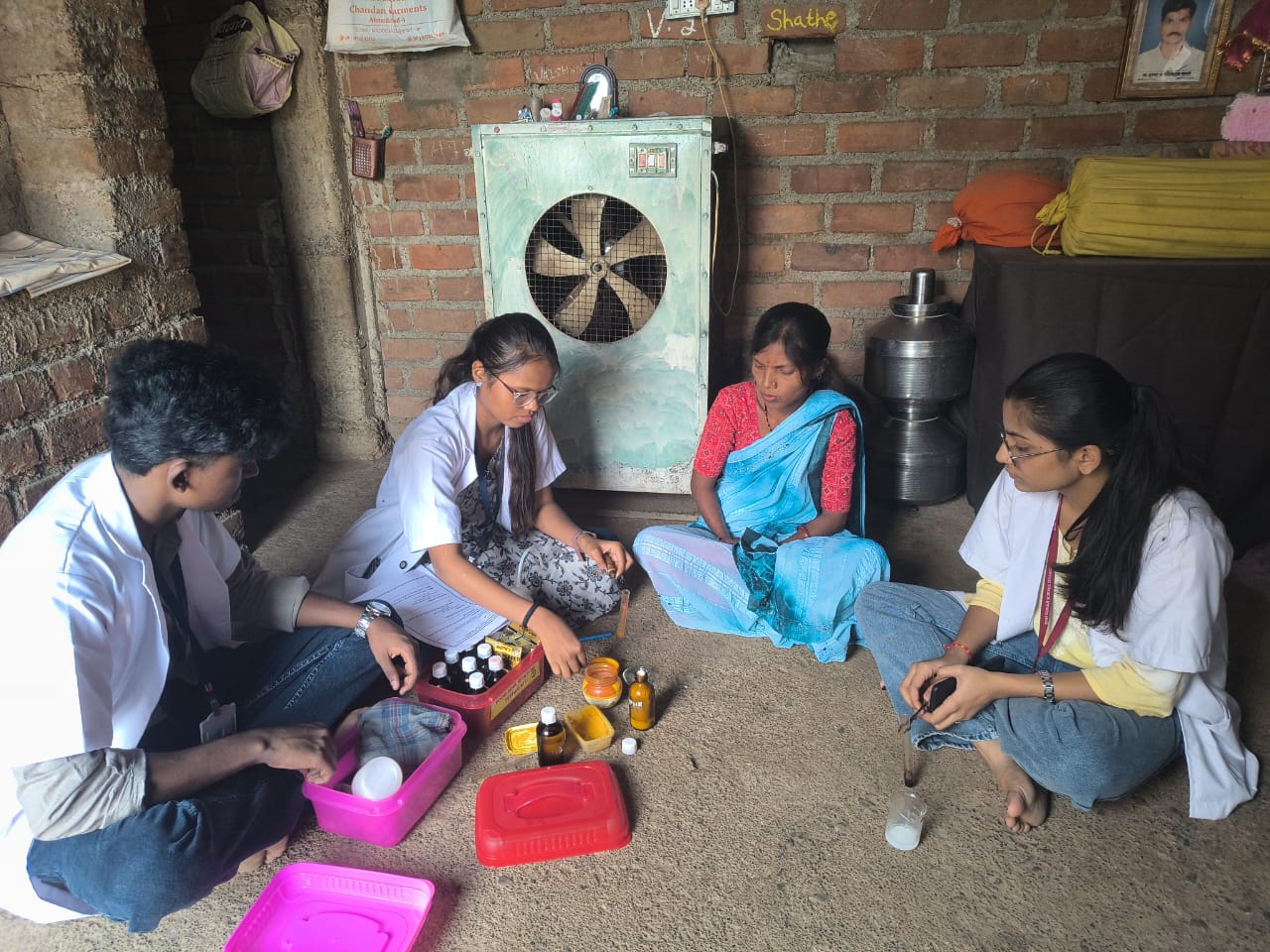 ACTIVITY PIC-3 | 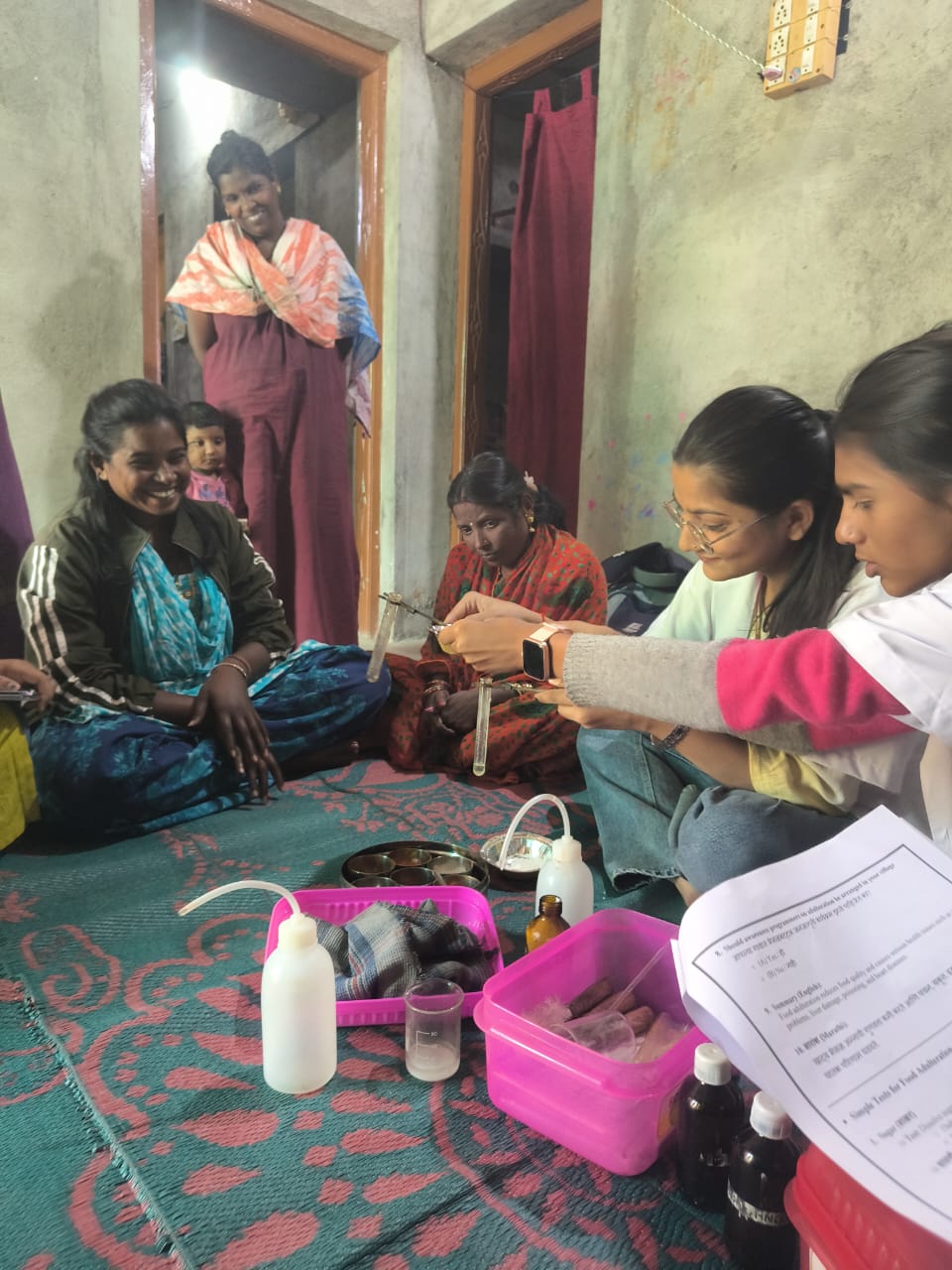 ACTIVITY PIC-4 |
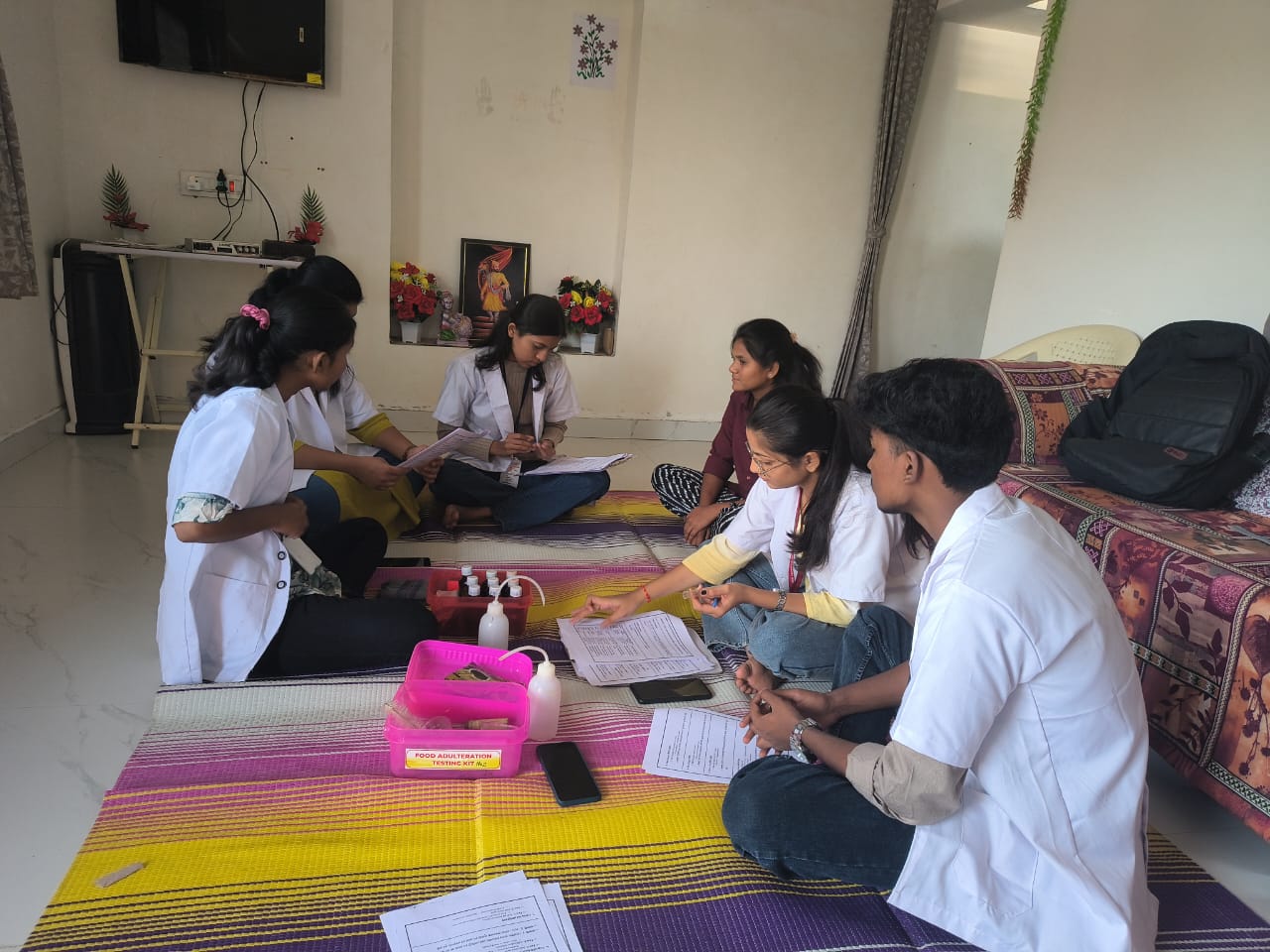 ACTIVITY PIC-4 | 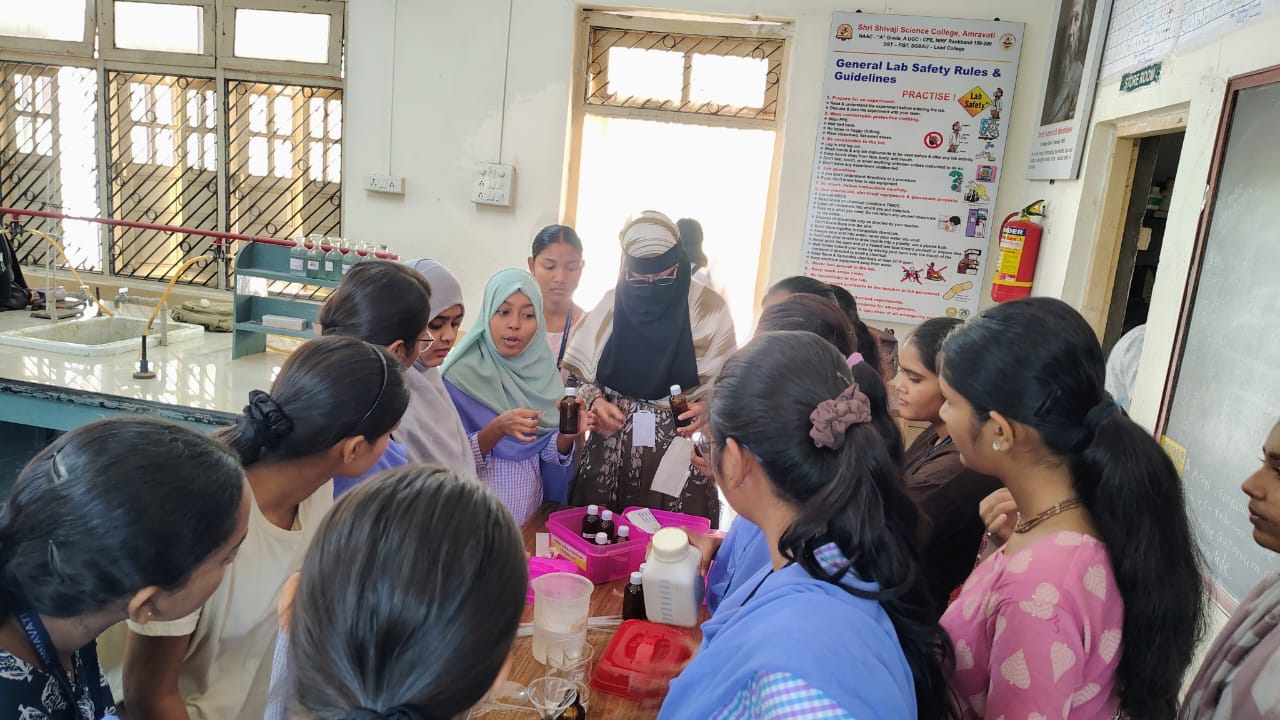 Chemistry Lab Pic Preparation OF Adulteration KIT |
Attendance Sheet:
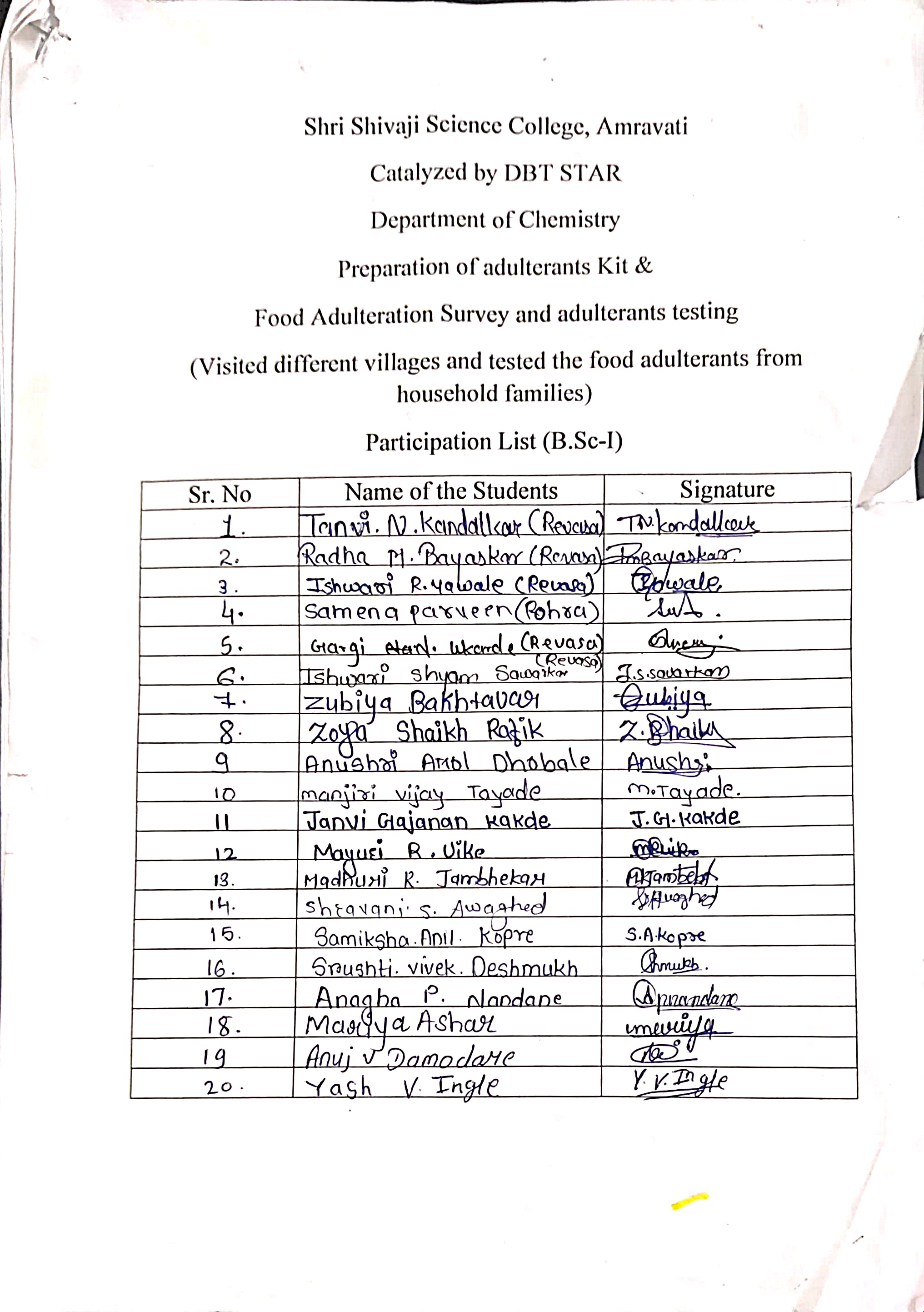 |
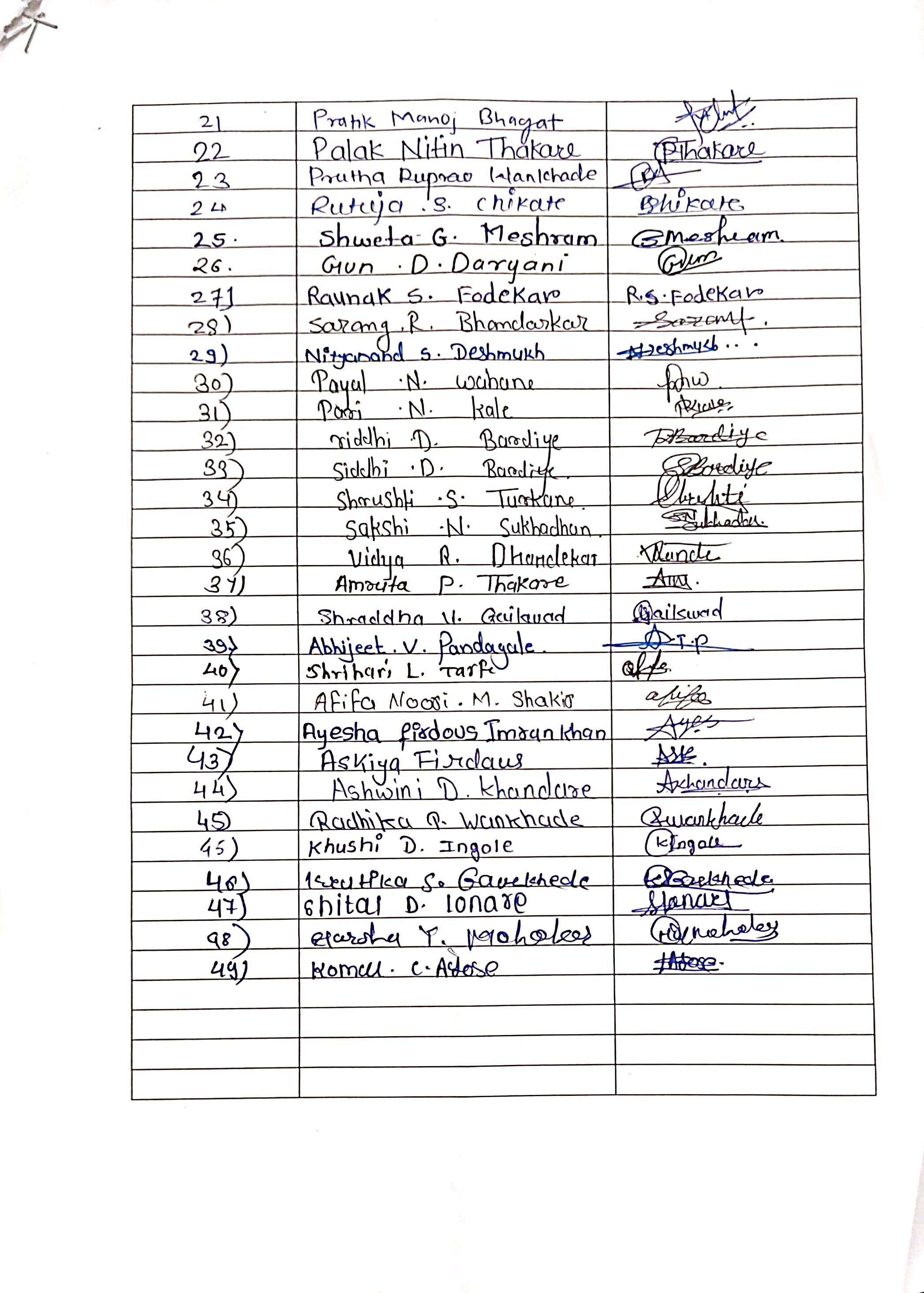 |
 |