SHRI SHIVAJI SCIENCE COLLEGE, AMRAVATI
DBT STAR COLLEGE PROJECT ACTIVITY
ACTIVITY REPORT

Design, Fabrication ,and Performance Evaluation of an Eco-Friendly Aloe Vera Based Bio-Battery
Activity Dates: Feb to march 26
Type of Activity: Minor Research Project
Organizing Department: Department of Environmental Science
Program Coordinators: Dr. S. P. Ingole
Head of the Department: Dr. S. P. Ingole
External Collaborator (if any): no
Objectives:
- 1. To design an eco-friendly bio-battery using Aloe vera as a natural electrolyte source.
- 2. To fabricate the bio-battery using suitable electrodes and biodegradable materials.
- 3. To evaluate the voltage, current, and power output of the developed bio-battery.
- 4. To study the performance stability and efficiency of the battery under different operating conditions.
- 5. To assess the environmental benefits and potential applications of the Aloe vera based bio-battery as an alternative energy source.
No of Beneficieries: 02
Classes Involved: B.Sc. III year CEB and CEZ
Venue of the Activity: -
Activity Report:
INTRODUCTION
The development of batteries dates back to the late 18th century when the first electrochemical cell was invented by Alessandro Volta in 1800. His invention, known as the voltaic pile, marked the beginning of modern electrochemistry and demonstrated that electrical energy could be generated through chemical reactions [22]. This discovery laid the foundation for subsequent advancements in battery technology. Over time, various types of batteries were developed, including lead-acid batteries, nickel-cadmium batteries, and lithium-ion batteries, each offering improved efficiency and energy storage capacity. However, despite their technological advancements, these conventional batteries rely heavily on toxic and non-biodegradable materials, which pose serious environmental and health hazards [3].
Bio-batteries operate on the same fundamental principle as conventional electrochemical cells. An electrochemical cell consists of two electrodes (anode and cathode) immersed in an electrolyte solution. Oxidation occurs at the anode, releasing electrons, while reduction takes place at the cathode. The flow of electrons through an external circuit produces electrical current. The major distinction between conventional batteries and bio-batteries lies in the nature of the electrolyte and active materials used. In bio-batteries, these components are derived from natural, biodegradable sources.
METHODOLOGY
The present study is experimental in nature and aims to develop and evaluate an eco- friendly Aloe vera-based bio-battery. The research design involves preparation of a natural electrolyte, construction of a simple electrochemical cell, measurement of electrical parameters, and performance evaluation under controlled laboratory conditions. The methodology is structured to assess the feasibility, stability, and environmental compatibility of Aloe vera gel as a bio-electrolyte.
Study Area
The experimental work was carried out in the Environmental Science Laboratory of Shri Shivaji Science College, Amravati. The laboratory environment was maintained at room temperature (approximately 25–30°C) to ensure consistent electrochemical reactions.
All experiments were conducted on a clean laboratory platform with proper electrical safety measures.
Materials Required
The following materials were used for the experimental setup:
• Fresh Aloe vera leaves
• Zinc plate/strip (Anode)
• Copper plate/strip (Cathode)
• Digital multimeter
• Connecting wires with crocodile clips
• 250 ml and 100 ml glass beakers
• Knife and stainless steel spoon
• Muslin cloth/filter paper
• Distilled water
• Sandpaper
• Thermometer
• Measuring scale
• Weighing balance (if required)
Preparation of Aloe Vera Electrolyte
Step 1: Selection and Collection
Mature and healthy Aloe vera leaves were selected from locally cultivated plants. Leaves free from fungal infection and physical damage were chosen to ensure high- quality gel extraction.
Step 2: Washing and Cleaning
The leaves were washed thoroughly with distilled water to remove dust and surface contaminants. This step was necessary to prevent external impurities from interfering with electrochemical reactions.
Step 3: Gel Extraction
Using a sterilized knife, the outer green rind was carefully removed. The inner transparent gel was scooped out using a stainless steel spoon and transferred into a clean beaker.
Step 4: Homogenization
The extracted gel was gently stirred to obtain a uniform consistency. No chemical additives or preservatives were introduced to maintain the natural properties of the gel.
Step 5: Filtration
The gel was filtered through muslin cloth to remove fibrous particles. This produced a semi-liquid, smooth electrolyte medium.
Step 6: Physicochemical Observation
The pH of the gel was measured using pH paper to determine its acidic or neutral nature. The temperature of the gel was also noted. These parameters influence ionic mobility and electrochemical performance.
Preparation of Electrodes
Step 7: Cleaning of Electrodes
Zinc and copper strips were cleaned using sandpaper to remove oxide layers. Oxide layers may reduce conductivity and affect electron transfer efficiency.
Step 8: Surface Area Standardization
The electrodes were cut into uniform size to maintain consistency across trials. The surface area exposed to the electrolyte was measured and kept constant.
Step 9: Labeling
The zinc electrode was labeled as the anode and the copper electrode as the cathode to avoid confusion during repeated experiments.
Construction of Bio-Battery
Step 10: Placement of Electrolyte
The filtered Aloe vera gel was poured into a clean 250 ml beaker.
Step 11: Insertion of Electrodes
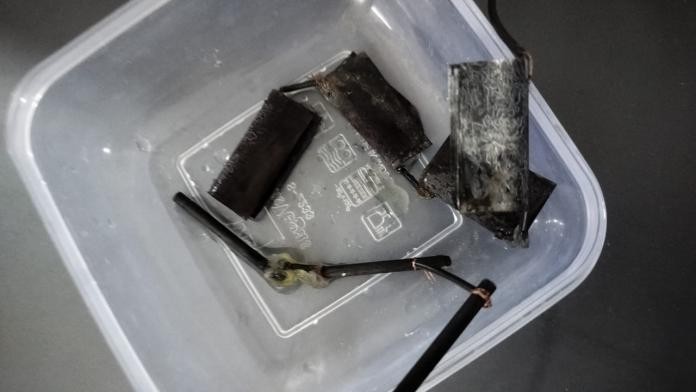
The zinc and copper electrodes were inserted vertically into the gel, ensuring they did not come into direct contact. Direct contact would cause short-circuiting and inaccurate readings.
Step 12: Maintaining Electrode Distance
A fixed distance (approximately 2–3 cm) was maintained between electrodes using a measuring scale. This helps control internal resistance.
Step 13: Electrical Circuit Completion
The electrodes were connected to a digital multimeter using insulated connecting wires. Proper contact was ensured to avoid fluctuation in readings.
Principle of Operation
The Aloe vera bio-battery operates based on redox reactions occurring between zinc and copper electrodes.
At the anode (Zinc), oxidation occurs:
Zn → Zn²⁺ + 2e⁻
At the cathode (Copper), reduction occurs:
2H⁺ + 2e⁻ → H₂
The Aloe vera gel acts as a natural electrolyte containing ions that facilitate internal charge transfer. The electrons released at the anode travel through the external circuit to the cathode, producing measurable voltage.
Measurement Procedure
Step 14: Open-Circuit Voltage Measurement
The multimeter was set to DC voltage mode. The initial voltage was recorded immediately after connecting the circuit.
Step 15: Time-Dependent Study
Voltage readings were recorded at regular intervals: 5 minutes
10 minutes
20 minutes
30 minutes
1 hour
This helped in analyzing stability and discharge behavior.
Step 16: Current Measurement
A small resistor was connected to measure current flow. The current values were recorded in milliampere (mA).
Step 17: Repetition
The experiment was repeated three times using fresh Aloe vera gel to ensure reliability and reproducibility.
Experimental Variables
The following variables were monitored:
• Electrode distance
• Surface area of electrodes
• Temperature
• Gel concentration
• Freshness of gel
Each variable was kept constant during individual trials to minimize error.
Data Recording and Graphical Analysis
All readings were tabulated systematically. A Voltage vs Time graph was plotted to observe discharge pattern. The average voltage from repeated trials was calculated to determine consistency.
OBSERVATION AND RESULT
The experimental setup of the Aloe vera based bio-battery was carefully observed under different conditions to evaluate its electrical performance. Fresh Aloe vera gel was used as a natural electrolyte, and zinc and copper electrodes were inserted into the gel at a fixed distance.
Initially, when the electrodes were placed in freshly extracted gel, a low voltage output was observed. This indicates that Aloe vera gel acts as a weak electrolyte but is capable of initiating electrochemical reactions between the electrodes.
Further observations were made by adjusting the electrode distance, improving the contact surface area, and ensuring proper electrical connections. It was noticed that the voltage output gradually increased with better system alignment and stability.
After conditioning of the setup and maintaining proper connections, a significant increase in voltage was observed. The system was also tested by connecting it to a low- power LED strip, which successfully glowed, confirming the practical applicability of the bio-battery.
Observation Table: 4.1 : Voltage Variations during Experimental Setup
S.r No Experimental Condition Voltage(V)
1. Initial Reading (Fresh Aloevera Gel) 0.95V
2. After Proper Electrode Placement 1.20 V
3. After Optimization Of Electrode Distance 2.50 V
4. After Conditioning/ Improved Setup 8.45 V
Table : 4.2:Time Vs Voltage (LED ON Condition )
Time (Minutes) Volage(V)
0 8.45V
5 8.10V
10 7.80V
15 7.40V
20 7.00
25 6.60
30 6.20
GRAPH :4.1 (Time vs Voltage)
Observation Table : 4.3: Voltage Variations with Aloevera Quantity
Sr.NO Aloevera Gel (Litre) No. of Cells (Zn-Cu Pairs) Voltage (V)
1 1L 4 pairs 8.4 V
2 2L 8 pairs 16.8 V
3 3L 12 pairs 25.2 V
4 4L 16 pairs 33.6 V
5 5L 20 pairs 42.0 V
GRAPH:4.2:Voltage and Variation
It was observed that the voltage output increases with increase in the quantity of Aloe vera gel and number of electrochemical cells. Each zinc–copper pair contributes to the overall voltage, and when connected in series, the total voltage increases proportionally. This indicates that scaling the system by increasing the number of cells can significantly enhance the output voltage of the bio-battery.
CONCLUSION
Discussion
The present study focuses on the development and evaluation of an eco-friendly Aloe vera based bio-battery system using zinc and copper electrodes. The experimental observations clearly indicate that Aloe vera gel can act as a natural electrolyte and support electrochemical reactions necessary for the generation of electrical energy.
Outcomes:
- 1. The Aloe vera based bio-battery was successfully designed and fabricated using eco-friendly materials.
- 2. The developed battery generated measurable voltage and current, demonstrating its energy-producing capability.
- 3. Performance evaluation showed stable operation for a certain duration under test conditions.
- 4. The study confirmed that natural electrolytes like Aloe vera can be used for low-power energy applications.
- 5. The project highlighted the potential of bio-batteries as sustainable, biodegradable, and environmentally friendly alternatives to conventional batteries.
Photos:
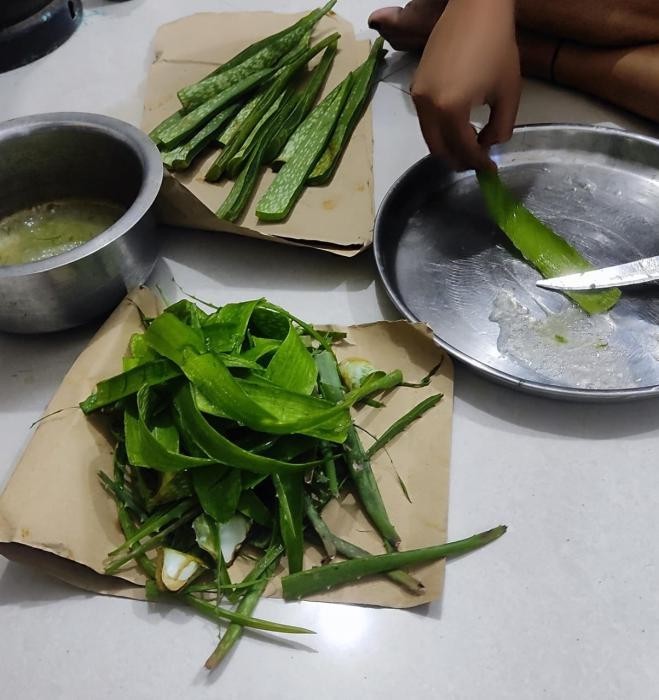 Extraction Of Aloevera Gel | 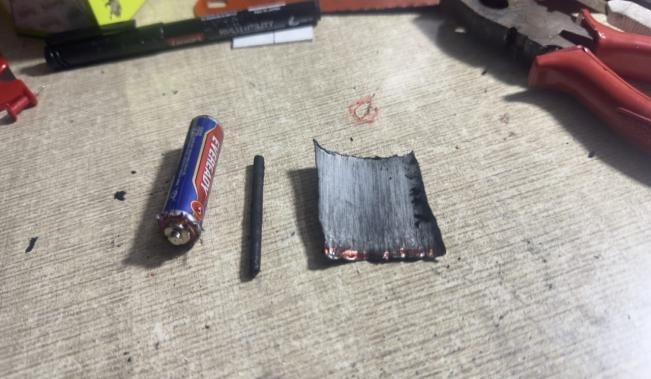 Preparation of Bio-Battery Model |
 Preparation of Bio-Battery Model | 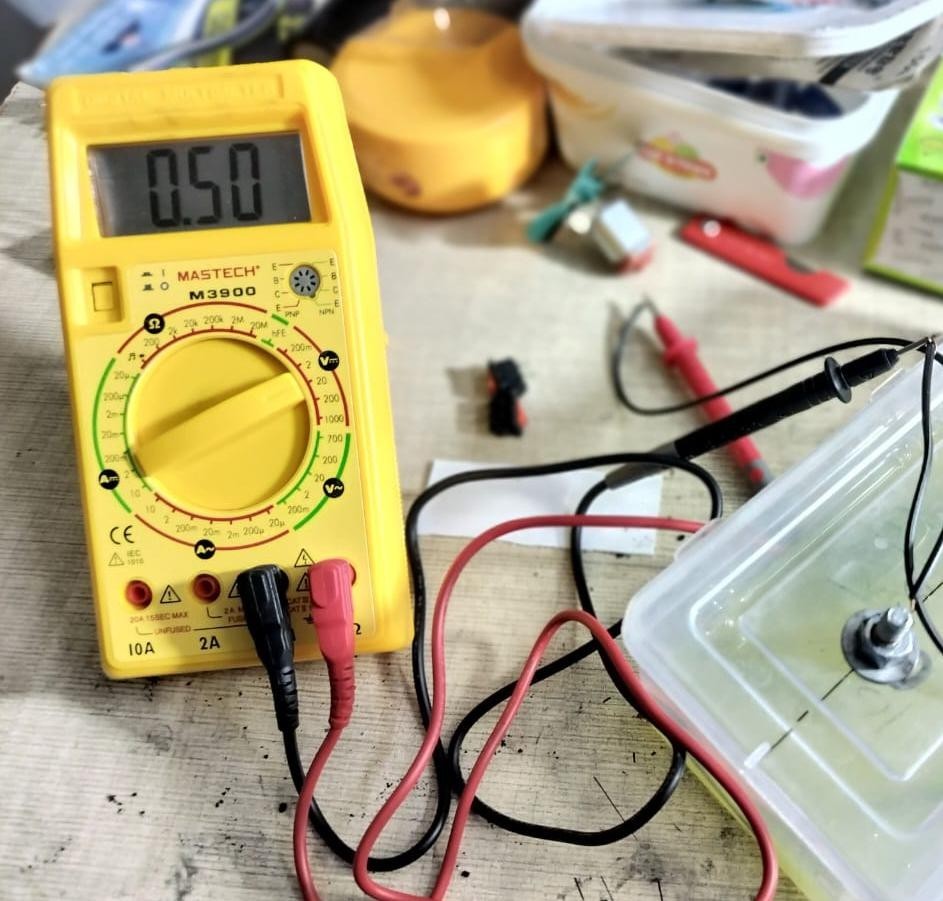 Initial Voltage Measurement |
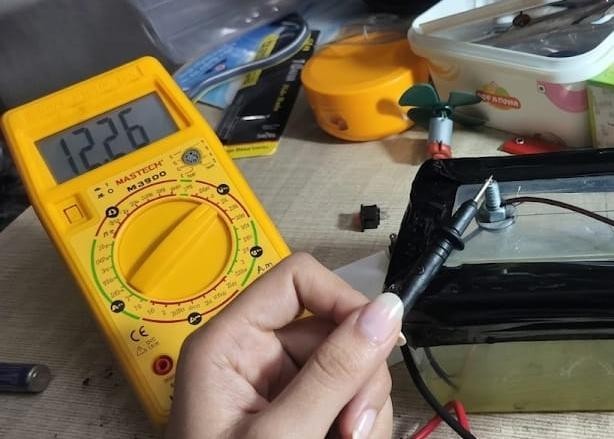 Final Voltage MFinal Working Modeleasurement | 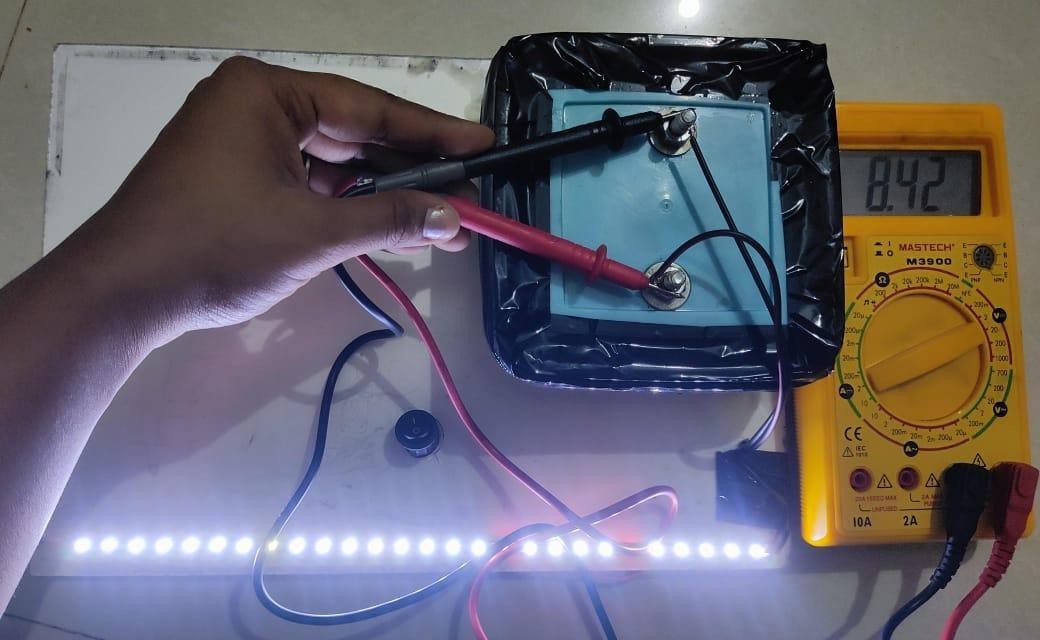 Final Voltage Measurement |
Attendance Sheet: