SHRI SHIVAJI SCIENCE COLLEGE, AMRAVATI
DBT STAR COLLEGE PROJECT ACTIVITY
ACTIVITY REPORT

Development of of natural herbal hair dye and comparative evaluation with marked product
Activity Dates: Feb to March 2026
Type of Activity: Minor Research Project
Organizing Department: Department of Environmental Science
Program Coordinators: Mr. V. D. Bute
Head of the Department: Dr. S. P. Ingole
External Collaborator (if any): No
Objectives:
- 1. To formulate a natural herbal hair dye using plant-based ingredients such as henna, indigo, amla, shikakai, bhringraj, and neem.
- 2. To evaluate the physicochemical properties of the prepared herbal hair dye including pH, moisture content, ash value, and loss on drying.
- 3. To study the microbiological stability by assessing microbial load and fungal growth during storage.
- 4. To compare the stability, quality, and performance of the herbal hair dye with a marketed product.
- 5. To estimate the shelf life and storage stability of the herbal hair dye under accelerated conditions.
No of Beneficieries: 02
Classes Involved: B.Sc. III year CEB and CEZ
Venue of the Activity: -
Activity Report:
INTRODUCTION
People around the world consider hair to be an important aspect of their personality. We use hair to express our personality to match, to make a statement, to help us feel good, to attract other people. Our hair is perhaps our most distinctive feature. Hair can be styled, colored and, if properly cared for, can shine with “health”. On an average, each person’s head contains between 1,00,000 and 1,50,000 hair follicles. You can change the length, shape, color and style of the hair depending on the age you want to appear. Ethnic differences in hair color are as obvious as hair types. The main types are black, brown, red and blonde. Indian hair color can range from black to pale blonde, and every shade in between.
MATERIAL AND METHODOLOGY
This chapter outlines the materials used and the methodology adopted to carry out the present study. It provides a clear description of the research design, data collection techniques, and procedures followed to ensure the accuracy and reliability of the results.
Herbal Raw Materials
The herbal ingredients were selected based on their traditional use in hair coloring, hair strengthening, antimicrobial activity, and scalp health.
• Henna (Lawsonia inermis) leaves – primary natural coloring agent.
• Indigo (Indigofera tinctoria) leaves – for dark brown to black shades
• Amla (Emblica officinalis) fruit powder – improves color fixation and hair health
• Shikakai (Acacia concinna) pods – natural cleanser and foaming agent
• Bhringraj (Eclipta alba) leaves – promotes hair strength and color retention
• Neem (Azadirachta indica) leaves – antimicrobial and scalp-protective agent
All raw materials should be of herbal/pharmacopoeial grade and free from synthetic dyes or chemical additives.
Chemicals and Reagents
All chemicals used were of pharmacopoeial or analytical grade.
o Distilled water – vehicle and extraction medium
o Ethanol (95%) – extraction and cleaning
o Sodium hydroxide – pH adjustment
o Hydrochloric acid – analytical testing
o Buffer solutions (pH 4.0, 7.0, 9.0) – calibration
o Nutrient agar – bacterial culture
o Sabouraud dextrose agar – fungal culture
o Sodium chloride – microbial dilution media
Instruments and Equipment
Instruments Purpose
Analytical Balance Accurate weighing of ingredients
Grinder Powdering of herbal materials
Sieve No. 60 Uniform particle size
Hot air oven Drying and moisture analysis
Digital PH meter pH measurement
UV- visible spectrophotometer Color intensity measurement
Incubator Microbial studies
Autoclave Sterilization
Stability chamber Stability testing
Methodology
Standardization of Raw Materials
a) Organoleptic Evaluation
Each powdered drug was evaluated for:
• Color
• Odor
• Taste
• Texture
This provides a preliminary quality assessment and helps detect adulteration.
b) Physicochemical Evaluation
The following parameters were determined as per WHO/IP guidelines:
• Loss on drying – to determine moisture content
• Total ash value – to assess total inorganic matter
• Acid-insoluble ash – to detect siliceous matter
• Water-soluble extractive value – to assess soluble constituents
c) Preparation of Herbal Powders
• Collected plant materials were thoroughly washed with water to remove dirt and impurities.
• Materials were shade dried to preserve active constituents.
• Dried materials were powdered using a grinder.
• Powders were passed through sieve no. 60 to obtain uniform particle size.
• The powders were stored in airtight containers protected from light and moisture
D] Formulation of Natural Herbal Hair Dye
The herbal hair dye was prepared by accurately weighing and blending the powdered herbal ingredients.
Ingredients Quantity (% w/w)
Henna 40
Indigo 30
Amla 10
Shikakai 8
Bhringraj 7
Neem 5
All ingredients were mixed thoroughly to obtain a homogeneous powder formulation.
OBSERVATIONS
The observation chapter presents the experimental findings obtained during the study. It focuses on the systematic recording and presentation of data without interpretation. All results are organized in tables, graphs, and descriptive formats for clarity. The observations highlight trends and patterns observed during the experiments. This chapter forms the basis for further analysis and discussion in subsequent sections.
1] pH Variation
pH of Herbal Hair Dye During Stability Study
Herbal Hair Dye
Time Period pH Value
Initial 6.2
1 Months 6.3
2 Months 6.2
3 Months 6.1
6 Months 6.1
Marketed Hair Dye [ Nisha]
Time Period pH Value
Initial 10.2
1 Months 9.4
2 Months 9.3
3 Months 9.2
6 Months 9.1
Both graphs show changes in measured parameters over time, indicating stability trends. In the first graph, values decrease steadily from 10.2 to 9.1, with a sharp initial drop followed by gradual decline. In the pH graph, values slightly increase from 6.2 to 6.5 in the first month, then gradually decrease to around 6.1. The pH variation is minimal, suggesting good formulation stability over the study period. Overall, both graphs indicate slight changes over time, with no drastic fluctuations, reflecting acceptable stability.
References: 1] Draelos, Z. D. (2007). Hair cosmetics: An overview. Dermatologic Therapy, 20(5), 261–271. https://www.ncbi.nlm.nih.gov/pmc/articles/PMC12268732
2] Kaul, A., & Khurana, A. (2022). Plant-based hair dyes: Chemistry and applications. Journal of Herbal Cosmetics, 5(2), 45–53. https://www.ncbi.nlm.nih.gov/pmc/articles/PMC9692289
2] Moisture Content {%}
Herbal Hair Dye
Time period Moisture [%]
Initial 3.5
1 Months 3.7
2 Months 3.8
3 Months 4.0
6 Months 4.2
Marketed Hair Dye [Nisha]
Time period Moisture [%]
Initial 2.1
1 Months 2.2
2 Months 2.3
3 Months 2.4
6 Months 2.5
The graph shows a gradual increase in moisture content over time. It rises steadily from 2.1% initially to 2.5% at 6 months. The increase is consistent at each time interval, indicating a uniform trend. This suggests gradual moisture absorption during storage. Overall, the change is slight but continuous throughout the study period.
3] Total Ash Content (%)
Herbal Hair Dye
Time period Total Ash (%)
Initial 8.1
1 Month 8.2
2 Months 8.3
3 Months 8.4
6 Months 8.2
Marketed Hair Dye [Nisha]
Time period Total Ash (%)
Initial 1.2
1 Month 1.2
2 Months 1.3
3 Months 1.3
6 Months 1.4
The total ash content remained stable at 1.2% during the initial and first month. It showed a slight increase to 1.3% at 2 and 3 months, indicating minimal change over time. By 6 months, it rose marginally to 1.4%, reflecting a gradual but controlled increase during storage.
4] Loss on Drying (LOD)
Herbal Hair Dye
Time period LOD (%)
Initial 0.82
1 Months 0.81
2 Months 0.79
3 Months 0.78
6 Months 0.76
The LOD (%) values show a gradual decrease over the storage period from 0.82 to 0.76. This indicates a slight reduction in moisture content or volatile components over time. The consistent decline suggests good stability of the formulation with minimal moisture retention.
Marketed hair dye
Time period LOD (%)
Initial 99
1 Months 97.8
2 Months 97.5
3 Months 97.2
6 Months 96.8
The LOD values showed a gradual decrease from 99% initially to 96.8% at 6 months. This indicates a slight loss of moisture or volatile components over time. The consistent decline suggests stable formulation behaviour with minimal variation during the storage period.
5] Microbial Load (CFU/g)
Herbal hair dye
Time period CFU/g
Initial <102
1 Month <102
2 Months <102
3 Months <102
6 Months <102
The microbial load (CFU/g) remained within acceptable limits throughout the study period. Initially, it was maintained below 10² CFU/g and showed no significant increase up to 2 months. A slight rise was observed at 3 and 6 months, remaining below 10³ CFU/g, indicating controlled microbial growth. Overall, the formulation demonstrated good microbiological stability during storage
Marketed Hair Dye [Nisha]
Time period CFU/g
Initial <102
1 Month <102
2 Months <102
3 Months <103
6 Months <103
The microbial load (CFU/g) remained consistently below 10² throughout the entire study period. No increase in microbial count was observed during storage. This indicates excellent microbiological stability and safety of the formulation over time.
6] Fungal Growth
Herbal hair dye
Fungal growth Observation
Initial Absent
1 Month Absent
2 Months Absent
3 Months Slight
6 Months Slight
Fungal growth was absent during the initial, 1st, and 2nd months, indicating good stability. Slight fungal growth was observed at 3 and 6 months. This suggests minimal microbial contamination over time while still remaining relatively controlled.
Marketed hair dye
Fungal growth Observation
Initial Absent
1 Month Absent
2 Months Absent
3 Months Absent
6 Months Absent
Fungal growth was initially absent and remained undetected for the first two months. A slight presence of fungal growth was observed at the third month, which persisted at a similar slight level even after six months. This indicates that fungal development began gradually after prolonged storage conditions.
7] Color Stability
Herbal hair dye
Time period Observation
Initial Dark brown
1Month No change
2 Months No change
3 Months Slightly light
6 Months Slightly change
The observations indicate that the sample remained dark brown initially and showed no noticeable change during the first two months, suggesting stability in its condition. By the third month, a slight lightening was observed, indicating the beginning of gradual change. This trend continued up to the sixth month, where only a minor overall change was noted. Overall, the data reflects a slow and minimum (change) over time, with most changes occurring after the second month and progressing gradually rather than abruptly.
Marketed hair dye
Time period Observation
Initial Dark brown
1Month No change
2 Months No change
3 Months Slight fading
6 Months Slight change
The data shows that the sample was dark brown at the initial stage and remained unchanged for the first two months, indicating stability in its properties. By the third month, a slight fading was observed, suggesting the onset of gradual change. This continued up to the sixth month, where a minor overall change was noted. Overall, the observations indicate a slow and progressive change over time, beginning after two months and remaining minimal throughout the study period.
8] Odor
Herbal hair dye
Time period Observation
Initial Characteristics herbal
1 Month No change
2 Months No change
3 Months Slightly lighter
6 Months Slightly change
The observations indicate that the herbal characteristics remained stable during the initial phase and up to 2 months, showing no noticeable changes. A slight change began to appear by the 3rd month, suggesting the onset of gradual transformation. By the 6th month, minor but observable changes in form were evident, indicating a slow and progressive effect of time on the herbal properties.
Marketed hair dye
Time period Observation
Initial Smooth uniform cream
1 Month No change
2 Months No change
3 Months Slight thickening
6 Months No significant change
• Expiry dates of herbal hair dye
1] Known data
Test Temp – 40°C
Normal Temp – 25°C [T2]
Accelerated Test - 6 months
Duration [ t1]
Observed change – slight change, acceptable
Q 10 value – 2 (common for herbal formulations)
(Degradation rate factor) Q10
2] Formula
t2=t1 × Q10 [ T1 -T2]/10
Where:
t1= time at accelerated temperature
t2= shelf life at room temperature
T1= accelerated temperature [25℃]
T2 = room temperature [40℃]
Q10= Degradation rate factor [2 to 3, we use 2]
T40-T25= 15℃
Substitute value:
T25= 6×2 15/10 = 6×21.5
21.5 = 2 × √2
=2 × 1.414
= 2.828
T25= 6×2.828
= 16.968 Months
Therefore; Predicted shelf life = 17 months
So, final label should be:
Mfg. Date = Sep 2025
Exp Date = Feb 2027
Shelf life = 18 months
the formulation shows minimal physical changes over time, indicating good stability. The predicted shelf life is approximately 17 months under normal storage conditions. For labeling purposes, the shelf life is rounded to 18 months to ensure safety and compliance. Accordingly, the manufacturing date is considered as September 2025. Therefore, the expiry date is assigned as February 2027.
RESULTS AND DISCUSSIONS
The present study was carried out to develop a natural herbal hair dye and to evaluate its physicochemical properties, stability, and performance in comparison with a marketed product. The results obtained from various evaluation parameters are presented below.
Outcomes:
- 1. The herbal hair dye was successfully formulated with acceptable color, texture, consistency, and pleasant herbal odor.
- 2. The formulation showed stable physicochemical properties with near-neutral pH and minimal changes during storage.
- 3. Microbial load remained within acceptable limits and fungal growth was minimal, indicating good microbiological safety.
- 4. Compared with marketed hair dye, the herbal formulation was safer, milder, and free from harsh chemical odor.
- 5. The predicted shelf life of the herbal hair dye was approximately 18 months, confirming good stability and commercial potential.
Photos:
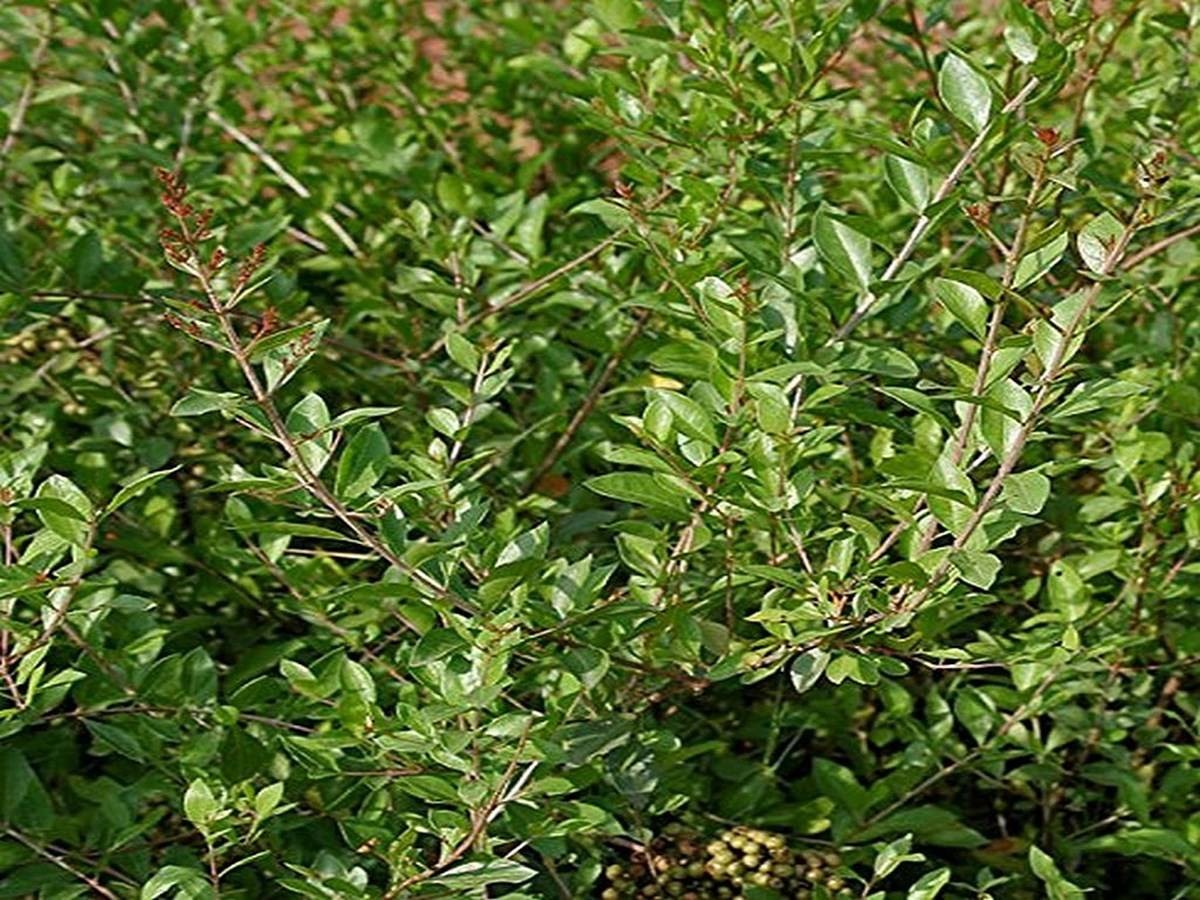 HENNA LEAVES | 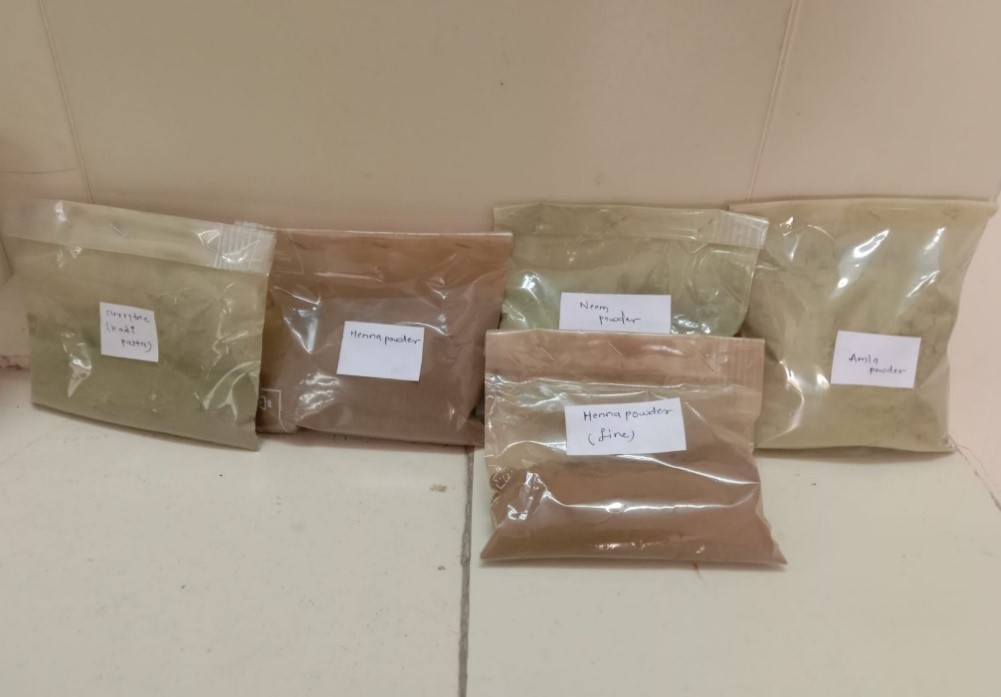 IN POEDER FORM |
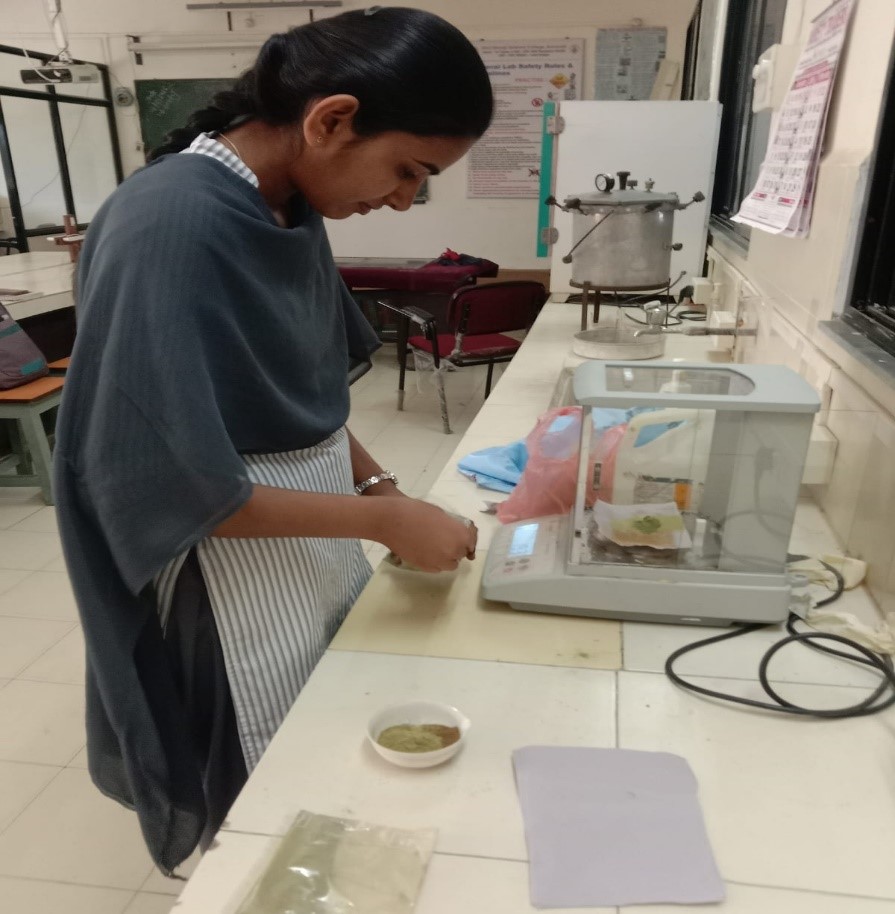 WEIGHT BY WEIGHING MACHINE | ![HERBAL HAIR DYE [In Powder Form]](uploads/photos/upload_photo_69eb50a8a01d8.jpg) HERBAL HAIR DYE [In Powder Form] |
 BLANK |  BLANK |
Attendance Sheet: