SHRI SHIVAJI SCIENCE COLLEGE, AMRAVATI
DBT STAR COLLEGE PROJECT ACTIVITY
ACTIVITY REPORT
One Day Workshop on “Enhancing Microbiology & Molecular Biology Laboratory Skills”
Activity Dates: 29 September, 2025
Type of Activity: Other
Organizing Department: Department of Zoology
Program Coordinators: Dr Shubhangi Gawande, Dr Sujata Kawade (Bansode)
Head of the Department: Dr J.D. Dhote
External Collaborator (if any): NIL
Objectives:
- Handling Sophisticated instruments in Microbiological Procedures
- Setting up of Laboratory for Microbiological procedures
- Set up of Basic Molecular Biology Techniques
- Providing a Scientific Attitude, Creativity & Skills
- Care of Laboratory during use of sophisticated Instruments
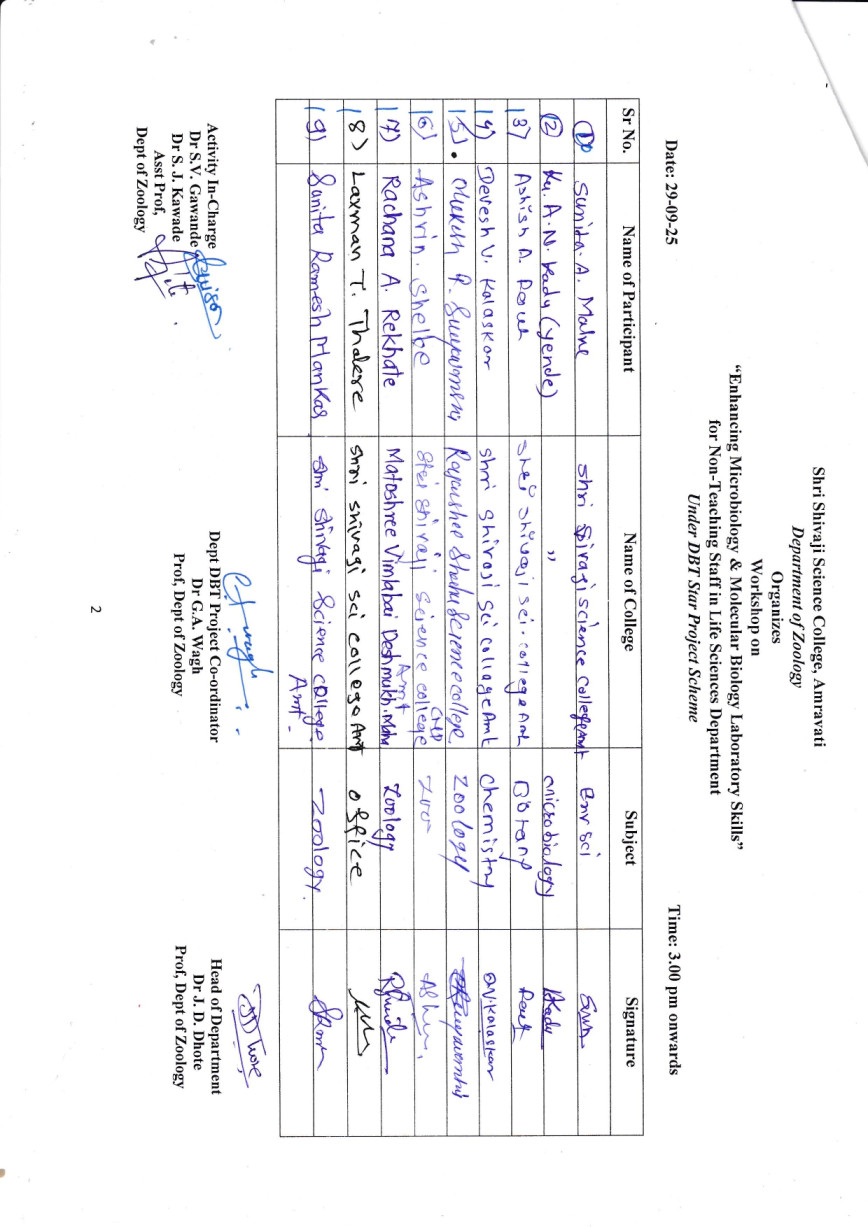
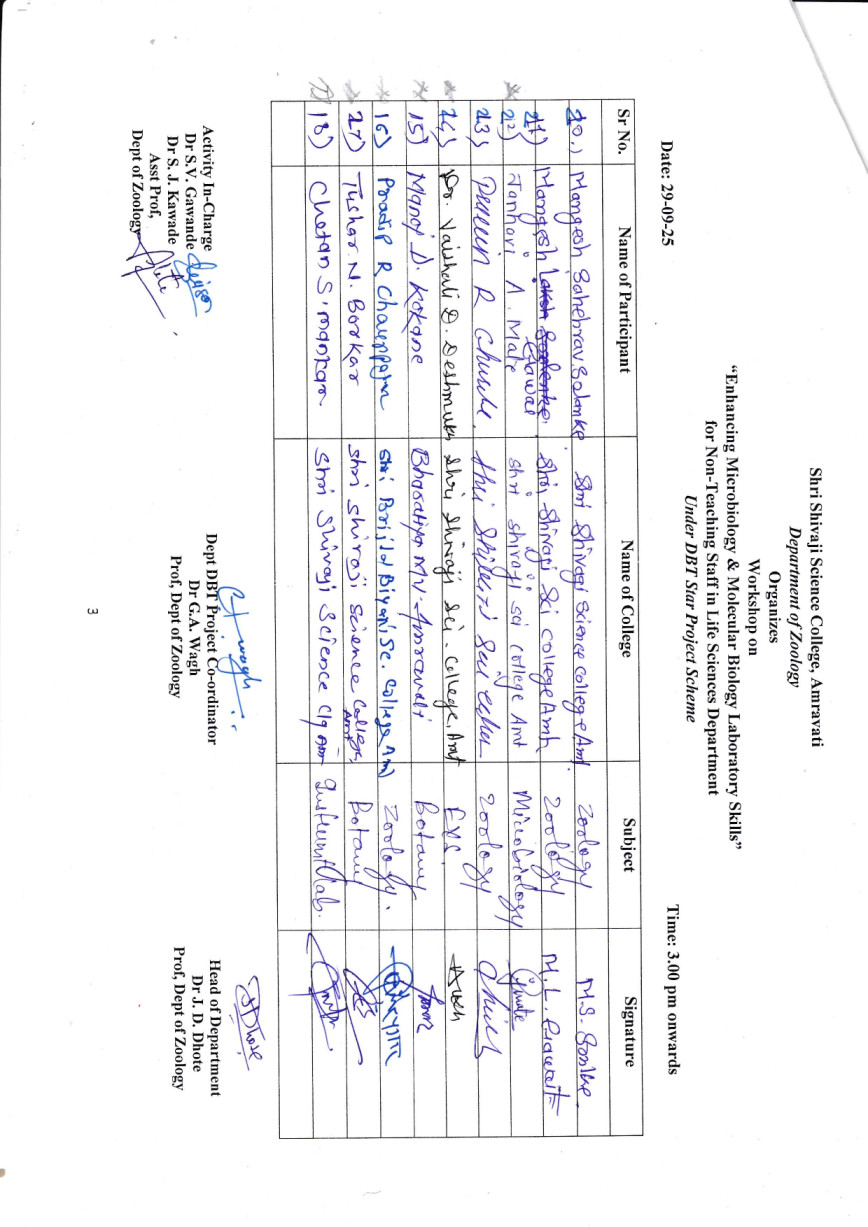
No of Beneficieries: 27
Classes Involved: Non-Teaching staff of Life Sciences Department
Venue of the Activity: UG-PG Zoology Laboratory
Activity Report:
Shri Shivaji Science College, Amravati
One Day Workshop on
“Enhancing Microbiology & Molecular Biology Laboratory Skills”
Organized by
Department of Zoology
Under DBT Star Scheme
A One Day Workshop on “Enhancing Microbiology & Molecular Biology Laboratory Skills for Non-Teaching Staff in Life Sciences Department was organized by the Department of Zoology, Shri Shivaji Science College, Amravati on 29 September, 2025 from 3.00 pm onwards.
The Workshop aimed to provide a platform for Hands-on-Training in Handling Sophisticated instruments in Microbiological Procedures and Set up of Basic Molecular Biology Techniques thus providing a Scientific Attitude, Creativity & Skills to the Biological Laboratory Staff. Target Group: UG/PG Non-Teaching staff of Life Sciences Department (Botany, Zoology, Microbiology, Biotechnology, Environmental Sciences). A total 27 Participants registered for the Workshop.
The Workshop began by Inaugural Function at the UG Zoology Laboratory from 3.00-3.30 pm. The Inaugural Function was Presided by Dr J. D. Dhote, Head, Department of Zoology, Shri Shivaji Science College, Amravati. She reported the progress made by the Department and the amenities available. The Workshop was Inaugurated by Shri Mahesh Patil, Office Superintendent, Shri Shivaji Science College, Amravati where he spoke a few words about the importance of organizing such non-teaching workshop. Dr G A Wagh, Professor, Department of Zoology & Dept DBT Project Co-ordinator gave a welcome & Introductory Speech about the activities to be conducted in the workshop and also reported the progress made by the department under the DBT Star Project Scheme. Demonstrator of the Workshop Dr Roshan Godse was also present on the dias. The Program was conducted by Dr Sujata Kawade, activity in-charge & Assistant Professor, Department of Zoology, Shri Shivaji Science College, Amravati. A Practical Manual prepared by Department of Zoology titled “An Information Booklet on Biological Laboratory Instruments” prepared by Dr S. V. Gawande, Assistant Professor, on behalf of the Dept of Zoology was also inaugurated in the Inaugural function.
Technical sessions of the Workshop were conducted at Zoology Post Graduate Laboratory I where Dr Roshan Godse demonstrated the working of electrophoresis technique to the participants of the Workshop. He Demonstrated the step wise procedure using gel electrophoresis to isolate the DNA molecule. Gel electrophoresis separates DNA molecules based on size by applying an electric current to move negatively charged DNA through an agarose gel matrix. Shorter fragments travel faster toward the positive anode, while larger fragments move slower, allowing DNA to be separated, visualized, and isolated for applications like cloning. Mechanism: DNA has a negative charge due to its phosphate backbone, causing it to migrate toward the positive electrode. Separation Basis: The agarose gel acts as a sieve; smaller fragments move faster and further through the pores than larger ones. Gel Concentration: The agarose concentration affects the separation speed and resolution, with higher percentages allowing separation of smaller DNA fragments. Visualization: Staining with dyes like ethidium bromide makes DNA visible as bands under UV light. Isolation: Specific bands can be cut from the gel with a razor blade and purified for further use. Procedure Highlighted Sample Preparation: DNA samples are mixed with a loading dye (which adds density and color) and loaded into wells within the gel. Running the Gel: An electrical current is applied in a buffer solution, pushing the DNA toward the anode. Size Determination: A DNA ladder (fragment of known size) is run alongside the samples to determine the exact length of the sample DNA. Extraction: The desired DNA band is excised under UV light using a clean razor blade and purified using a gel extraction kit.Demonstration included preparation of sample, Preparation of Agarose gel solution, Gel casting, setting up of electrophoresis chamber, Gel loading, Power supply, observation of blue coloured DNA sample, Placing gel in ethidium bromide solution, exposing ethidium bromide stained gel to UV light, Photography and Observation.
Hands-on-Training in Handling Sophisticated instruments in Microbiological Procedures were also demonstrated in the workshop including Handling and Working of Laminar Air Flow and Autoclave. An air purification system to maintain a unidirectional, constant and non-turbulent flow of filtered air at a uniform speed to create a sterile environment was demonstrated with Laminar air flow (LAF). How this system uses high-efficiency particulate air (HEPA) or ultra-low penetration air (ULPA) filters to remove airborne contaminants like dust, bacteria, and spores, ensuring a particle-free working area was shown to the participants. LAF systems used in laboratories and pharmaceutical facilities to protect sensitive samples, cultures, and products from contamination was reported at the workshop. Operating Guidelines (SOP) Turn on early: Activate the blower at least 30 minutes before starting work to purge the chamber. Sterilize: Sanitize with alcohol and run UV light (ensure the sash is closed) for 30 minutes prior to use. Maintain Flow: Keep the workspace tidy and avoid blocking the air intake or outlets to prevent turbulence.
Maintenance: Monitor the Magnehelic gauge for pressure drops, indicating a need to replace filters
Hands-on-Training in Handling Autoclave most commonly used instruments in molecular biology labs for the sterilization of equipment and materials. The autoclave works on the principle of moist heat sterilization. The high pressure inside the chamber increasing the boiling point of water for the sterilization of equipment, ensuring the rapid penetration of heat into the deeper parts of equipment were demonstrated. Also, the moisture in the steam causing coagulation of proteins of microbes causing irreversible loss of their activity and functions. Thus, killing the microorganisms and sterilizing the equipment was demonstrated at the Workshop.
Also working and handling of micropipettes, used for molecular biology techniques were also demonsterated to the participants of the Workshop.
The Participants also visited the CIC (Central Instrumentation Cell) of the college and observed some of the sophisticated instrument like X-Ray diffractor, Atomic Absorption Spectrophotometer (AAS), UV- Spectrophotometer, High Pressure Liquid Chromatographer (HPLC), Karl Zeiss Trinocular Microscope, etc. The uses and mechanism of working of these instruments were demonstrated to the participants.
After the technical sessions, high tea with snacks was arranged for the participants. The registered participants were given a workshop kit with writing pad, pen and the Information Booklet on Biological Laboratory Instruments. The Workshop concluded with vote of thanks and distribution of certificates.
Outcomes:
- Handling Sophisticated instruments in Microbiological Procedures
- Setting up of Laboratory for Microbiological procedures
- Set up of Basic Molecular Biology Techniques
- Providing a Scientific Attitude, Creativity & Skills
- Care of Laboratory during use of sophisticated Instruments
Photos:
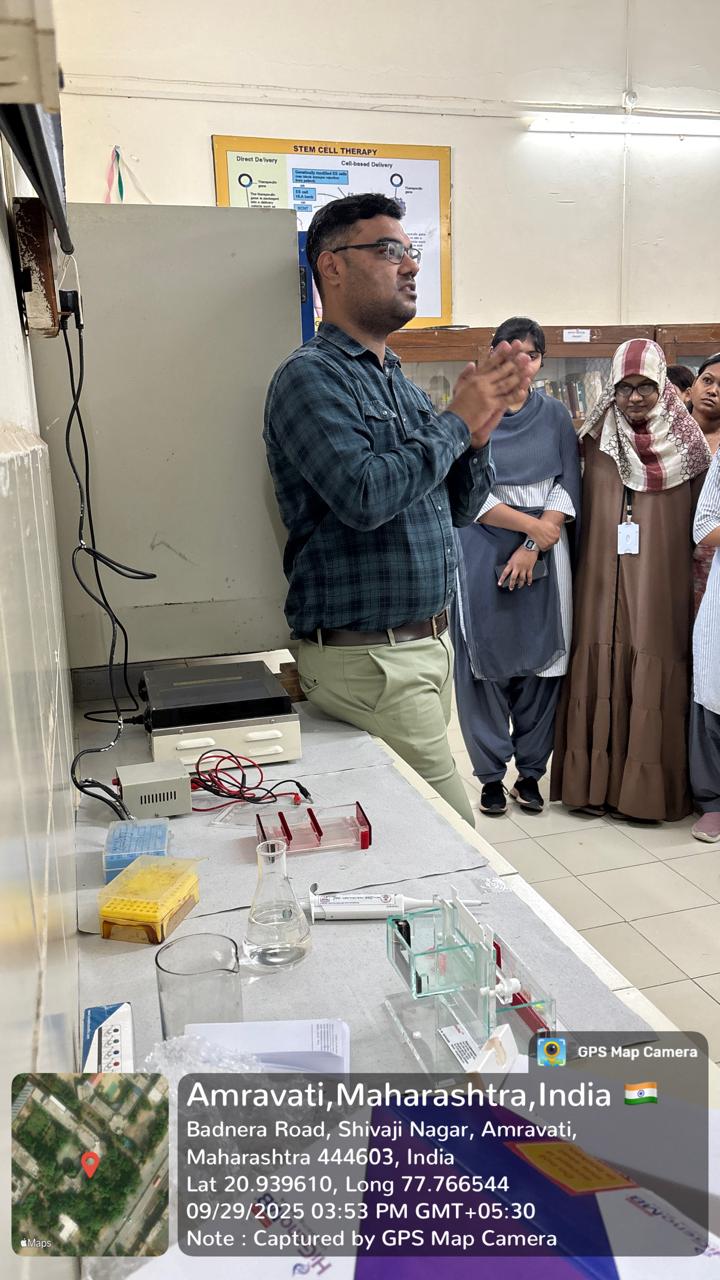 Demonstration of Gel electrophoresis by Dr Roshan Godse at the workshop | 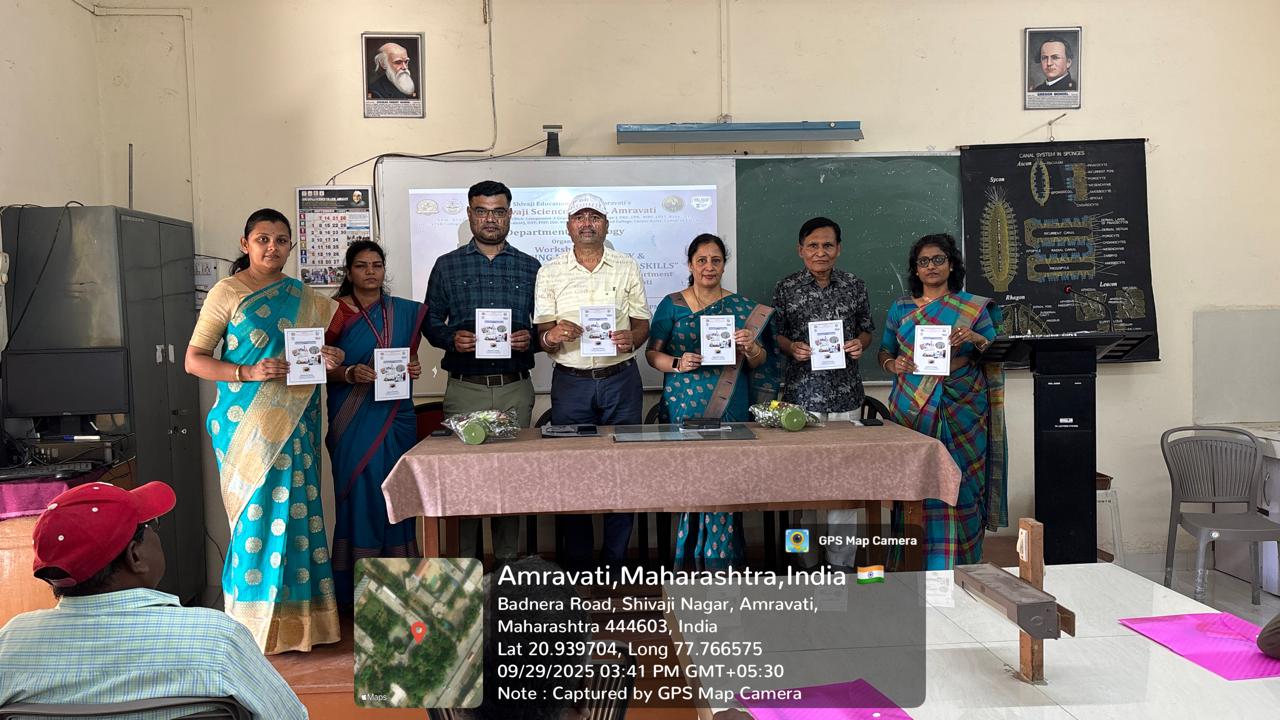 Laboratory maintainance booklet released at the workshop |
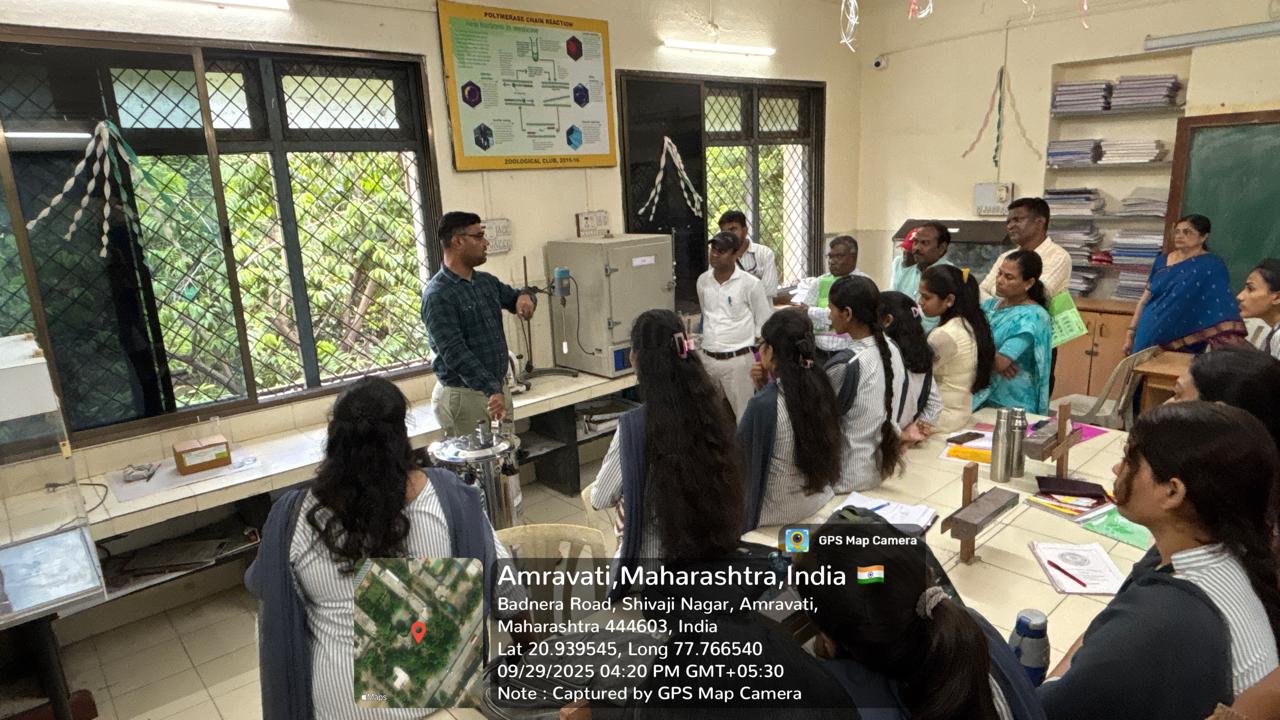 Deonstration of handling of autoclave by Dr Roshan Godse | 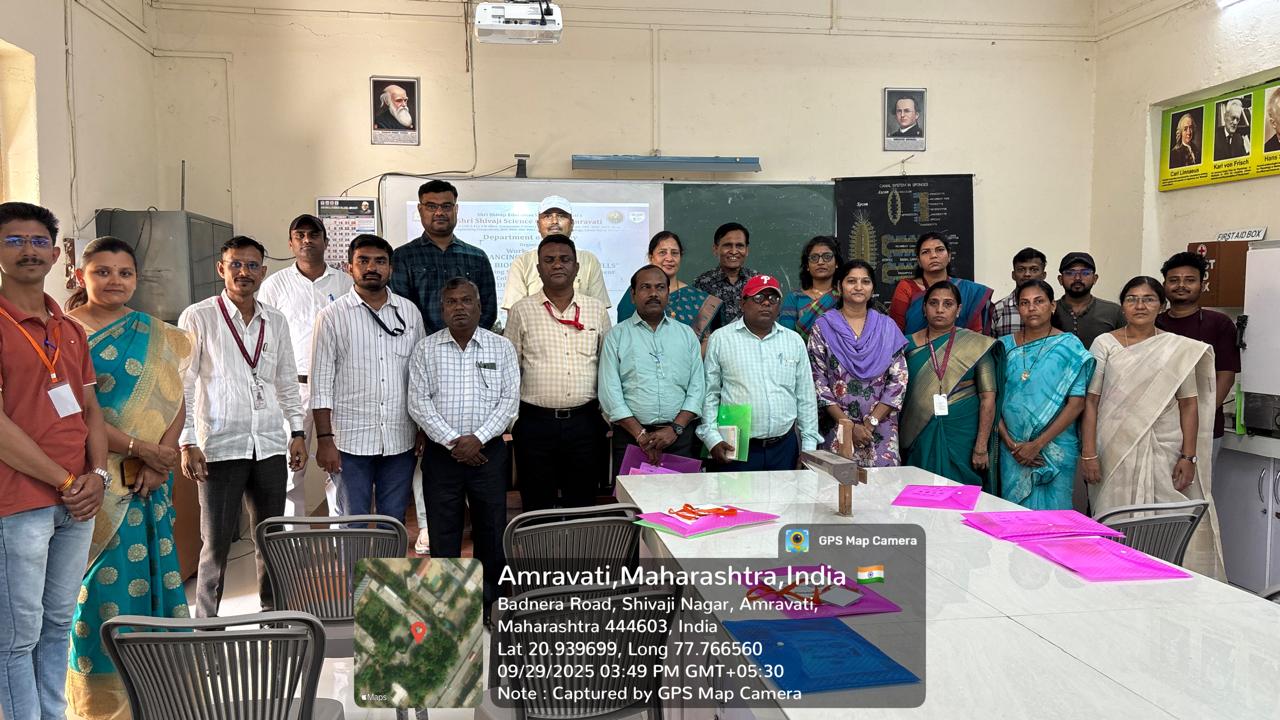 Group photo of participants at the workshop |
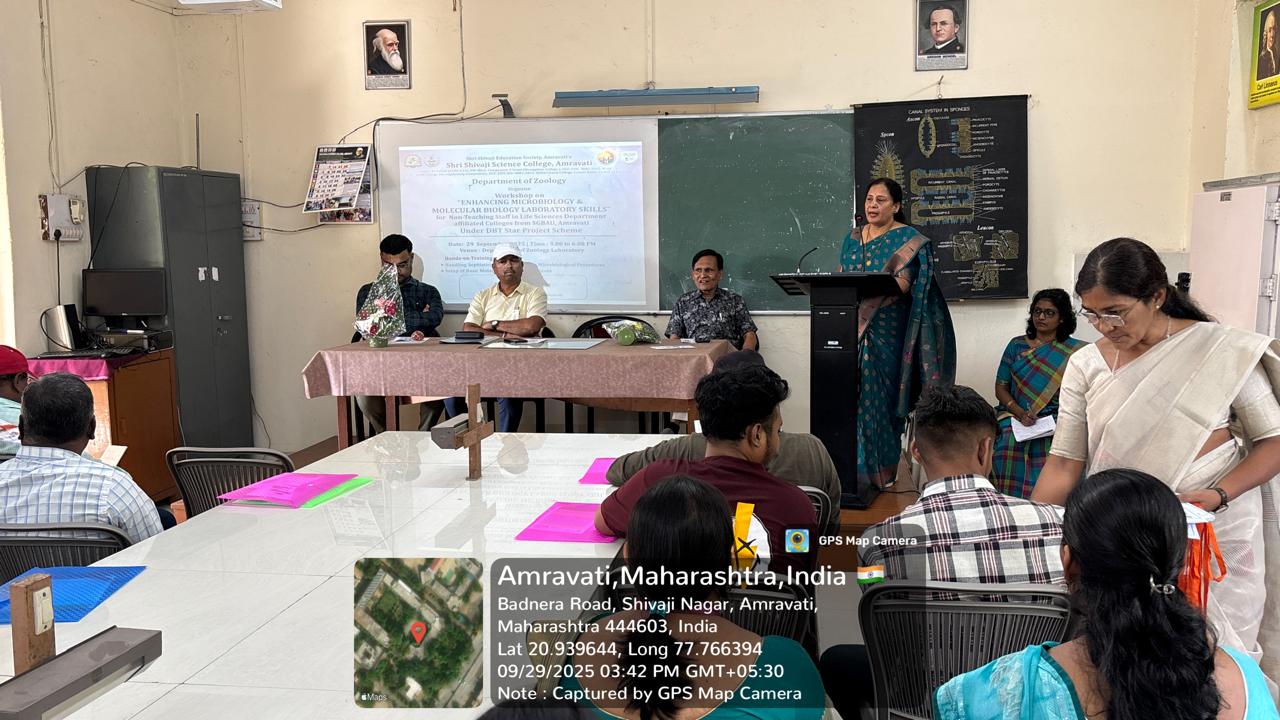 Prof and Head Dr J D Dhote addressing the participants at the workshop | 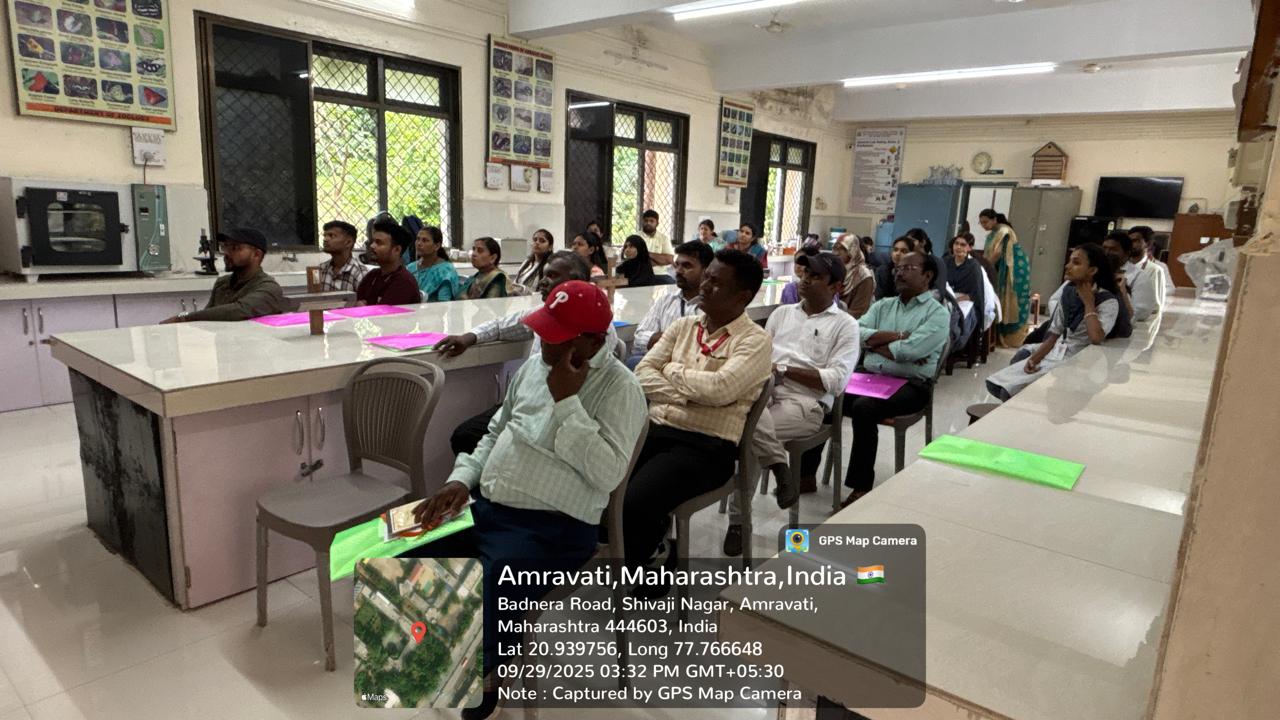 Non Teaching staff participants at inauguration of the workshop |
Attendance Sheet:
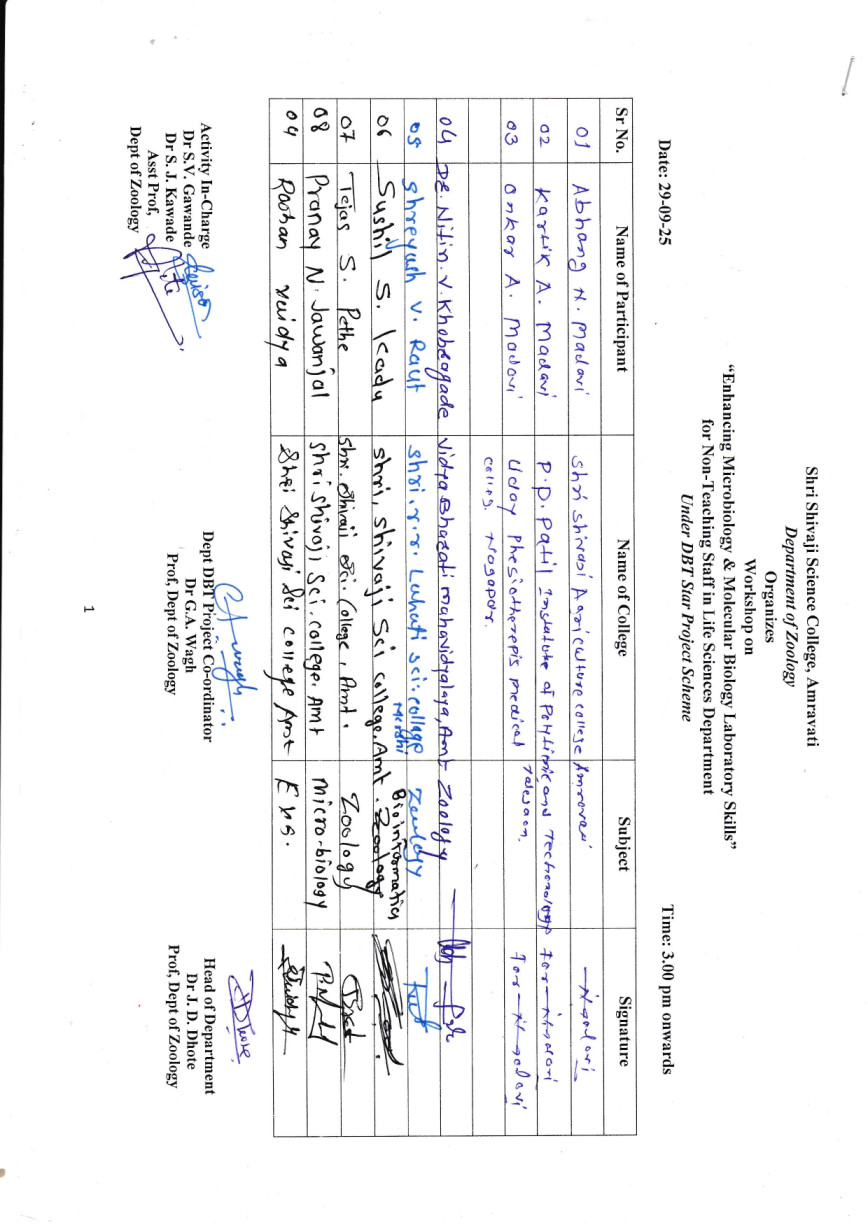 Sheet |
 Sheet |
 Sheet |