SHRI SHIVAJI SCIENCE COLLEGE, AMRAVATI
DBT STAR COLLEGE PROJECT ACTIVITY
ACTIVITY REPORT

Formulation and Evolution of perfume from locally available flower
Activity Dates: Feb to March 2026
Type of Activity: Minor Research Project
Organizing Department: Department of Environmental Science
Program Coordinators: Mr. V. D. Bute
Head of the Department: Dr. S. P. Ingole
External Collaborator (if any): No
Objectives:
- • To provide a pleasant and attractive fragrance.
- • To mask unpleasant body odors.
- • To enhance personal hygiene and freshness.
- • To improve mood and emotional well-being.
- • To create a personal identity or signature scent.
No of Beneficieries: 02
Classes Involved: B.Sc. III year CEB and CEZ
Venue of the Activity: Shri Shivaji Science College, Amravati
Activity Report:
Introduction
Since the beginning of recorded history, humans have used natural and man-made materials to mask, reduce, or enhance body odor. These fragrant substances are commonly known as perfumes or fragrances. Perfume is a pleasant-smelling liquid made from aromatic extracts that are dissolved in alcohol and water. It is used for personal grooming, improving mood, increasing attraction, and expressing personality.
Perfumes have played an important role in different civilizations for thousands of years. Ancient people used flowers, herbs, woods, oils, and animal products to prepare scented materials. Over time, the art and science of perfumery developed into a large modern industry using both natural ingredients and synthetic aroma chemicals.
Today, perfumes are widely used around the world in cosmetics, personal care products, soaps, room fresheners, and aromatherapy. The present report describes the history, preparation, composition, uses, and fragrance notes of perfumes.
Meaning of Perfume
Perfume is a fragrant liquid prepared by blending essential oils, aroma compounds, fixatives, alcohol, and water. Different perfumes react differently on each person because body temperature, skin chemistry, sweat level, and natural body odor vary from person to person. Therefore, the same perfume may smell different on two individuals.
Generally, perfumes contain a high percentage of fragrance oils mixed with alcohol. Lighter versions such as body sprays, deodorants, and colognes contain lower concentrations of fragrance oils.
Historical Background of Perfume
The use of perfume dates back to ancient civilizations. Perfumery is believed to have started in ancient Mesopotamia and Egypt and later spread to Greece, Rome, Persia, Arabia, and Europe.
Egyptians
The Egyptians were among the first people to use perfumes. Initially, perfume was used mainly for religious ceremonies, temple rituals, and offerings to gods. Priests used fragrant oils and incense during worship. Later, perfumes became part of personal care and beauty practices.
Greeks
The Greeks used perfumes extensively. They believed in cleanliness and used different fragrances for different body parts. They also used scented oils after bathing and during social events.
Romans
The Romans considered perfume a symbol of luxury and status. Perfumes were used in baths, homes, clothes, and even fountains. Wealthy Romans used large quantities of fragrance in daily life.
Arabs and Persians
Arab scholars and chemists greatly improved perfume-making techniques. Two famous chemists, Jābir ibn Hayyān and Al-Kindi, contributed to the perfume industry by developing methods of distillation and writing books on fragrances.
Cyprus
The oldest known perfume factory was discovered on the island of Cyprus and is about 4,000 years old. This proves that perfume production was carried out on a large scale in ancient times.
Hungary
The first modern alcohol-based perfume was introduced in Hungary for Queen Elizabeth of Hungary. It was made by blending scented oils in alcohol solution.
France
France is considered the birthplace of modern perfumery. The country became famous for cultivating aromatic plants such as lavender, rose, and jasmine. Even today, France remains a global center for perfume design, production, and export.
England and Germany
Both England and Germany also contributed significantly to the modernization of perfume manufacturing.
Preparation of Perfume
Traditional perfumes were made from natural plant and animal substances. Flowers, herbs, spices, woods, and resins were commonly used.
Methods of Extraction
Several methods are used to obtain fragrant compounds from plants:
1. Distillation – Steam is passed through plant materials to collect aromatic oils.
2. Expression – Oils are squeezed from citrus peels.
3. Solvent Extraction – Solvents are used to dissolve fragrant substances.
4. Effleurage – Fat is used to absorb fragrance from delicate flowers.
These methods extract essential oils, which are the main aromatic ingredients of perfumes.
Main Ingredients of Perfume
1. Essential Oils
Essential oils are natural aromatic liquids extracted from flowers, leaves, seeds, bark, roots, fruits, or wood. Examples include lavender oil, rose oil, sandalwood oil, and lemon oil.
2. Alcohol
Alcohol is used as a solvent to dissolve fragrance oils and help spread the scent when applied. It evaporates quickly and releases the aroma into the air.
3. Fixatives
Fixatives are substances added to make the fragrance last longer by slowing down evaporation. They act as anchors for the scent. Natural fixatives include resins, musk substitutes, and woody oils.
4. Water
Water is added to dilute the perfume and balance the concentration.
Importance and Uses of Perfume
Perfumes are used for several reasons beyond just smell.
1. Personal Freshness
Perfume helps control body odor and gives a feeling of cleanliness and freshness.
2. Emotional Effects
Fragrances can influence mood and emotions. Pleasant scents often create feelings of relaxation, happiness, confidence, and comfort.
For example, the smell of vanilla may remind a person of pleasant childhood memories.
3. Attraction and Social Appeal
Many people wear perfume to increase attractiveness and leave a positive impression on others.
4. Expression of Personality
A perfume choice often reflects an individual’s taste, style, and personality.
5. Habit and Confidence
Some individuals become accustomed to wearing perfume daily and feel incomplete without it.
Perfume and the Human Brain
When fragrance molecules are inhaled, they stimulate smell receptors in the nose. These signals travel to the brain, especially areas related to memory and emotions such as the hippocampus and limbic system.
This is why scents can strongly trigger memories, emotional responses, and mental relaxation.
Some studies suggest fragrance stimulation may influence hormone release, mood regulation, and neurotransmitter activity.
Modern Perfume Industry
Modern perfumes are often made using synthetic aroma chemicals instead of only natural oils. This development began in the late nineteenth century with the discovery of compounds such as vanillin.
Synthetic ingredients offer several advantages:
• Lower production cost
• Consistent fragrance quality
• Longer shelf life
• Availability of rare scents
• Creation of new fragrances not found in nature
As a result, perfumes are now more affordable and used more frequently in daily life.
Modern research is also exploring body scent chemistry and pheromone-like fragrances designed to enhance attraction.
Fragrance Notes in Perfume
Perfumes are designed in three fragrance layers called notes. These notes appear one after another over time.
1. Top Notes
Top notes are the first scents noticed immediately after application. They are light, fresh, and evaporate quickly.
Examples:
• Lemon
• Orange
• Grapes
• Berries
• Lavender
• Herbs
2. Middle Notes
Middle notes are also called heart notes. They appear after top notes fade and form the main body of the perfume.
Examples:
• Rose
• Jasmine
• Nutmeg
• Lemon blossom
3. Base Notes
Base notes appear last and last the longest. They provide depth, richness, and lasting power.
Examples:
• Sandalwood
• Vanilla
• Musk
• Amber
The combination of these three notes creates a balanced and pleasant perfume experience.
Conclusion
Perfume has been an important part of human civilization for thousands of years. From ancient Egypt and Greece to modern France and global industries, perfumery has evolved through science, art, and culture.
Perfumes are prepared using essential oils, alcohol, water, and fixatives. They help improve freshness, confidence, mood, and personal identity. Modern perfumes combine natural and synthetic ingredients to create long-lasting and affordable fragrances.
The three fragrance notes—top, middle, and base—make perfumes unique and dynamic over time. Today, perfume remains a valuable product in personal care and an important industry worldwide.
Outcomes:
- 1. Preparation and evaluation of perfume was done.
- 2. The physiochemical parameters other prepared perfume were determined.
- 3. The formulation exhibited good as appearance characteristics as well as the pH was found in range, 8. 9 which determined pH.
- 4. Other parameters such as Hedonic test, sensory test, spot test were determined.
- 5. The present work is concerned with the formulation of perfume using flowers.
Photos:
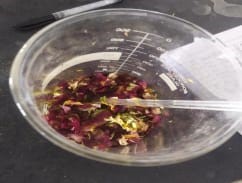 SOAKED PETALS OF FLOWERS | 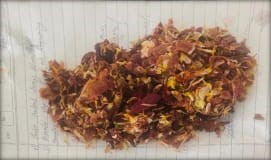 COLLECTION OF DRY PETALS |
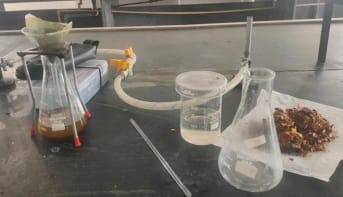 EXTRACTION PROCESS | 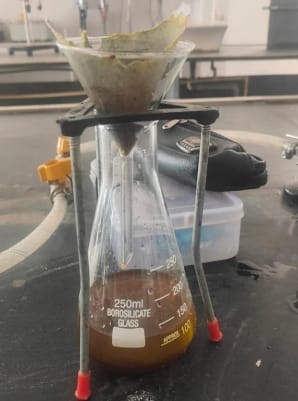 COLLECTION OF PERFUME |
 blank |  blank |
Attendance Sheet: