SHRI SHIVAJI SCIENCE COLLEGE, AMRAVATI
DBT STAR COLLEGE PROJECT ACTIVITY
ACTIVITY REPORT

Formulation and evolution of perfume from locally available flowers
Activity Dates: January to March 2026
Type of Activity: Minor Research Project
Organizing Department: Department of Environmental Science
Program Coordinators: Mr. V. D. Bute
Head of the Department: Dr. S. P. Ingole
External Collaborator (if any): No
Objectives:
- To utilize herbal waste materials for the preparation of an eco-friendly mosquito repellent.
- To evaluate the repellent efficacy of the prepared formulation against different mosquito species.
- To assess the physical and chemical stability of the mosquito repellent formulation during storage.
- To examine the safety of the herbal repellent for human use, including skin compatibility.
- To compare the performance of the herbal mosquito repellent with commercial repellents.
No of Beneficieries: 02
Classes Involved: B.Sc. III year CEB and CEZ
Venue of the Activity: Shri Shivaji Science College, Amravati
Activity Report:
Introduction
Mosquitoes are dangerous insect vectors that transmit pathogens from infected individuals to healthy populations. They are responsible for spreading several life-threatening diseases such as malaria, dengue, chikungunya, yellow fever, and filariasis. Mosquito populations are increasing rapidly due to stagnant water accumulation, poor waste management, unplanned urbanization, and changing climatic conditions. Warm temperatures, high humidity, and improper sanitation create ideal breeding conditions for mosquitoes.
Vector-borne diseases mainly affect tropical and subtropical regions where environmental conditions favor mosquito survival. According to the Global Mosquito Program in 2022, more than 750 million people are affected by mosquito-borne diseases every year, resulting in nearly three million deaths worldwide. In countries like India, the problem is severe due to diverse climatic and geographical conditions.
India has a wide ecological range extending from the Himalayas to Kanyakumari. It includes forests, wetlands, agricultural lands, rivers, ponds, and urban settlements. These varied ecosystems support the growth and multiplication of many mosquito species. Except for arid regions like Rajasthan, most parts of India provide favorable habitats for mosquitoes.
Traditional mosquito control methods include chemical insecticides, fogging, mosquito coils, vaporizers, and synthetic skin repellents. Though these methods are widely used, long-term dependence has created serious concerns such as environmental pollution, toxic effects on human health, respiratory irritation, insect resistance, and ecological imbalance. Therefore, there is a growing need for safe, natural, and biodegradable alternatives.
The present study focuses on the preparation and evaluation of an eco-friendly herbal mosquito repellent spray made from plant-based materials and herbal waste products. The aim is to provide a sustainable, safe, and effective substitute for conventional mosquito repellents.
Materials Used
The herbal spray was prepared using natural ingredients known for mosquito repellent properties.
1. Eucalyptus Leaves
Eucalyptus leaves contain essential oils rich in eucalyptol (1,8-cineole), citronellal, limonene, and terpenoids. These compounds possess insect repellent, antibacterial, and anti-inflammatory properties. The strong aroma of eucalyptus effectively repels mosquitoes. Leaves and waste biomass can be used economically.
2. Ginger Rhizome Waste
Ginger waste contains bioactive compounds such as gingerol, shogaol, zingerone, and volatile oils. These substances have antioxidant, antibacterial, and insect repellent activities.
3. Tulsi (Ocimum sanctum)
Tulsi is one of the most important medicinal plants in India. Its leaves contain eugenol, rosmarinic acid, ursolic acid, caryophyllene, and oleanolic acid. Tulsi aroma naturally repels mosquitoes and insects.
4. Camphor
Camphor is a highly aromatic crystalline substance obtained from the camphor tree (Cinnamomum camphora). It produces strong vapors that help repel mosquitoes.
5. Clove
Clove flower buds contain eugenol and caryophyllene. Eugenol acts as a neurotoxin to mosquitoes by disturbing their sensory receptors and reducing biting activity.
Methodology
The herbal ingredients were dried, powdered, and extracted using suitable methods. Essential oils and extracts were mixed in proper proportion with a carrier liquid to prepare the mosquito repellent spray.
The prepared formulation was evaluated for:
• Appearance
• Color
• Odor
• Uniformity
• pH
• Evaporation rate
• Stability during storage
• Mosquito repellent efficacy under room conditions
• Safety and irritation test
Results and Discussion
Physical Evaluation
The prepared herbal spray showed good physical properties:
• Clear and uniform appearance
• Light green color
• Pleasant herbal aroma
• No suspended particles
• Proper consistency
These results indicate good compatibility of ingredients and successful formulation.
Physico-Chemical Evaluation
The formulation showed a pH of 6.26, which is near neutral and suitable for household use. This suggests that the spray is non-irritating and safe for indoor application.
The evaporation rate was found appropriate, allowing gradual release of active vapors in the room. Proper volatility is important because active compounds need to spread evenly through air for effective mosquito repellency.
Mosquito Repellent Activity
The mosquito repellency test was conducted under ambient room conditions to simulate practical home use. The herbal spray showed significant repellent activity.
• Initial repellency was moderate after spraying.
• Repellent effect increased gradually with time.
• Maximum repellency reached 85% within 30 minutes.
This progressive increase in effectiveness is due to continuous release and uniform diffusion of volatile compounds such as eugenol, cineole, citronellal, and terpenoids.
These compounds interfere with mosquito olfactory receptors, making it difficult for mosquitoes to detect human body odor and carbon dioxide. As a result, mosquitoes are unable to locate hosts for biting.
Advantages of Room Method Testing
Unlike laboratory cage studies, room-condition testing provides realistic performance data because it includes:
• Natural airflow
• Practical room volume
• Daily environmental conditions
• Human usage patterns
Therefore, the results better represent household effectiveness.
Stability Study
The stability study showed promising results:
• No phase separation
• No sediment formation
• Minimal color change
• Mild odor retained
• Consistent repellent activity
These observations indicate good shelf life and reliability during storage.
Safety Evaluation
The herbal formulation showed no signs of irritation, breathing discomfort, or harmful smoke production. This makes it safer than many synthetic coils and chemical repellents.
The absence of toxic synthetic compounds reduces risk to:
• Children
• Elderly people
• Asthma patients
• Pets
• Indoor air quality
Environmental Benefits
The herbal spray offers several ecological advantages:
1. Biodegradable ingredients
2. Low toxicity
3. Reduced chemical pollution
4. Use of herbal waste materials
5. Sustainable and renewable resources
6. Lower ecological impact than synthetic insecticides
Using plant waste such as eucalyptus leaves and ginger residues also promotes waste utilization and circular economy practices.
Comparison with Synthetic Repellents
Parameter Herbal Spray Synthetic Repellents
Safety High Moderate
Smoke Production None Present in coils
Toxicity Low Higher
Environmental Impact Low High
Biodegradable Yes Limited
Resistance Development Low chance Common
Thus, herbal repellents offer a healthier alternative for long-term domestic use.
Conclusion
The present study successfully developed and evaluated an eco-friendly herbal mosquito repellent spray using natural ingredients such as eucalyptus, ginger, tulsi, camphor, and clove. The formulation showed excellent physical quality, near-neutral pH, storage stability, and strong mosquito repellent activity reaching up to 85% effectiveness within 30 minutes.
The spray worked by releasing volatile plant compounds that disrupt mosquito sensory systems and prevent host detection. It was safe for indoor use, caused no irritation, and produced no harmful smoke.
Compared with synthetic repellents, the herbal formulation is biodegradable, environmentally friendly, and safer for human health. Although environmental conditions may slightly influence performance, the overall results strongly support the use of herbal repellents as a sustainable and practical alternative to chemical mosquito control products.
Outcomes:
- • Successfully developed an eco-friendly mosquito repellent using herbal waste materials.
- • Demonstrated effective mosquito repellency for several hours under controlled conditions.
- • The formulation is non-toxic, biodegradable, and safe for human use compared to chemical repellents.
- • Promotes utilization of herbal waste, reducing environmental pollution and supporting waste management.
- • Cost-effective and easily prepared using locally available materials.
Photos:
 Analysis of pH | 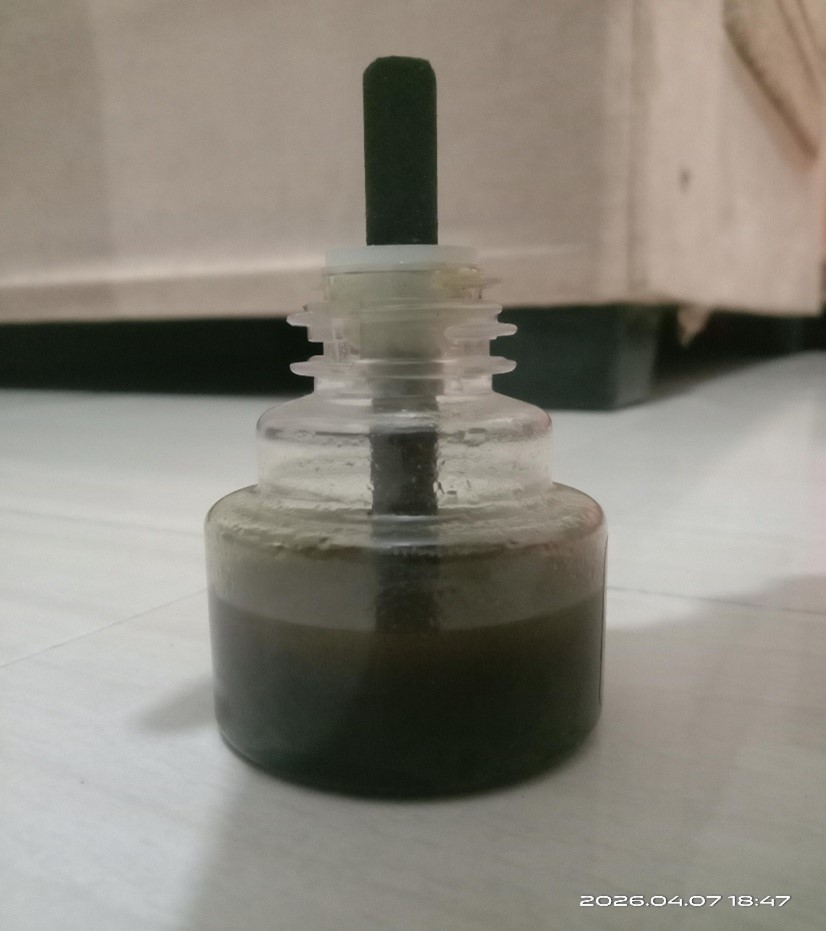 Filling of vaporizer bottle |
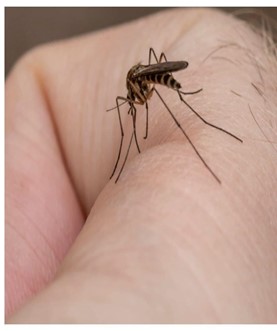 Mosquito landing on hand | 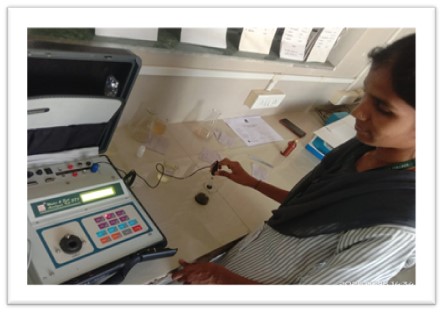 pH test by using digital pH meter |
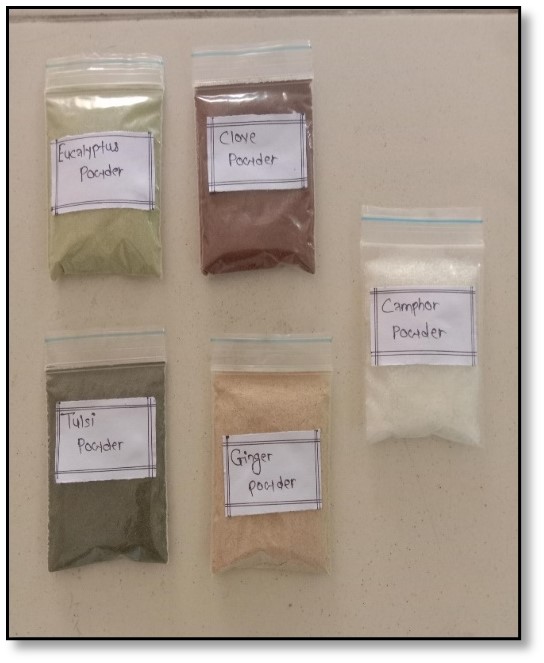 Prepared herbal powder | 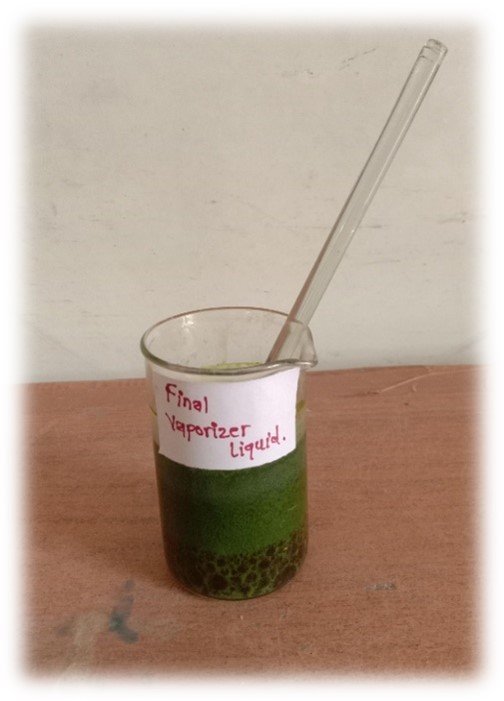 Prepared herbal powder |
Attendance Sheet: