SHRI SHIVAJI SCIENCE COLLEGE, AMRAVATI
DBT STAR COLLEGE PROJECT ACTIVITY
ACTIVITY REPORT
Sugarcane Bagasse’s as a Sustainable Tableware Material
Activity Dates: Jan to March 2026
Type of Activity: Minor Research Project
Organizing Department: Department of Environmental Science
Program Coordinators: Dr. S. P. Ingole
Head of the Department: Dr. S. P. Ingole
External Collaborator (if any): No
Objectives:
- The collection and reduced Agricultural waste and sugarcane bagasse’s waste
- The dried bagasse was ground into small fibers using a grinder.
- The treated/dried bagasse fibers were mixed with the prepared maida paste.
- The mixture was placed into molds of desired shapes
- The dried tableware was removed from molds. Edges were trimmed and smoothened if required.
No of Beneficieries: 02
Classes Involved: B.Sc. III year CEB and CEZ
Venue of the Activity: Shri Shivaji Science College, Amravati
Activity Report:
Study Area: - The study area is Amravati city. Amravati is a city in Maharashtra located in the Vidarbha region. It is the ninth largest city in Maharashtra, India & second largest city in the Vidarbha region in terms of population. It is the administrative headquarter of Amravati district as well as Amravati Division which includes Amravati District, Akola District, Buldhana District, Washim District & Yavatmal District
Air Pollution: Rapid industrialization and heavy traffic are primary drivers, releasing harmful particulate matter, sulfur dioxide, and nitrogen oxides. • Industrialization & Waste: Industries dump untreated waste into water bodies, while improper waste management leads to soil pollution. • Deforestation: The rapid clearing of forests reduces the planet's natural capacity to absorb carbon dioxide. • Urbanization: Rapid urban expansion creates waste management issues and increases energy consumption. Impact on Environment and Health: • Premature Deaths: Approximately 7 million people die annually due to air pollution. • Extreme Weather: Pollution is fueling a rise in intense weather events. • Biodiversity Loss: Contamination of water and land is killing aquatic species and destroying ecosystems. • Climate Change Mitigation The production and disposal of plastics contribute significantly to greenhouse gas emissions. From fossil fuel extraction to manufacturing and incineration, plastics have a high carbon footprint (EPIC) Potential Solutions and Mitigation: Page 1 • Transition to Clean Energy: Adopting solar and wind power reduces dependence on fossil fuels. • Sustainable Transport: Increasing the usage of electric vehicles (EVs), public transport, and reducing personal car usage. • Waste Management: Implementing stricter waste disposal regulations and promoting recycling. • Reforestation: Expanding green covers to improve air quality. (WHO)
Effective action requires a combination of government policy and individual action to reduce the environmental footprint Plastic waste persists in the environment for hundreds of years, accumulating in landfills, oceans, and natural habitats. This long-term persistence leads to soil degradation, water pollution, and harm to wildlife. Eco-friendly alternatives, on the other hand, are designed to decompose naturally within a short period, reducing environmental burden. Plastic materials have become an essential component of modern society due to their durability, lightweight characteristics, and cost effectiveness. Since their mass production began in the mid-20th century, plastics have been widely used across various sectors, including packaging, healthcare, transportation, and consumer goods. Their versatility and efficiency have significantly contributed to technological advancement and improved living standards. (Quanyin Tan) Health and Safety Benefits Plastic tableware may release harmful chemicals when exposed to heat or acidic food. These chemicals can leach into food and pose potential health risks. In contrast, eco-friendly materials are generally free from toxic additives and are safer for human use.
Biodegradable tableware made from natural materials provides a healthier alternative, especially in food-related applications. (UNEP) Plastic pollution from single-use tableware represents a major global environmental issue due to its persistence, widespread use, and harmful impacts on ecosystems and human health. (UNEP) The increasing environmental challenges associated with plastic pollution, particularly from single-use tableware, have created an urgent need for eco-friendly alternatives. Conventional plastic products, while convenient and cost-effective, have led to severe ecological imbalance due to their non-biodegradable nature and widespread usage. As environmental awareness grows, the demand for sustainable and biodegradable materials has become more significant than ever. (Yuan Chen) Health and Safety Benefits Plastic tableware may release harmful chemicals when exposed to heat or acidic food. These chemicals can leach into food and pose Page 2 potential health risks. In contrast, eco-friendly materials are generally free from toxic additives and are safer for human use.Biodegradable tableware made from natural materials provides a healthier alternative, especially in food-related applications The preparation of sugarcane bagasse tableware involves the following steps:
Step 1: Collection of Bagasse Sugarcane bagasse was collected from local sugarcane juice stalls. The material was cleaned manually to remove dirt and impurities.
Step 2: Washing and Drying The bagasse was washed thoroughly with clean water. It was then dried under sunlight for 24–48 hours to remove moisture.
Step 3: Size Reduction The dried bagasse was ground into small fibers using a grinder. Fine fibers help in better binding and smooth finishing.
Step 4: Preparation of Maida Binder Maida was mixed with water in a ratio of 1:4 (Maida: water). The mixture was heated while stirring continuously until a sticky paste was formed. This paste acts as a natural adhesive.
Step 5: Mixing of Materials, the treated/dried bagasse fibers were mixed with the prepared maida paste. Mixing ratio: 70% bagasses: 30% binder (approx.) The mixture was stirred until a uniform consistency was obtained.
Step 6: Moulding The mixture was placed into moulds of desired shapes (coasters, tray, table pots, and incense stick stand). It was pressed using a manually to give proper shape and remove excess water.
Step 7: Drying and Curing The moulded products were dried using Sun drying (2–3 days) Proper drying ensures strength and durability.
Step 8: Finishing Page 28 The dried tableware was removed from moulds. Edges were trimmed and smoothened if required.
Step 9: Testing The final products were tested for: Strength and durability, Water resistance, Biodegradability
Sustainable tableware is made from renewable, biodegradable, or recycled materials like sugarcane bagasses. We derived from sugarcane residue; this is used for biodegradable table ware like coasters, small table pots, Tray, incense stick stand.
1. Coasters: - Coasters are small mats, used to protect furniture surfaces from heat, moisture, and scratches caused by drink ware. They are essential home accessories that prevent water rings from condensation on tables. • Protection: Prevents damage to dining tables, coffee tables, and countertops. • Decor: Enhances home and kitchen aesthetics, with options matching modern or traditional interiors. • Versatility: Suitable for teacups, coffee mugs, beer mugs, and glass tumblers
2. Table plant pot: - Tabletop plant pots are small, decorative containers designed for indoor use, perfect for enhancing aesthetics and bringing nature into compact spaces. They add color and texture to coffee tables, desks, and bookshelves.
3. Tray: - Sugarcane bagasse trays are eco-friendly, 100% biodegradable, and compostable table ware made from fibrous sugarcane residue.
Outcomes:
- • Reduces plastic pollution
- • Promotes waste-to-wealth concept
- • Eco-friendly & biodegradable alternative
- Useful for household & decorative purposes
- • Supports circular economy
Photos:
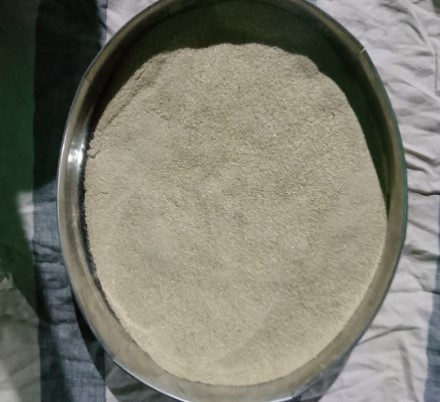 After drying Bagasse powder | 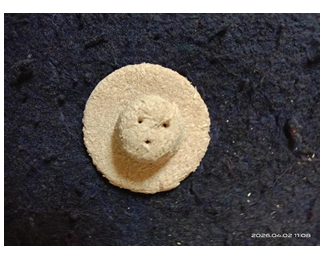 Incense Stick Stand |
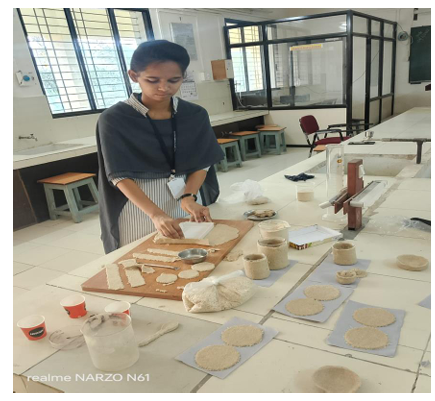 Process of making tableware from sugarcane | 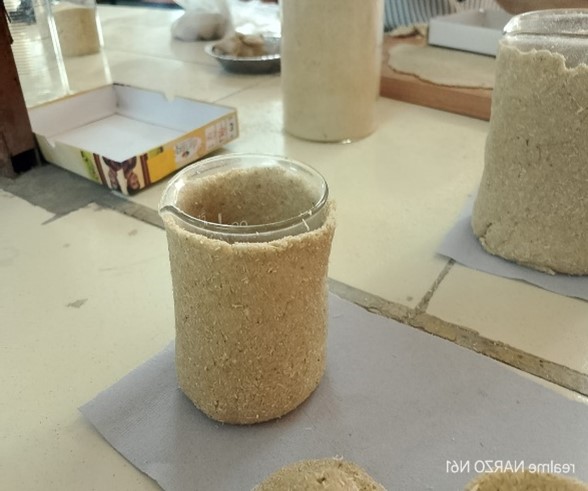 Produre of making final product |
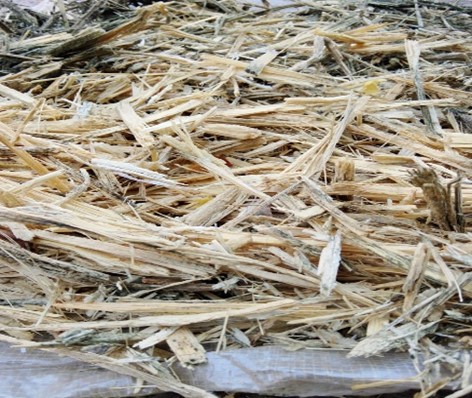 Row material suger cane Bagasse | 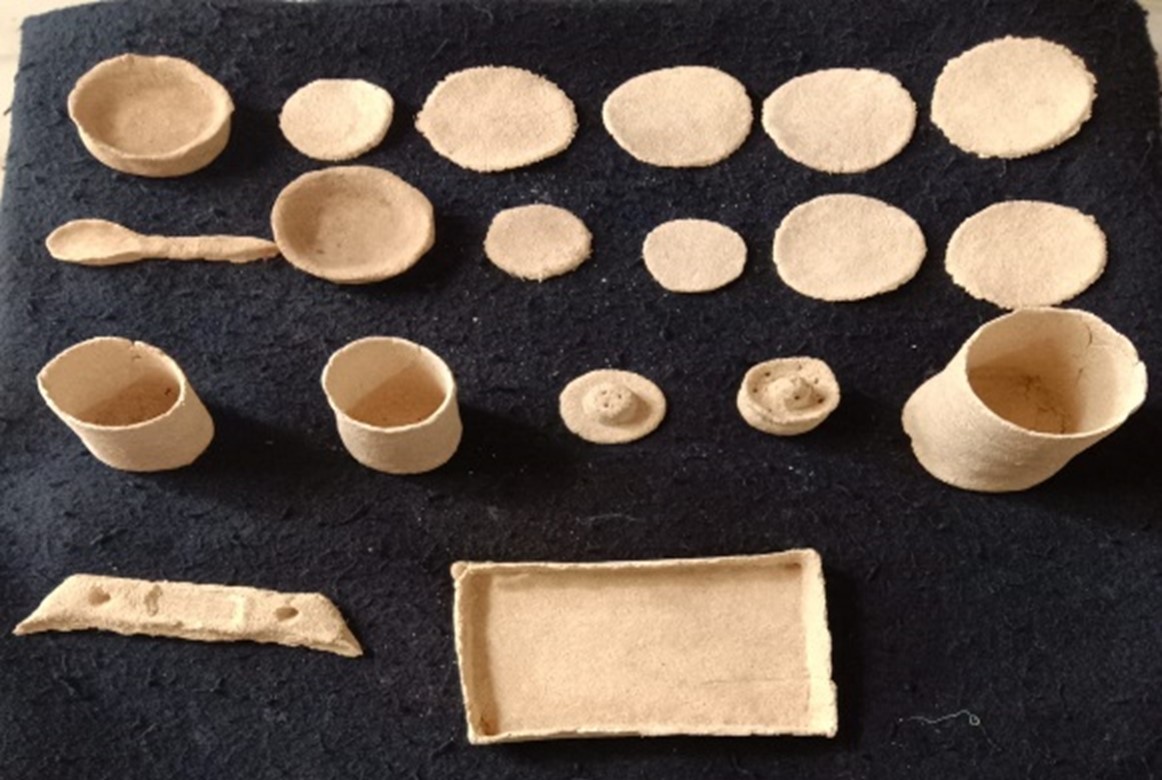 Table ware product |
Attendance Sheet: