SHRI SHIVAJI SCIENCE COLLEGE, AMRAVATI
DBT STAR COLLEGE PROJECT ACTIVITY
ACTIVITY REPORT

UNDERSTANDING AWARENESS AND ECO-FRIENDLY. PRACTICES AT VINAYAK NAGAR AMRAVATI
Activity Dates: 07.10.2025
Type of Activity: Minor Research Project
Organizing Department: Department of Environmental Science
Program Coordinators: Mr. V. D. Bute
Head of the Department: Dr. S. P. Ingole
External Collaborator (if any): No
Objectives:
- To assess the level of environmental awareness and understanding among residents.
- To identify common environmental practices related to waste management, water usage, and energy conservation.
- To study the attitudes and behaviors of people towards environmental protection and sustainability.
- To recognize local environmental problems faced by the community.
- To encourage community participation in eco-friendly activities and programs.
No of Beneficieries: 60 Famaily
Classes Involved: B.Sc. III year CEB and CEZ
Venue of the Activity: Vinayak Nagar, Amravati
Activity Report:
Introduction:
The present study aims to assess the level of Environmental Literacy among residents of Vinayak Nagar, Amravati, with a particular focus on their awareness, attitudes, and behavioral practices concerning environmental sustainability. The methodology outlines the systematic process followed for data collection, analysis, and interpretation. The study adopts a scientific and structured approach to ensure validity, reliability, and accuracy of results.Study Area: The study was conducted in Vinayak Nagar, located along Amravati (Maharashtra). This locality represents a developing sub-urban area characterized by population density, but rapid construction activities due to affordable land prices. The region includes several buildings and hospitals such as “Hantodkar Hospital” and “Bijwe Hospital”, which contribute to both economic growth and localized environmental pressure.
Although the area initially possessed favorable environmental conditions such as good air quality and minimal industrial activity, rapid construction has resulted in increased dust, noise pollution, and waste accumulation. Furthermore, the absence of an organized waste disposal system has led to open dumping and burning of garbage along roadsides.
The main purpose of this study was to identify existing awareness levels, understand local environmental problems, and suggest practical solutions for sustainable development at the community level.
Methodology:
a) Study Area: Vinayak Nagar, Amravati, Maharashtra, India
Vinayak Nagar is a prominent and well-developed residential locality situated in the south-western part of Amravati city in Maharashtra. The area is named after local historical and cultural significance and reflects a growing urban residential setup. The locality is relevant for an environmental awareness study as Vinayak Nagar consists predominantly of urban middle-class families, small business owners, students, and working professionals.
Key landmarks in and around Vinayak Nagar include:
Vithal rukhmini Temple, Amravati — A spiritual and cultural center that attracts daily visitors
Radha Nagar Garden — A well-known public garden used for morning walks, children’s play, and community gatherings.
Local markets, educational institutions, schools, and residential colonies are located within a 1-2 km radius.
Geographical and Demographic Information:
Latitude: Approximately 20.93° North
Longitude: Approximately 77.75° East
Type of Settlement: Planned urban residential area
Population: Estimated through municipal and local sources (population falls under Amravati Municipal Corporation; Vinayak Nagar has moderate to high density housing and shops)
Climate: Tropical with hot summers, moderate monsoons, and mild winters
b) Questionnaire Design
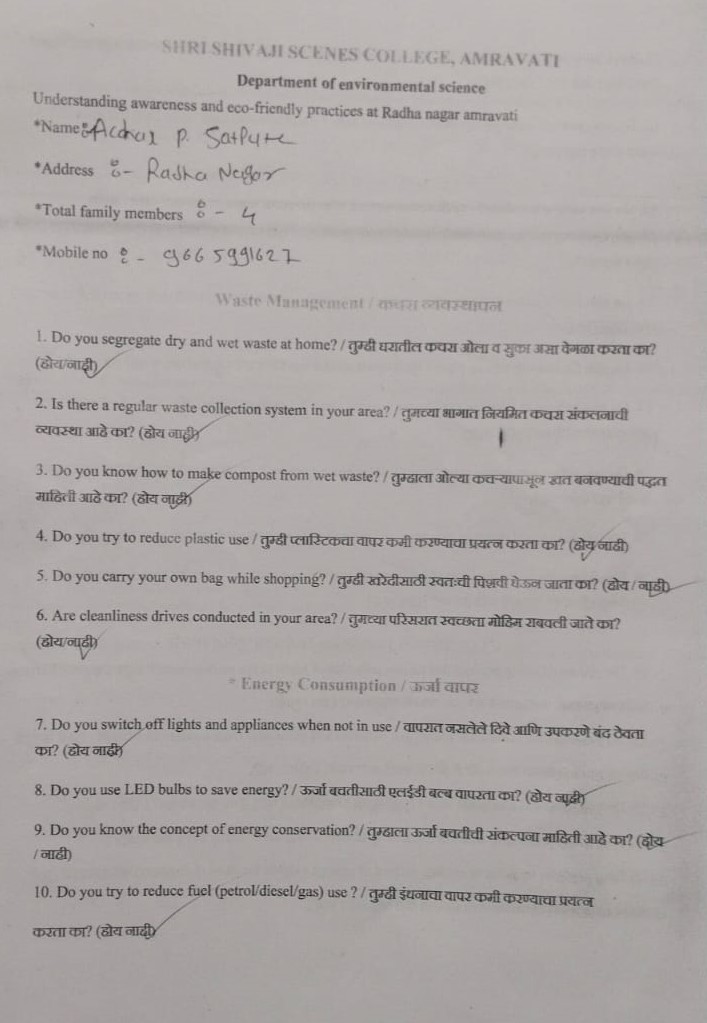
To assess environmental literacy and eco-friendly practices, a structured questionnaire was prepared in simple and understandable language. Both English and local Marathi/Hindi terms were used where necessary to ensure better clarity for respondents.
c) Sampling Method
A simple random sampling method was adopted to avoid bias and ensure that households from different lanes and sections of Vinayak Nagar, Amravati were represented.
Sample Size: 60-80 households
d) Data Collection Process
Method: Door-to-door personal visit and face-to-face interaction
Duration: Data collection was conducted within a single day
Procedure:
1. Introduction of survey purpose to the household members
2. Consent was taken verbally before asking questions
3. Respondents were assured that data would be used only for academic purposes
4. Answers were recorded manually on printed questionnaires and with support
Tools and Techniques Used.
Primary Tools: Printed questionnaire forms, pen-paper, clipboard, mobile phone for photos
Support Tools: Informal interaction and observation of physical surroundings (e.g., seeing dustbins placed outside houses)
Data Presentation and Analysis:
The collected data from 60—80 households in Vinayak Nagar, Amravati was analyzed to understand the environmental awareness and eco-friendly practices of residents. The data is presented below in graphical form.
1. Household Waste Management Practices
Aspect Response Percentage (%)
Use of dustbins Yes 100%
Waste Segregation Yes 60%
Use of cloth bags Yes 80%
2. Adoption of Eco-Friendly Practices
The table below indicates the percentage of households adopting LED solar energy, electric vehicles, and rainwater harvesting.
3. Awareness Of Environmental Issues
The following table displays the awareness levels of residents regarding pollution, waste management,water conservation, and government schemes:,
Result:
The survey conducted in Vinayak Nagar, Amravati revealed that although general environmental awareness exists among people, its practical application in daily life is significantly low. The key results are as follows:
Waste Management:
100% of households reported using dustbins.
However, only 40% practiced proper segregation of wet and dry waste, while 60% disposed of all waste together.
Use of Eco-Friendly Alternatives:
Only 60% of respondents used solar energy (solar panels or heaters).
30% of households reported using electric two-wheelers or vehicles.
Water-saving techniques such as rainwater harvesting and low-flow practices were rarely adopted.
Awareness vs. Practice Gap:
Although 60% of people were aware of pollution and environmental issues, only a small number actually implemented eco-friendly practices.
Knowledge of government schemes like Swachh Bharat Abhiyan and Ujjwala Yojana was low (only 15% aware).
Lack of motivation, lack of proper guidance, and the perception that it is “not necessary” were common reasons for not adopting eco-friendly habits.
Major Finding:
Awareness about environmental protection exists, but responsibilities are limited.
Water conservation awareness was especially low, with most people admitting that they waste water unlimited.
Residents showed interest in participating in awareness programs or campaigns if organized by local authorities or educational institutions.
Conclusion:
The study concluded the survey show that Vinayak Nagar residents are moderately environmentally literated most are awared to supportive of Eco-Friendly practices but consist education and communities initially are needed to strengthen sustainability and habits.
There is a significant gap between environmental awareness and eco-friendly behavior. To improve environmental sustainability in Vinayak Nagar, the following steps are recommended:
Conduct regular awareness about management of waste
wet and dry waste segregation by providing separate regularly
the usage of solar panels, electricity and rainwater harvesting
Conduct program about the importance of water-saving techniques through schools, NGOs, and local organizations.
Involve youth, students, women, and senior citizens in community cleanliness plantation programs.
With proper guidance, motivation, and public participation, Vinayak Nagar can move towards becoming an environmentally responsible and sustainable society.
The survey at Vinayak Nagar shows that residents possess basic environmental awareness and follow some eco-friendly practices, especially in cleanliness and energy saving. However, there is scope for improvement in waste segregation, composting, rainwater harvesting, and reduction of air pollution.
Community participation, municipal support, and environmental education can significantly improve sustainability in the locality. The project successfully provided students with field exposure and highlighted the importance of citizen involvement in environmental protection.
Outcomes:
- The survey helped measure the awareness level of residents regarding waste management, water conservation, air pollution, and energy saving.
- Common issues such as mixed waste disposal, plastic use, water wastage, lack of rainwater harvesting, and dust pollution were identified.
- Residents became more aware of simple sustainable habits like waste segregation, using LED bulbs, saving water, and planting trees.
- Interaction between students and residents encouraged community involvement in environmental improvement.
- B.Sc. III students gained practical knowledge of field surveys, questionnaire preparation, data analysis, and environmental communication.
Photos:
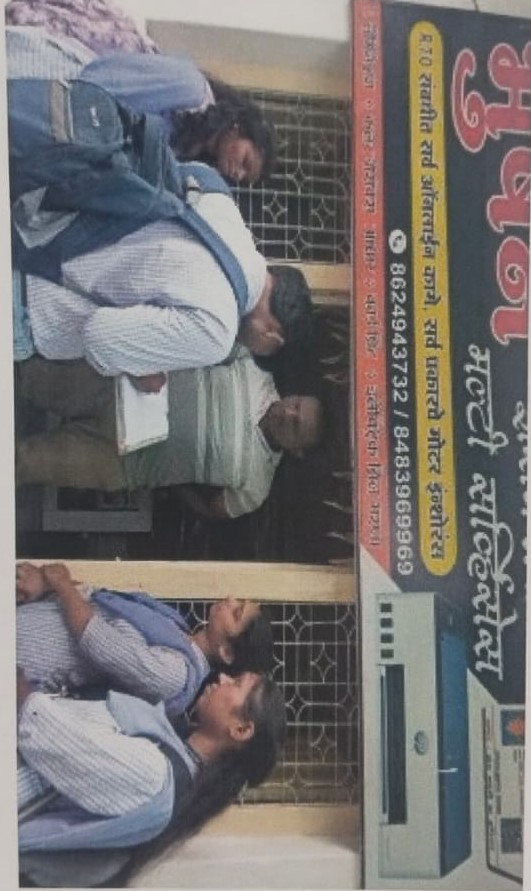 Student performing survey | 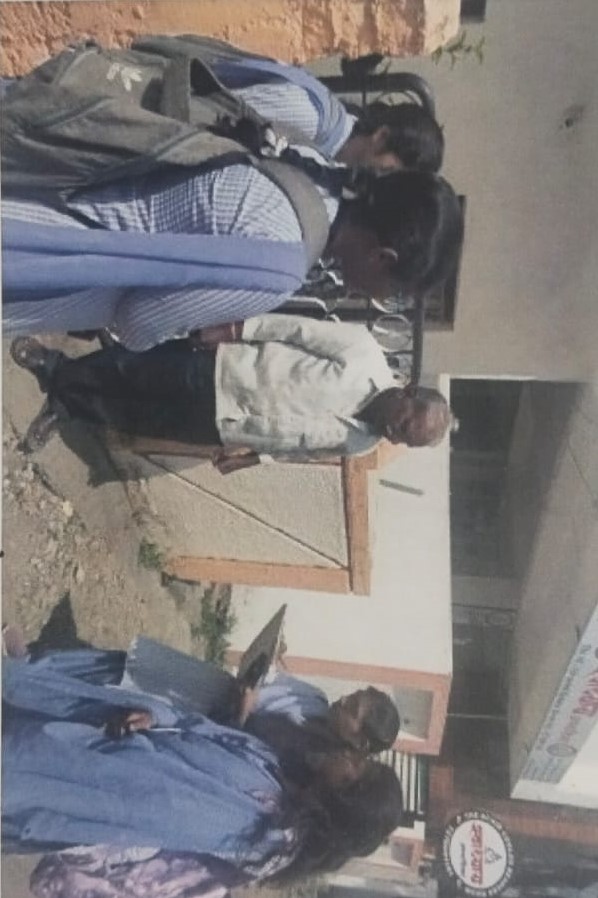 Communicate with people |
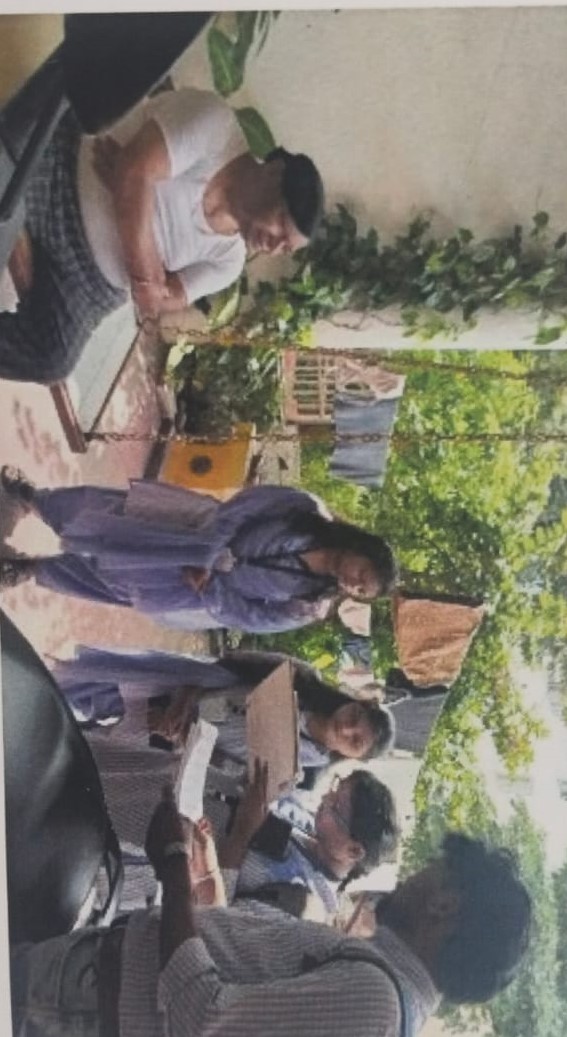 Interaction with people | 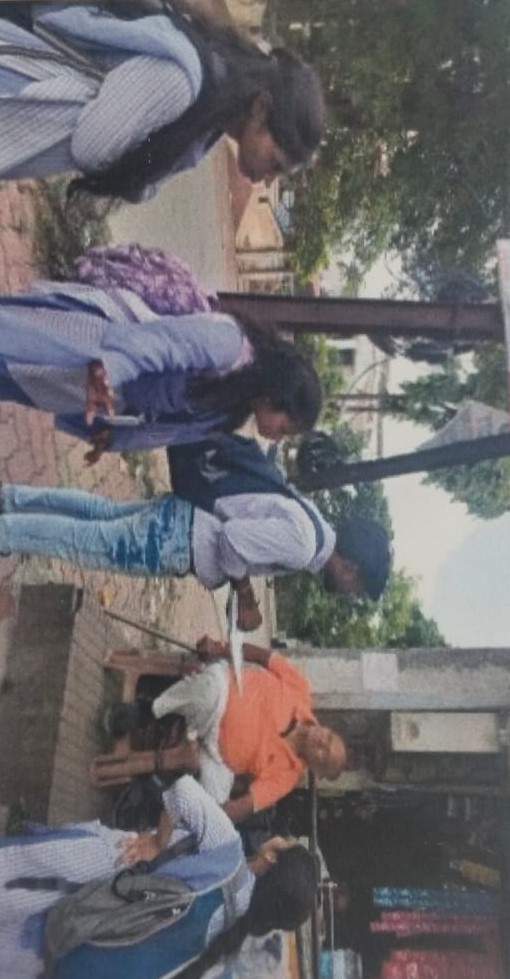 Discussion and sharing of view on environment |
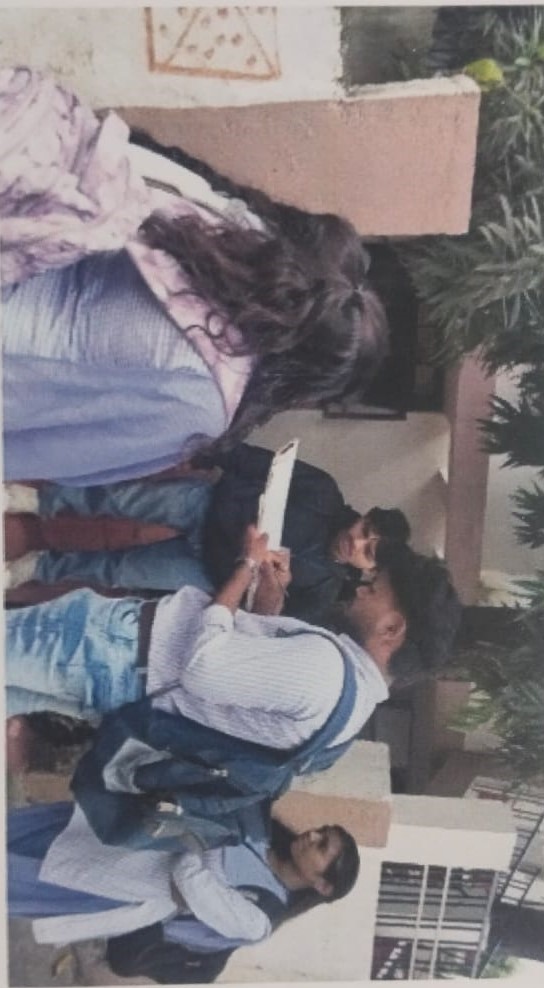 performing survey | 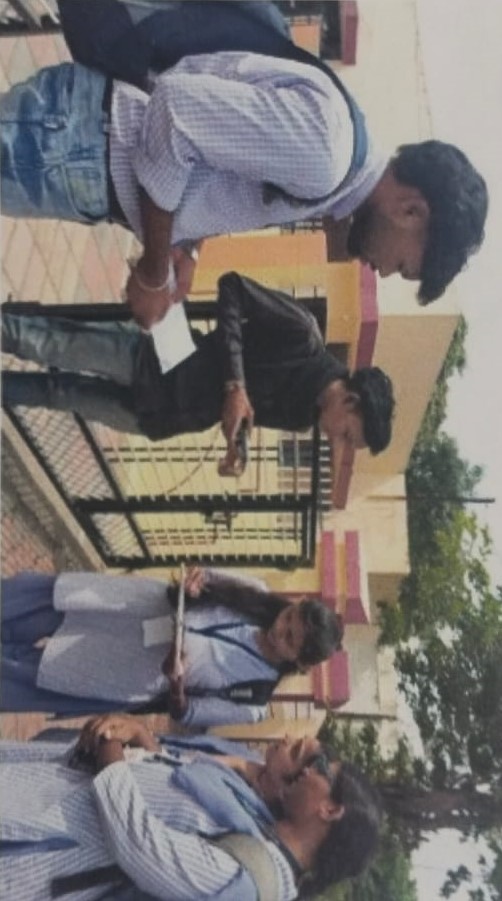 survey photo |
Attendance Sheet:
 |