SHRI SHIVAJI SCIENCE COLLEGE, AMRAVATI
DBT STAR COLLEGE PROJECT ACTIVITY
ACTIVITY REPORT

UNDERSTANDING ENVIRONMENTAL AWARENESS AND PRACTICES AT GADGE NAGAR, AMRAVATI
Activity Dates: 07.10.2025
Type of Activity: Minor Research Project
Organizing Department: Department of Environmental Science
Program Coordinators: Mr. V. D. Bute
Head of the Department: Dr. S. P. Ingole
External Collaborator (if any): No
Objectives:
- • To assess the level of environmental awareness among residents of Gadge Nagar.
- • To study the waste management practices followed in households, including the use of dustbins and waste segregation.
- • To analyse the extent of energy conservation methods adopted, such as the use of solar energy and electric appliances efficiently.
- • To evaluate the awareness and implementation of water conservation techniques in daily household activities.
- • To examine residents’ participation in eco-friendly practices such as recycling, use of electric vehicles, and responsible disposal of waste.
No of Beneficieries: 03
Classes Involved: B.Sc. III year CEB and CEZ
Venue of the Activity: GADGE NAGAR, AMRAVATI
Activity Report:
Introduction:
The environment is the foundation of life on Earth and provides essential natural resources such as air, water, soil, forests, minerals, and energy. Human survival and development depend on the availability and balance of these resources. However, in recent decades, rapid urbanization, industrial growth, deforestation, population increase, and careless human behaviour have caused severe environmental degradation. Issues like climate change, air pollution, water scarcity, improper waste disposal and loss of biodiversity are now visible not only at a global level but also within local communities.
In developing cities like Amravati in Maharashtra, urban localities are expanding and creating pressure on natural resources. Gadge Nagar is one such residential area where increasing population, growing consumption and daily household waste generation directly affect the local environment. Studying environmental awareness and eco-friendly practices at this local level helps us to understand how residents think, what they know, and what actions they take to protect nature.
Methodology:
Study Area: Gadge Nagar, Amravati, Maharashtra, India
Location and Background
Gadge Nagar is a prominent and well-developed residential locality situated in the south-western part of Amravati city in Maharashtra. The area is named after the social reformer Sant Gadge Maharaj, who emphasized cleanliness, social reform, and awareness. This makes the locality highly suitable for an environmental literacy and awareness-based study. The area mainly consists of urban middle-class families, students, employees, small business owners, and retired residents. It is a well-known residential area in Amravati city. It includes important places like ISKCON Temple, Sant Gadge Maharaj Samadhi Mandir, and Rathi Nagar Garden. The locality reflects normal urban living conditions with middle-class families. People are educated but may not fully adopt eco-friendly practices in daily life. It helps understand how urban citizens manage waste and resources at a family level.
Site Description
This sub-section provides a more detailed description of the physical, social, and environmental characteristics of Gadge Nagar: Type of Area: Planned residential colony with well-constructed roads, drainage systems, and municipal services under Amravati Municipal Corporation (AMC). Residential Pattern: Includes individual houses, row houses, apartments, and small rental units. Most homes have RCC structures with basic sanitation facilities. Public Utilities: Availability of municipal water supply and household tap connections, Street lighting and electricity supply from Maharashtra State Electricity Distribution Company Limited (MSEDCL), Dustbins placed in certain common areas by AMC, but segregation at source is limited.Cleanliness & Waste Disposal: Household waste is collected by municipal workers daily or on alternate days, No separate system for wet and dry waste in most households, Open dumping is rare but mixed waste is common, Rathi Nagar Garden – Green public space used for morning walks and children’s recreation, Tree plantation along internal streets and temple areas, Small open plots which sometimes serve as dumping spots due to lack of awareness, Mostly two-wheelers, bicycles, and a few electric scooters in use, City buses, auto-rickshaws and private vehicles are main transport modes.
Presence of temples like ISKCON Temple and Sant Gadge Maharaj Samadhi Mandir which also conduct cleanliness initiatives occasionally. Residents participate in cultural events, religious gatherings, and social awareness activities at community halls or temple premises, ISKCON
Temple, Amravati, Sant Gadge Maharaj Samadhi Temple, Rathi Nagar Garden, Residential colonies, schools, local markets, and coaching institutes within 1–2 km radius.
4. Geographical and Demographic Information
Feature Details
Latitude approx. 20.93° North
Longitude approx. 77.75° East
Type of Settlement Urban residential colony
Population Moderate to high-density (under Amravati Municipal Corporation)
Climate Tropical – Hot summers, moderate monsoon, mild winter
This analysis makes Gadge Nagar an ideal survey site to study how urban populations practice eco-friendly behaviour in their everyday lives.
Sampling Method
A simple random sampling method was adopted to avoid bias and ensure that households from different lanes and sections of Gadge Nagar were represented. Sample Size: 50–60 households. Target Respondents: One responsible adult member from each family (preferably the person who makes household decisions or manages daily chores). Selection Criteria: Houses were selected randomly, Only one respondent was interviewed per household to avoid repetition, Both male and female participants were included, All socio-economic groups within the locality were covered as far as possible, Nature of Respondents: Homemakers, working professionals, senior citizens, and youth (18+).
Data Collection Process: Method: Door-to-door personal visit and face-to-face interaction. Duration: Data collection was conducted within a single day. Procedure: Introduction of survey purpose to the household members, Consent was taken verbally before asking questions, Respondents were assured that data would be used only for academic purposes, Answers were recorded manually on printed questionnaires and with support of mobile notes where needed
Data Collected Includes: Household waste disposal practices, Use of dustbins and waste segregation, Awareness about environmental issues, Usage of solar energy, electric vehicles, and water-saving methods, Options and willingness to follow eco-friendly habits
Tools and Techniques Used: Printed questionnaire forms, pen-paper, clipboard, mobile phone for note-taking, Informal interaction and observation of physical surroundings (e.g., seeing dustbins placed outside houses), Data Analysis Method: Responses were manually counted, categorized and converted into percentage form (no Excel or software used), Presentation Methods (later in report): Tables, percentage analysis, observation-based interpretation.
Data Presentation and Analysis:
A total of 50–60 households from Gadge Nagar, Amravati were surveyed to understand their level of environmental awareness, waste management practices, use of energy resources, and water conservation behaviour. The data is presented in the form of question-based tables, summary tables, and graphical visualizations.
Observation Table:
1. Household Waste Management
Sr.
No. Question Response Percentage (%)
1 Do you use a dustbin in your home? Yes 100%
2 Do you segregate wet and dry waste separately? No (mostly) Yes – 20% / No – 80%
3 Do you use cloth or reusable bags instead of plastic? Yes 60%
4 Do you convert kitchen waste into compost/fertilizer? No Yes – 10% / No – 90%
5 Is garbage collected regularly by municipal workers? Yes Yes – 85% / No – 15%
6 Do you segregate electronic waste (e-waste)? No Yes – 15% / No – 85%
7 How do you dispose leftover household medicines (Throw away) 100%
2. Energy Use & Eco-Friendly Practices
Sr.
No. Question Response Percentage (%)
7 What fuel is used for cooking? (LPG/Electric/Wood) LPG 95% LPG / 5% Others
8 Do you switch off lights and fans when not in use? Yes Yes – 75% / No – 25%
9 Do you use solar panels/solar heater at home? No (mostly) Yes – 7–10%
10 Do you use an electric vehicle (EV/e-bike)? Rare Yes – 15–20%
11 Do you prefer walking for short distances? Yes 60% Yes
12 Do you use public transport for longer travel? Sometimes 50%
3. Water Use and Conservation
Sr. No. Question Response (Most Common) Percentage (%)
1 What source of drinking water do you use? (Tap/Lake/River/Borewell) Tap/Borewell 70% Tap / 25% Borewell / 5% Others
2 Is wastewater reused for gardening or farming? No Yes – 10% / No – 90%
3 Do you use RO / water filter / boiled water for drinking? Yes (RO/Filter) 80% Yes / 20% No
4 Is RO reject water reused (e.g., washing clothes, cleaning, etc.)? No Yes – 15% / No – 85%
5 Do you treat wastewater from homes? (Soak pit / No system) No Yes – 5% / No – 95%
Key Analysis / Interpretation: Although 100% of households have dustbins, only 20% practice proper waste segregation, Solar energy usage is very low (7–10%), showing poor adoption of renewable resources, Electric vehicle usage is limited (15–20%) but slowly increasing, Awareness about pollution is high, however awareness about government schemes and recycling remains low, Water-saving techniques are practiced by only 5% of families, showing extremely low concern for water conservation, People are aware, but implementation of eco-friendly habits is very low due to lack of habit, awareness, or motivation.
Result:
The survey conducted in Gadge Nagar, Amravati revealed that although general environmental awareness exists among people, its practical application in daily life is significantly low. The key results are as follows:
Waste Management: 100% of households reported using dustbins, However, only 20% practiced proper segregation of wet and dry waste, while 80% disposed of all waste together.
Use of Eco-Friendly Alternatives: Only 7–10% of respondents used solar energy (solar panels or heaters), 15–20% of households reported using electric two-wheelers or vehicles, Water-saving techniques such as rainwater harvesting, water recycling, low-flow taps were practiced by only around 5%. Awareness vs. Practice Gap: Although 60% of people were aware of pollution and environmental issues, only a small number actually implemented eco-friendly practices, Knowledge of government schemes like Swachh Bharat Abhiyan, Solar Subsidy, Ujjwala Yojana was low (only 25–30% aware), Lack of motivation, lack of proper guidance, and perception that it is “not necessary” were common reasons for not adopting eco-friendly habits.
Major Finding: Awareness about environmental protection exists, but responsible actions are limited, Water conservation awareness was especially low, with most people admitting that they waste water unknowingly, Residents showed interest in participating in awareness programs or campaigns if organized by local authorities or educational institutions.
Conclusion:
The study concludes that Gadge Nagar residents possess a basic understanding of environmental issues such as pollution, waste accumulation, and climate change. However, practical eco-friendly actions such as waste segregation, water conservation, and use of renewable energy are not widely adopted.
There is a significant gap between environmental awareness and eco-friendly behaviour. To improve environmental sustainability in Gadge Nagar, the following steps are recommended: Conduct regular awareness drives and workshops at community levels, Encourage wet and dry waste segregation by providing separate bins and regular municipal collection, Promote the usage of solar panels, electric vehicles, and rainwater harvesting systems through government incentives, Educate households about the importance of water-saving techniques through schools, NGOs, and local organizations, Involve youth, students, women, and senior citizens in community cleanliness campaigns and tree plantation programs.
Outcomes:
- The level of environmental awareness among residents of Gadge Nagar is assessed.
- Household waste management practices, including dustbin use and waste segregation, are studied.
- The extent of energy conservation methods such as solar energy use and efficient appliances is analyzed.
- Awareness and implementation of water conservation techniques are evaluated.
- Participation in eco-friendly practices like recycling, electric vehicle use, and proper waste disposal is examined.
Photos:
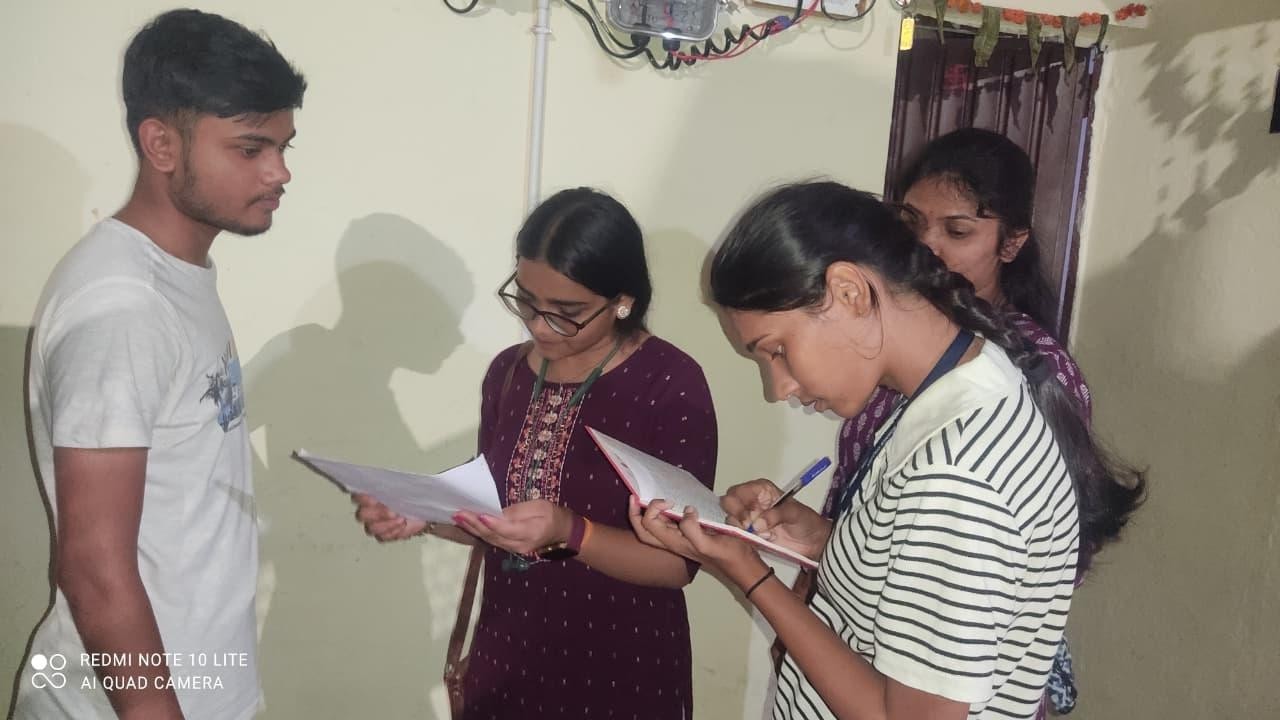 Gadge Nagar provides a unique setting to examine how local residents translate environmental awareness into practical daily actions | 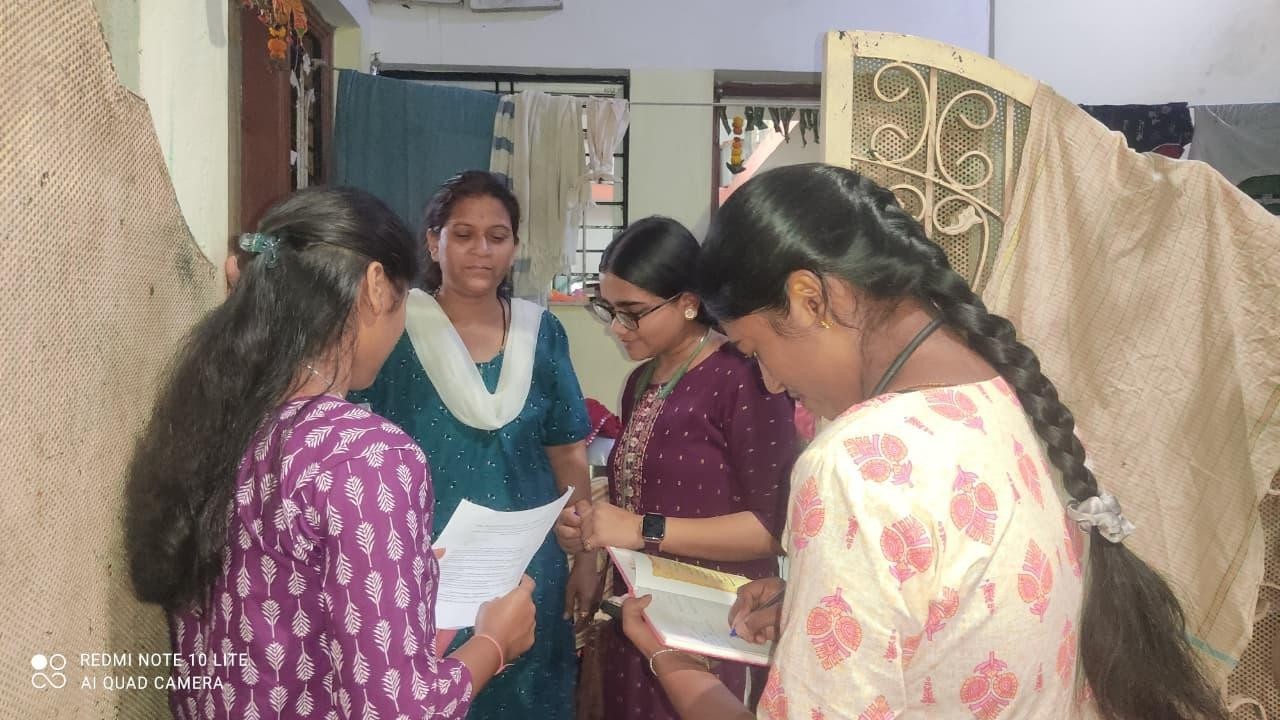 Surveying change residents of Gadge Nagar share their environmental wisdom |
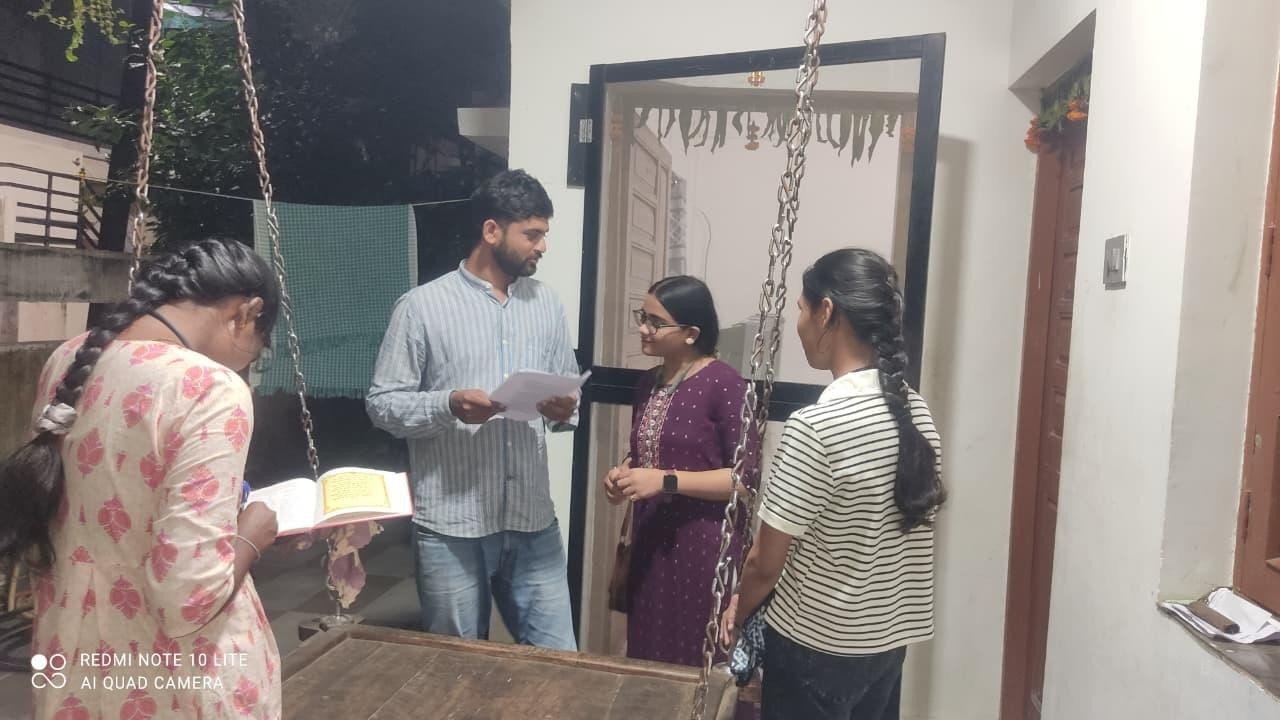 The study emphasizes that true sustainability begins with informed minds and responsible habits at the grassroots level | 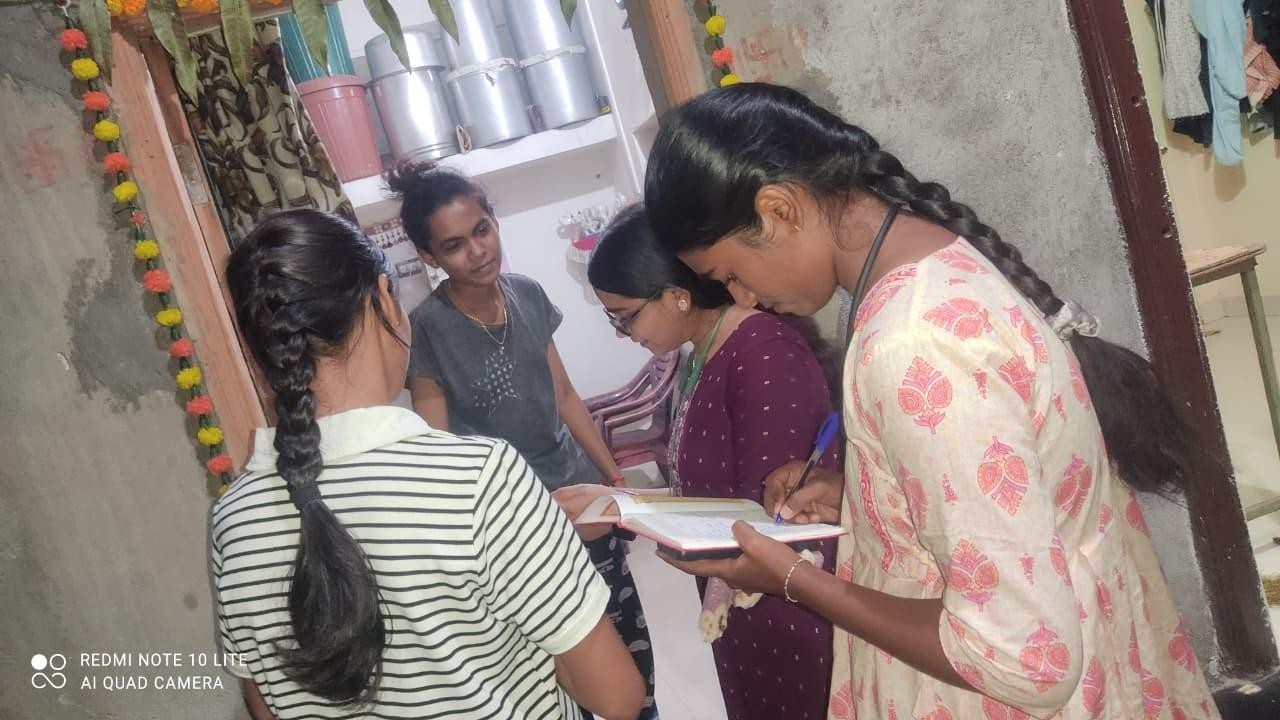 Survey Photo |
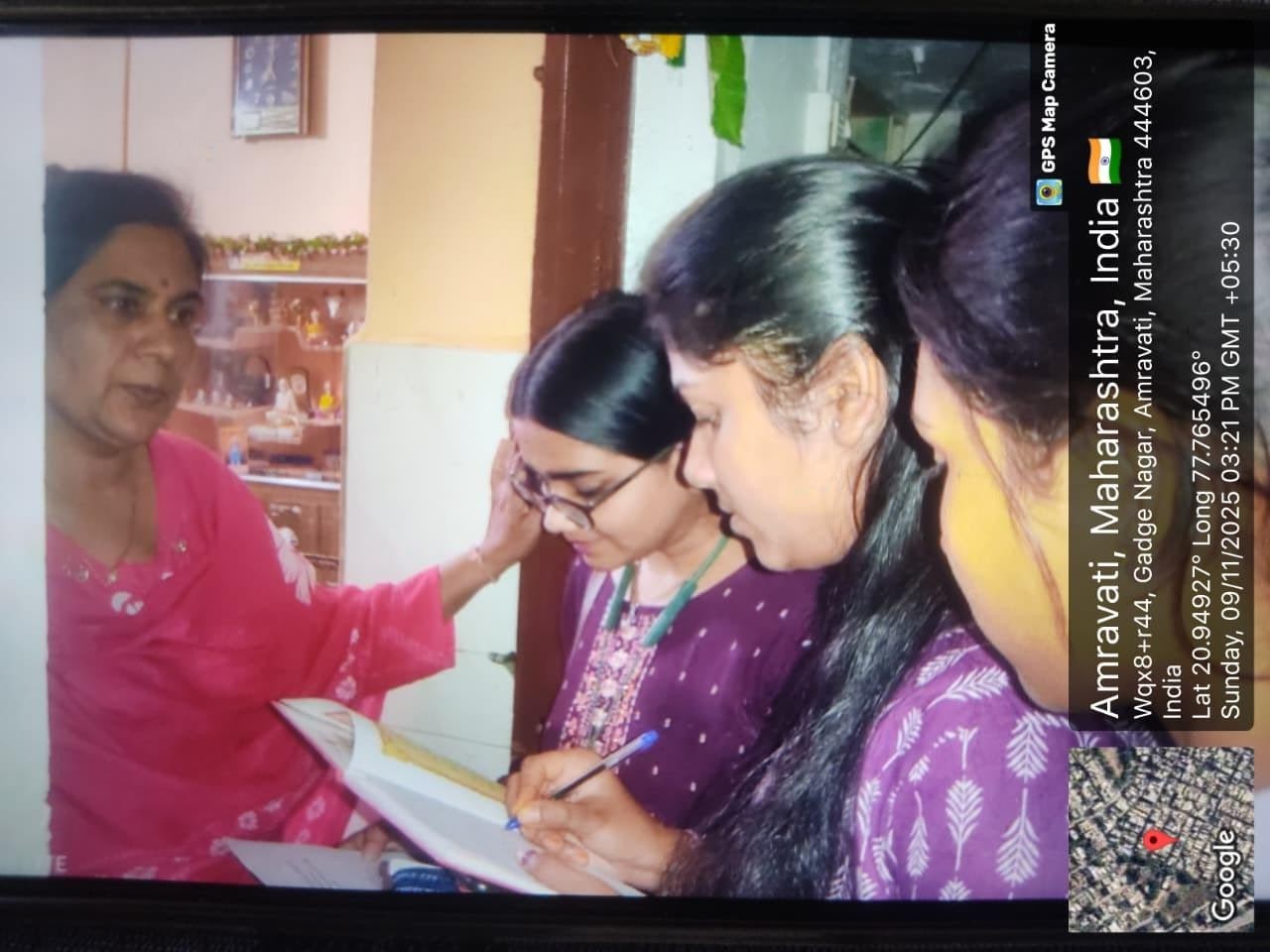 Interaction during Survey Photo | 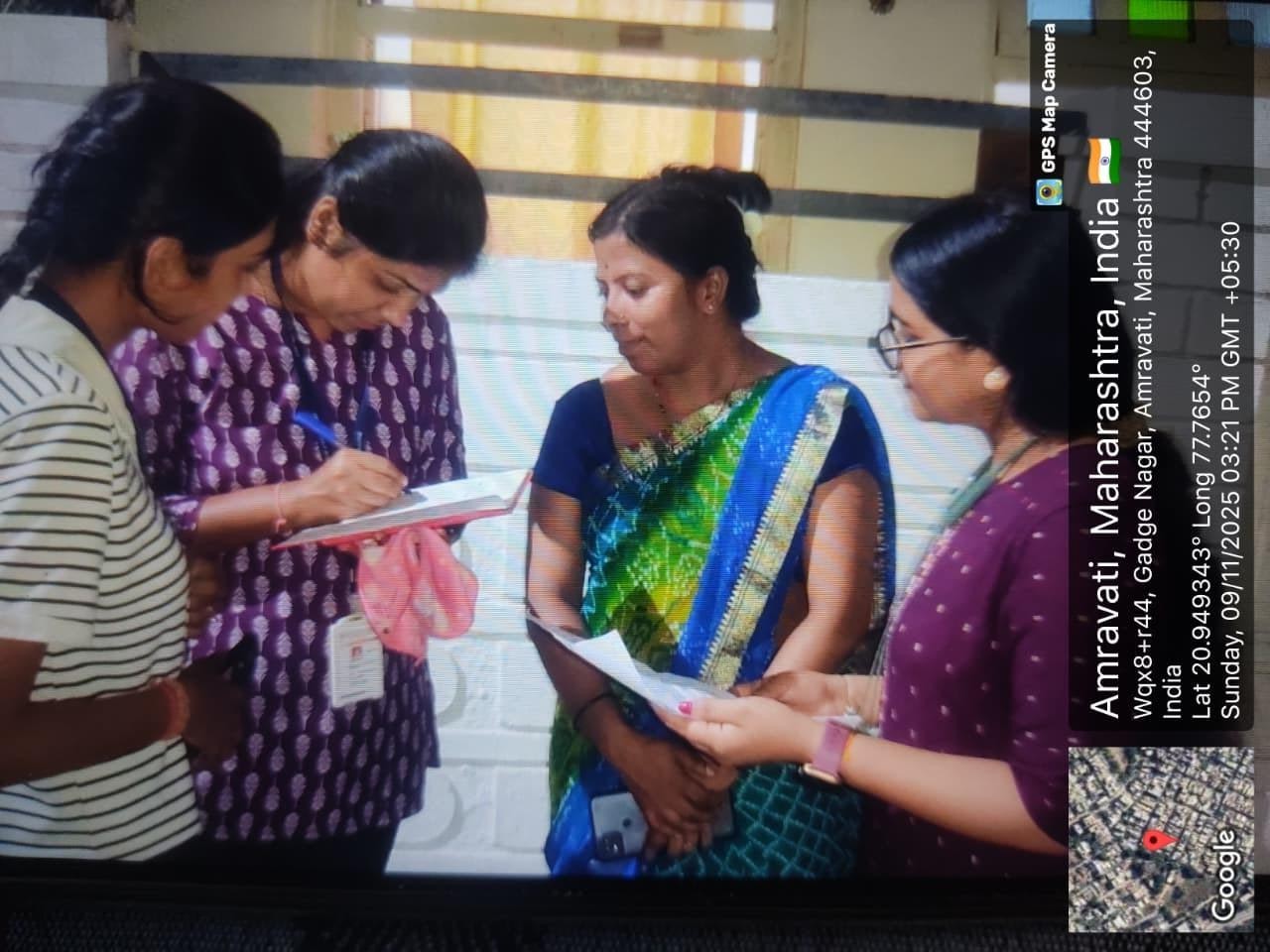 Interaction during Survey Photo |
Attendance Sheet: