SHRI SHIVAJI SCIENCE COLLEGE, AMRAVATI
DBT STAR COLLEGE PROJECT ACTIVITY
ACTIVITY REPORT

Preparation of Biodiversity Register of Navsari Prabhag No-3, Amravati City
Activity Dates: Nov 2025
Type of Activity: Minor Research Project
Organizing Department: Department of Environmental Science
Program Coordinators: Mr. V. D. Bute
Head of the Department: Dr. S. P. Ingole
External Collaborator (if any): No
Objectives:
- To document and record local biological resources and species diversity
- To preserve traditional knowledge related to biodiversity and its uses
- To promote conservation and sustainable use of natural resources.
- To identify threats to biodiversity and suggest protection measures.
- To support local communities in managing and protecting their environment.
No of Beneficieries: 04
Classes Involved: B.Sc. III year CEB and CEZ
Venue of the Activity: Navsari Prabhag No-3, Amravati City
Activity Report:
INTRODUCTION
Biodiversity refers to the variety and variability of life forms present on Earth, including plants, animals, microorganisms, and the ecosystems they inhabit. It is commonly studied at three levels: genetic diversity (variation within species), species diversity (variety of species in a region), and ecosystem diversity (different types of habitats such as forests, wetlands, grasslands, and deserts). Biodiversity is essential for maintaining ecological balance, as each organism plays a specific role in the ecosystem. It supports vital processes such as nutrient cycling, pollination, soil formation, and climate regulation. Moreover, biodiversity provides humans with food, medicine, fuel, and raw materials, making it indispensable for survival and economic development.
A Biodiversity Register, often referred to as a People’s Biodiversity Register (PBR), is an important document that systematically records information about the biological resources of a specific area along with associated traditional knowledge. It is prepared at the local level by
communities, with the support of experts, scientists, and local governing bodies. The register
includes detailed information about various plant and animal species, their local names, uses in medicine, agriculture, and daily life, as well as conservation practices followed by the community. It also highlights the status of biodiversity, threats to local species, and measures required for their protection.
PROFILE OF THE CITY
• Amravati City
Amravati is one of the major urban centers of the Vidarbha region in the state of Maharashtra, India. It serves as the administrative headquarters of both Amravati district and Amravati division. The city holds considerable historical, cultural, and economic importance and has developed as a key center for education, agriculture, and trade in central India.
Prabhag Rachana (Ward Structure of Amravati City)
Amravati city is governed by the Amravati Municipal Corporation, which is responsible for urban planning, infrastructure development, and delivery of civic services. For administrative efficiency, the city is divided into multiple wards, commonly referred to as Prabha’s
Navsari (Ward: 3)
1. Geographical Location
Navsari is in Amravati district of Maharashtra, India, in the Vidarbha region. It lies on the Deccan Plateau and is surrounded by agricultural land and semi-urban settlements.
Total Population Approximate population (your given data): 30,705 This includes different social groups such as SC and ST population. It represents a semi-urban/rural settlement pattern.
Climate
The provided Climatograph offers a detailed overview of the monthly climate dynamics in the Navsari area of Amravati, specifically correlating precipitation with temperature fluctuations throughout the year. The data reveals a distinct tropical monsoon climate, characterized by a prolonged dry season followed by an intense rainy period. Rainfall remains minimal from January to May, typically staying below 10mm, which coincides with a steady rise in temperatures that peak in May at approximately 43°C. The onset of the monsoon in June brings a dramatic increase in moisture, with precipitation levels surging to a peak in July (230°C) and August (200°C). Interestingly, as rainfall increases, the maximum temperature line shows a sharp decline due to cloud cover and the cooling effect of the rain, stabilizing around 30–32°C during the wet months. Minimum temperatures follow a similar seasonal curve, reaching their lowest point in December and January at about 12°C. For the purposes of a Biodiversity Register, this graph explains the ecological "pulse" of the region, where the extreme heat of the pre-monsoon summer followed by heavy seasonal rains dictates the life cycles of the local flora and fauna.
Land Use Pattern
Land use in Navsari area mainly includes: Agricultural land (major portion) – crops like cotton, soybean, and cereals Residential areas – houses and settlements Open land and grazing areas Small forest patches or plantations
METHDOLOGY
The biodiversity survey was conducted in the Navsari area of Amravati district, Maharashtra, India. The study area includes a mosaic of different habitats such as agricultural fields, forest patches, open grasslands, and nearby water bodies including ponds and seasonal streams.
Primary Data Collection
Primary data collection refers to the process of gathering first-hand information directly from the study area through field observations and scientific sampling methods. In the biodiversity survey of Navsari area, primary data collection played a crucial role in understanding the actual distribution, diversity, and abundance of plant and animal species in their natural habitats. This method ensures accuracy and reliability, as the data is collected directly by the researcher rather than depending on previously recorded information. For the study of flora (plants), several standard ecological techniques were used. Quadrat sampling was one of the main methods, where square plots of fixed sizes were placed in different locations. Within these quadrats, all plant species were identified and recorded. This helped in calculating important ecological parameters such as species richness, density, frequency, and abundance. It also provided information about vegetation structure and allowed comparison between different habitats. Transect sampling was another important technique used to study plant distribution. In this method, a line or belt was laid across the study area, and all plant species along that line were recorded. This method is useful in understanding how plant species vary across environmental gradients like soil type, moisture, and sunlight.
Flora (Plant) Survey Techniques
The study of plant diversity was conducted using several scientific sampling techniques to assess vegetation composition, density, and distribution patterns.
The quadrat sampling method was used as a quantitative approach to study plant communities. In this method, square plots of fixed dimensions were laid randomly or systematically across the study area. Different quadrat sizes were used depending on vegetation type, such as 1m × 1m for herbs, 5m × 5m for shrubs, and 10m × 10m for trees. Within each quadrat, all plant species were identified, counted, and recorded.
Fauna (Animal) Survey
Techniques The study of animal diversity involved both direct and indirect methods to ensure comprehensive documentation of species present in the area.
Secondary Data Collection
Secondary data collection involved gathering information from existing sources such as research papers, scientific journals, government reports, and reliable news articles related to biodiversity in the Navsari area and surrounding regions of Amravati district. This data helped in supporting field observations and provided a broader understanding of biodiversity patterns and environmental issues.
BIODIVERSITY OF THE AREA
The Navsari area of Amravati is an important peri-urban and semi-urban locality that supports a rich and diverse range of living organisms. The biodiversity of this area includes different forms of flora, fauna, insects, birds, small mammals, reptiles, amphibians, soil organisms, and aquatic life, all of which together contribute to the ecological balance of the locality. Due to the presence of residential settlements, open lands, roadside green spaces, agricultural patches, gardens, vacant plots, and seasonal water accumulating areas, Navsari provides favorable conditions for the survival of many life forms. The biodiversity of the area is influenced by both natural and human-managed environments, making it a transitional zone between urban development and rural landscape. Such mixed land use increases ecological variety and supports biological richness even within a limited geographical area.
Floral Diversity
The bar chart provided displays the Floral Diversity within the Navsari area of Amravati, categorizing documented plant life by their growth forms and medicinal utility. The data reveals a robust ecosystem dominated by Trees, with 904 distinct species identified, suggesting a well established canopy and high woody biomass. Herbs form the second largest group with 450 species, followed by Shrubs at 280 species, indicating a diverse understory and ground cover. The register also highlights a significant ethnobotanical value within the region, identifying 100 species of Medicinal Plants, while Climbers round out the list with 85 species. From a biodiversity standpoint, this distribution indicates a multi-layered forest structure that provides varied niches for local fauna, with the high tree count likely serving as the foundational support for the area’s birds and insects.
Faunal Diversity
The bar chart provided illustrates the Faunal Diversity in the Navsari area of Amravati, documenting the richness of the species across six major taxonomic groups. The data highlights a remarkable avian diversity, with Birds being the most dominant group at 392 identified species. This high count suggests that the region’s diverse flora and seasonal climate provide ideal nesting and foraging habitats for both resident and migratory birds. Insects also show significant representation, led by Butterflies (126 species) and Beetles (80 species), which play crucial roles in pollination and nutrient cycling. Smaller populations of Reptiles (40 species) and Mammals (38 species) are documented, while Amphibians comprise the smallest group with 11 species. For your People's Biodiversity Register, this graph serves as evidence of a healthy, multi-tiered food web where high insect and plant diversity supports a large and varied bird population.
Ecosystem & Habitat
The habitat and ecosystem of Navsari area are highly diverse because the locality contains a combination of urban, peri-urban, agricultural, wetland, and open-land environmental features. The major habitats found in the area include roadside plantations, home gardens, residential green spaces, agricultural fields, field boundaries, open plots, scrub patches, seasonal drainage channels, ponds, waterlogged areas, and small unmanaged green patches. These habitats provide food, shelter, breeding spaces, nesting sites, moisture, and microclimatic support to different groups of organisms. From an ecological perspective, Navsari includes a urban ecosystem formed by buildings, roads, and planted vegetation; a peri-urban ecosystem that acts as a transition between developed and less-developed land; an agricultural ecosystem that supports crop-associated biodiversity and soil organisms; and a wetland or seasonal aquatic ecosystem formed by temporary water bodies, nalas, and drainage-linked moisture zones
THREATS TO BIODIVERSITY
Biodiversity refers to the variety of living organisms, including plants, animals, and microorganisms, present in a particular region. It plays an important role in maintaining ecological balance and supporting life on Earth. The Navsari area of Amravati district is rich in biodiversity due to the presence of natural vegetation, agricultural lands, and nearby forest regions. This area provides a suitable habitat for many species of trees, shrubs, herbs, birds, insects, and small animals. The diversity of flora and fauna contributes to environmental stability and supports the livelihood of local people. However, this biodiversity is gradually declining due to various human activities and environmental changes. One of the major threats is deforestation. Trees are cut down for agriculture, construction, and developmental purposes. This leads to the destruction of natural habitats, forcing animals to migrate or even die due to lack of shelter and food. Continuous deforestation also disturbs the ecological balance and reduces the overall green cover of the region.
CONSERVATION MEASURES
Conservation of biodiversity means protecting, preserving, and properly managing plants, animals, and natural resources so that they remain available for future generations. The Navsari area of Amravati district is rich in biodiversity due to its natural vegetation, agricultural lands, and nearby forest ecosystems. However, increasing human activities such as deforestation, urbanization, and pollution have disturbed the ecological balance.
Therefore, strong and effective conservation measures are necessary to protect and sustain biodiversity in this region. One of the most important steps in biodiversity conservation is afforestation and reforestation. Planting more trees and restoring degraded forest areas helps increase green cover, improve air quality, and provide habitat and food for various species. Protection of natural habitats like forests, grasslands, and water bodies is equally essential. Strict implementation of laws to prevent illegal tree cutting, land encroachment, and habitat destruction can help maintain a safe environment for plants and animals.
COCLUSION & RECOMMENDATIONS
The study of biodiversity in the Navsari area of Amravati district shows that the region is rich in a variety of living organisms, including plants, animals, birds, and microorganisms. The presence of agricultural lands, forest patches, grasslands, and water bodies creates a suitable environment for different species to survive and grow. This diversity helps in maintaining ecological balance and supports natural processes such as pollination, nutrient cycling, and food chains. Biodiversity is very important as it provides essential resources like food, medicine, fuel, and raw materials. It also supports the livelihoods of local people and contributes to climate regulation, soil conservation, and water management. Thus, biodiversity plays a vital role in both environmental sustainability and human well-being.
Outcomes:
- Local biological resources and species diversity are properly documented and recorded.
- • Traditional knowledge related to biodiversity and its uses is preserved for future generations.
- • Conservation and sustainable use of natural resources are promoted.
- Threats to biodiversity are identified and suitable protection measures are suggested.
- • Local communities are supported in managing and protecting their environment.
Photos:
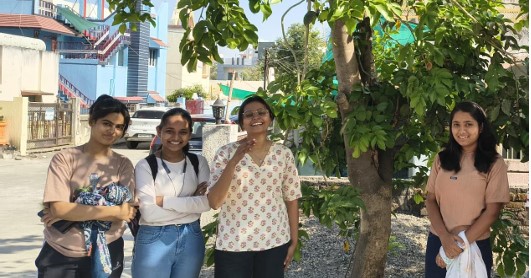 Group photo during survey | 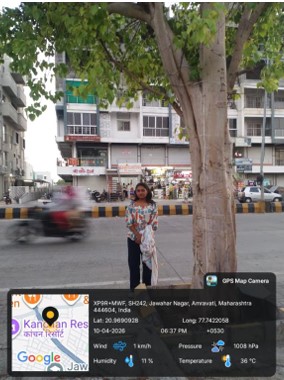 Navasari area |
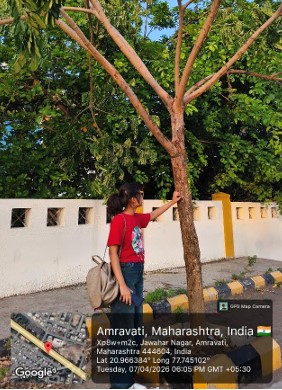 Surveying Jawahar Nagar, one tree at a time at Navsari | 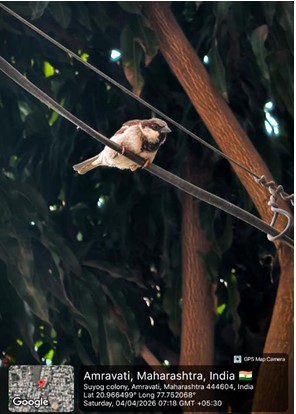 The humble house sparrow |
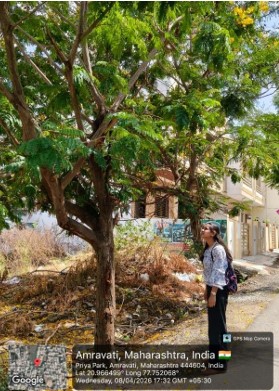 Tree counting at Navsari area |  blank |
Attendance Sheet: