SHRI SHIVAJI SCIENCE COLLEGE, AMRAVATI
DBT STAR COLLEGE PROJECT ACTIVITY
ACTIVITY REPORT

‘Preparation of Biodiversity Register of Ambapeth Gaurakshan Namuna Prabhag no:-13 ,Amravati city’
Activity Dates: 30.03.2026
Type of Activity: Minor Research Project
Organizing Department: Department of Environmental Science
Program Coordinators: Mr. V. D. Bute
Head of the Department: Dr. S. P. Ingole
External Collaborator (if any): No
Objectives:
- To identify and record different species of plants, animals, birds, and insects present in the study area.
- To understand the ecological importance of local biodiversity and its role in maintaining environmental balance.
- . To create awareness among local people about the importance of conservation of biodiversity.
- To analyze the impact of human activities on the biodiversity of the selected area.
- To encourage community participation in protecting and conserving natural resources.
No of Beneficieries: 03
Classes Involved: B.Sc. III year CEB and CEZ
Venue of the Activity: AmbaPeth, Amravati
Activity Report:
INTRODUCTION
Biodiversity refers to the variety and variability of all living organisms present on Earth, including plants, animals, microorganisms, and the ecosystems they form. It encompasses diversity at three levels—genetic diversity, species diversity, and ecosystem diversity. Biodiversity is essential for maintaining ecological balance and supporting life on Earth. It provides numerous ecosystem services such as food, medicine, clean air, water purification, climate regulation, and soil fertility, which are vital for human survival and well-being.
The conservation of biodiversity has become a global concern due to increasing threats such as urbanization, deforestation, pollution, climate change, and overexploitation of natural resources. Rapid development activities have led to habitat destruction and loss of species, which directly affects ecosystem stability. Therefore, it is important to document and conserve biodiversity at the local level to ensure sustainable development.
A Biodiversity Register is an important tool used to record the availability of biological resources, traditional knowledge, and ecological information of a particular area. It helps in identifying local species of plants and animals, understanding their uses, and promoting conservation awareness among local communities. Preparation of a biodiversity register also encourages participation of people in protecting their natural surroundings.
This project was conducted by a team of five undergraduate students, Anisha Gomase, Anushri Jachak, Saloni Jachak, Jiya Dahake, and Payal Solanke, from the Department of Environmental Science, B.Sc. Final Year, Shri Shivaji Science College, Amravati. The team collaboratively worked on the preparation of the biodiversity register of Ambapeth Gorakshan Nauma, Ward No. 13, involving field observations, data collection, and documentation of local flora and fauna. Each member actively contributed to the successful completion of the project, enhancing their practical knowledge, teamwork skills, and awareness regarding biodiversity conservation.
PROFILE OF THE CITY
Amravati is one of the important cities located in the Vidarbha region of the state of Maharashtra. It serves as the administrative headquarters of the Amravati district as well as the Amravati division and holds a significant place in terms of history, culture, economy, and education. The city has ancient roots dating back to around the 11th century and is believed to have been established around 1097 AD. During the British period, it was part of the Berar region and played an important role in administration and trade. After independence, it became part of Maharashtra in 1960 and has since developed steadily. Amravati is also known for its religious importance, especially the famous Ambadevi Temple, which attracts many devotees.
Prabhag rachna
Prabhag Rachana (ward structure) is an important administrative system used for the proper management and development of urban areas. In Amravati, the municipal administration is carried out by the Amravati Municipal Corporation, which divides the city into several smaller units called “Prabhag” or wards.
This division helps in efficient governance, planning, and delivery of public services at the local level. Amravati city is divided into around 70+ wards, which are grouped into multiple prabhags for administrative convenience. Each prabhag consists of a few wards and is represented by elected corporators. These corporators are chosen by the people through municipal elections and are responsible for addressing the problems and needs of their respective areas.
idential locality Badnera – Railway junction and transport hub Camp Area – Old cantonment and developed zone Rukhmini Nagar – Modern residential area Navsari – Growing residential locality Wadali – Known for Wadali Talao Dastur Nagar – Well-developed residential area Sai Nagar – Expanding urban locality MIDC Area – Industrial zone Gadge Nagar – Important residential and institutional area Morshi Road Area – Developing commercial belt
Prabhag rachana in Amravati is a well-organized system that ensures effective administration, balanced development, and active public participation. It helps the municipal corporation to manage the city efficiently and improves the overall quality of life for the citizens.
WARD NO:-13 AMBAPETH GAUAKSHAN NAMUNA
Ward No. 13 – Ambapeth–Gorakshan Sample Total Population: 28,225 Scheduled Castes (SC): 1,517 Scheduled Tribes (ST): 863 Areas Included in Ward 13 Amravati Railway Station area, Satidham Temple, Ambapeth, Tarasaheb Garden, Buti Plot, Namuna, Takiya, Mudholkar Peth, Janardan Peth, Gorakshan, Madhav Nagar, New Ganesh Colony, Pannalal Nagar, Balaji Plot, Gadre Plot, Prahlad Colony, Sharada Nagar, Devarankar Nagar, Durga Vihar, Dhanvantari Hospital, Biyani College, HVPM area, Municipal Corporation Office, BSNL Office, Post Office, etc. Sub-divisions 13-A 13-B 13-C 13-D Boundary Description of Ward 13
North Boundary From Itwara Bazaar Chowk (Ismail Cut Piece shop), moving east along the road crossing Chitra Chowk, continuing via Kacheri Road up to the northeast corner junction of the Amravati Railway Station area. East Boundary From the northeast corner junction of the railway station area, moving south along the road up to the railway bridge and Congress Nagar Road junction. From there moving west up to the railway line, then continuing south along the eastern boundary of the railway line up to Navathe Nagar underpass nala bridge. South Boundary From Navathe Nagar underpass nala bridge, moving west along the drainage channel up to the bridge near Chhangani Nagar. From there continuing west along the road up to the main road of Chhangani Nagar. Then moving north up to the nala bridge near Bherde Layout, and from there west along Maroti Nagar road up to Mahajanpuri Gate road (up to the house of Shri Ram Jaiswal). West Boundary From Mahajanpuri Gate road (house of Shri Ram Jaiswal), moving north along the road up to Gandhi Ashram and HVPM bridge. From there moving east via Loteshwar Temple boundary up to Ambanala junction. Then moving east along the road via Ramkrishna Vidyalaya boundary and Aurangpura road up to Ambagate southeast tower. From there moving north along Ambagate up to the northern tower, then east up to Gandhi Chowk tower, and finally north along the road back to Itwara Bazaar Chowk (Ismail Cut Piece shop).
METHODOLOGY The present study was conducted in Ambapeth Gorakshan Nauma, Ward No. 13, located in Amravati city, Maharashtra. The study area includes residential surroundings, roadside vegetation, open spaces, and a nearby water body known as Amba Nala. Although it is an urban area, it supports a variety of flora and fauna. However, increasing human activities and improper waste management have impacted the ecological condition of the area. The site was selected to document local biodiversity and assess environmental conditions. Data Collection Methods The methodology adopted for the preparation of the biodiversity register involved a combination of primary data collection and secondary data collection. A systematic approach was followed to ensure accurate and reliable documentation of biodiversity. 1) Primary Data Collection Primary data was collected through field surveys and direct observation of biodiversity in the study area. Regular visits were conducted at different times of the day, especially during morning and evening hours, to observe maximum diversity of plants and animals. During the field survey, various locations such as roadsides, gardens, open lands, and water bodies were explored. Special attention was given to Amba Nala, which flows through the area. It was observed that Amba Nala was highly polluted. The water appeared dark in color and emitted a strong pungent and foul smell, indicating anaerobic conditions due to lack of oxygen. Such conditions are harmful for aquatic organisms and reflect poor environmental quality. The nala contained large amounts of solid waste, including plastic bags, bottles, food waste, and other domestic garbage.
The following methods were used for primary data collection:
Direct Observation: Identification of plants, birds, insects, and animals in their natural habitat. Photography: Photographs were taken for documentation and identification. Interaction with Local People: Information about commonly found species and their uses was collected. Field Notes: Observations regarding species, location, and environmental conditions were recorded systematically. The collected primary data formed the basis for preparing the biodiversity register.
2) Secondary Data Collection
Secondary data was collected from various reliable sources to support and verify the primary data. The sources of secondary data include:
Books and Reference Materials: Environmental science and biodiversity books were used for species identification and understanding ecological importance. Research Articles and Journals: Previous studies on biodiversity registers and urban biodiversity were referred. Government Reports: Information from the Biological Diversity Act (2002), National Biodiversity Authority (NBA), and Ministry of Environment, Forest and Climate Change (MoEFCC) was used. Internet Sources: Reliable websites were used for additional information and confirmation of species. Local Records: Any available information related to biodiversity in Amravati region was considered. Secondary data helped in confirming species identification, understanding ecological roles, and improving the accuracy of the biodiversity register.
Data Analysis and Documentation
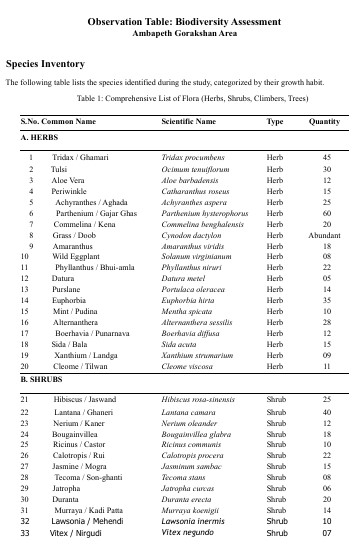
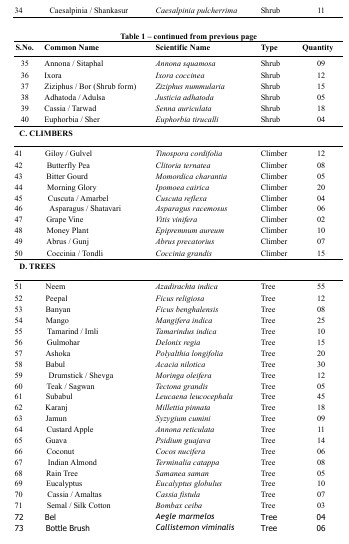
After collecting both primary and secondary data, the information was organized and classified into categories such as plants, birds, insects, and animals. The data was systematically arranged in the form of a biodiversity register, including details like common name, habitat, and uses (if known).
ECOSYSTEM AND HABITAT
Ambapeth Gorakshan Nauma, situated in Ward No. 13 of Amravati city, represents a typical urban ecosystem where natural elements coexist with human settlements. The ecosystem of this area is influenced by both biotic and abiotic components that interact continuously to maintain ecological balance. The region experiences a tropical climate characterized by high temperatures during summer, moderate rainfall during the monsoon season, and relatively mild winters. These climatic conditions support the growth of a variety of plant species and provide suitable habitat for different types of animals. The vegetation of Ambapeth includes a mixture of trees, shrubs, herbs, and climbers that are commonly found in urban and semi-urban environments.
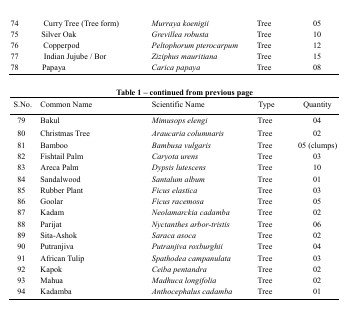
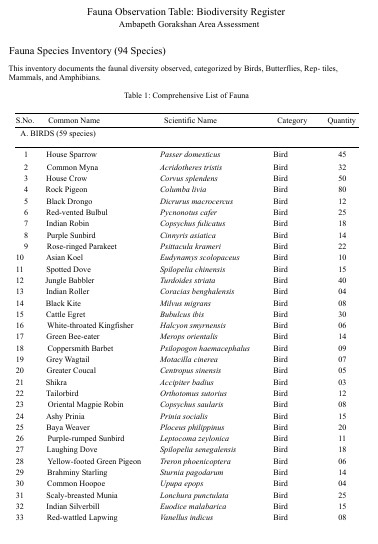
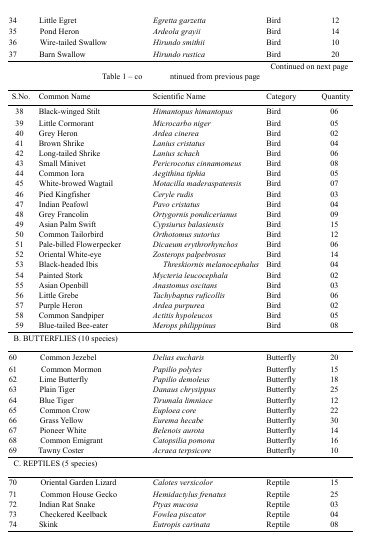
Trees such as Neem, Banyan, Peepal, and Mango are widely distributed along roadsides and residential areas, providing shade, food, and shelter for various organisms. Shrubs and herbs grow abundantly in open spaces, vacant plots, and along roadsides, while climbers are often seen growing on fences, walls, and trees. This vegetation forms the primary producers in the ecosystem, playing a crucial role in photosynthesis, oxygen production, and maintaining the overall environmental quality. The faunal diversity in this area is also significant and includes birds, mammals, reptiles, amphibians, and insects. Birds such as sparrows, crows, pigeons, and mynas are commonly observed in residential and open areas, while butterflies and other insects are frequently found near vegetation.
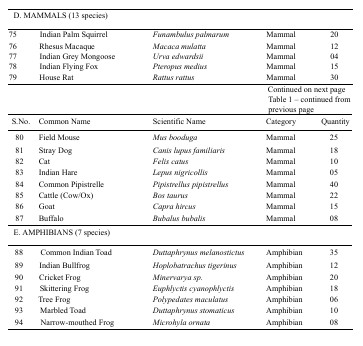
Mammals such as dogs, cats, squirrels, and rodents are well adapted to urban life. Reptiles like lizards and snakes inhabit gardens, walls, and open lands, whereas amphibians such as frogs are mainly seen during the monsoon season in moist and waterlogged areas. These organisms are interconnected through various food chains and food webs, which help in maintaining ecological stability.
THREATS TO BIODIVERSITY
Biodiversity in Ambapeth Gorakshan Nauma, Ward No. 13 of Amravati, is facing several threats due to increasing human activities and environmental degradation. Although the area supports a variety of plant and animal species, the pressure of urbanization and improper management of natural resources has led to a gradual decline in biodiversity.
CONSERVATION MEASURES
The conservation of biodiversity in Ambapeth Gorakshan Nauma, Ward No. 13 of Amravati, is essential to maintain ecological balance and ensure a healthy environment for present and future generations. Due to increasing urbanization, pollution, and human interference, biodiversity in this area is under pressure. Therefore, effective conservation measures must be adopted to protect and restore the natural ecosystem. One of the most important measures is the conservation and enhancement of green cover.
CONCLUSION
The present study on the preparation of a biodiversity register of Ambapeth Gorakshan Nauma, Ward No. 13, Amravati, successfully highlights the diversity and status of flora and fauna in the study area. Through systematic survey and field observations, a variety of plant species including trees, shrubs, herbs, and climbers, as well as animal groups such as birds, butterflies, reptiles, mammals, and amphibians were identified and recorded. The findings reveal that even within an urban environment, a considerable level of biodiversity still exists and plays an important role in maintaining ecological balance.
Outcomes:
- Different species of plants, animals, birds, and insects in the study area are identified and recorded.
- The ecological importance of local biodiversity and its role in environmental balance are understood.
- Awareness is created among local people about the need for biodiversity conservation.
- The impact of human activities on biodiversity is analyzed and recognized.
- Community participation in protecting natural resources is encouraged.
Photos:
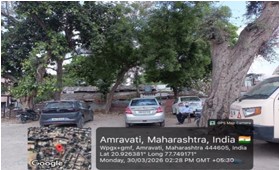 Student perform work of MRP | 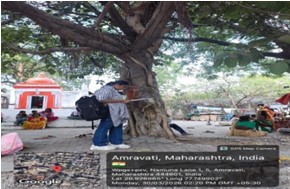 Student perform work of MRP |
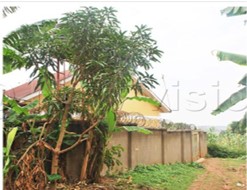 Location photo | 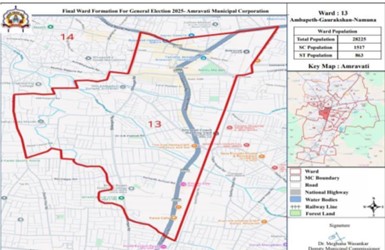 Prabhag Rachana |
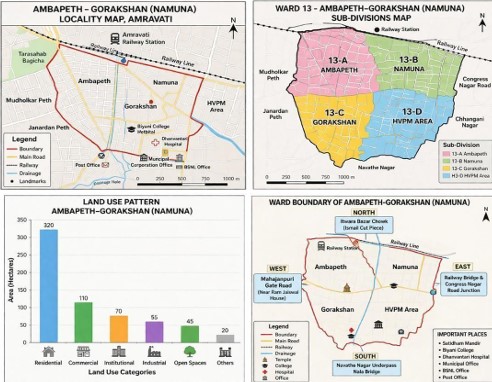 Prabhag Rachana | 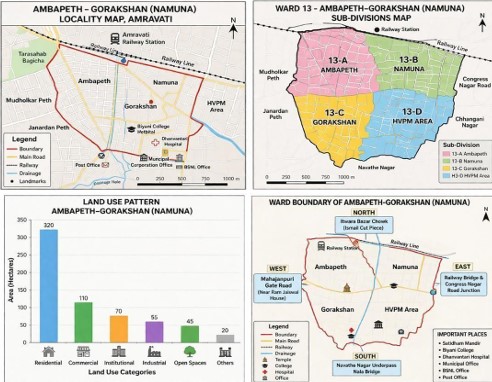 Prabhag Details |
Attendance Sheet:
 |
 |
 |
 |
 |
 |