SHRI SHIVAJI SCIENCE COLLEGE, AMRAVATI
DBT STAR COLLEGE PROJECT ACTIVITY
ACTIVITY REPORT

Exploring envieonmental literacy for conservation and sustainability at Pusda
Activity Dates: Nov 2025
Type of Activity: Minor Research Project
Organizing Department: Department of Environmental Science
Program Coordinators: Mr. V. D. Bute
Head of the Department: Dr. S. P. Ingole
External Collaborator (if any): No
Objectives:
- To promote awareness and understanding of the environment and its challenges.
- To encourage sustainable resource management and conservation practices.
- To develop the capacity to analyze, evaluate, and solve environmental problems.
- To instill a sense of responsibility and stewardship toward the environment.
- To motivate participation in environmental protection initiatives at local and global levels
No of Beneficieries: 50 Families
Classes Involved: B.Sc. III year CEB and CEZ
Venue of the Activity: Pusda, Tq. Chandur Bazar, Dt. Amravati
Activity Report:
Exploring Environmental Literacy for Conservation and Sustainability Environmental literacy refers to the understanding, awareness, and responsibility individuals have toward the natural environment and the issues affecting it. In a world facing challenges such as climate change, pollution, biodiversity loss, and resource depletion, environmental literacy has become a crucial foundation for achieving conservation and sustainability goals. It enables people to make informed decisions and take meaningful action to protect the planet. Environmental literacy plays a key role in addressing these challenges.
It refers to the ability to understand the natural systems that make life on Earth possible and to make informed and responsible decisions about how to interact with the environment. Environmental literacy is more than just knowledge—it involves awareness, values, attitudes, and practical skills that empower individuals to live sustainably and contribute to environmental protection. Developing environmental literacy helps individuals recognize the importance of balance between human needs and nature’s limits. It encourages people to question unsustainable habits and to participate actively in conservation efforts—whether by reducing waste, conserving water, protecting wildlife, or supporting renewable energy. Schools, colleges, communities, and governments all have a vital role in promoting environmental education that nurtures environmentally literate citizens.
Role of Environmental Literacy in Conservation and Sustainability Environmental literacy acts as a bridge between knowledge and action. Through education and awareness, individuals learn how their daily behaviors affect the planet and how they can reduce their environmental footprint. In conservation, it helps people understand the value of natural resources and ecosystems, leading to more responsible use of land, water, forests, and wildlife.
In sustainability, it nurtures attitudes and lifestyles that ensure present needs are met without compromising the ability of future generations to meet theirs. Community-based education, environmental clubs, clean-up drives, tree plantation programs, and green technologies are practical ways to enhance environmental literacy and contribute to a more sustainable society.
Exploring environmental literacy is essential for building a generation that understands and respects the environment. It not only enhances knowledge but also inspires positive action for conservation and sustainability. By making environmental literacy a lifelong commitment— through education, policy, and community participation—humanity can ensure a healthier, safer, and more sustainable future for all.
Objectives of Environmental Literacy
1. To promote awareness and understanding of the environment and its challenges.
2. To encourage sustainable resource management and conservation practices. 3
. To develop the capacity to analyze, evaluate, and solve environmental problems.
4. To instill a sense of responsibility and stewardship toward the environment.
5. To motivate participation in environmental protection initiatives at local and global levels.
To Understand Attitudes Towards Environmental Conservation This objective aims to study how people feel, think, and behave toward protecting the environment. It focuses on understanding villagers’ opinions, emotions, and actions regarding conservation activities such as tree plantation, cleanliness, saving water, and reducing pollution. By analyzing their attitudes, we can find out whether people are truly concerned about the environment or not. A positive attitude means they are willing to take part in conservation efforts and follow sustainable practices in their daily lives. A negative or careless attitude shows the need for more awareness and education.
Understanding people’s attitudes helps in planning effective awareness campaigns and educational programs that can change behavior and motivate communities to work together for environmental protection. To Promote Knowledge About Sustainability Practices The objective of promoting knowledge about sustainability practices focuses on spreading awareness and understanding about ways of living that protect natural resources and maintain ecological balance. It aims to educate people about how their daily habits — such as using water, electricity, food, and land — affect the environment and how they can adopt eco-friendly practices for a better future.
Location: Pusada Village Area
The activity on “Exploring Environmental Literacy for Conservation and Sustainability” was conducted in the Pusada village area with the aim to increase awareness and understanding among the local community about environmental issues and sustainable practices. The initiative focused on engaging villagers, students, and youth groups in interactive sessions to build knowledge about environmental conservation and promote responsible behavior towards natural resources.
Objectives of the Activity
1. To create awareness about environmental literacy and its role in sustainable development.
2. To educate participants about conservation practices related to water, soil, biodiversity, and waste management.
3. To encourage the adoption of eco-friendly habits within the local community.
4. To develop a sense of responsibility towards protecting natural resources for future generations.
Activities Conducted
Various activities were organized to make the event interactive and informative. These included group discussions on local environmental problems, a nature walk around the village to identify biodiversity, and practical demonstrations on waste segregation and composting. Awareness posters and eco-pledges were also created by the participants to reinforce sustainable behavior.
Outcomes of the Program
The program successfully enhanced environmental awareness among the villagers. Participants developed a better understanding of sustainability concepts and learned how their everyday actions can impact the environment. The initiative fostered collaboration between local authorities, schools, and youth volunteers to continue promoting eco-friendly practices in the Pusada village area.
Conclusion
The survey on “Exploring Environmental Literacy for Conservation and Sustainability” was undertaken to assess the level of environmental awareness, understanding, and attitudes among the villagers of Pusda. The study successfully provided insights into how the rural population perceives environmental issues and their willingness to contribute to conservation efforts. From the findings, it is evident that most villagers are aware of the importance of a clean and healthy environment.
They understand that the protection of natural resources such as water, air, soil, and forests is essential for human survival. The majority of respondents expressed concern about pollution, deforestation, waste mismanagement, and the overuse of plastics. Many participants showed an interest in participating in eco-friendly activities such as tree plantation, cleanliness drives, and awareness campaigns. However, the study also revealed a clear gap between awareness and practical implementation.
While people have general knowledge about environmental protection, their understanding of sustainability practices—such as waste segregation, recycling, renewable energy, and sustainable agriculture—remains limited. This highlights the urgent need for environmental education and community-based training to help people apply sustainable methods in their everyday lives. The survey concludes that the villagers of Pusda possess a positive and responsible attitude toward environmental protection.
With the help of schools, colleges, government programs, and non-governmental organizations, rural communities can be further motivated to adopt eco-friendly habits. Creating awareness through workshops, rallies, and local environmental campaigns can play a major role in promoting sustainable living. In conclusion, the study emphasizes that environmental literacy is the foundation of conservation and sustainability.
Educating people about the environment not only increases their knowledge but also inspires them to take action for the protection of nature. A society that understands and respects the environment will make responsible choices to preserve it for future generations. Therefore, strengthening environmental literacy will lead to a healthier, cleaner, and more sustainable world for all.
Outcomes:
- The study helps to understand villagers’ attitudes toward environmental conservation.
- It identifies their level of awareness and participation in conservation activities.
- • It promotes knowledge about sustainability practices among villagers.
- It encourages people to adopt eco-friendly habits in daily life.
- It helps reduce pollution and wastage of natural resources.
Photos:
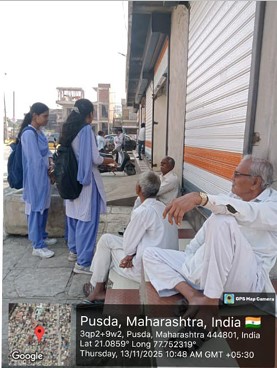 Students perform survey at Pusda | 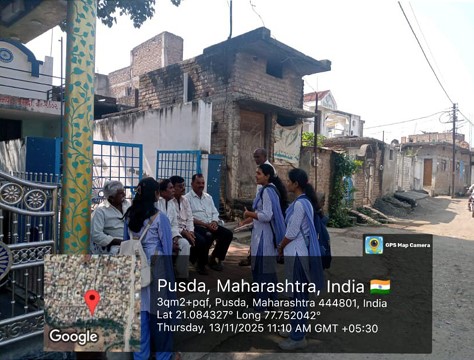 Interaction with people |
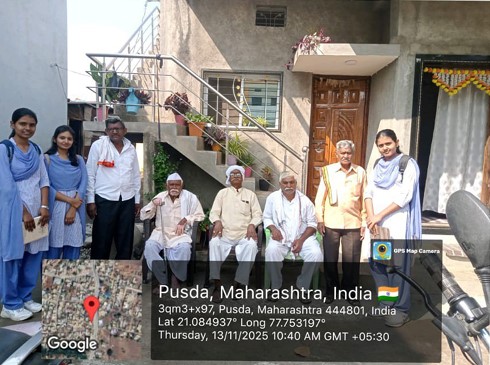 Photo with people | 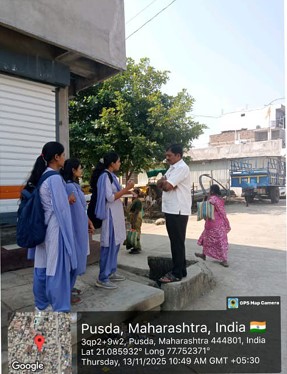 Filling of question of survey |
 blank |  blank |
Attendance Sheet: