SHRI SHIVAJI SCIENCE COLLEGE, AMRAVATI
DBT STAR COLLEGE PROJECT ACTIVITY
ACTIVITY REPORT

Eco-Literacy Survey at Aradhana Square, Amravati
Activity Dates: November 2025
Type of Activity: Minor Research Project
Organizing Department: Department of Environmental Science
Program Coordinators: Mr. V. D. Bute
Head of the Department: Dr. S. P. Ingole
External Collaborator (if any): No
Objectives:
- 1) To evaluate the level of environmental literacy among residents of Aradhana Square with reference to water management, waste management, air quality perception, and energy usage.
- 2) To assess household practices related to environmental conservation, including water-saving methods, waste segregation, recycling behavior, and use of reusable or eco-friendly materials.
- 3) To examine public awareness regarding local environmental issues, such as air pollution, noise pollution, waste disposal methods, and changes in local biodiversity.
- 4) To identify discrepancies between environmental awareness and actual environmental practices exhibited at the household and community level.
- 7) To explore challenges and limiting factors that hinder the adoption of sustainable environmental practices among residents.
No of Beneficieries: 100 Families
Classes Involved: B.Sc. III year CEB and CEZ
Venue of the Activity: Aradhana Square, Ring Road, Pote Patil Road, Amravati
Activity Report:
INTRODUCTION
The environment constitutes the totality of physical, chemical, and biological factors that surround living organisms and influence their survival, development, and evolution. It includes natural elements such as air, water, soil, flora, fauna, and human-made components that arise from cultural, economic, and technological activities. The environment is not a static entity; rather, it is a dynamic system where each component interacts with others to maintain ecological equilibrium. Human well-being, public health, agricultural productivity, climate stability, and biodiversity are all deeply rooted in this ecological balance. However, with rapid urbanization, industrial growth, and population expansion, the environment has been subjected to unprecedented stress. Urban centres, particularly in developing nations like India, have experienced significant increases in waste generation, water pollution, air contamination, noise levels, and loss of green spaces. According to the Ministry of Environment, Forest and Climate Change (MoEFCC), many Indian cities face environmental pressure primarily due to increased consumption patterns and lack of sustainable behavioral practices at individual and community levels. Environmental issues today are not only scientific or technological in nature, but also social and behavioral, meaning that public understanding and attitudes play a decisive role in environmental health.
METHODOLOGY
The present study aims to assess the level of Environmental Literacy among residents of Aradhana Square, Rahatgaon Ring Road, Amravati, with a particular focus on their awareness, attitudes, and behavioral practices concerning environmental sustainability. The methodology outlines the systematic process followed for data collection, analysis, and interpretation. The study adopts a scientific and structured approach to ensure validity, reliability, and accuracy of results. Study Area:: The study was conducted in "Aradhana Square, located along Rahatgaon Ring Road, Amravati (Maharashtra)". This locality represents a, Newly developing sub-urban are characterized by low population density,but rapid construction activities due to affordable land prices. The region includes several hotels and event venues such as "Golden Leaf, Mukti, Lotus, Silver Star, Celebration Lawn, Sawaji Hotel, and Nimantran Hotel", which contribute to both economic growth and localized environmental pressure.
Scientific Concept of Survey Method
A survey is a systematic scientific method used in social and environmental research to collect primary data directly from people. It helps researchers understand and quantify human knowledge, opinions, behaviors, and attitudes related to a particular topic. The scientific foundation of the survey method lies in empirical observation — that is, gathering data from real-world situations rather than theoretical assumptions.
Scientifically, surveys follow a systematic process:
1. Problem Identification – defining what is to be studied (e.g., level of environmental literacy).
2. Questionnaire Design – creating standardized questions to ensure objectivity and comparability.
3. Sampling – selecting a representative group of people to reflect the larger population.
4. Data Collection – recording responses using interviews, forms, or digital tools.
5. Data Analysis – applying statistical techniques like percentage, frequency, or correlation to interpret patterns.
Research Design:
The study adopted a descriptive, quantitative, and cross-sectional survey design to systematically evaluate the prevailing environmental literacy among residents. A quantitative approach allowed for the objective measurement of knowledge, attitudes, and behaviors across multiple environmental dimensions, while the cross-sectional framework enabled data collection at a single point in time. The study emphasizes empirical accuracy and provides a clear statistical overview of environmental awareness and practices among participants.
Design of Questionnaireses:: A structured instrument titled “Environmental Literacy Survey at Aradhana Square", was developed exclusively for this research. The questionnaire consisted of "38 close-ended questions", categorized into "five thematic domains" relevant to the study objectives:
1. Water Pollution & Management
2. Waste Management
3. Energy & Electricity Usages
4. Air Pollution
5. Environmental Awareness & Community Participation
DETAILS OF ACTIVITES CONDUCTED
The Environmental Awareness Survey was conducted at Aradhana Square, Amravati, to study the level of awareness, attitude, and environmental practices among local residents. The selection of this particular site was done after a preliminary visit to several nearby localities. Aradhana Square was finally chosen because it is a moderately populated area with a good mixture of residential houses, apartments, and small businesses, which provided a balanced sample for environmental data collection.The survey area consisted of approximately 300–400 houses and several small-scale shops and business establishments, such as chakki mills, tailor shops, beauty parlours, furniture shops, kirana stores, and vegetable vendors. This diversity allowed the team to interact with different sections of society and understand their environmental behavior and challenges from multiple viewpoints.
OBSERVATION
The environmental literacy survey was conducted at Aradhana Square, Amravati, covering 100 families (one respondent per household). The area represents a moderately populated suburban region, consisting of both newly constructed and under-construction houses. The survey responses were categorized under five main environmental components: Water Pollution & Management, Waste Management, Energy & Electricity, Air Pollution, and Awareness & Community Participation.
(A) Water Pollution & Management
About 98% of households receive sufficient water on a daily basis, indicating that the supply is regular. This suggests that there is generally adequate availability of water for most households.
• 98% experience water scarcity in summer → seasonal water stress.
• 100% store water in covered containers → strong hygiene practice.
• Only 67% are confident about wastewater management → lack of clarity.
• 91% consciously save water → positive conservation behavior.
In summary, the community demonstrates good hygiene and drinking water safety awareness, but seasonal shortages and uncertainty about wastewater treatment indicate a need for better municipal communication and long-term water sustainability measures.
(B) Solid Waste Management
About 75% of households use dustbins regularly, indicating that basic waste management discipline exists.
• Only 45% segregate waste → low waste separation practice.
• 100% have seen roadside garbage → poor municipal waste collection.
• 60% report burning of waste → source of local air pollution.
• Only 44% reuse plastic bags → continued dependence on single-use plastics.
• 29% recycle regularly → recycling awareness is present but limited.
Overall, while households follow basic disposal habits, segregation, recycling and reduction of roadside dumping need stronger community involvement and municipal enforcement.
(C) Energy Use & Electricity
• 71% switch off appliances → conscious energy saving.
• 96% use LED bulbs → shift towards energy efficiency.
• 89% do not use solar → low renewable energy adoption.
• 47% link high bills with wastage → mixed awareness of energy budgeting.
• 94% rely on LPG/biogas → reduced indoor smoke pollution.
This indicates good adoption of efficient household energy practices, but solar installations require better financial support awareness and government promotion.
(C) Air Pollution & Urban Environment
• 47% perceive high dust levels → significant particulate pollution.
• 55% observe open burning → localized air contamination.
• 96% identify traffic as noise pollution → high urban stress.
• Only 12% use dust masks → weak preventive health behavior.
• 93% avoid crackers → positive cultural change.
• 100% observe tree loss, 92% fewer birds → declining biodiversity.
• 33% use public transport → moderate eco-mobility.
• 100% believe EVs reduce pollution → strong awareness.
Overall, the area faces dust pollution, loss of greenery, and traffic-induced noise, but preventive practices and sustainable transport adoption remain limited.
(D) Community Participation & Awareness
• 96% know about Swachh Bharat Mission → high awareness reach.
• 62% take part in drives → moderate participation.
• 68% feel others understand segregation, but only 45% practice → awareness-action gap.
• 100% agree community efforts can improve environment → strong collective motivation.
• 79% maintain plants at home → micro-level greening behavior.
This shows that while environmental consciousness exists, the challenge is converting awareness into consistent everyday practices.
RESULT
The Environmental Literacy Survey conducted at Aradhana Square, Amravati provided valuable insights into the level of environmental awareness, attitudes, and practices among the local residents. The study covered 100 families, representing a suburban community that is both newly developed and under construction, with a moderate population density. The results were categorized under five major environmental aspects — Water Management, Waste Management, Energy Use, Air Pollution, and Community Participation.
1. Water Pollution & Management
The survey revealed that a majority of residents receive sufficient drinking water and follow safe practices such as boiling or filtering water. About 72% of respondents consciously try to save water, showing strong awareness toward conservation. However, 60% face water shortage during summer, highlighting the need for improved water resource management and rainwater harvesting systems.
2.Solid Waste Management
About 75% of households use dustbins regularly, indicating that basic waste management discipline exists; however, only 45% segregate waste, showing low waste separation practices. All respondents (100%) have seen roadside garbage, reflecting poor municipal waste collection, and 60% report burning of waste, which becomes a source of local air pollution. Only 44% reuse plastic bags, indicating continued dependence on single-use plastics, while 29% recycle regularly, showing that recycling awareness is present but still limited. Overall, while households follow basic disposal habits, segregation, recycling, and reduction of roadside dumping need stronger community involvement and stricter municipal enforcement.
3.Energy & Electricity
About 71% of households switch off appliances when not in use, showing conscious energy-saving behavior, and 96% use LED bulbs, indicating a strong shift toward energy efficiency. However, 89% do not use solar energy, reflecting low adoption of renewable sources, while 47% link high electricity bills with wastage, suggesting mixed awareness of energy budgeting. Additionally, 94% rely on LPG or biogas for cooking, which helps reduce indoor smoke pollution. Overall, households show good adoption of efficient energy practices, but greater awareness of financial support and stronger government promotion are needed to increase solar energy installations.
4. Air Pollution
About 47% of respondents perceive high dust levels, indicating significant particulate pollution, while 55% observe open burning that leads to localized air contamination; 96% identify traffic as a major source of noise pollution, reflecting high urban stress, yet only 12% use dust masks, showing weak preventive health behavior. A positive trend is seen as 93% avoid crackers, indicating cultural change toward cleaner air, but 100% observe tree loss and 92% report fewer birds, highlighting declining biodiversity. Additionally, 33% use public transport, reflecting moderate eco-mobility, and 100% believe that electric vehicles reduce pollution, showing strong environmental awareness. Overall, the area experiences dust pollution, loss of greenery, and traffic-induced noise, while preventive practices and wider adoption of sustainable transport remain limited.
5. Awareness & Community Participation
About 96% of respondents know about the Swachh Bharat Mission, indicating high awareness reach, while 62% actively take part in cleanliness drives, reflecting moderate participation; although 68% feel others understand waste segregation, only 45% actually practice it, revealing a clear awareness–action gap. All respondents (100%) agree that community efforts can improve the environment, showing strong collective motivation, and 79% maintain plants at home, demonstrating micro-level greening behavior. Overall, while environmental consciousness is high, the key challenge lies in converting awareness into consistent everyday environmental practices.
CONCLUSION
The environmental awareness survey conducted at Aradhana Square, Amravati helped us understand the living conditions, awareness levels, and environmental habits of the residents in that area. The survey team visited each home personally and interacted with people to know their opinions and daily practices related to cleanliness, pollution, and environmental protection. We received a very positive and cooperative response from the citizens.
Outcomes:
- To measure the environmental literacy level of residents regarding water, waste, air quality, and energy use in Aradhana Square.
- To assess household environmental practices such as water saving, waste segregation, recycling, and use of eco-friendly materials.
- To examine awareness of local environmental issues like pollution, waste disposal, and biodiversity changes.
- To identify the gap between environmental awareness and actual sustainable practices.
- To evaluate community participation in initiatives such as Swachh Bharat Mission and local environmental drives.
Photos:
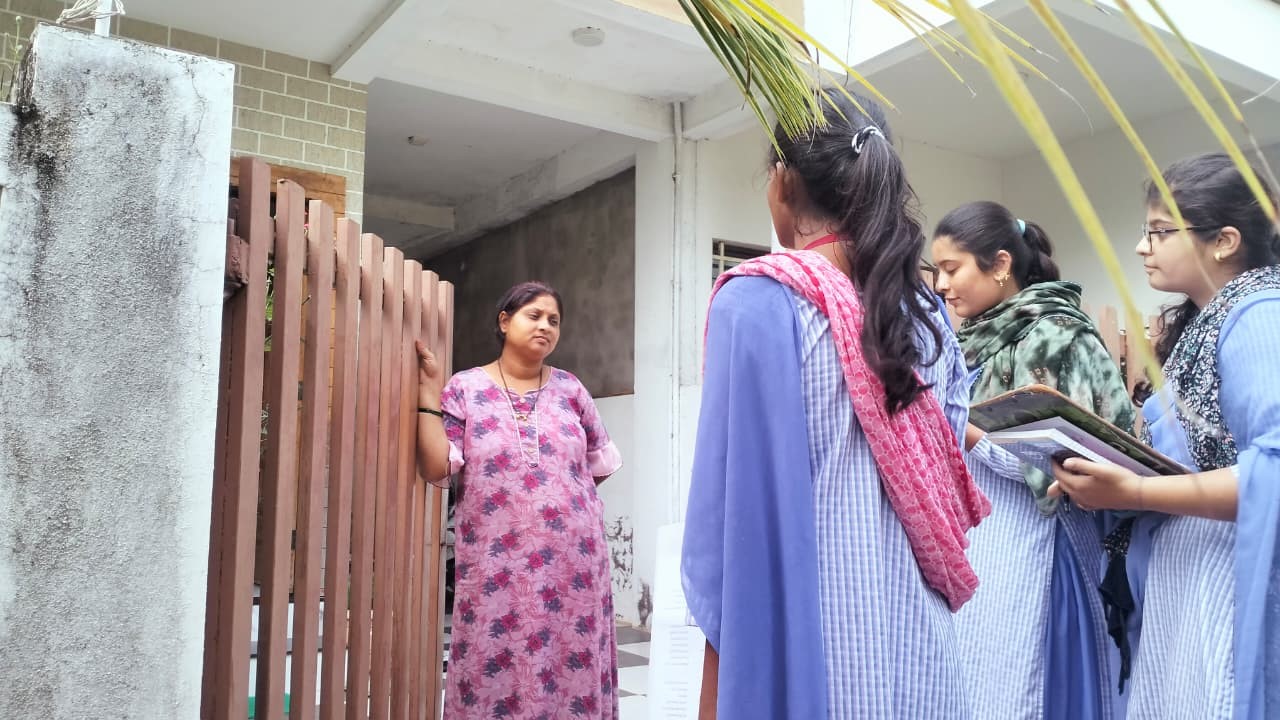 Location Mahalaxmi nagar, aradhana square | 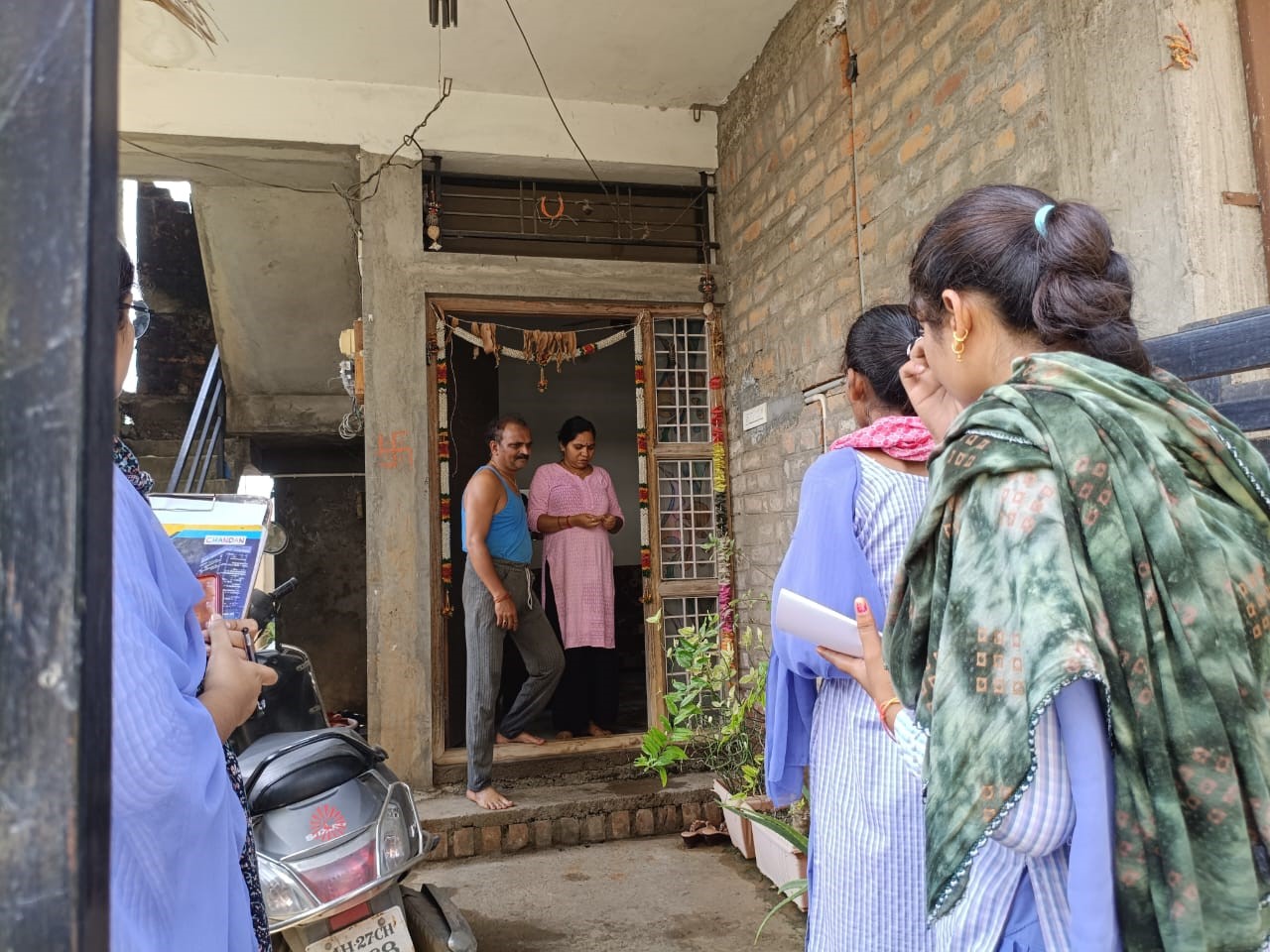 Location Mahalaxmi nagar, aradhana square |
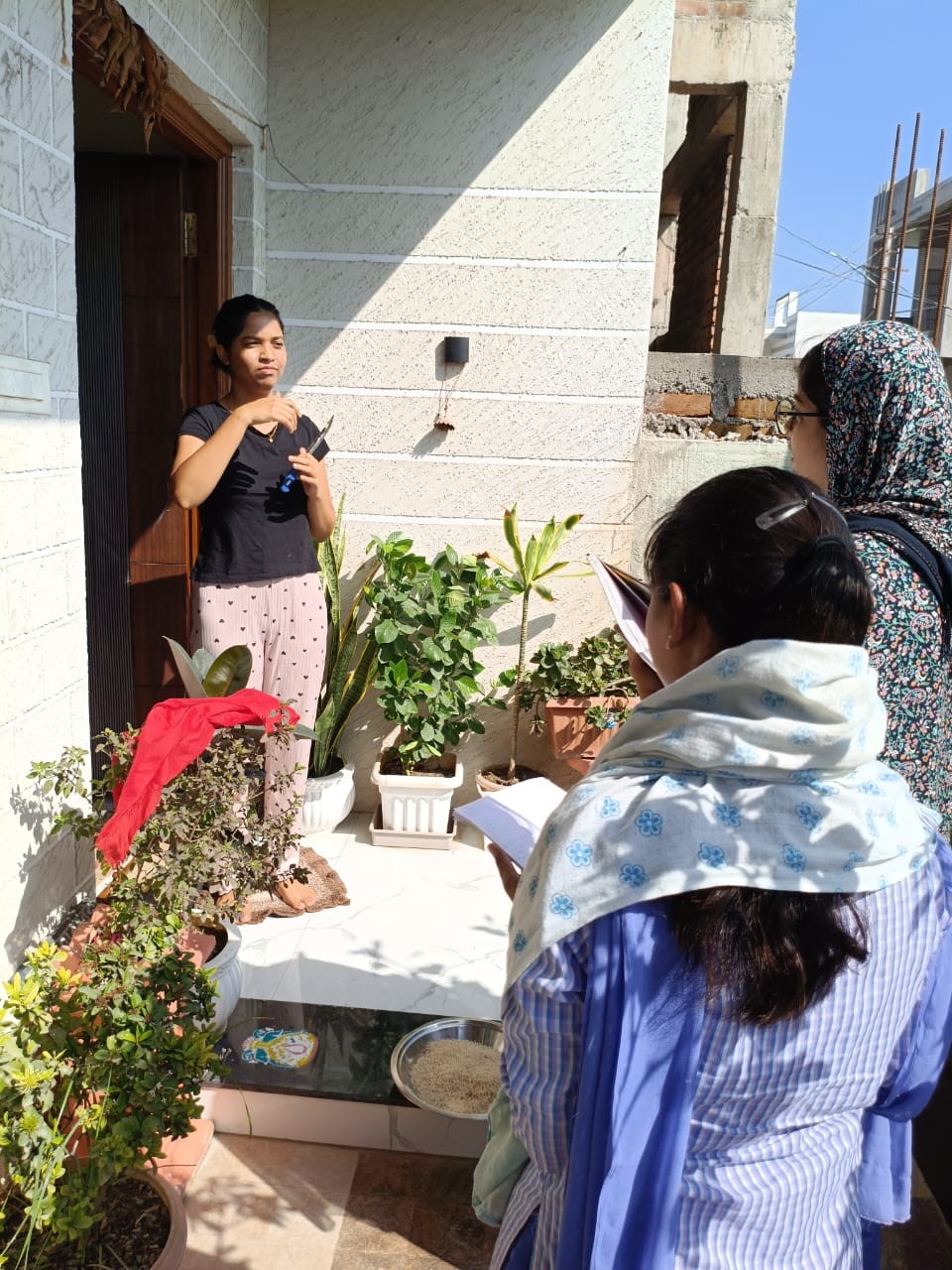 Location Mahalaxmi nagar, aradhana square | 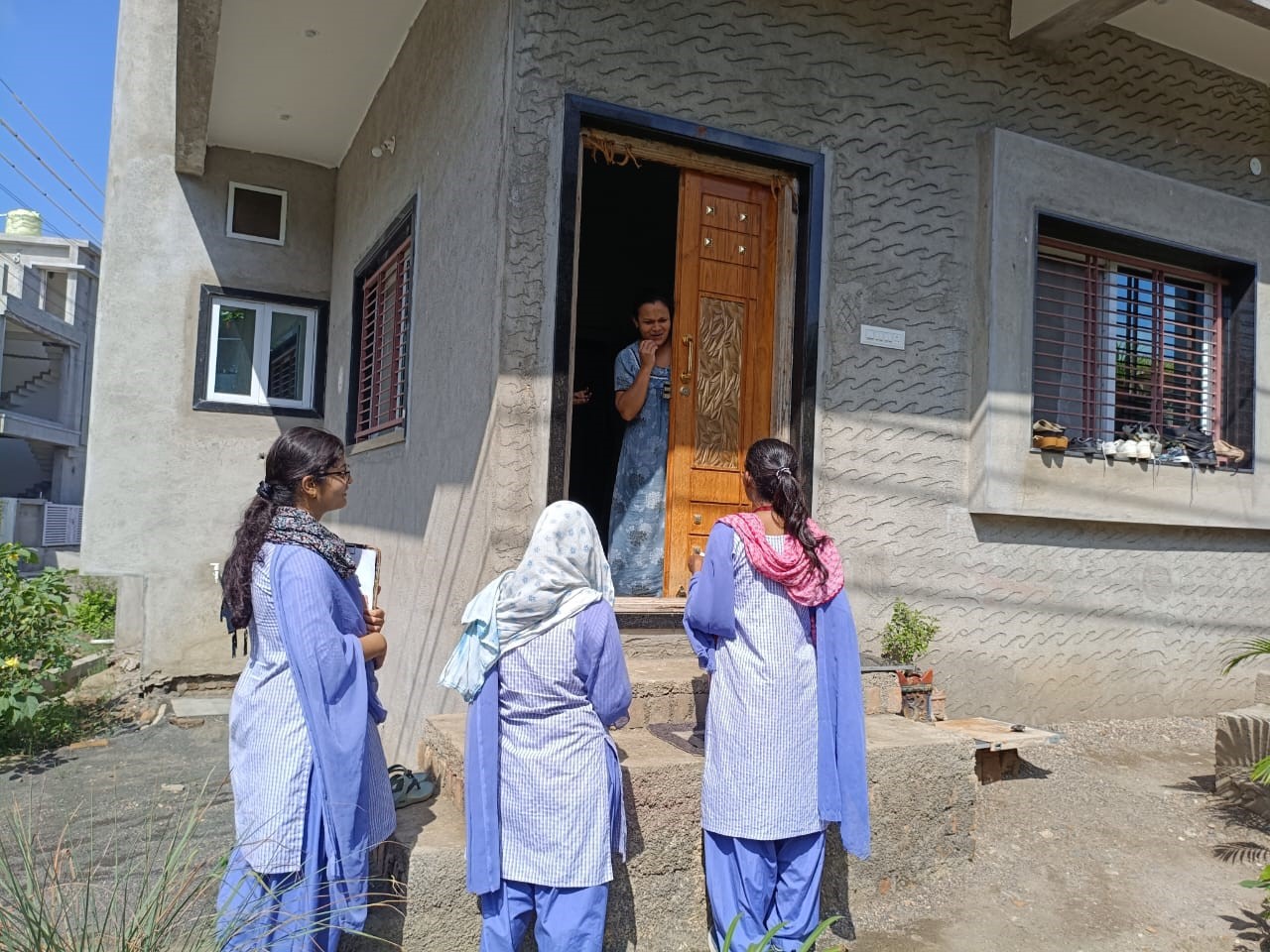 Sant Gajanan Nagar 1 |
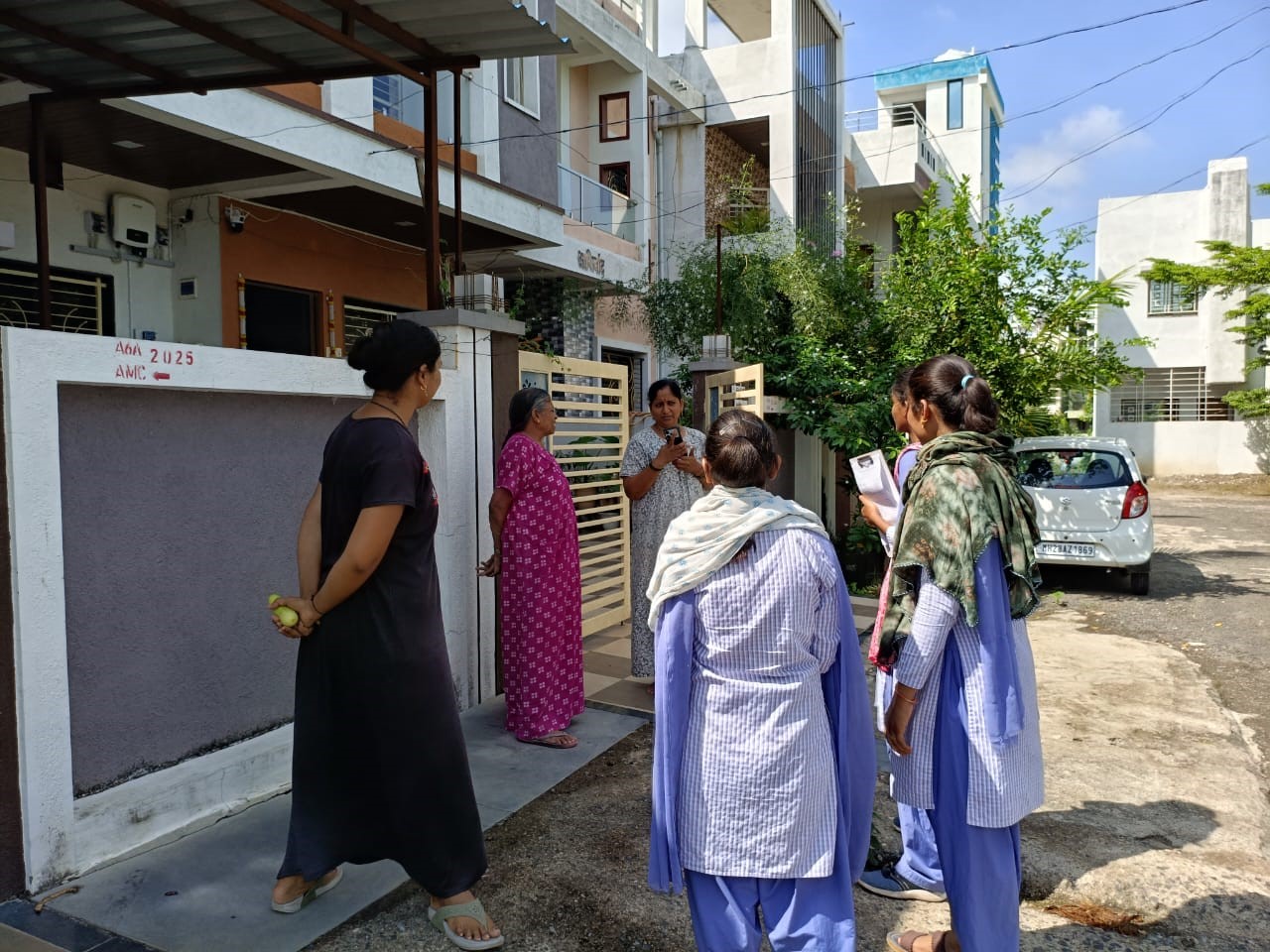 Sant Gajanan Nagar 2 | 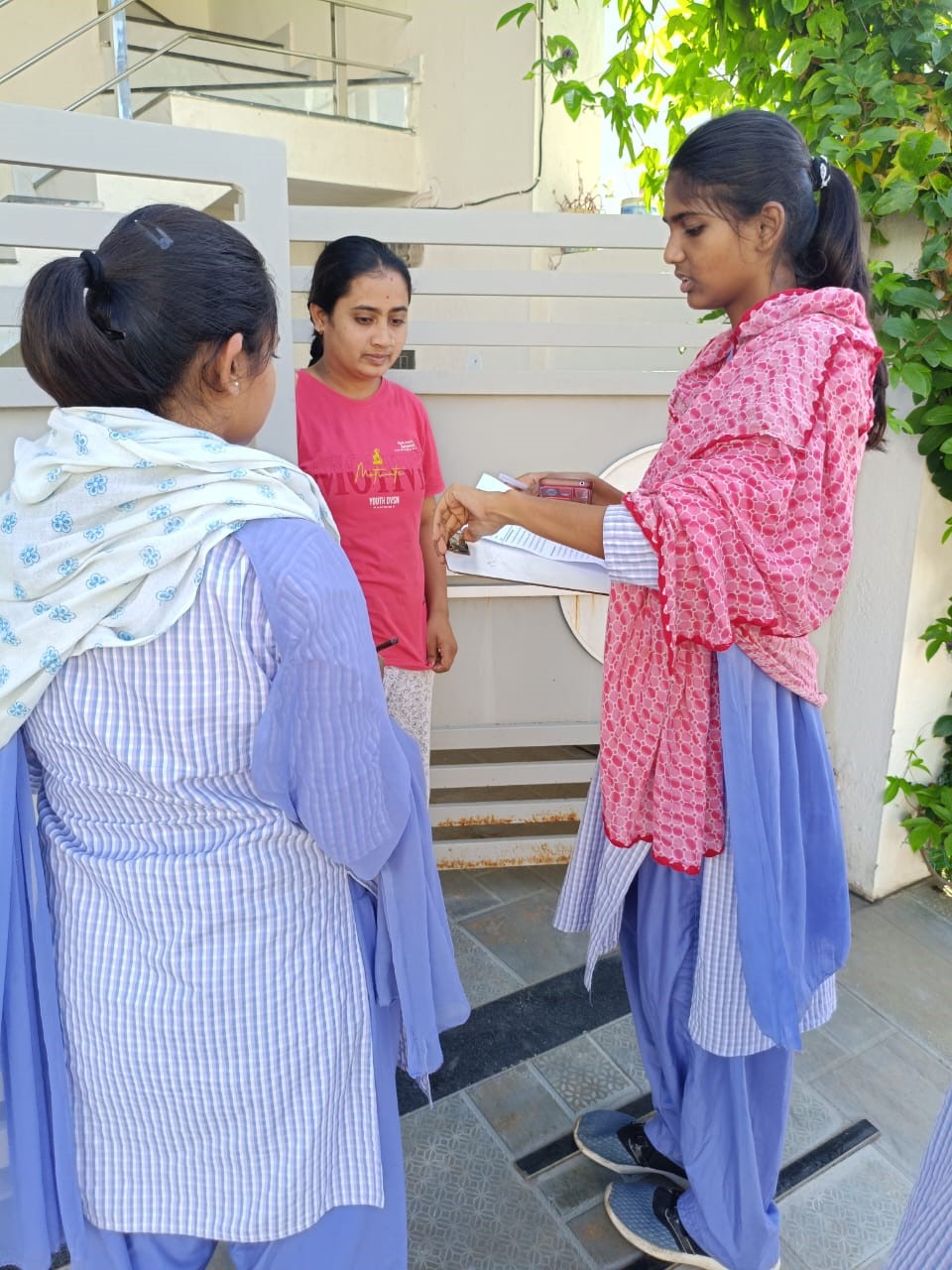 Sant Gajanan Nagar 3 |
Attendance Sheet: