SHRI SHIVAJI SCIENCE COLLEGE, AMRAVATI
DBT STAR COLLEGE PROJECT ACTIVITY
ACTIVITY REPORT
One Day Educational Visit to CSRI-NEERI
Activity Dates: 30 March 2026
Type of Activity: Field Studies
Organizing Department: Department of Environmental Science
Program Coordinators: Mr. V. D. Bute
Head of the Department: Dr. S. P. Ingole
External Collaborator (if any): -
Objectives:
- 1. To understand the functioning and research activities carried out at CSIR-NEERI in the field of environmental science and engineering.
- 2. To gain practical knowledge about environmental monitoring techniques, pollution control methods, and sustainable technologies.
- 3. To observe advanced laboratory instruments and analytical methods used for air, water, and soil quality analysis.
- 4. To enhance students’ awareness about environmental issues such as air pollution, water pollution, waste management, and climate change.
- 5. To bridge the gap between theoretical knowledge and real-world environmental applications.
No of Beneficieries: 21
Classes Involved: B.Sc. I Major Env. Sci.
Venue of the Activity: CSIR-NEERI, Nagpur
Activity Report:
A one-day educational visit was organized by the Department of Environmental Science, Shri Shivaji Science College, Amravati, for B.Sc. First Year students on 30 March 2026 to CSIR-NEERI and Raman Science Centre, Nagpur. The visit was planned as a part of experiential learning to provide students with practical exposure to environmental science concepts and scientific advancements. A total of 21 students enthusiastically participated in this academic activity under the guidance of faculty members.
The group reached the campus of CSIR-NEERI at around 11:00 AM. The institute, being one of the premier research organizations in India, provided an ideal platform for students to understand real-time environmental problem-solving approaches. Upon arrival, the students were warmly welcomed and directed towards an introductory session.
The visit commenced with an informative audio-visual presentation that highlighted the history, vision, and major research contributions of NEERI. The presentation elaborated on the institute’s role in addressing environmental challenges such as air and water pollution, waste management, environmental impact assessment, and sustainable development. Students were introduced to the interdisciplinary nature of environmental science and how NEERI integrates scientific research with policy-making and technological innovation. This session served as a foundation for understanding the subsequent departmental visits.
After the audio-visual session, the students visited the “Harit Sangrahalaya,” an environmental museum located within the NEERI campus. This museum provided a comprehensive overview of environmental conservation through various exhibits, models, and visual displays. Topics such as biodiversity conservation, renewable energy sources, ecological balance, climate change, and waste management were presented in an interactive and easy-to-understand manner. The exhibits emphasized the importance of sustainable living practices and environmental responsibility. Students showed keen interest in the displays and actively engaged in discussions with the guides.
The next phase of the visit involved exposure to various specialized divisions within NEERI. The first division visited was the Air Quality Management Division. This section focused on monitoring and controlling air pollution, which is one of the most pressing environmental issues today. Students were introduced to advanced instruments used for measuring air pollutants such as particulate matter (PM₁₀ and PM₂.₅), sulfur dioxide (SO₂), nitrogen oxides (NOₓ), and carbon monoxide (CO). The scientists explained the working principles of these instruments and demonstrated how data is collected and analyzed. Students learned about the sources of air pollution, including vehicular emissions, industrial activities, and urbanization, as well as the impact of meteorological factors like wind speed, temperature, and atmospheric stability on pollutant dispersion. The visit helped students understand the practical aspects of air quality monitoring, which they had previously studied theoretically.
Following this, the group visited the Water and Earth System Division. This division deals with water quality analysis, soil testing, and sustainable resource management. Students observed various laboratory setups and instruments used for analyzing water samples. The scientists explained important parameters such as pH, dissolved oxygen (DO), biological oxygen demand (BOD), chemical oxygen demand (COD), turbidity, and the presence of heavy metals. The importance of maintaining water quality for human health and ecosystem stability was emphasized. In addition, students learned about groundwater contamination, soil degradation, and methods for sustainable management of natural resources. The division also highlighted the role of environmental monitoring in policy formulation and environmental protection.
The final departmental visit at NEERI was to the Solid and Hazardous Waste Management Division. This section provided valuable insights into the management of solid and hazardous wastes, which is a critical environmental concern in modern society. Students were introduced to different types of waste, including municipal solid waste, industrial waste, biomedical waste, and electronic waste. The scientists explained various waste treatment and disposal methods such as segregation, recycling, composting, incineration, and landfilling. Special emphasis was given to hazardous waste management, including the handling, treatment, and safe disposal of toxic substances. Students also learned about waste-to-energy technologies and the importance of minimizing waste generation through sustainable practices.
An important highlight of the NEERI visit was the interactive session with Dr. Lal Singh, Principal Scientist of the Solid and Hazardous Waste Management Division. During this session, students actively participated by asking questions related to environmental issues, research opportunities, and career prospects in the field of environmental science. Dr. Lal Singh shared his valuable experiences and provided guidance on how students can contribute to environmental protection through research and innovation. He also emphasized the importance of scientific temperament, dedication, and continuous learning. The interaction was highly motivating and left a strong impact on the students.
After completing the academic sessions at NEERI, the group took a lunch break. This provided an opportunity for students and faculty members to relax and discuss their observations and learning experiences. The students shared their excitement and expressed appreciation for the practical exposure they had gained.
In the afternoon, the group proceeded to Raman Science Centre, Nagpur, which is a well-known institution for promoting scientific awareness and education among students. The visit to the science centre added an interactive and enjoyable dimension to the educational tour.
At the science centre, students explored various galleries that showcased scientific models and demonstrations related to physics, energy, space science, and technology. The exhibits were designed to be interactive, allowing students to learn by doing. Concepts such as motion, electricity, magnetism, optics, and energy transformation were demonstrated through hands-on models. This approach helped students understand complex scientific principles in a simple and engaging manner.
One of the most interesting sections of the science centre was the science craft area, where students participated in creative activities that combined science with practical skills. They engaged in making simple scientific models and experiments, which enhanced their creativity and problem-solving abilities. The interactive nature of the exhibits encouraged students to ask questions, explore ideas, and develop a deeper interest in science.
The visit to the Raman Science Centre also highlighted the importance of science communication and public awareness. It demonstrated how scientific knowledge can be effectively conveyed to people of all age groups through innovative and engaging methods. Students found this part of the visit both educational and enjoyable, as it allowed them to learn in a relaxed and interactive environment.
The entire visit was conducted under the supervision and guidance of dedicated faculty members including Mr. Vikrant Bute, Dr. Manisha Jane, Priti Bonde, and Pratiksha Khedakar. Their efforts in organizing and coordinating the visit ensured that the program was smooth, informative, and beneficial for all participants. They guided the students throughout the visit, encouraged them to interact with scientists, and helped them connect theoretical knowledge with practical observations.
Overall, the one-day educational visit conducted on 30 March 2026 to CSIR-NEERI and Raman Science Centre proved to be highly successful and enriching. It provided students with a valuable opportunity to gain firsthand knowledge of environmental research, modern laboratory techniques, and scientific innovations. The visit not only enhanced their academic understanding but also inspired them to develop a sense of responsibility towards environmental conservation. The combination of a research institute and a science centre made the experience holistic, blending serious scientific learning with interactive exploration. The knowledge and experience gained during this visit will undoubtedly contribute to the academic growth and future aspirations of the students.
Outcomes:
- 1. Students gained practical exposure to advanced environmental research activities conducted at CSIR-NEERI.
- 2. Enhanced understanding of air quality monitoring techniques and instruments used for measuring pollutants such as PM, SO₂, NOₓ, and CO.
- 3. Improved knowledge of water quality assessment methods including parameters like pH, DO, BOD, COD, and turbidity.
- 4. Developed awareness about soil analysis and sustainable management of natural resources.
- 5. Acquired in-depth understanding of solid and hazardous waste management practices, including recycling, composting, and safe disposal techniques.
Photos:
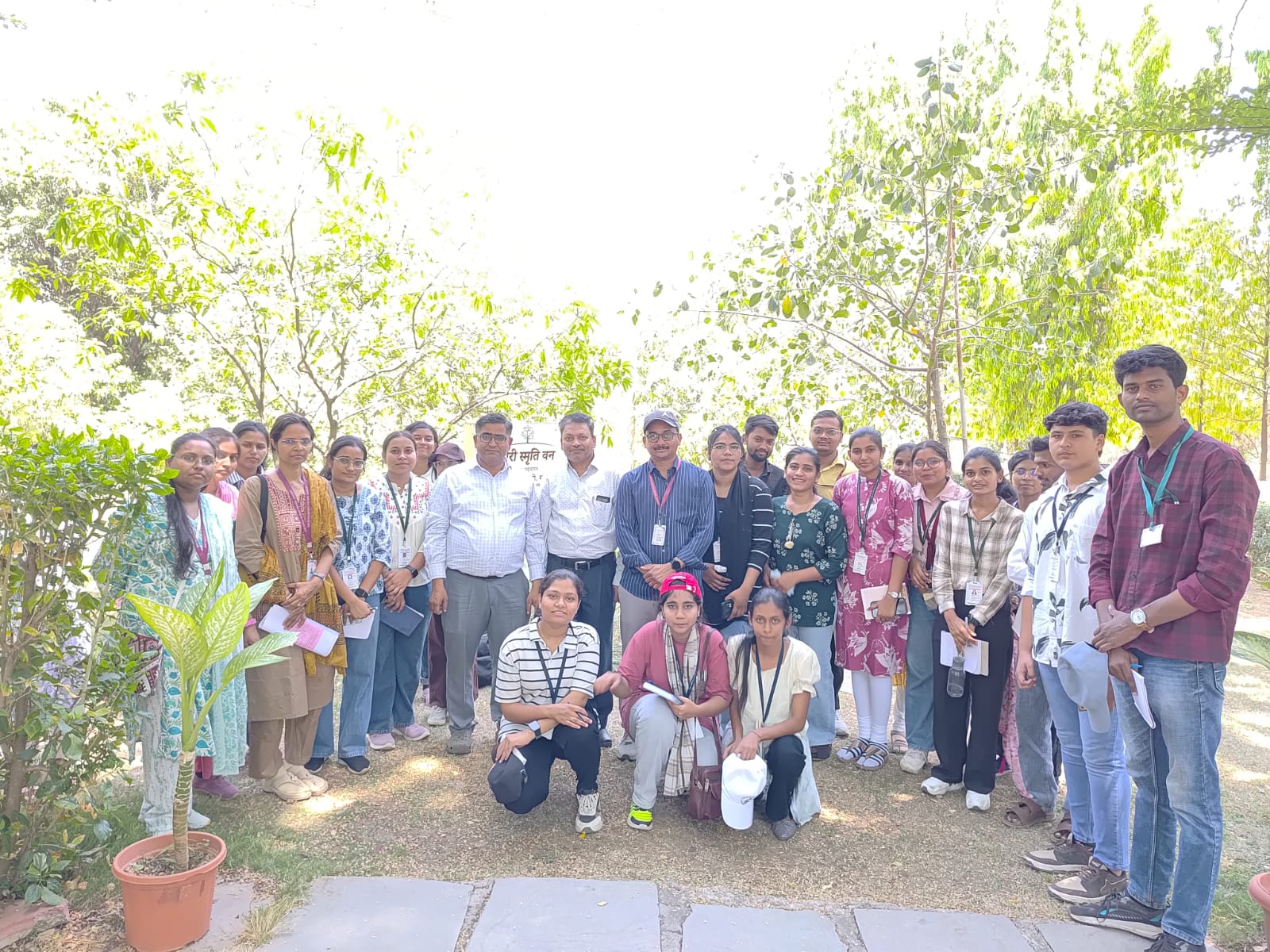 Interaction with Dr. Lalsingh | 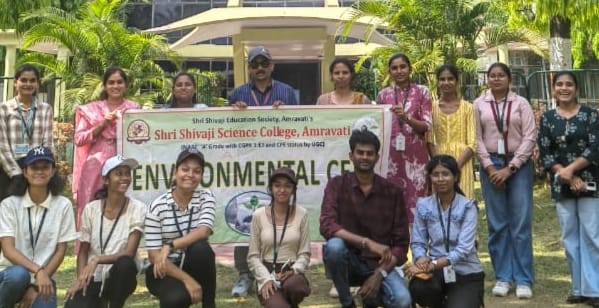 Visit CSIR-NEERI |
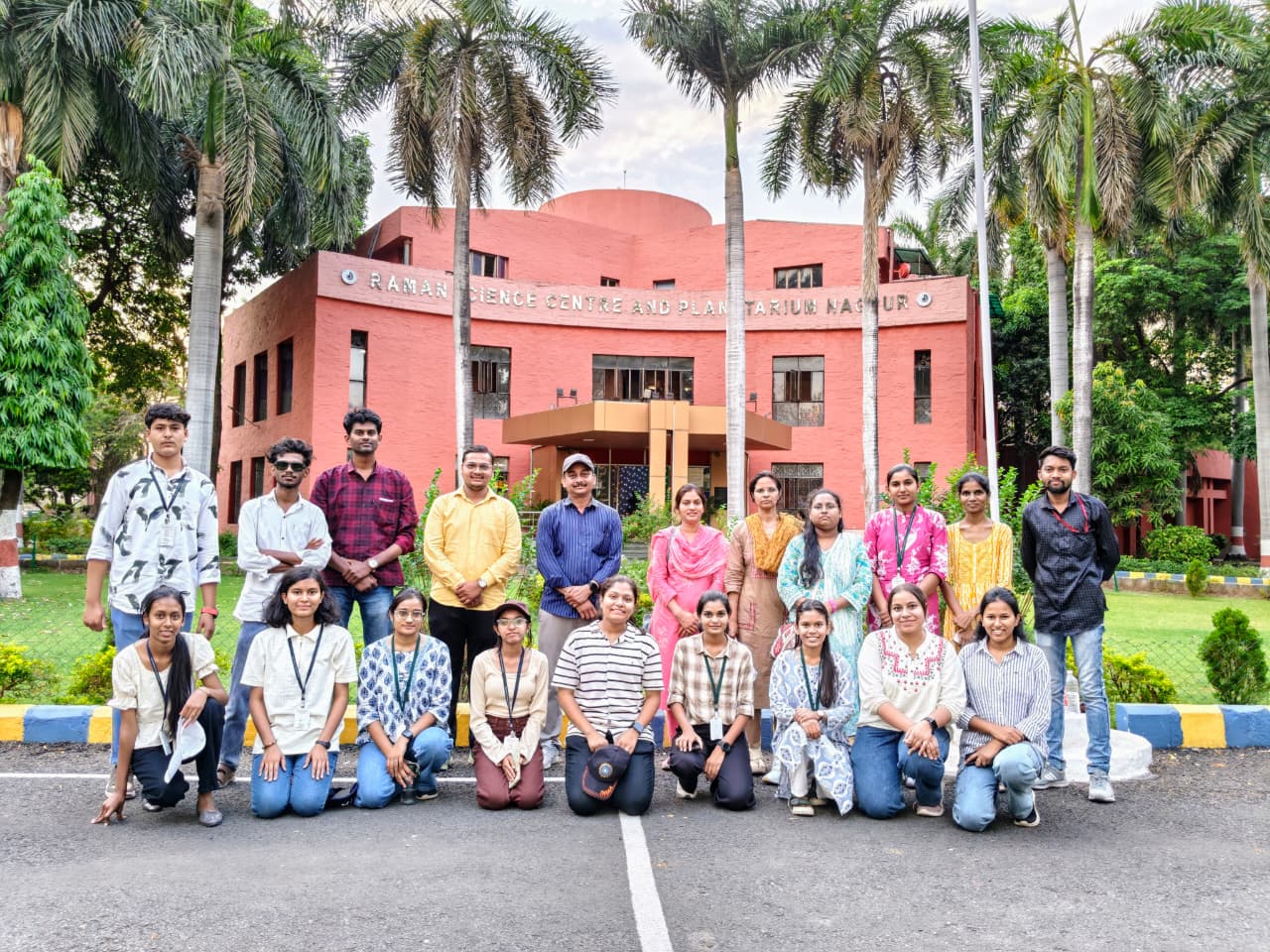 Visit Sir C. V. Raman Science Centre, Nagpur | 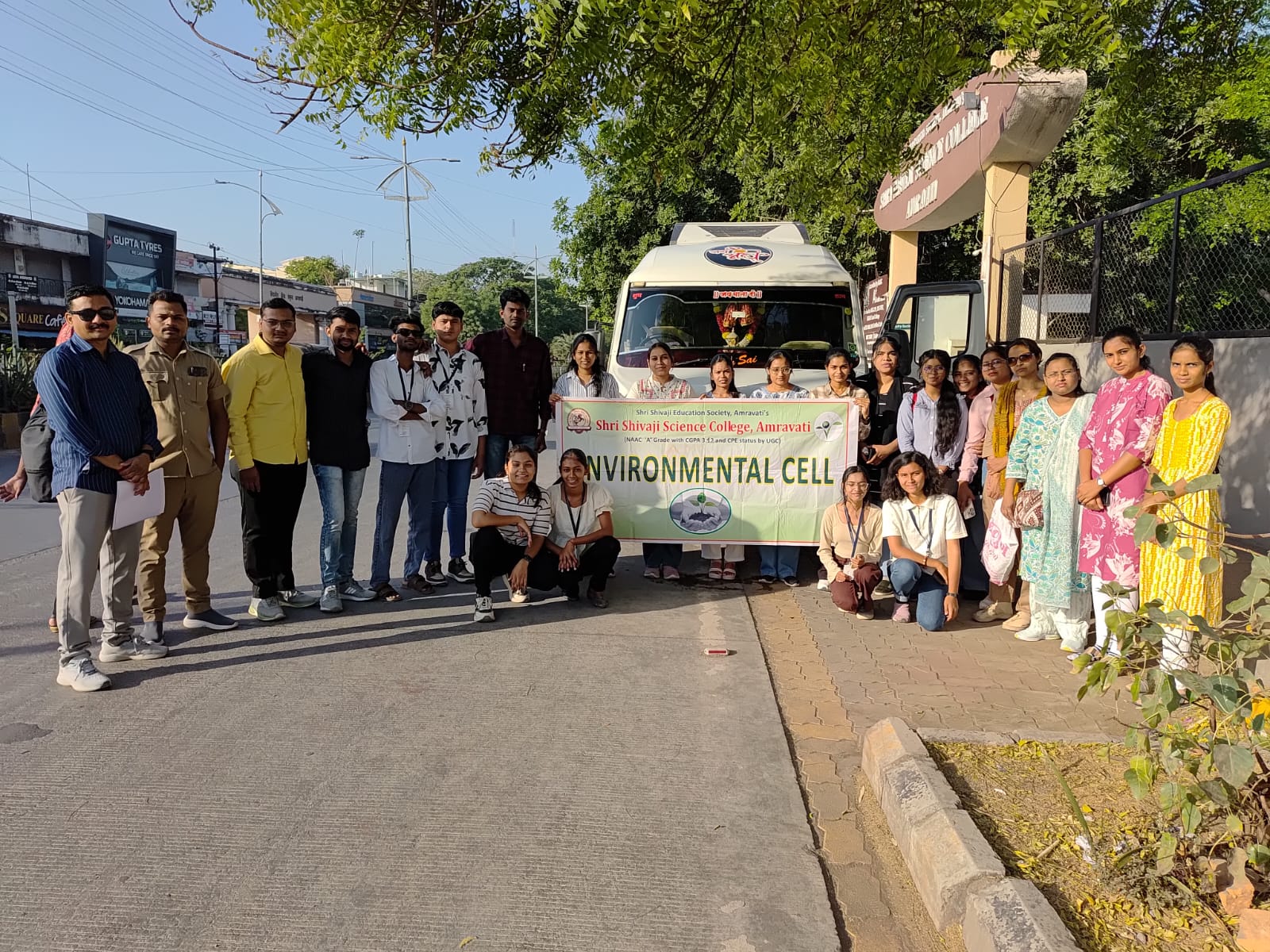 Departure from Amravati |
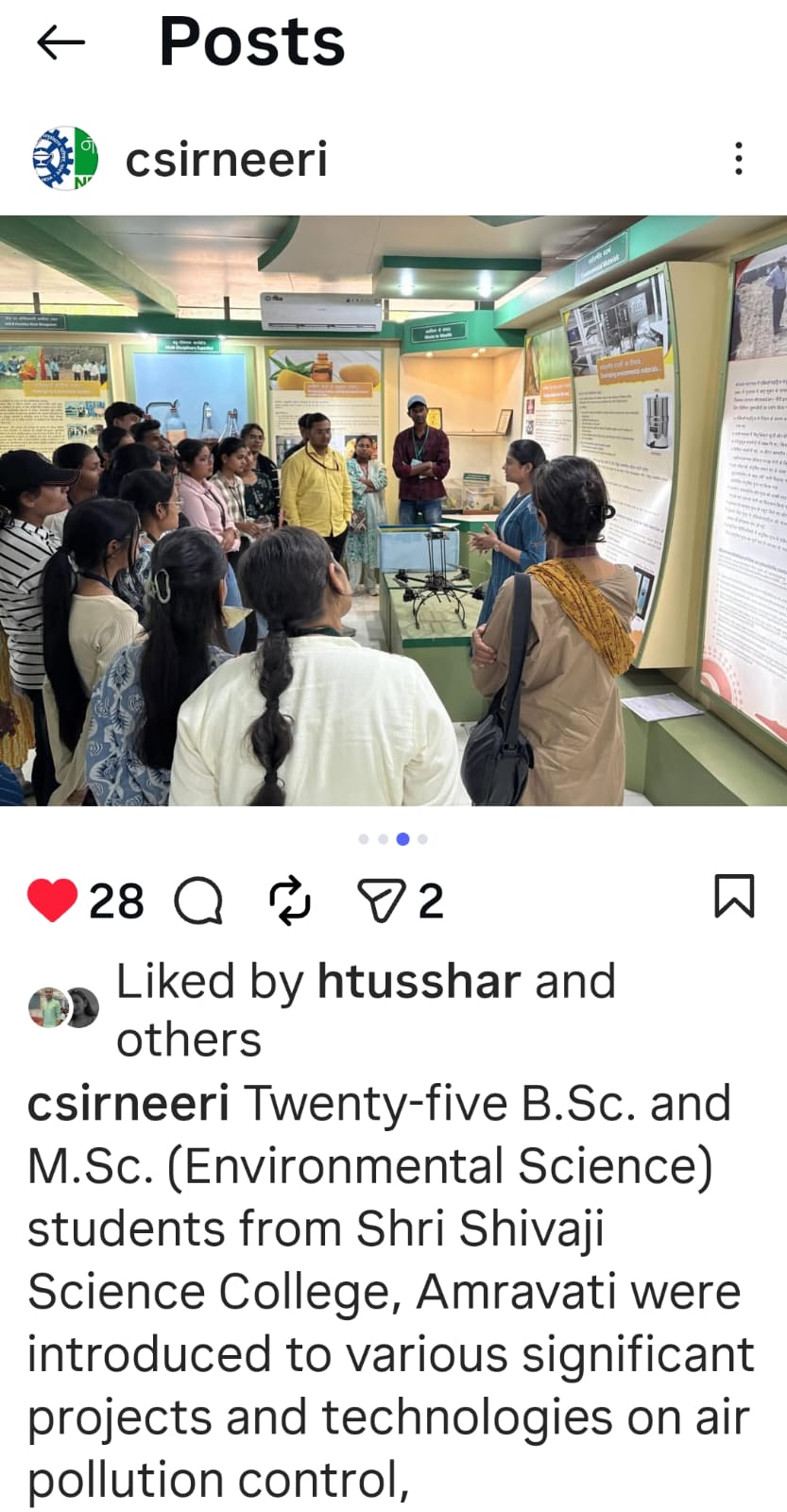 CSRI-NEERI post on instagram (2) | 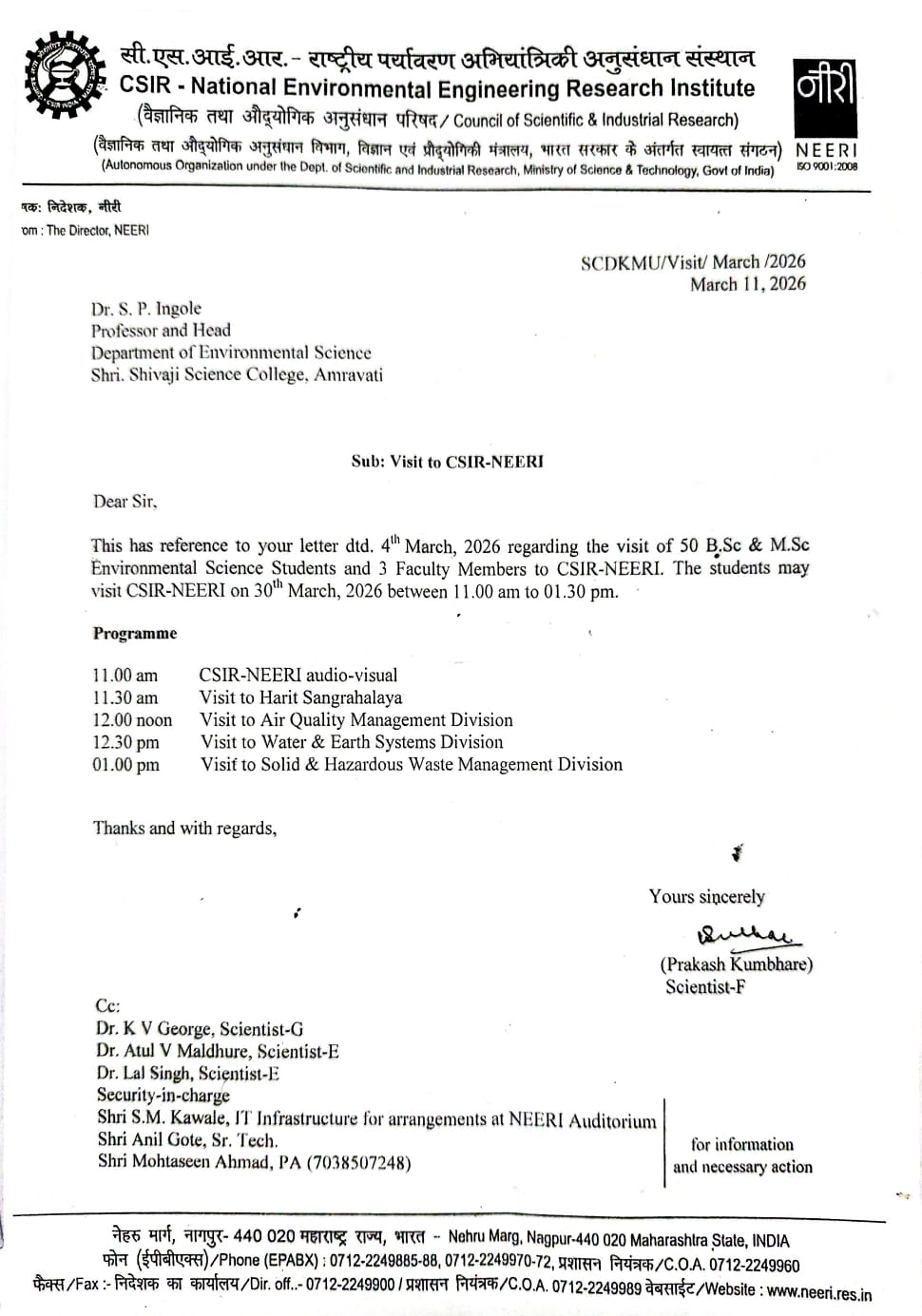 Permission letter of CSIR-NEERI |
Attendance Sheet:
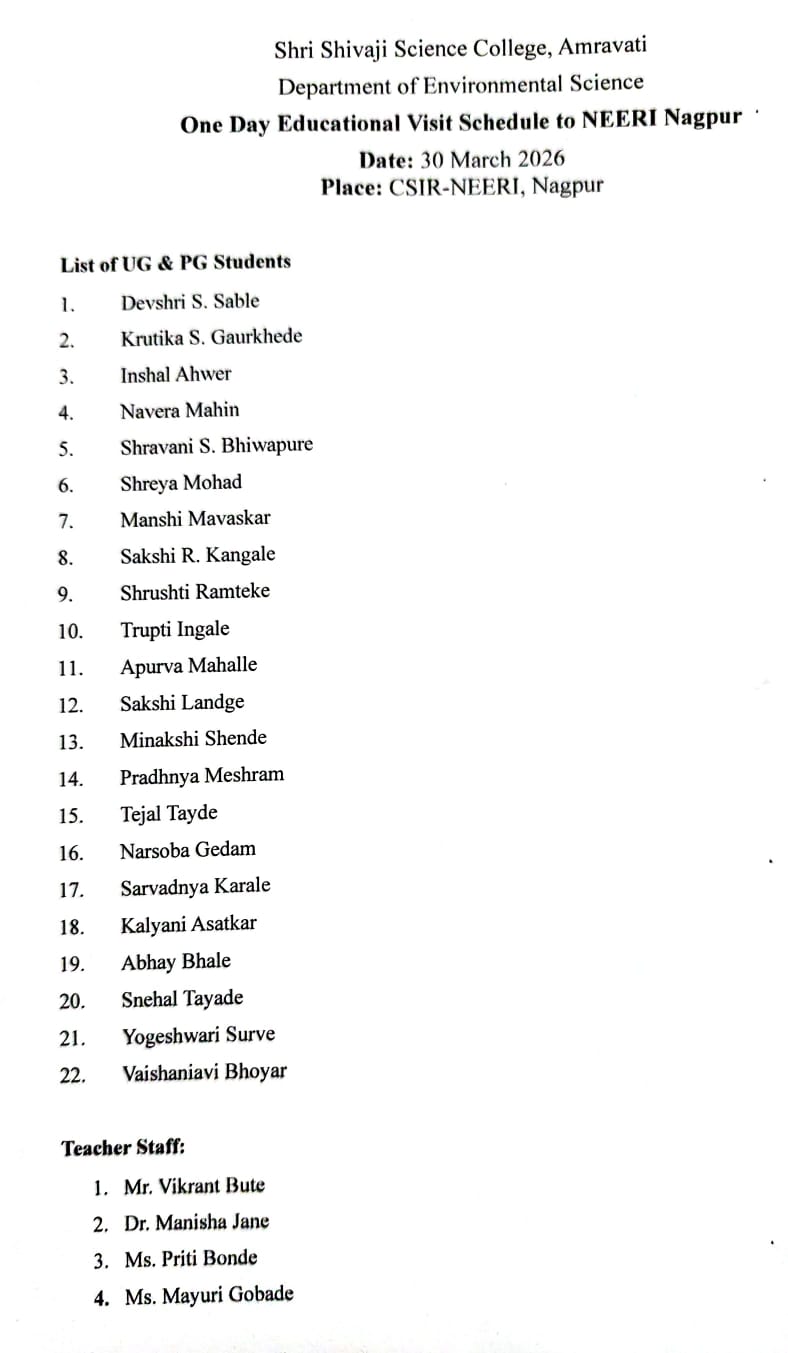 |