SHRI SHIVAJI SCIENCE COLLEGE, AMRAVATI
DBT STAR COLLEGE PROJECT ACTIVITY
ACTIVITY REPORT
Determination of pH and Conductivity of Borewell Water Sample for Potability
Activity Dates: 23 September 2025
Type of Activity: Other
Organizing Department: Department of Chemistry
Program Coordinators: Dr. Shruti P. Ingole
Head of the Department: Dr. P. R. Mandlik
External Collaborator (if any): -
Objectives:
- 1. To measure the pH of the borewell water sample and determine its acidity or alkalinity.
- 2. To determine the electrical conductivity (EC) of the water sample as an indicator of dissolved ionic content.
- 3. To assess the total dissolved solids (TDS) indirectly using conductivity values.
- 4. To compare the obtained pH and conductivity values with standards prescribed by the World Health Organization and Bureau of Indian Standards for drinking water.
- 5. To evaluate the potability (suitability for drinking) of the borewell water sample based on the measured parameters.
No of Beneficieries: 100
Classes Involved: BSc-II Year Students
Venue of the Activity: UG Chemistry Laboratory, Shri Shivaji Science College, Amravati
Activity Report:
Department of Chemistry organized a one day activity “To determine pH and Conductivity of Borewell water sample for Potability” for B.Sc.II Students on dated 23 September 2025 under the guidance of Dr. G.V. Korpe, Principal, Shri. Shivaji Science College, Amravati, Dr. P. R. Mandlik, Head, Department of Chemistry, Dr. D.D. Khedkar, Coordinator, DBT Star Project, Dr. S. P. Ingole organizing Committee member.
1. Aim: To determine the pH and electrical conductivity of a borewell water sample and assess its suitability for drinking (potability).
2. Principles: pH Measurement:pH indicates the acidity or alkalinity of water. Drinking water should have a pH between 6.5 and 8.5.
3. Conductivity Measurement:Electrical conductivity measures the ability of water to conduct electricity, which depends on dissolved salts (ions). High conductivity indicates high dissolved solids.If pH lies between 6.5 – 8.5, the water is considered safe for drinking.
Conductivity below 1500 µS/cm generally indicates acceptable water quality.
Higher conductivity suggests excess dissolved salts, making water unsuitable for drinking.
4. Apparatus:pH meter / pH paper, Conductivity meter, Beaker, Glass rod, Distilled water
5. Procedure:
A. pH Determination:
1.Take the borewell water sample in a clean beaker.
2.Calibrate the pH meter using standard buffer solutions.
3.Dip the electrode into the sample.
4.Record the pH value displayed.
B. Conductivity Determination
1.Rinse the conductivity electrode with distilled water.
2.Immerse it in the water sample.
3.Note the conductivity value shown on the meter.
5. Observations:
Parameter Observed Value
pH___ Conductivity___ µS/cm
6. Result
The pH of the given borewell water sample is __.
The conductivity of the sample is __ µS/cm.
7. Discussion
If pH lies between 6.5 – 8.5, the water is considered safe for drinking.
Conductivity below 1500 µS/cm generally indicates acceptable water quality.
Higher conductivity suggests excess dissolved salts, making water unsuitable for drinking.
8. Conclusion
Based on the observed values:
The borewell water sample is (potable / not potable).
Reason: pH and conductivity values are within / outside permissible limits.
9. Objectives:
1. To measure the pH of the borewell water sample and determine its acidity or alkalinity.
2. To determine the electrical conductivity (EC) of the water sample as an indicator of dissolved ionic content.
3. To assess the total dissolved solids (TDS) indirectly using conductivity values.
4. To compare the obtained pH and conductivity values with standards prescribed by the World Health Organization and Bureau of Indian Standards for drinking water.
5. To evaluate the potability (suitability for drinking) of the borewell water sample based on the measured parameters.
6. To understand the relationship between conductivity and the presence of dissolved salts and minerals in groundwater.
10. Applications
1. Routine water quality testing in laboratories
2. Environmental monitoring of groundwater
3. Preliminary assessment of drinking water safety.
11. Outcome
1. Measurement of pH
• Successfully determined the pH of the borewell water sample using a pH meter/indicator.
• Assessed whether the pH lies within the acceptable drinking water range (typically 6.5–8.5 as per World Health Organization).
2. Determination of Electrical Conductivity (EC)
• Measured the electrical conductivity of the water sample, indicating the presence of dissolved ions.
• Understood the relationship between conductivity and total dissolved solids (TDS).
3. Assessment of Water Quality
• Evaluated the potability of the borewell water based on obtained pH and EC values.
• Compared results with standard guidelines (e.g., Bureau of Indian Standards).
4. Understanding Chemical Characteristics
• Interpreted how pH affects corrosion, scaling, and biological activity in water.
• Understood how high conductivity may indicate excessive salts, minerals, or contamination.
5. Practical Laboratory Skills
• Gained hands-on experience in using instruments like pH meter and conductivity meter.
• Learned proper calibration, sample handling, and measurement techniques.
6. Data Interpretation and Reporting
Developed ability to analyze experimental data and draw conclusions about water safety.
Prepared a scientific report based on observed values and standards.
7. Environmental Awareness
Recognized the importance of groundwater quality monitoring for public health. Understood the need for regular testing of borewell water for safe consumption.
Dr. S. P. Ingole Dr. P. R. Mandlik
Incharge of Activity Head Dept. of Chemistry
Outcomes:
- Measurement of pH
- Determination of Electrical Conductivity (EC)
- Assessment of Water Quality
- Understanding Chemical Characteristics
- Practical Laboratory Skills
Photos:
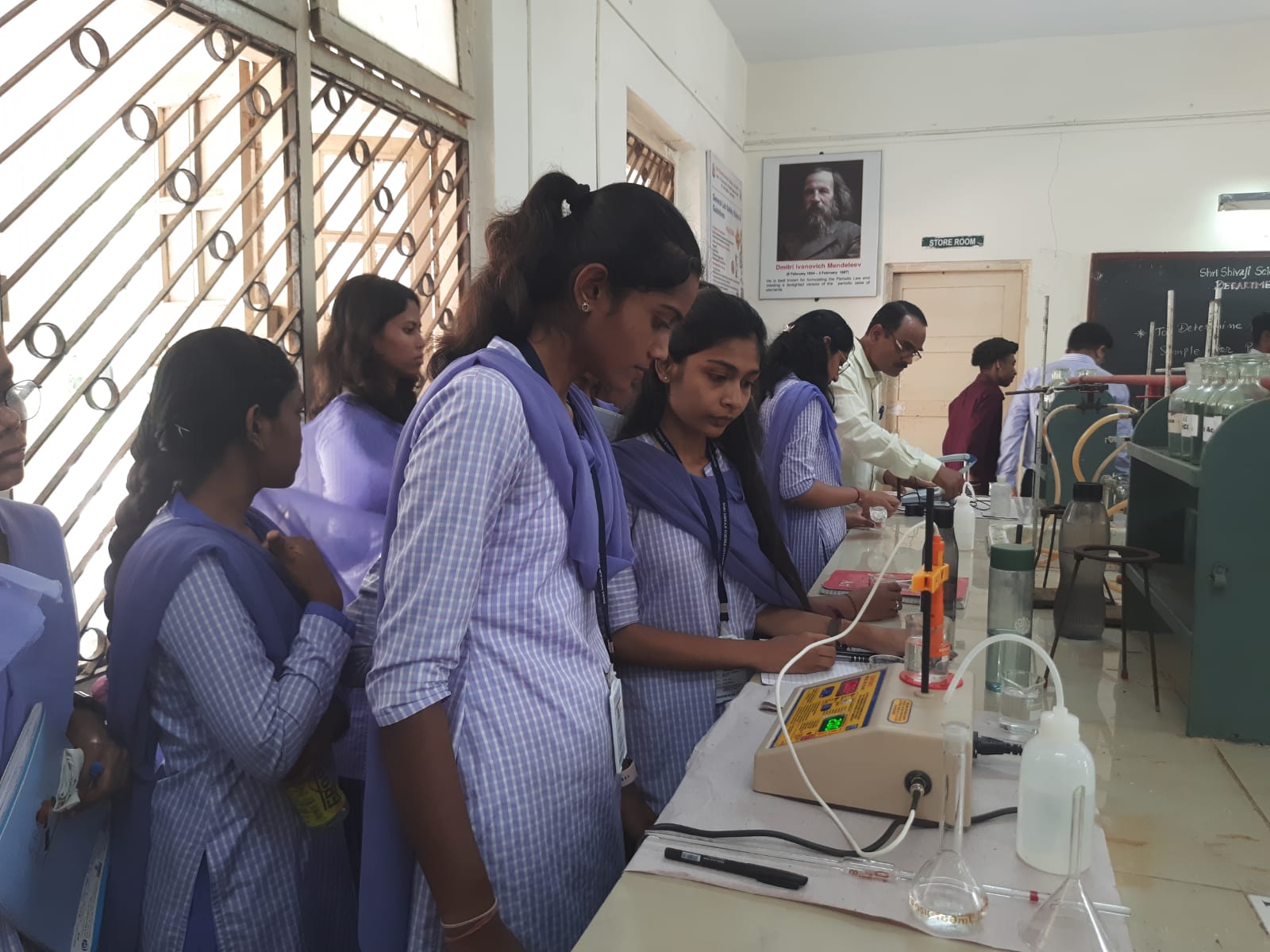 Conductivity measurement by student groups using conductivity meter | 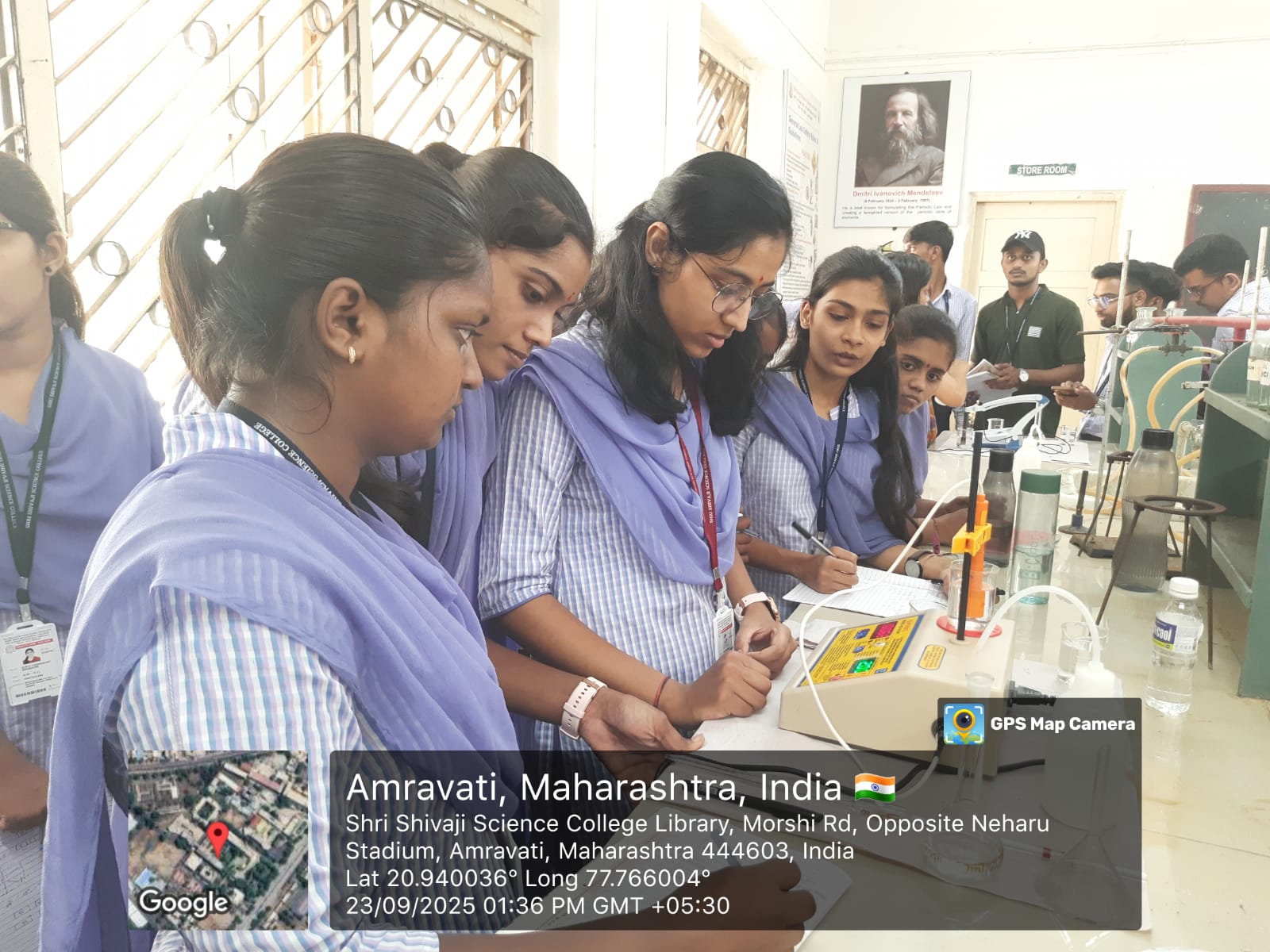 Conductivity measurement by student groups using conductivity meter |
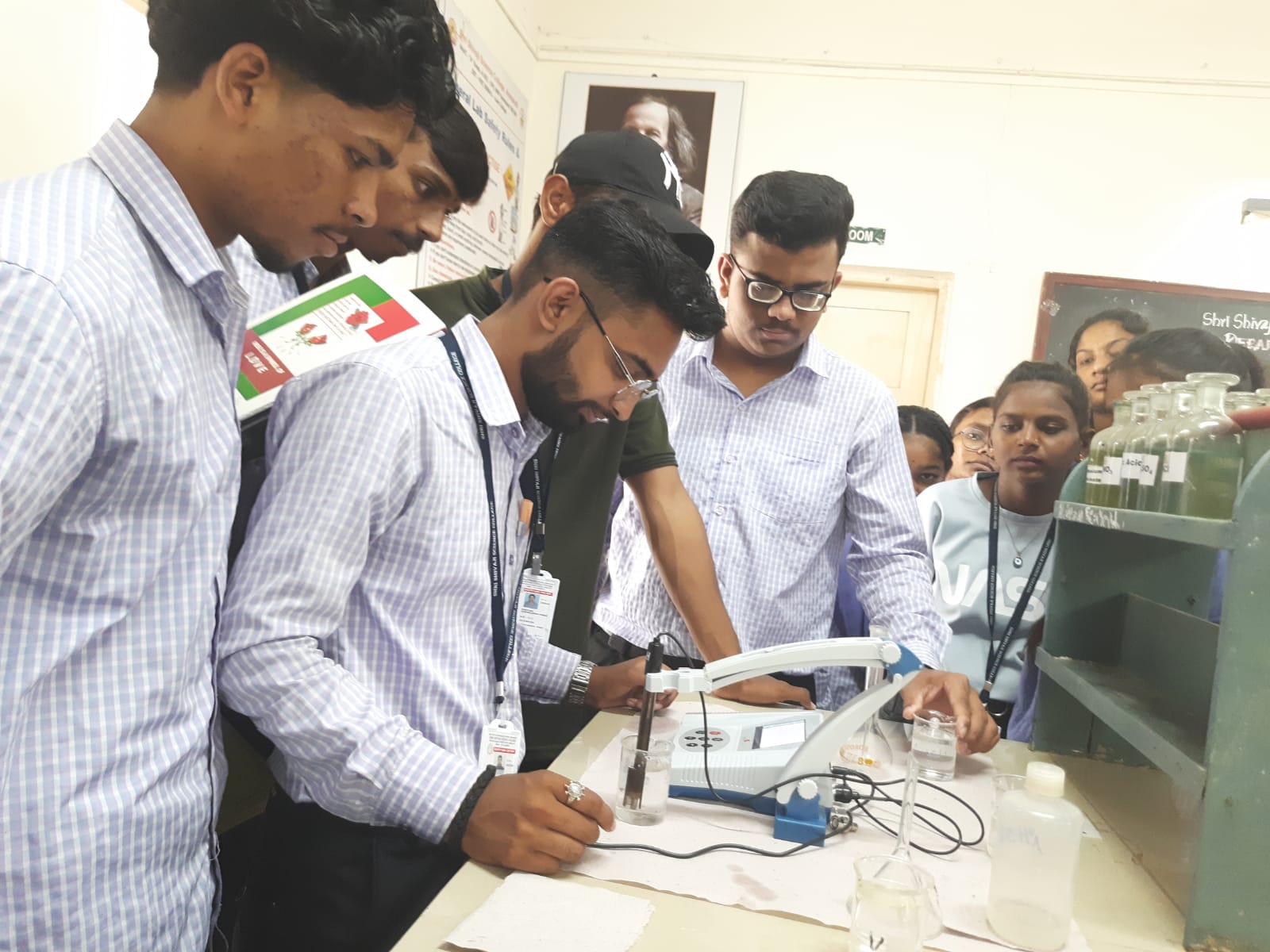 Students performing pH measurement of borewell water sample | 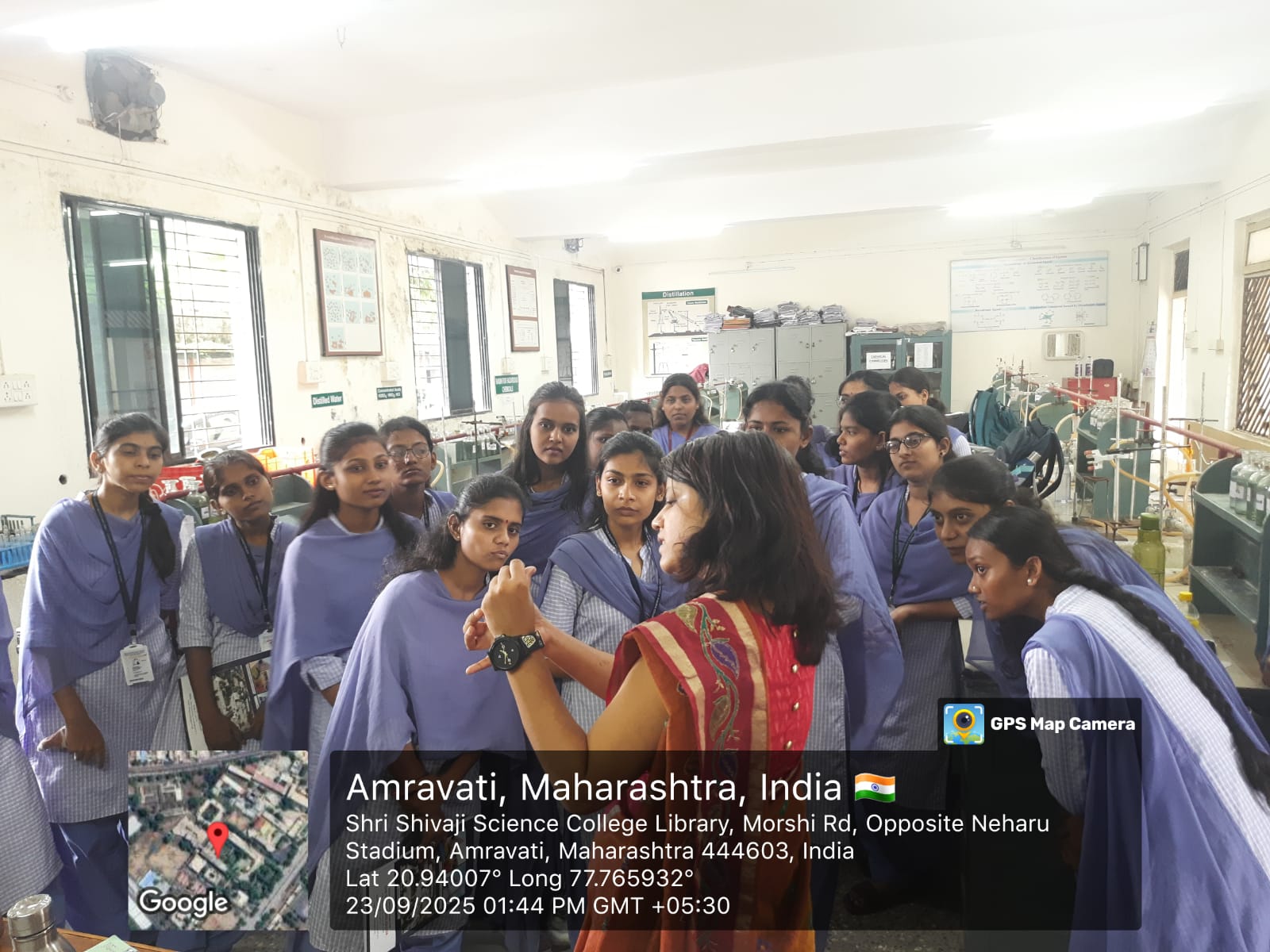 Demonstration of pH meter calibration by Dr. S. P. Ingole |
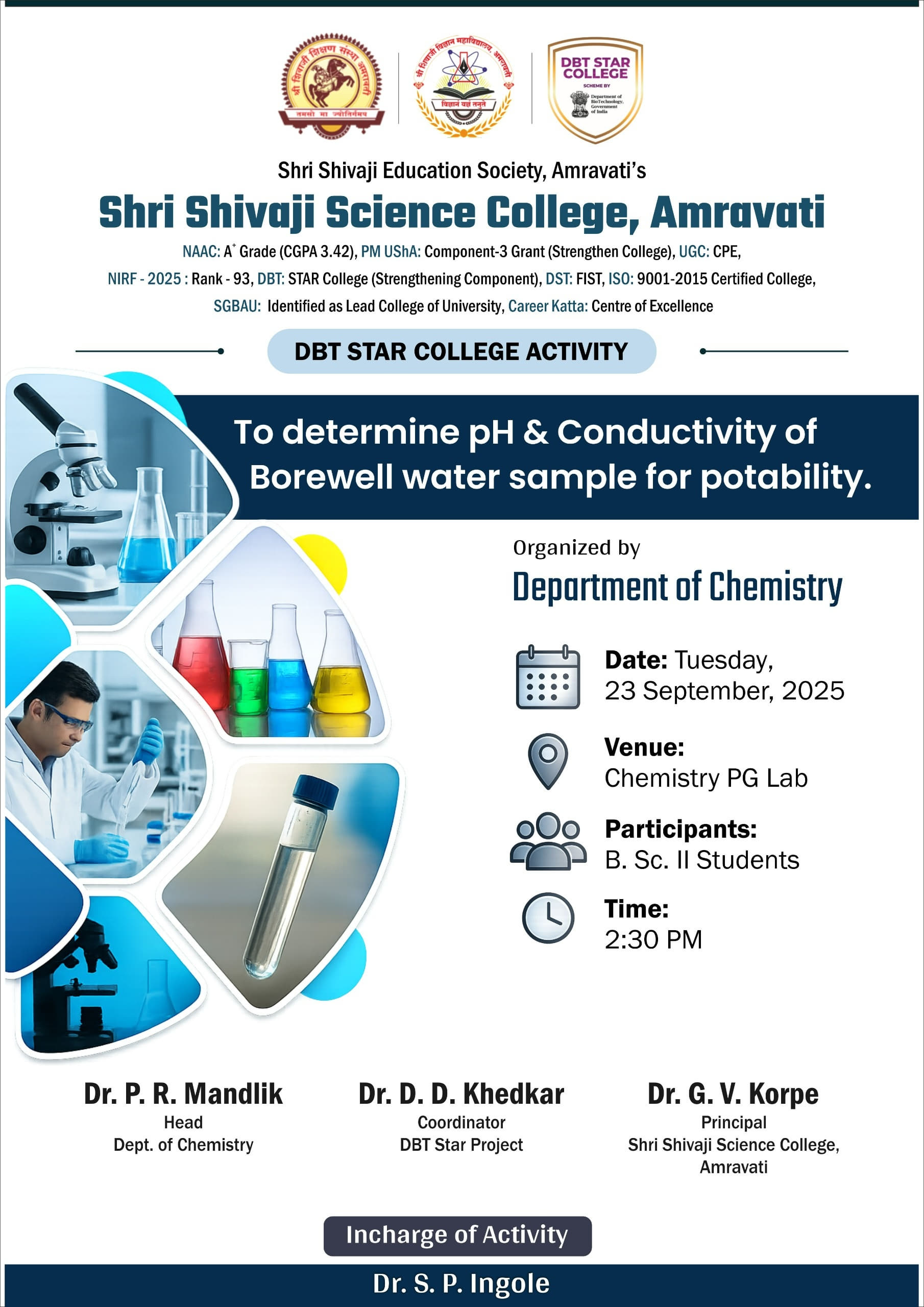 Flyer | 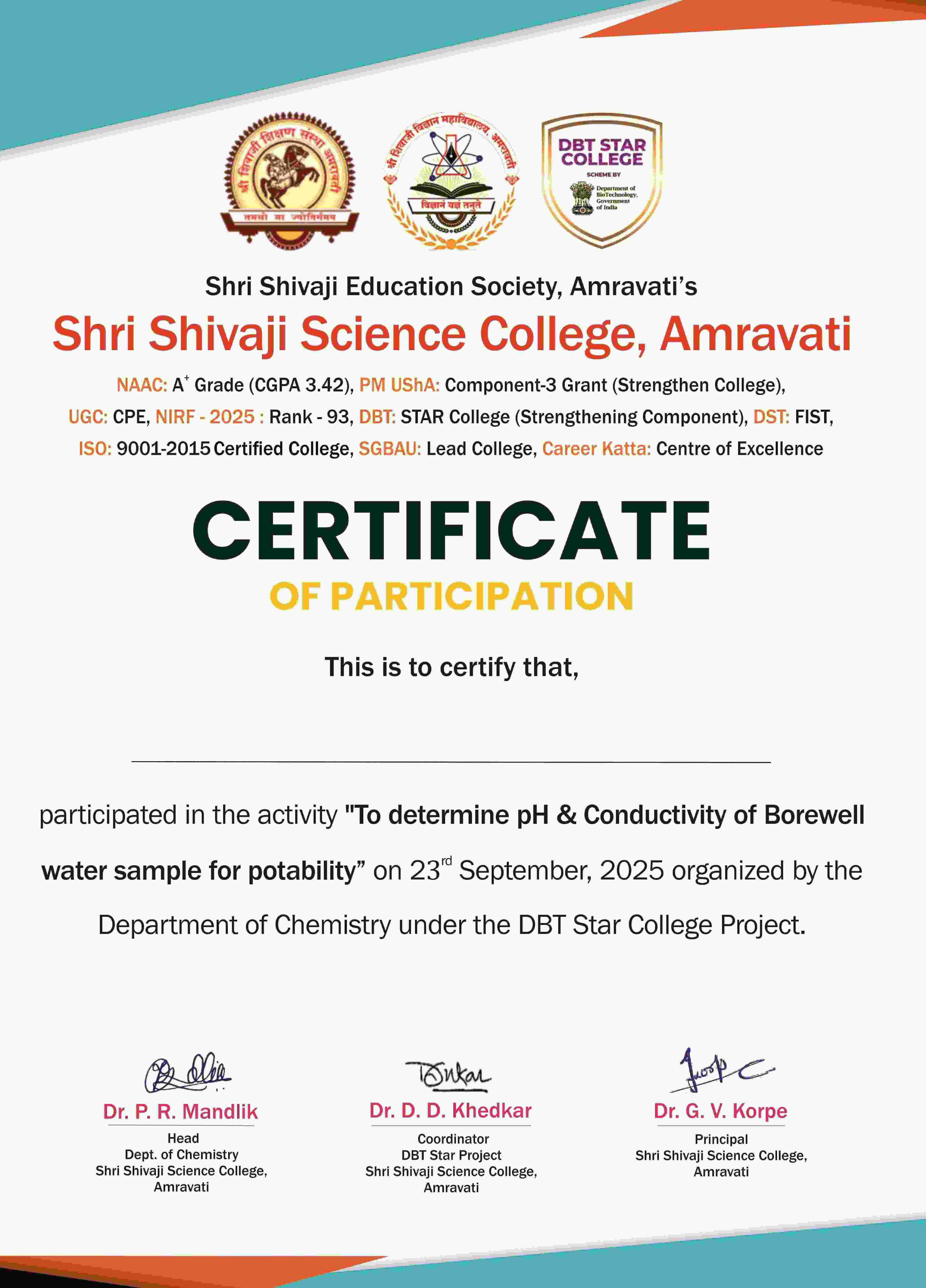 Certificate |
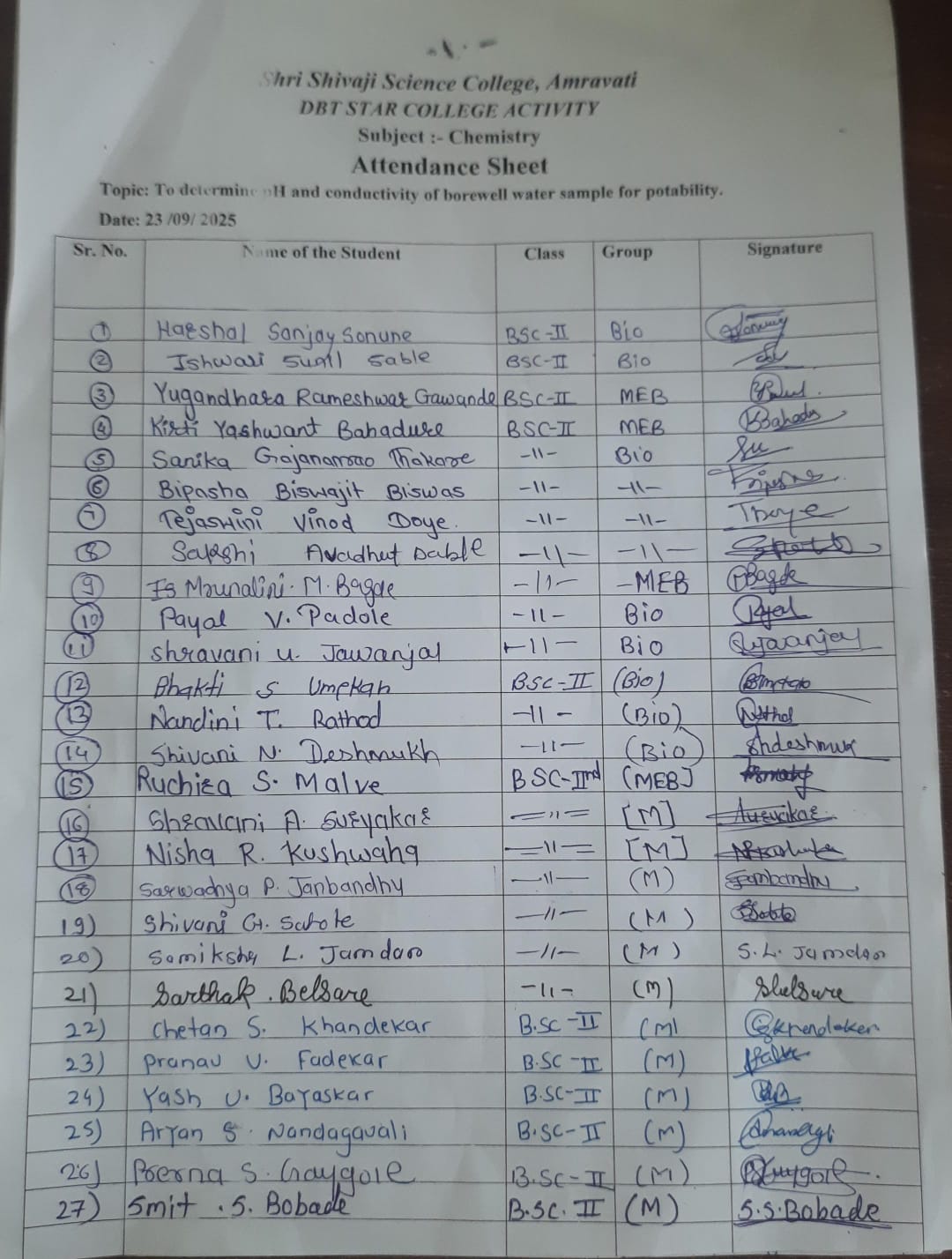
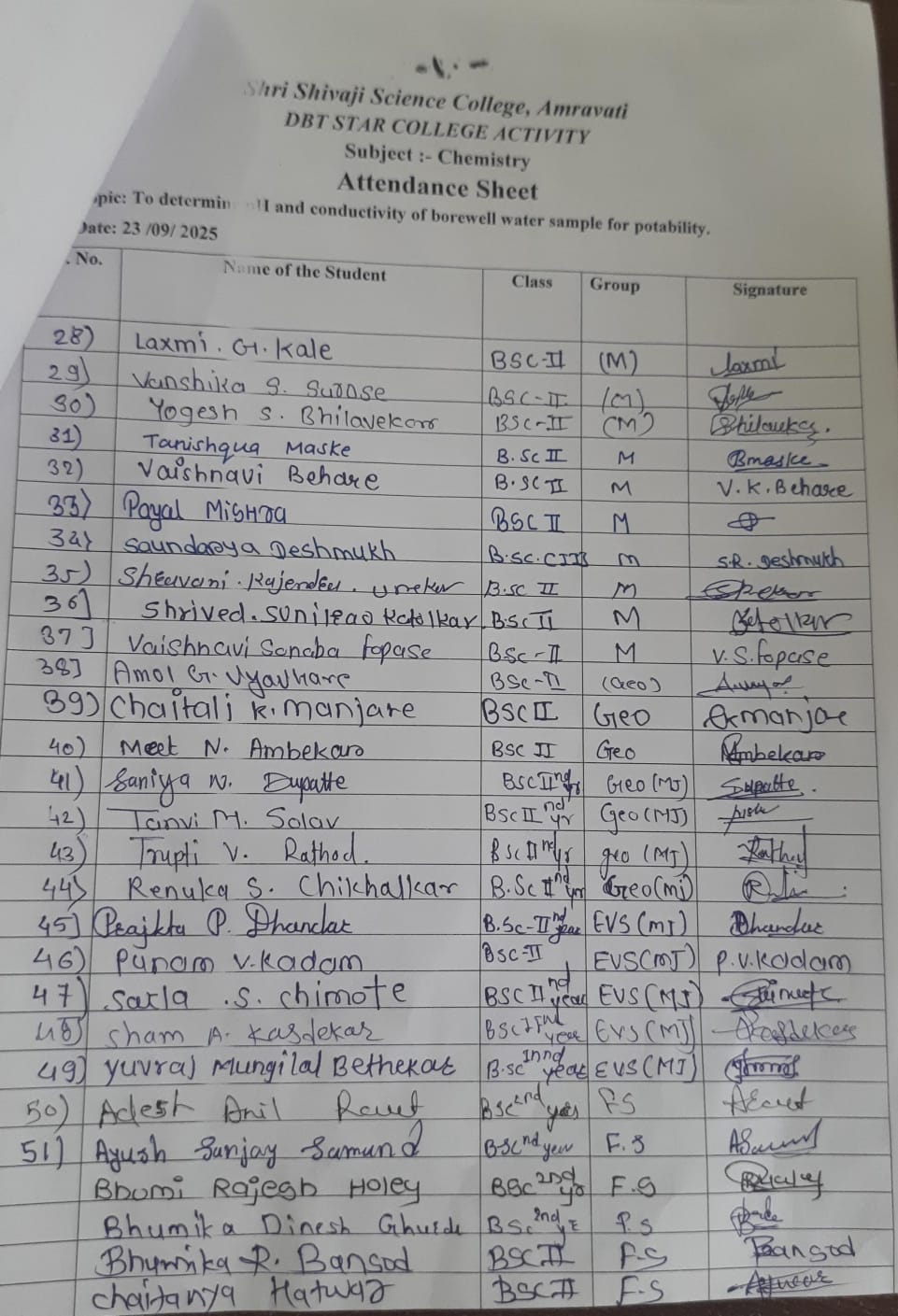
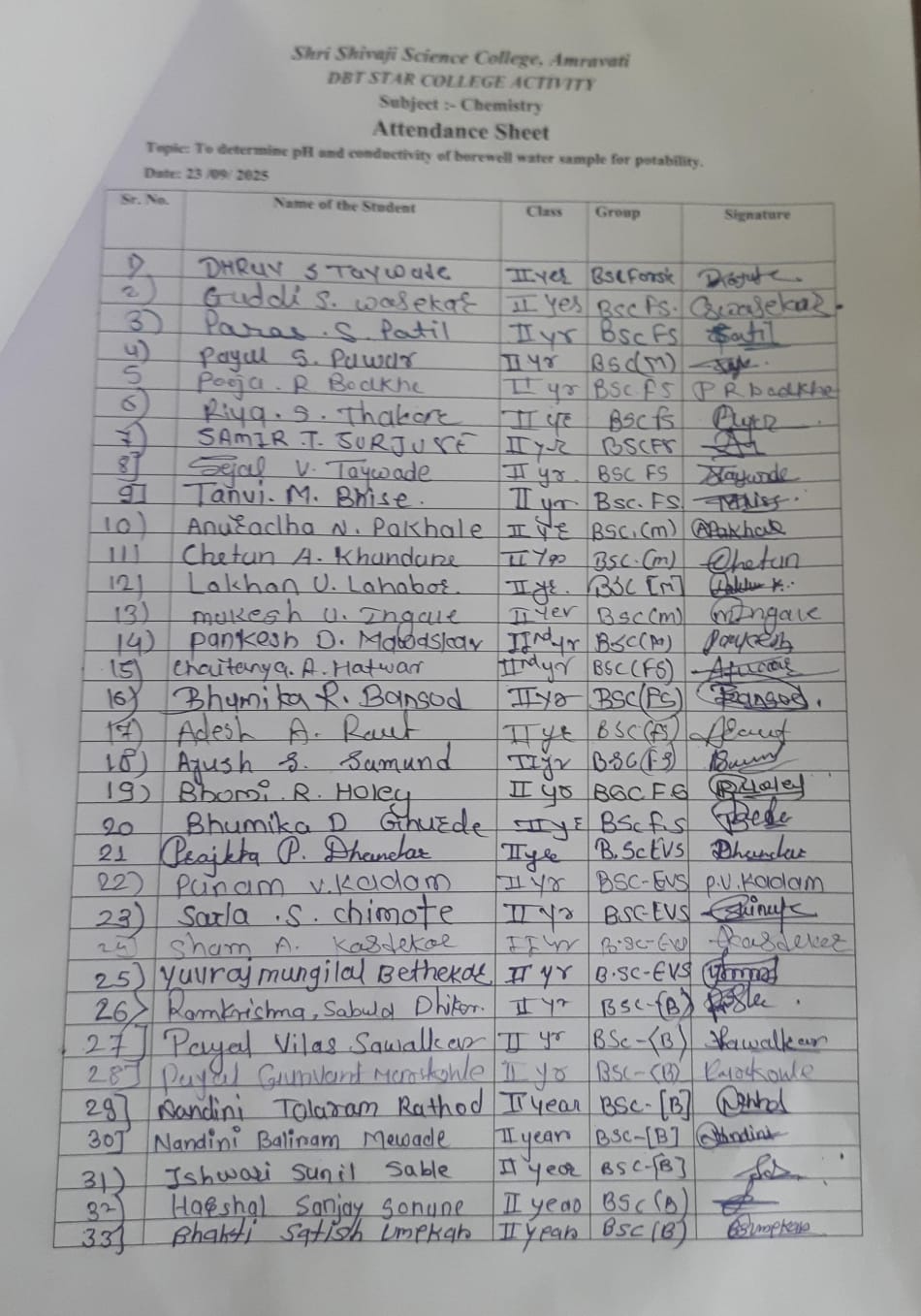
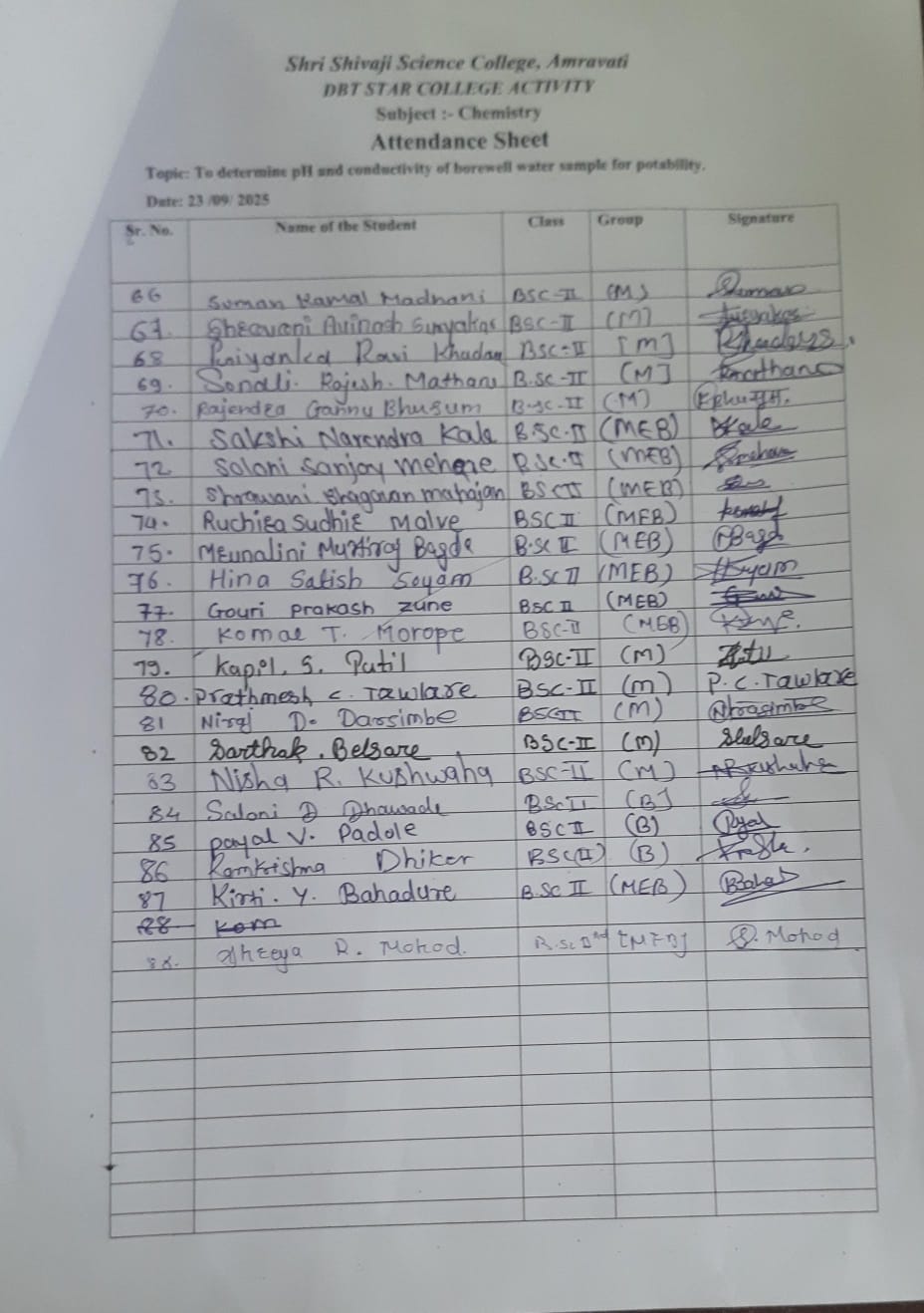
Attendance Sheet:
 |
 |
 |
 |