SHRI SHIVAJI SCIENCE COLLEGE, AMRAVATI
DBT STAR COLLEGE PROJECT ACTIVITY
ACTIVITY REPORT
Rangoli Competition
Activity Dates: 24.09.2025
Type of Activity: Other
Organizing Department: Department of Microbiology
Program Coordinators: Dr. Ashruta A. Gawali
Head of the Department: Dr. R. C. Maggirwar
External Collaborator (if any): No
Objectives:
- To create awareness about the importance of bioremediation in environmental sustainability.
- To encourage students to creatively express scientific concepts through traditional art forms.
- To promote interest in microbiology and biotechnology among undergraduate students.
- To provide a platform for students to showcase their artistic and scientific talents.
- To foster innovation, teamwork, and interdisciplinary learning.
No of Beneficieries: 20
Classes Involved: B.Sc students
Venue of the Activity: Department of Microbiology, Shri Shivaji Science College, Amravati
Activity Report:
Shri Shivaji Science College, Amravati
Department of Microbiology & Biotechnology
DBT Star College Project
Report on Rangoli Competition
Under the aegis of the Microbiologist Society India, Amravati Students Unit, and the Department of Microbiology, Shri Shivaji Science College, Amravati, a Rangoli Competition was successfully organized for undergraduate students as part of the DBT Star College Project. The event was designed to combine scientific awareness with artistic creativity, encouraging students to think innovatively while addressing important environmental concerns.
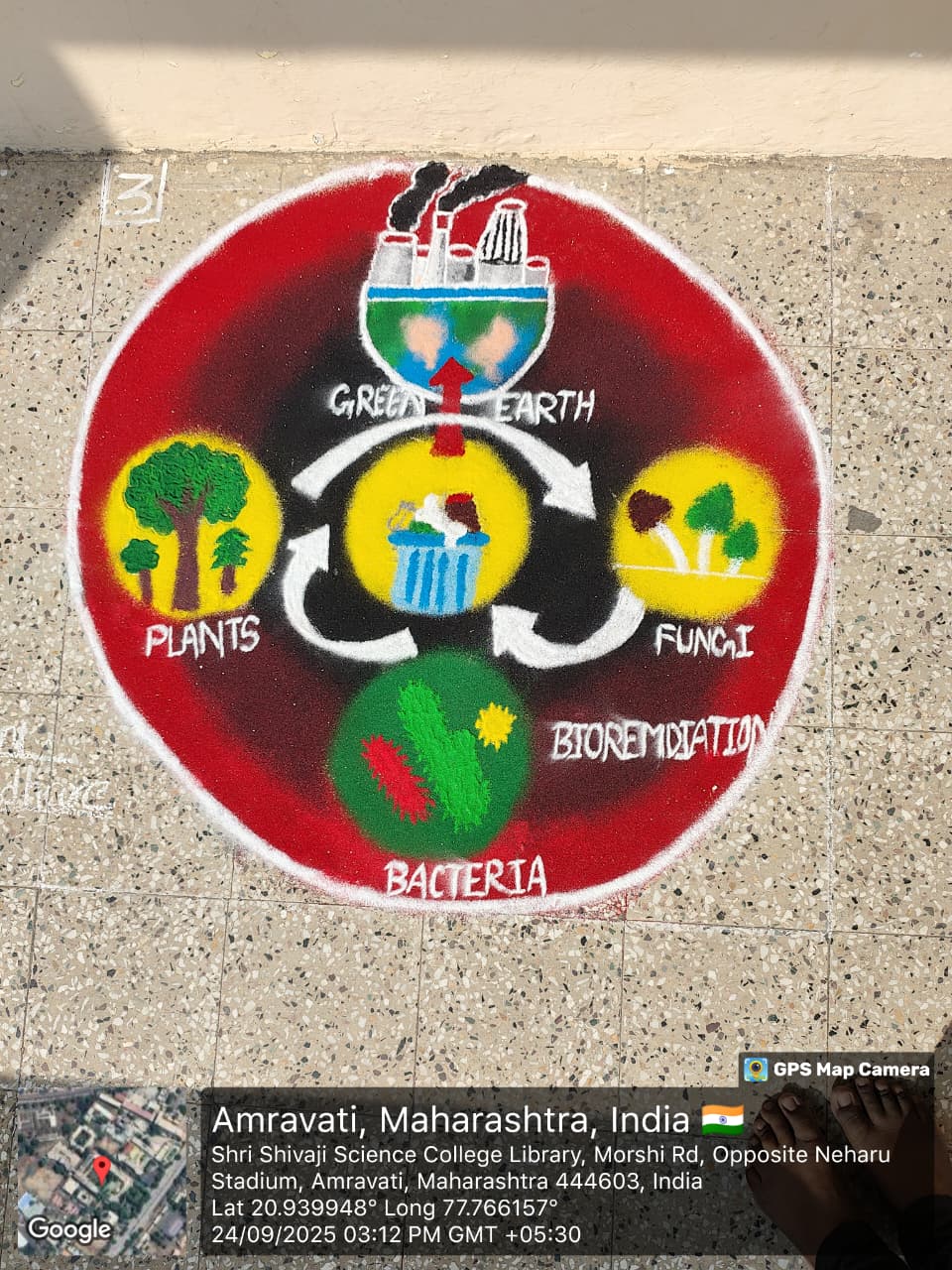
The theme of the competition was “Bioremediation”, a crucial and contemporary topic in the field of microbiology and environmental science. Bioremediation refers to the use of microorganisms to degrade or neutralize environmental pollutants, thereby restoring contaminated environments. Through this theme, the organizers aimed to sensitize students about sustainable environmental practices and highlight the role of microbiology in solving real-world ecological problems. The use of Rangoli, a traditional Indian art form, added a cultural dimension to the scientific theme, making the activity both educational and engaging.
The competition was coordinated efficiently by Ms. S. S. Khandare and Ms. V. N. Thakare, who ensured smooth planning and execution of the event. Their efforts included guiding participants, managing logistics, and maintaining discipline throughout the competition. The event witnessed active support and cooperation from faculty members and student volunteers, contributing to its overall success.
A panel of esteemed judges was invited to evaluate the Rangoli designs. The judging panel included Ms. S. S. Mankar, Coordinator of the Department of Biotechnology, and Ms. P. P. Dhakulkar from the Department of Biotechnology. The judges assessed the participants’ work based on several criteria, including creativity, relevance to the theme, clarity of scientific concept, presentation, and overall aesthetic appeal. Their expertise ensured a fair and unbiased evaluation process.
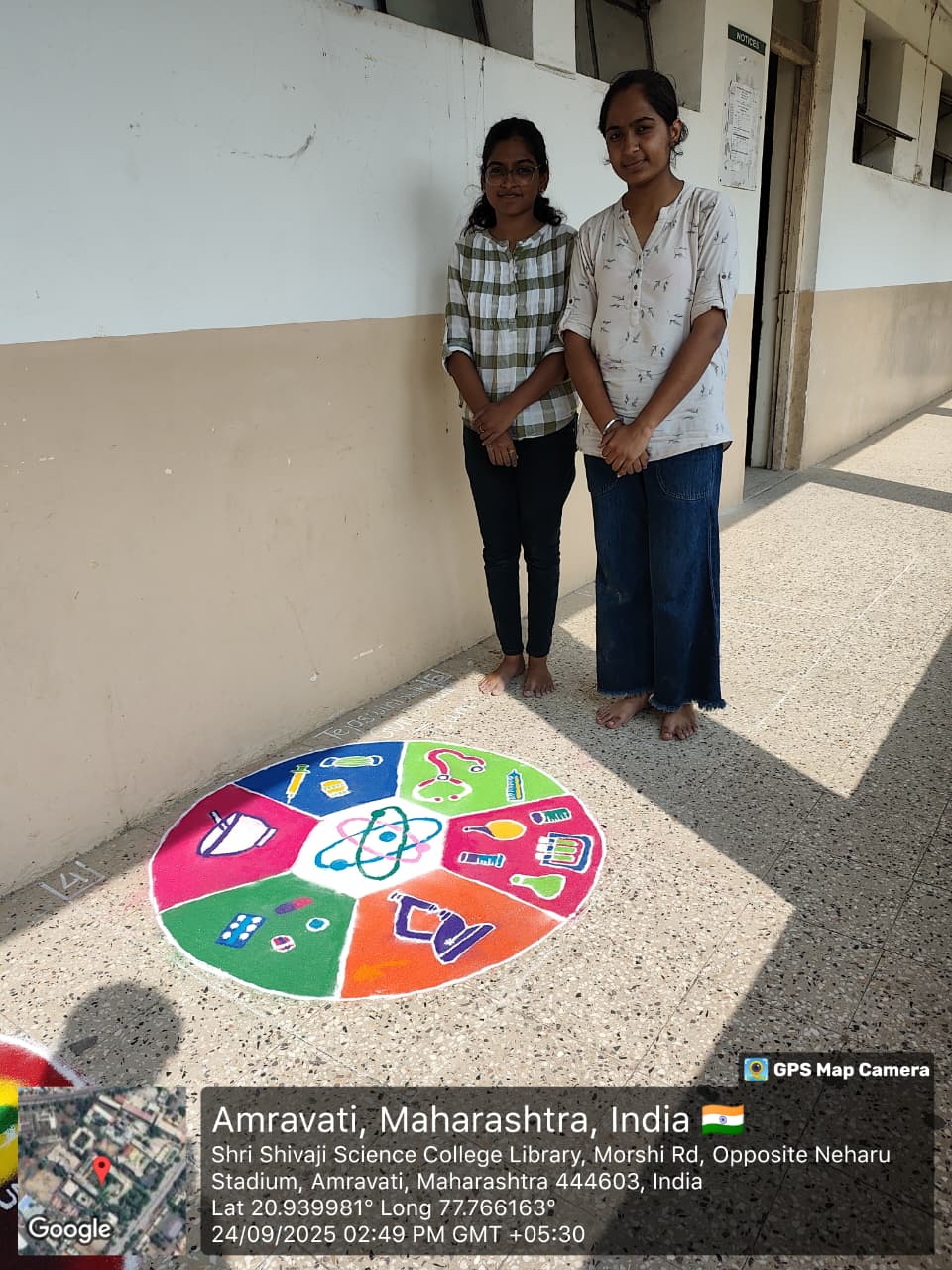
The competition received an enthusiastic response from undergraduate students across the department. Participants showcased remarkable creativity and originality in presenting their ideas. Each Rangoli design reflected a unique perspective on bioremediation, illustrating concepts such as oil spill cleanup, wastewater treatment, soil decontamination, and the use of microbes in environmental restoration. The students used vibrant colors, innovative patterns, and symbolic representations to effectively communicate complex scientific ideas through visual art.
The event venue was transformed into a vibrant display of colors and knowledge, with each Rangoli telling a story of environmental protection and scientific innovation. The competition not only served as a platform for artistic expression but also encouraged participants and viewers to think critically about environmental issues and the role of science in addressing them.
After careful evaluation by the judges, the following participants were declared winners:
Result of the Competition:
1st Rank: Tanushree Mhashekar & Siya Agrawal
2nd Rank: Shivani Sapdhare
3rd Rank: Shraddha Tekode, Monali Wankhade & Rupal Thelkar
The winners were appreciated for their exceptional creativity, clarity in presenting the theme, and overall artistic excellence. Their Rangoli designs stood out for effectively integrating scientific knowledge with aesthetic presentation. All participants were acknowledged for their efforts and enthusiasm, which contributed to the success of the event.
Objectives of the Competition
To create awareness about the importance of bioremediation in environmental sustainability.
To encourage students to creatively express scientific concepts through traditional art forms.
To promote interest in microbiology and biotechnology among undergraduate students.
To provide a platform for students to showcase their artistic and scientific talents.
To foster innovation, teamwork, and interdisciplinary learning.
Outcomes of the Competition
Participants gained a deeper understanding of bioremediation and its practical applications.
The activity enhanced students’ creativity and ability to visually communicate scientific ideas.
It encouraged active participation in co-curricular academic activities.
Students developed confidence and collaborative skills through teamwork and presentation.
The event successfully raised awareness about eco-friendly solutions and environmental conservation.
It strengthened the integration of science and art, making learning more interactive and enjoyable.
Conclusion
The Rangoli Competition proved to be a successful and enriching event that effectively combined science, art, and environmental awareness. It provided students with a unique opportunity to explore and present microbiological concepts in a creative and engaging manner. The enthusiastic participation and innovative presentations reflected the students’ keen interest and understanding of the subject.
Overall, the event fulfilled its objectives by promoting scientific awareness, encouraging creativity, and fostering a sense of responsibility towards environmental sustainability. Such activities play a vital role in holistic education by going beyond traditional classroom learning and inspiring students to think critically and creatively. The Department of Microbiology looks forward to organizing more such events in the future to continue nurturing talent and spreading scientific awareness among students.
Outcomes:
- Participants gained a deeper understanding of bioremediation and its practical applications.
- The activity enhanced students’ creativity and ability to visually communicate scientific ideas.
- It encouraged active participation in co-curricular academic activities.
- Students developed confidence and collaborative skills through teamwork and presentation.
- The event successfully raised awareness about eco-friendly solutions and environmental conservation.
Photos:
 Where science meets art | 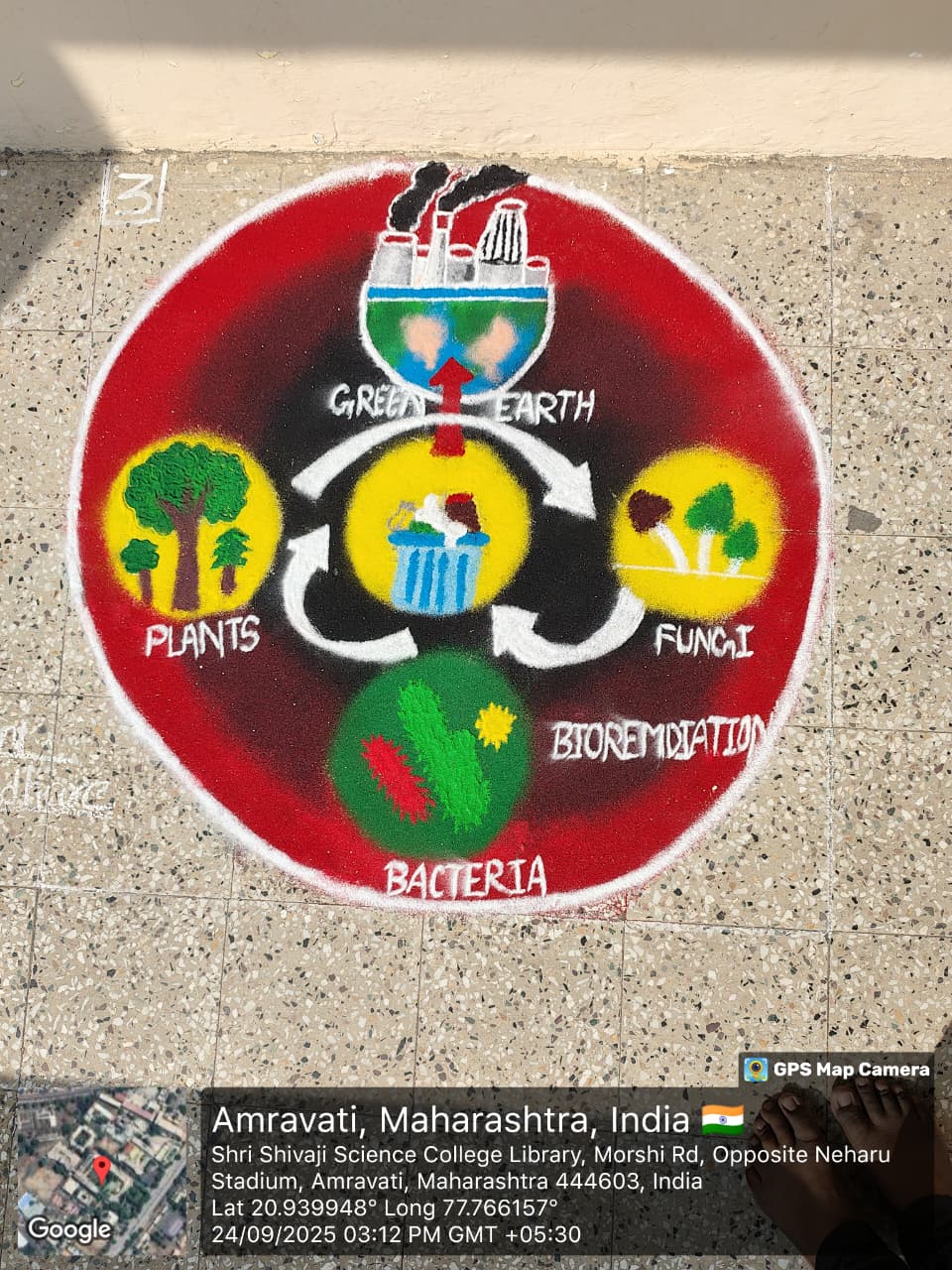 Creativity inspired by microbiology |
 Colors speaking the language of sustainability | 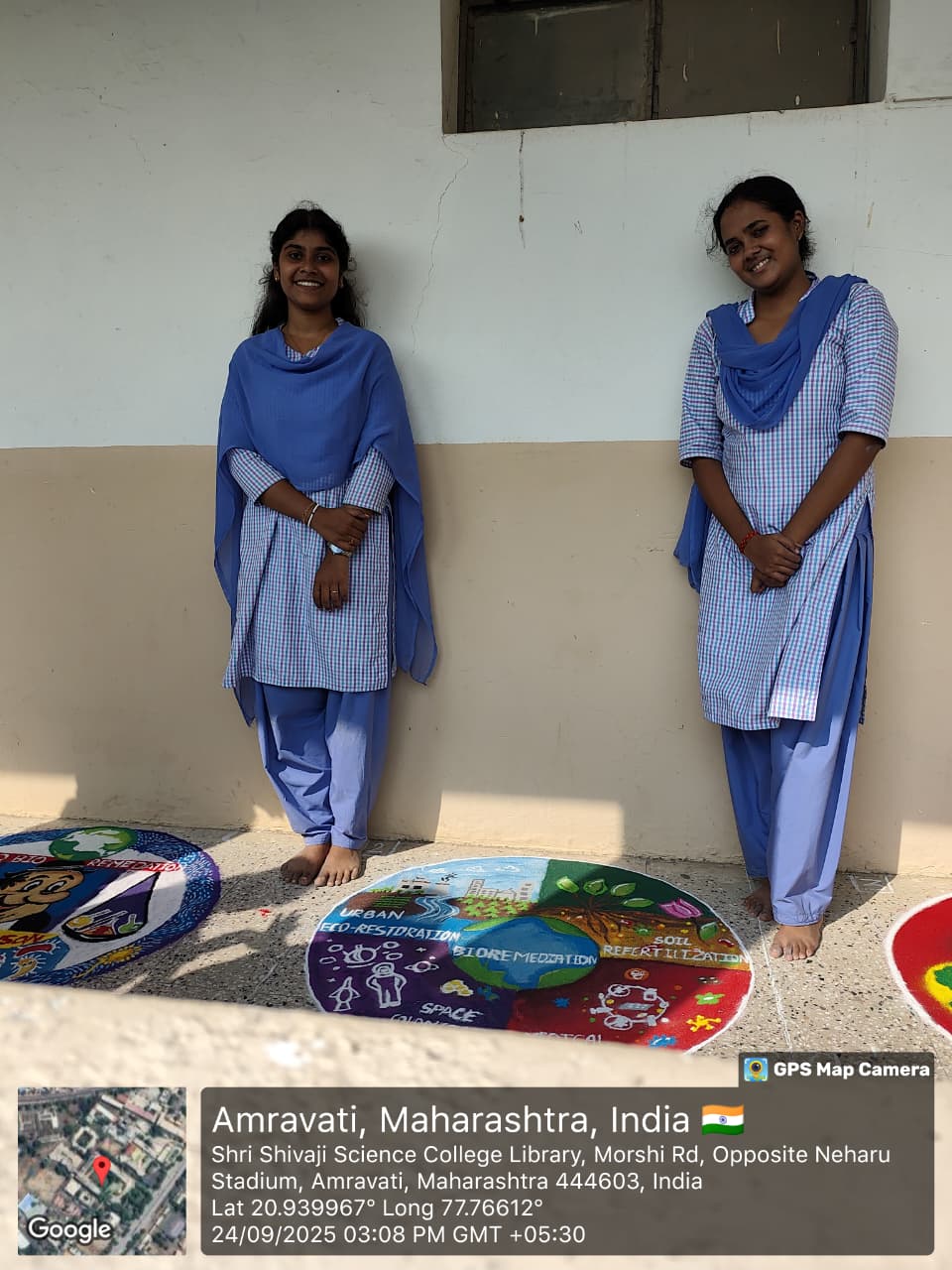 Colors speaking the language of sustainability |
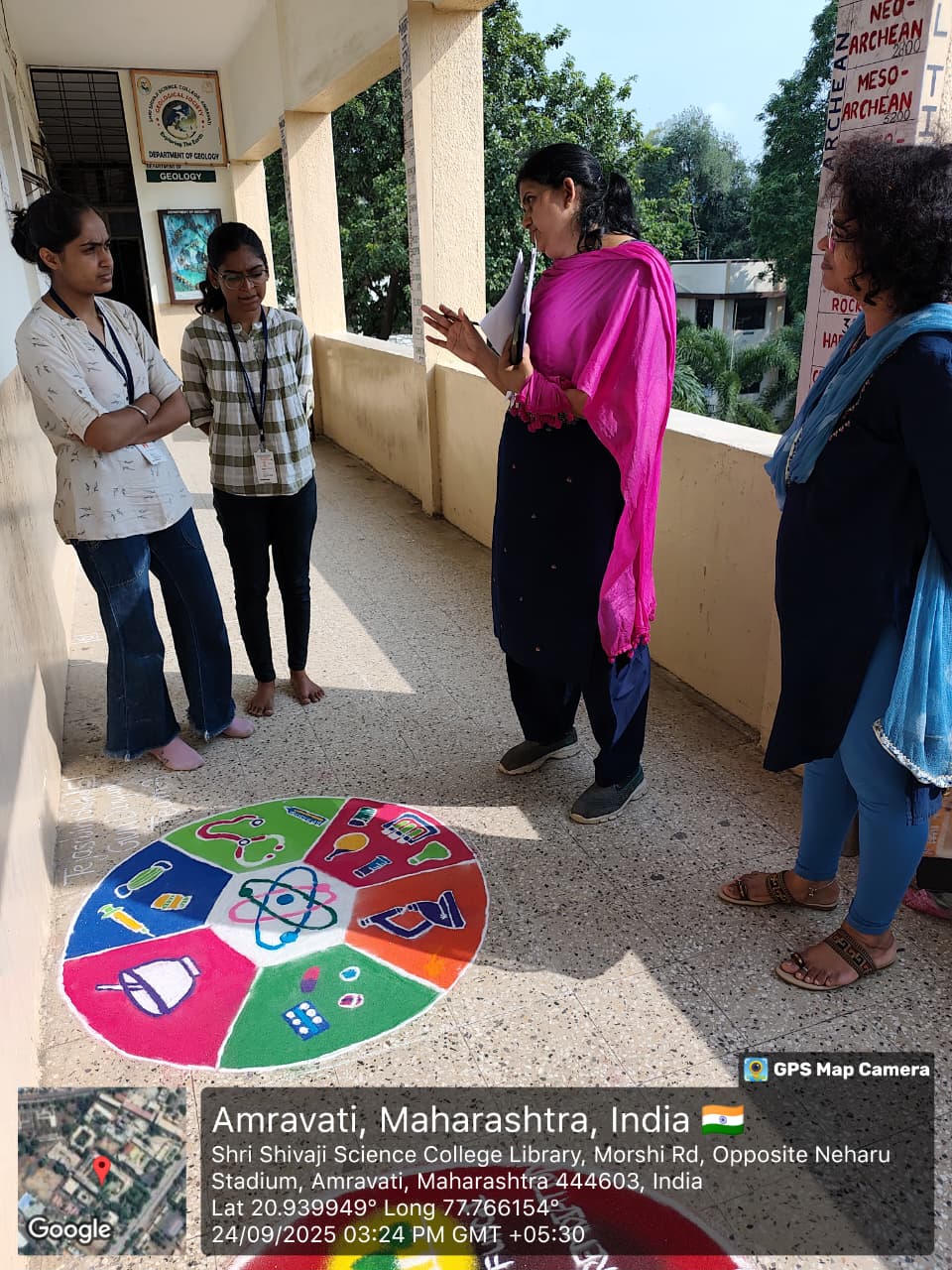 Blending tradition with scientific innovation | 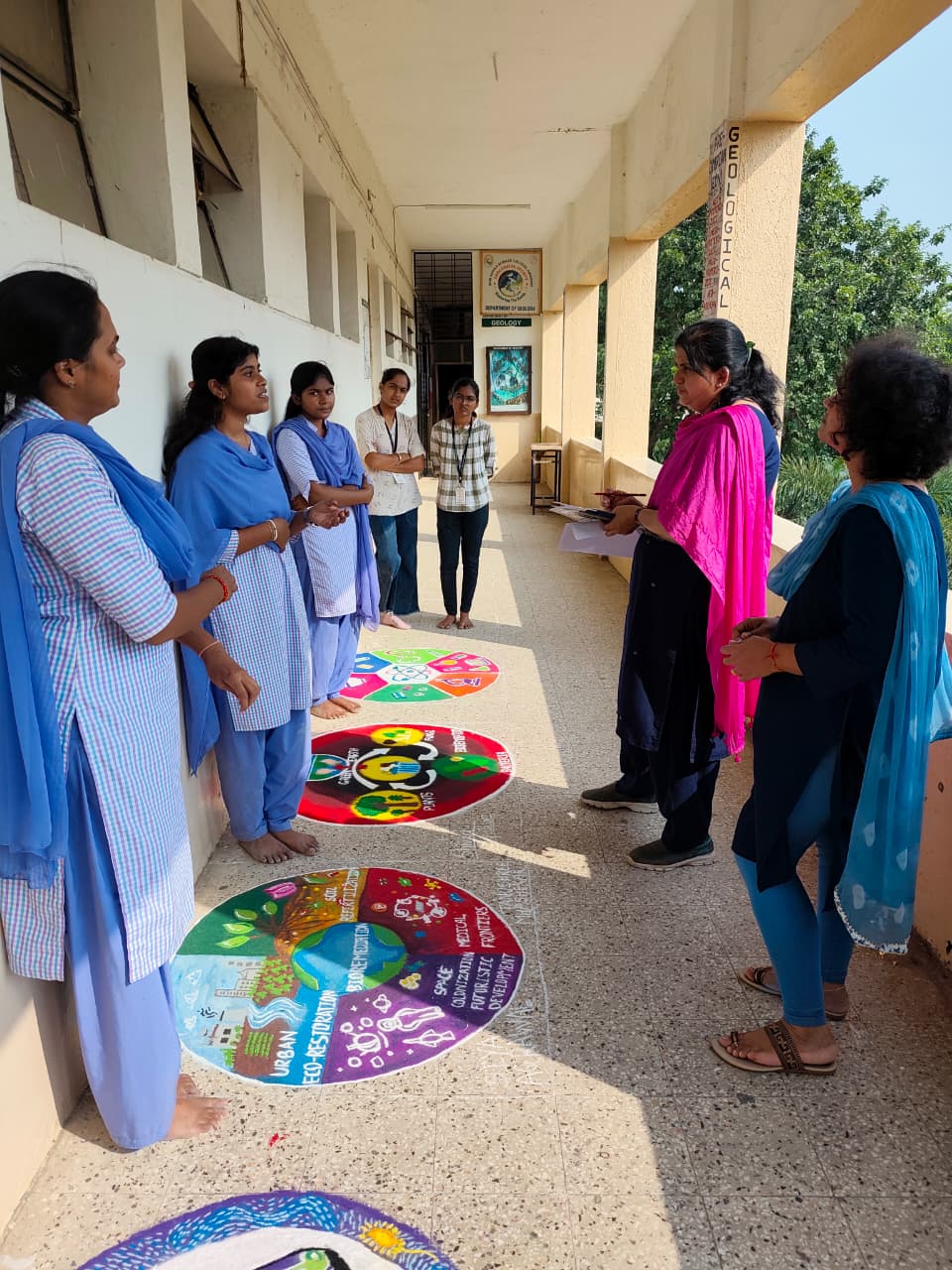 Rangoli with a message of environmental healing |
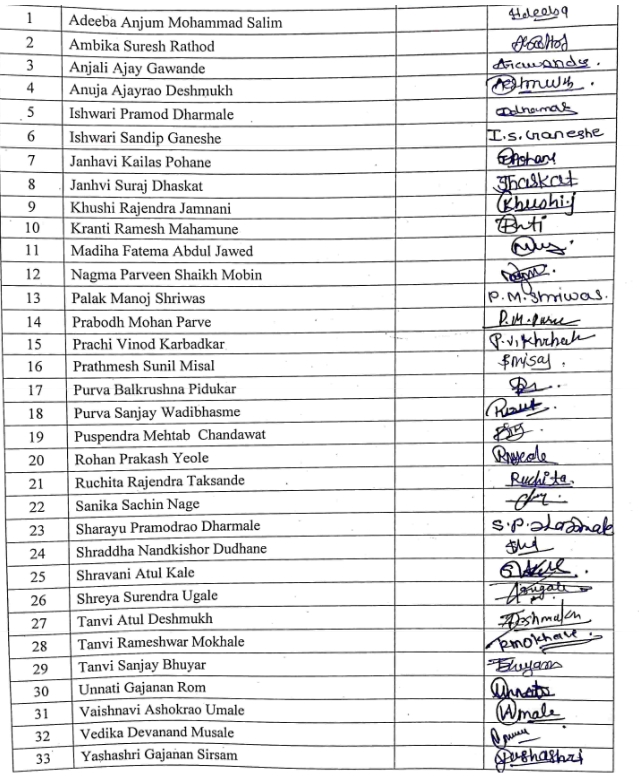
Attendance Sheet:
 |