SHRI SHIVAJI SCIENCE COLLEGE, AMRAVATI
DBT STAR COLLEGE PROJECT ACTIVITY
ACTIVITY REPORT
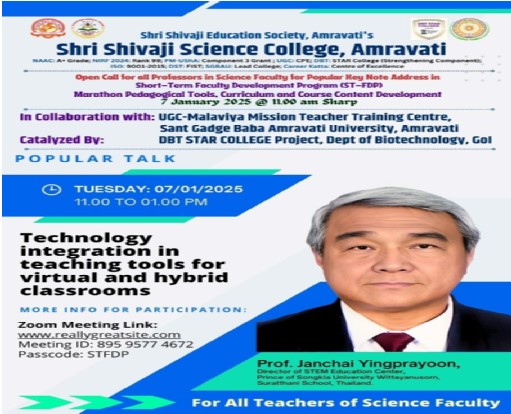
Inculcation of environmental values — Dhamori Vidyalaya, Dhamori
Activity Dates: 30.09.2025
Type of Activity: Outreach Activity
Organizing Department: Department of Environmental Science
Program Coordinators: Mr. V. D. Bute
Head of the Department: Dr. S. P. Ingole
External Collaborator (if any): Dhamori Vidyalaya, Dhamori
Objectives:
- 1. To increase students’ awareness of environmental issues and the importance of conservation.
- 2. To encourage students to adopt eco-friendly habits in their daily lives.
- 3. To promote creativity, teamwork, and active participation through interactive activities.
- 4. To recognize and reward students for their involvement and enthusiasm in environmental activities
- 5. To motivate teachers and students to use sustainable alternatives, such as cloth bags
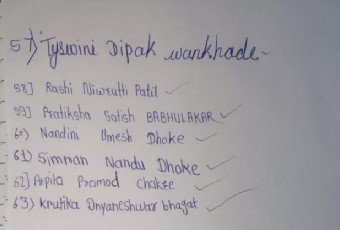
No of Beneficieries: 63
Classes Involved: B.Sc. III
Venue of the Activity: Dhamori Vidyalaya, Dhamori
Activity Report:
The Environmental Science Department of our institution organized a meaningful and impactful outreach activity conducted by the B.Sc. Final Year students with the objective of spreading environmental awareness and encouraging sustainable practices among school students and the wider community. The program was carefully planned to combine educational values with practical action, focusing on respect toward school authorities, gratitude to teachers, and the promotion of eco-friendly habits through cloth bag distribution. The initiative aimed not only to educate participants about environmental protection but also to inspire positive social values, community participation, and responsible citizenship.
In the present era, environmental issues such as plastic pollution, climate change, water scarcity, and loss of biodiversity have become serious global concerns. Educational institutions have an important role in creating awareness among young people and motivating them to adopt environmentally responsible behavior. With this vision, the Environmental Science Department designed the outreach activity as an opportunity to connect academic learning with social responsibility. It also provided B.Sc. Final Year students with practical exposure, leadership experience, and a chance to serve society through meaningful action.
Planning and Preparation
The outreach activity was planned well in advance under the guidance of faculty members of the Environmental Science Department. Several meetings were conducted with the B.Sc. Final Year students to discuss the theme, objectives, schedule, and responsibilities of the event. Students actively participated in brainstorming ideas to make the program informative, engaging, and useful for school students.
Permission was obtained from the concerned school authorities, and coordination was established to ensure smooth execution of the event. The faculty members guided students regarding communication, discipline, time management, and proper conduct during the visit.
Students prepared awareness materials such as posters, slogans, charts, banners, and short speeches related to environmental conservation. Special emphasis was given to the issue of plastic pollution and the need for replacing single-use plastic bags with reusable cloth bags. Attractive and easy-to-understand visual materials were created so that school students could quickly grasp the key messages.
Cloth bags were arranged for distribution among students, teachers, and supporting staff members. This practical initiative was included to demonstrate that environmental protection can begin with simple daily habits. The organizing team also prepared short talks, presentations, and interactive activities to make the event educational as well as enjoyable.
Different responsibilities were assigned to final year students such as anchoring, welcome arrangements, stage management, documentation, photography, audience coordination, and cloth bag distribution. This division of work ensured discipline, teamwork, and smooth functioning of the program.
Execution of the Program
On the scheduled day, the B.Sc. Final Year students visited the selected school along with faculty coordinators. The school management and teachers warmly welcomed the visiting team. Students of the Environmental Science Department expressed gratitude to the school authorities for giving them an opportunity to conduct the outreach activity and interact with young learners.
The program began with an inaugural session. A brief introduction was given regarding the purpose of the outreach activity and the importance of environmental education. Faculty members highlighted the need to develop environmental awareness at the school level and appreciated the role of schools in shaping responsible future citizens.
Following the inaugural session, the final year students conducted awareness talks on various environmental issues. The topics covered included:
Plastic pollution and its harmful effects on land, water bodies, and wildlife
Waste management and segregation of biodegradable and non-biodegradable waste
Importance of tree plantation and biodiversity conservation
Water conservation and methods to prevent wastage
Energy saving practices in homes and schools
Personal responsibility in maintaining cleanliness in surroundings
The presentations were delivered in simple and understandable language so that school students could easily connect with the message. Students used charts, slogans, and examples from daily life to make the sessions more relatable and effective.
Interactive Learning Sessions
One of the most successful parts of the program was the interactive question-answer session conducted after the awareness talks. School students enthusiastically asked questions about pollution, recycling, saving water, planting trees, and reducing waste. The final year students answered confidently and encouraged participants to think about their own habits and how they could improve them.
Short activities and slogans were also organized to maintain interest and participation. Some students shared ideas such as carrying water bottles, using cloth bags, switching off lights when not needed, and planting saplings at home. This interaction created a lively and positive learning environment.
Cloth Bag Distribution Initiative
A major highlight of the outreach activity was the distribution of cloth bags among school students, teachers, and non-teaching staff members. The objective of this initiative was to reduce dependency on single-use plastic bags and promote the use of reusable alternatives in everyday life.
During the distribution process, final year students explained the environmental benefits of cloth bags, such as:
Reduction in plastic waste generation
Reusability for multiple purposes
Greater durability compared to plastic bags
Lower environmental pollution
Protection of animals and aquatic life from plastic hazards
Promotion of sustainable shopping habits
Students explained that plastic bags often clog drains, pollute soil, contaminate water bodies, and harm birds and animals when discarded carelessly. Cloth bags, on the other hand, are safer, stronger, and environmentally friendly.
The recipients appreciated the thoughtful gesture and expressed willingness to use cloth bags in their daily routines. The initiative successfully conveyed the message that small changes in personal habits can create a large positive impact on the environment.
Promotion of Values and Social Responsibility
Apart from environmental education, the outreach activity strongly emphasized moral and social values. Throughout the event, the B.Sc. Final Year students displayed discipline, teamwork, leadership, cooperation, and respect toward teachers and school authorities.
The act of thanking the school management reflected gratitude and strengthened cooperation between institutions. Such interactions help build healthy educational partnerships and encourage collective efforts for social development.
The activity also helped students realize that environmental protection is not limited to textbook knowledge. It requires awareness generation, community participation, and responsible action. By engaging directly with school students, the final year participants understood their role as environmental ambassadors.
Participation and Response
The outreach activity received enthusiastic participation from both college students and school students. Teachers actively supported the event and appreciated the confidence, dedication, and presentation skills of the Environmental Science students.
School students listened attentively to the sessions and responded actively during discussions. Many students promised to reduce plastic use, conserve water, plant trees, and maintain cleanliness in their homes and surroundings. The cloth bag distribution especially attracted attention and was welcomed as a practical and useful step.
Faculty members observed that the event successfully created environmental consciousness among young minds and encouraged positive behavioral change.
The outreach activity conducted by the B.Sc. Final Year students of the Environmental Science Department was highly successful, educational, and meaningful. It effectively combined environmental awareness with social values and practical action. Through awareness talks, interactive sessions, cloth bag distribution, and respectful engagement with school authorities, the program conveyed important messages of sustainability, gratitude, and civic responsibility.
The careful planning, systematic execution, and enthusiastic participation of students and teachers made the event impactful and memorable. It provided a strong foundation for fostering environmental values in the school community and inspired participants to adopt eco-friendly practices in their daily lives.
Such outreach initiatives are essential in today’s world, where environmental challenges require collective responsibility and informed action. The program stands as an excellent example of how educational institutions can contribute to building a greener, cleaner, healthier, and more responsible society.
Outcomes:
- 1. Increased awareness among school students regarding environmental issues.
- 2. Encouragement to reduce plastic bag usage through cloth bag adoption.
- 3. Development of leadership, teamwork, and communication skills among final year students.
- 4. Strengthened relationship between the college and school community.
- 5. Promotion of values such as gratitude, respect, discipline, and responsibility.
Photos:
 Students with school teachers | 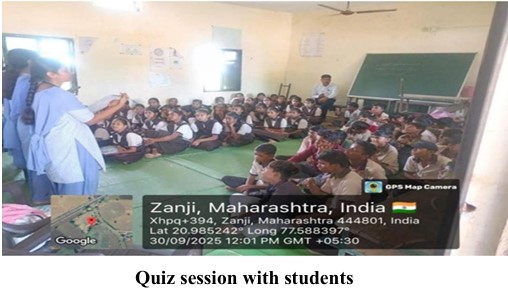 Students conduct session in class room. |
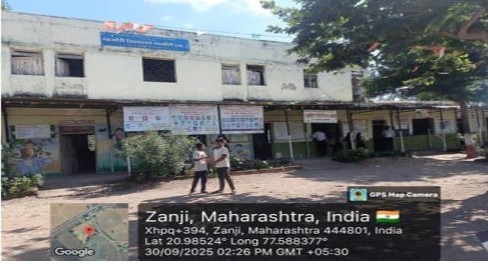 Dhamori Vidyalaya, Dhamori, School Building | 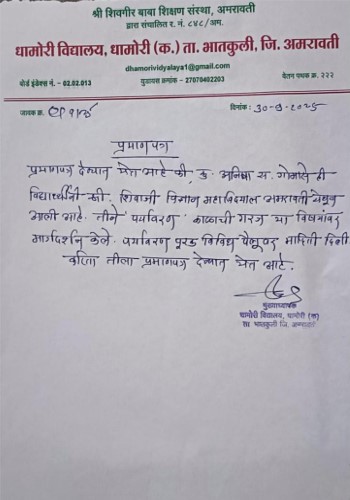 Student Certificate from school |
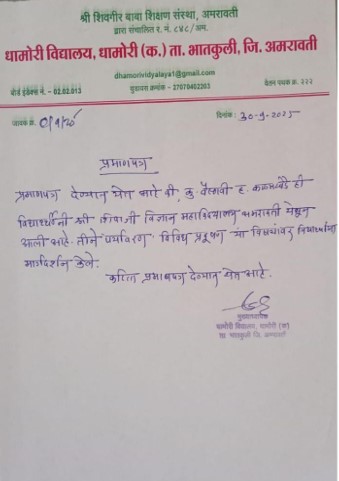 Student Certificate from school | 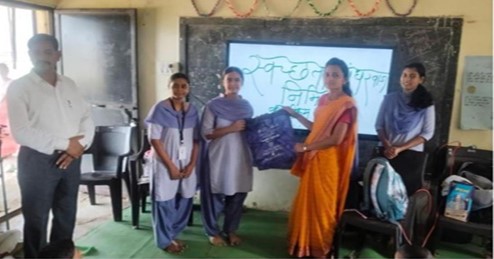 Cloth bag distribution |
Attendance Sheet:
 |
 |