SHRI SHIVAJI SCIENCE COLLEGE, AMRAVATI
DBT STAR COLLEGE PROJECT ACTIVITY
ACTIVITY REPORT
Installation of Wood Gallary
Activity Dates: 30.12.2025
Type of Activity: Minor Research Project
Organizing Department: Department of Botany & Bioinformatics
Program Coordinators: Dr. A. S. Kale
Head of the Department: Dr. D. D. Khedkar
External Collaborator (if any): NA
Objectives:
- To develop a well-organized wood gallery as a permanent teaching and learning resource in the Department of Botany.
- To enhance practical knowledge of students in wood anatomy, taxonomy, and economic botany.
- To provide hands-on training in preparation, polishing, preservation, and labeling of wood specimens.
- To strengthen laboratory infrastructure under the DBT Star College Scheme.
- To promote experiential and research-based learning among undergraduate students.
No of Beneficieries: 10
Classes Involved: BSc 1
Venue of the Activity: Department of Botany, Shri Shivaji Science College Amravati
Activity Report:
The activity titled “Installation of Wood Gallery” was successfully carried out on 30th December 2025 by the Department of Botany, Shri Shivaji Science College, Amravati under the prestigious DBT Star College Scheme. This initiative was undertaken as a part of a Minor Research Project with the aim of strengthening laboratory infrastructure and promoting experiential learning among undergraduate students. The activity was coordinated by Dr. A. S. Kale under the guidance of the Head of the Department, Dr. D. D. Khedkar. A total of 10 B.Sc. students actively participated in this academic exercise, which emphasized skill development, scientific approach, and hands-on training.
The DBT Star College Scheme is designed to support colleges in improving science education through innovative teaching methods, practical exposure, and development of infrastructure. In alignment with these objectives, the installation of a wood gallery was conceptualized to provide students with a permanent, well-structured learning resource. The study of wood is an essential component of botany, particularly in subjects such as plant anatomy, taxonomy, and economic botany. However, due to the lack of well-maintained specimen collections, students often rely on theoretical knowledge alone. This activity aimed to overcome this limitation by creating a comprehensive wood gallery within the department.
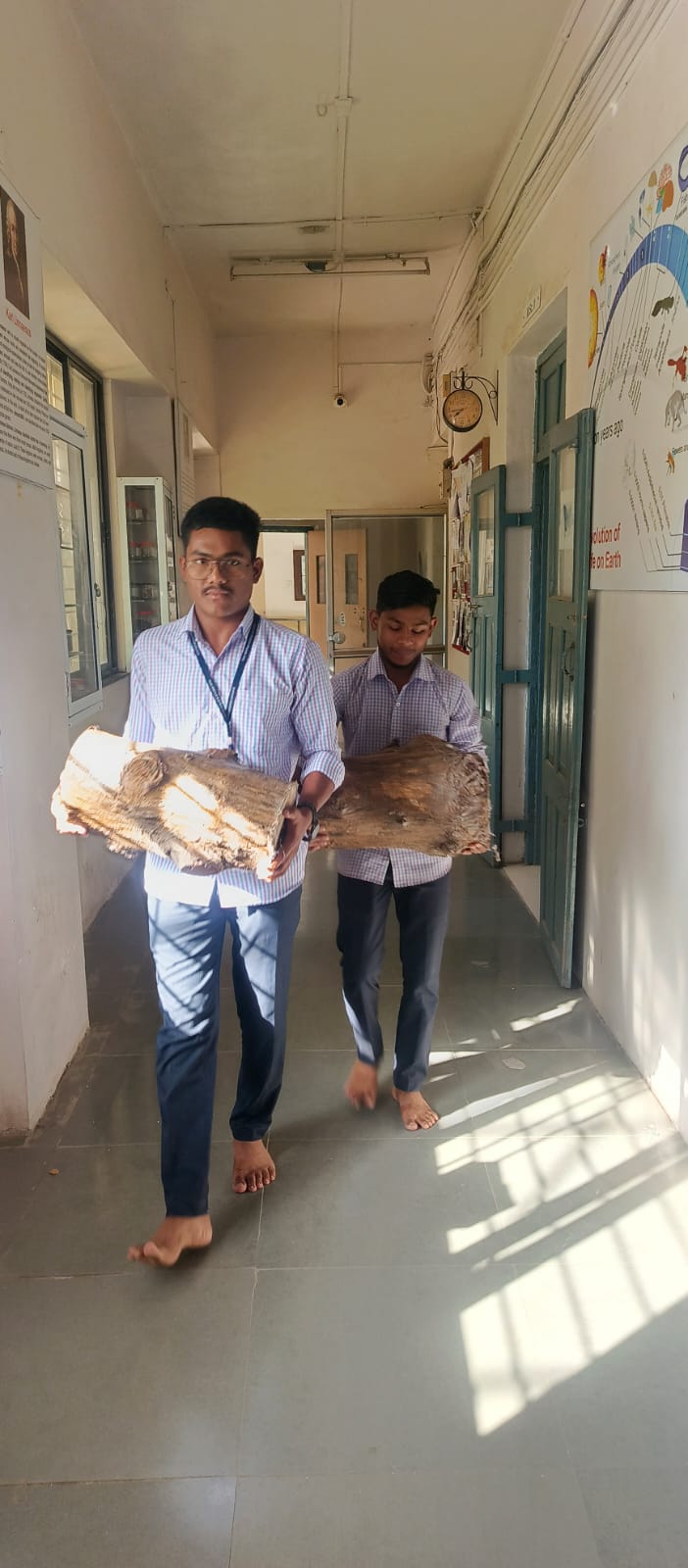
A total of 43 wood blocks were prepared during the activity, representing a diverse range of plant species. The selection process was carried out thoughtfully to include specimens from different families and ecological backgrounds, thereby ensuring academic relevance and diversity. The collected wood samples were processed in the laboratory following systematic scientific procedures. Each piece was carefully cut into uniform block sizes using appropriate tools to maintain standardization and ease of handling. Attention was given to preserving the natural characteristics of the wood, such as grain patterns, color variations, and texture, which are important for identification and study.
The prepared wood blocks were then subjected to a detailed cleaning process. Dust, bark remnants, and other impurities were removed to enhance the clarity of structural features. This was followed by polishing using sandpaper of different grades. The polishing process played a crucial role in improving both the appearance and the visibility of anatomical details such as growth rings, vessels, fibers, and medullary rays. The smooth and refined surface of the blocks made them more suitable for demonstration and long-term preservation.
To ensure durability, the polished wood blocks were treated with suitable preservatives. This step was particularly important in protecting the specimens from fungal growth, insect attack, and environmental damage, thereby increasing their lifespan. After preservation, each block was carefully labeled with essential information including scientific name, family, and common name. The labeling was done in a clear and standardized format to facilitate easy identification and academic use. Proper labeling also enhanced the scientific value of the collection, making it a reliable reference for students and faculty.
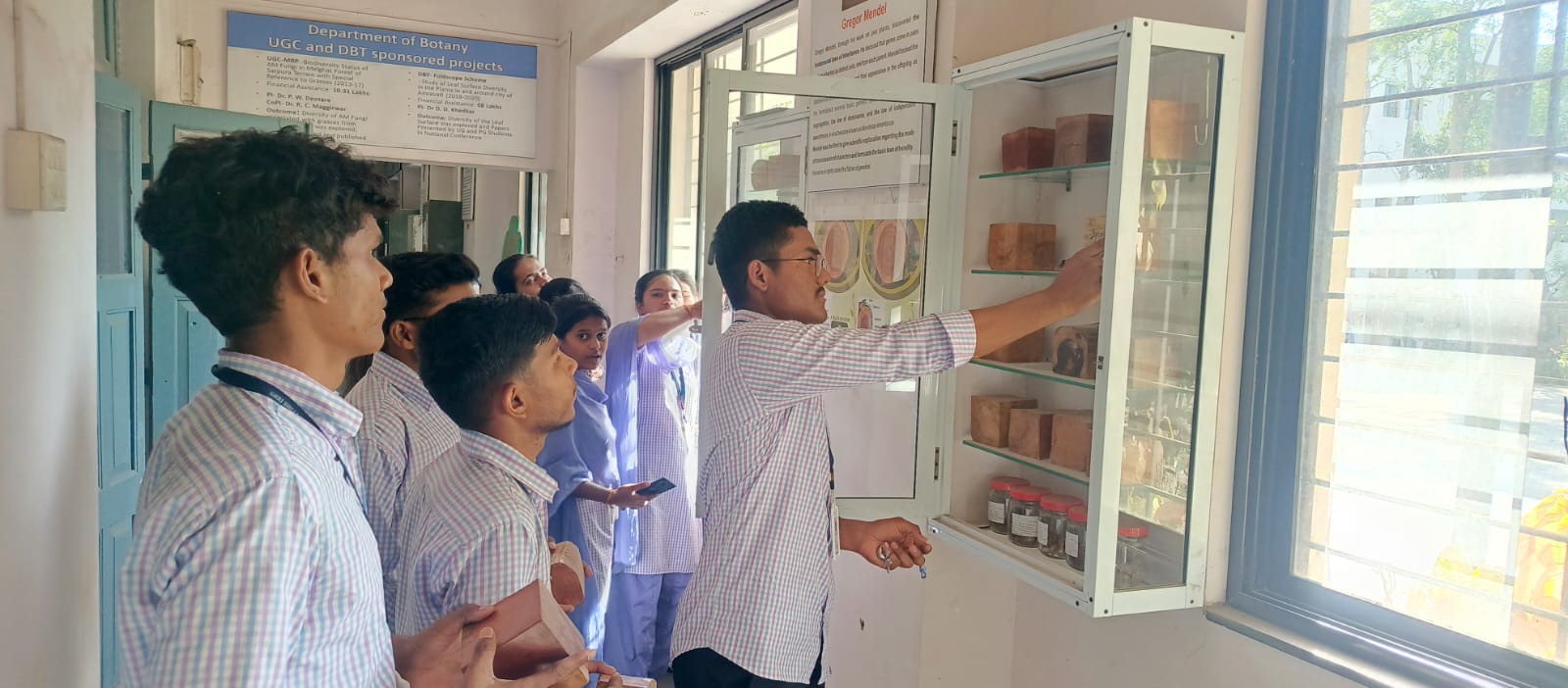
The installation phase involved systematic arrangement of the labeled wood blocks in the designated gallery space within the Department of Botany. The specimens were organized in a logical sequence, either based on taxonomic classification or specific characteristics, to make the display informative and user-friendly. Adequate spacing and proper mounting techniques were employed to ensure that each sample was easily visible and accessible. The gallery was designed not only as a display unit but also as an interactive learning space where students can closely observe and study different types of wood.
Student participation was a key highlight of this activity. All 10 students were actively involved in various stages of the project, including sample preparation, cleaning, polishing, labeling, and installation. This hands-on experience allowed them to understand the practical aspects of wood anatomy and specimen preservation. It also helped in developing essential laboratory skills, attention to detail, and a scientific temperament. Working as a team, students learned the importance of coordination, planning, and execution in completing a research-oriented task.
The establishment of the wood gallery has significantly enriched the academic infrastructure of the department. It serves as a permanent teaching aid that can be utilized during practical sessions, demonstrations, and student projects. Faculty members can use the gallery to provide real-time examples, thereby making the teaching-learning process more effective and engaging. The gallery also supports the objectives of the DBT Star College Scheme by promoting inquiry-based learning and strengthening practical knowledge.
Furthermore, this activity has encouraged a research-oriented mindset among students. By engaging in a minor research project, students were introduced to the systematic approach of scientific work, including observation, analysis, and documentation. Such exposure is expected to motivate them to undertake further research activities and pursue higher studies in plant sciences. The gallery also opens opportunities for future expansion, such as incorporating additional species, adding microscopic sections, and including information about economic uses and ecological significance of different woods.
The successful implementation of this activity reflects the effective utilization of the support provided under the DBT Star College Scheme. It demonstrates how targeted funding and proper planning can lead to meaningful academic outcomes. The guidance of the Head of the Department and the dedicated efforts of the program coordinator ensured the smooth execution of the project. Even in the absence of an external collaborator, the department was able to successfully complete the activity using its internal resources and expertise.
The Installation of Wood Gallery under the DBT Star College Scheme holds significant academic and practical importance. It provides a permanent, well-organized resource for studying wood anatomy, taxonomy, and economic botany, thereby enhancing experiential learning among students. The project promotes hands-on skill development in sample preparation, preservation, and scientific labeling. It also strengthens departmental infrastructure and supports innovative teaching methods. By engaging students in a research-oriented activity, it fosters scientific thinking, observation skills, and teamwork. Overall, the project bridges the gap between theoretical knowledge and practical application, benefiting both current and future learners in botanical sciences.
In conclusion, the “Installation of Wood Gallery” activity stands as a valuable contribution to the Department of Botany. It has not only enhanced the practical skills and knowledge of the participating students but has also resulted in the creation of a long-lasting academic resource. The gallery will continue to benefit future students by providing them with direct exposure to wood specimens and supporting their understanding of key botanical concepts. This initiative highlights the importance of experiential learning and showcases the positive impact of the DBT Star College Scheme in strengthening science education at the undergraduate level.
Outcomes:
- A structured wood gallery with 43 well-prepared and labeled wood specimens was successfully installed.
- Students gained practical skills in specimen preparation, preservation techniques, and scientific documentation.
- Improved understanding of wood characteristics such as grain, texture, growth rings, and anatomical features.
- Enhanced student interest in research and development of scientific attitude and teamwork skills.
- The department acquired a long-term academic resource that supports effective teaching and future research activities.
Photos:
 Students arranging wood blocks in the racks | 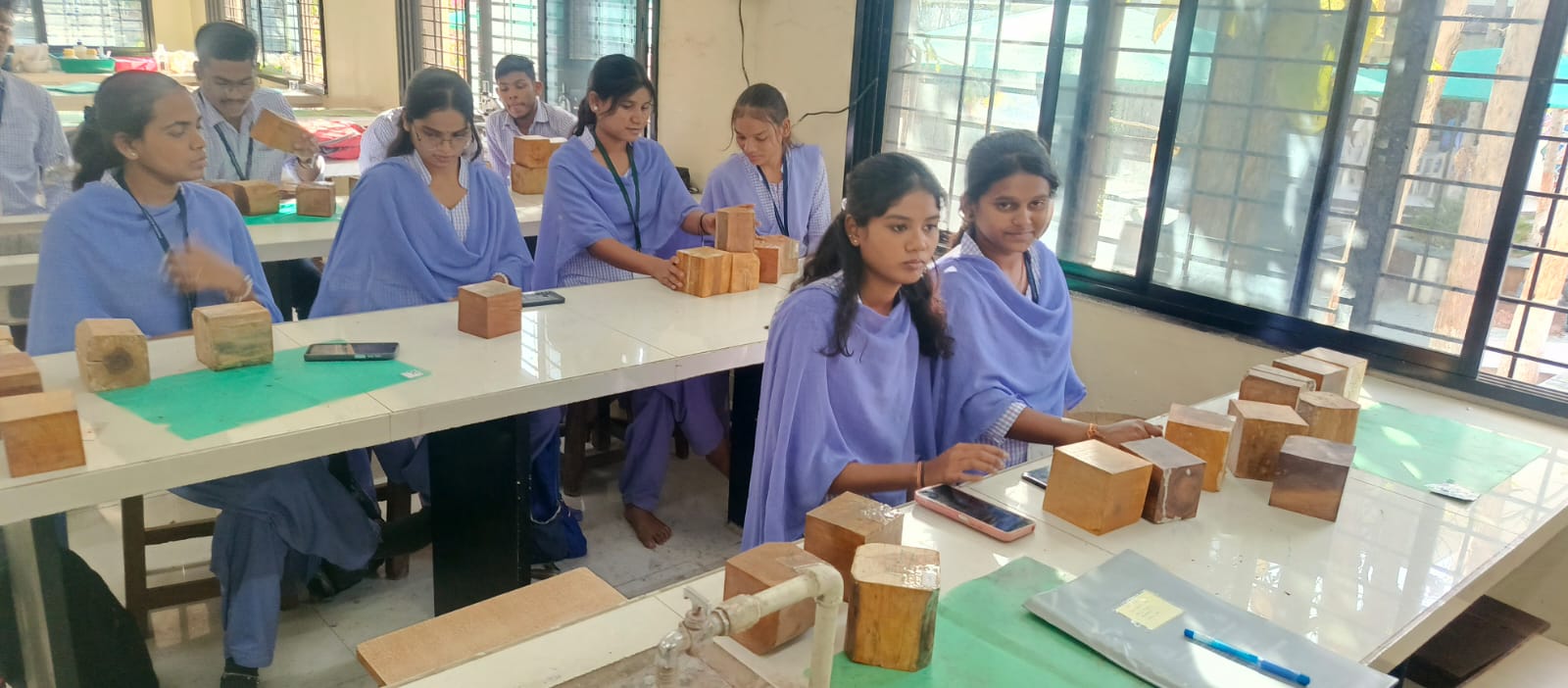 Students understanding the wood type |
 Students arranging wood blocks | 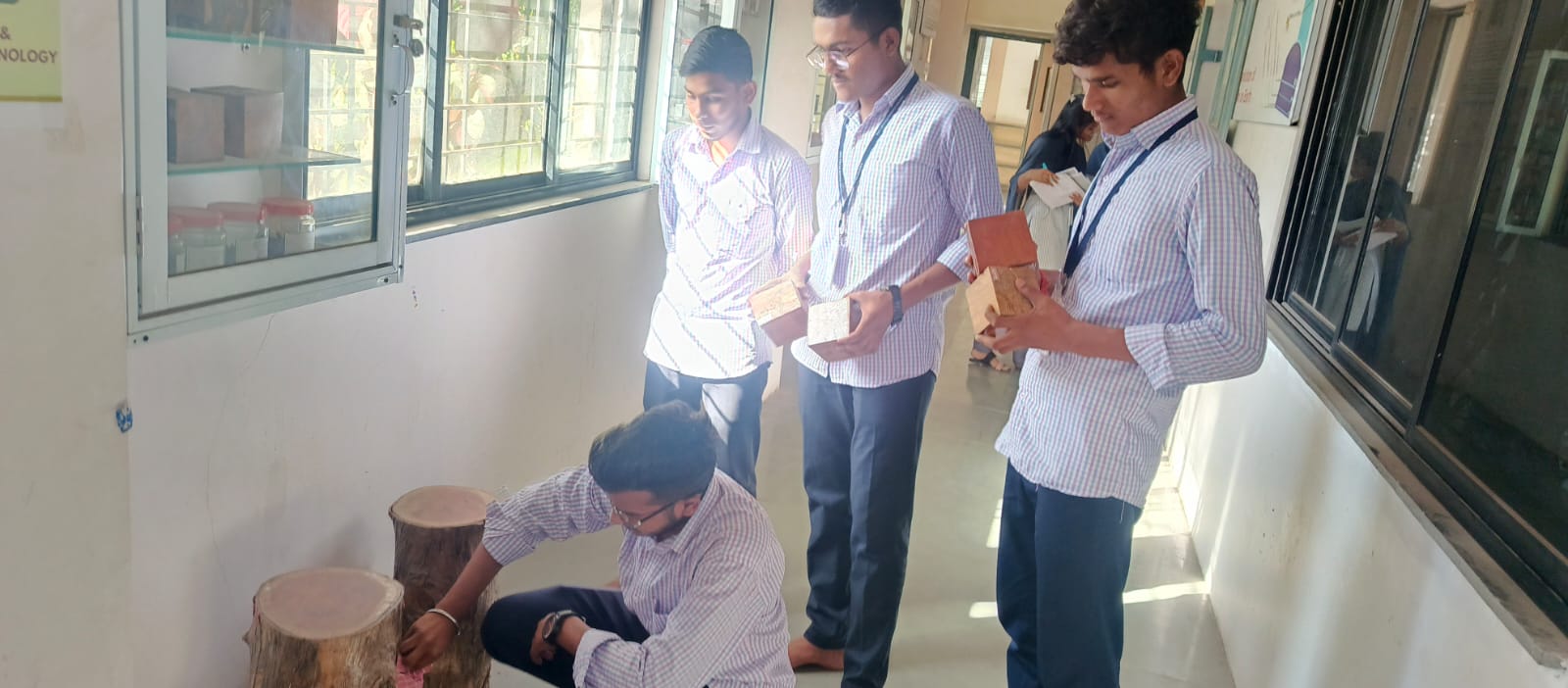 Cleaning of the Wood blocks |
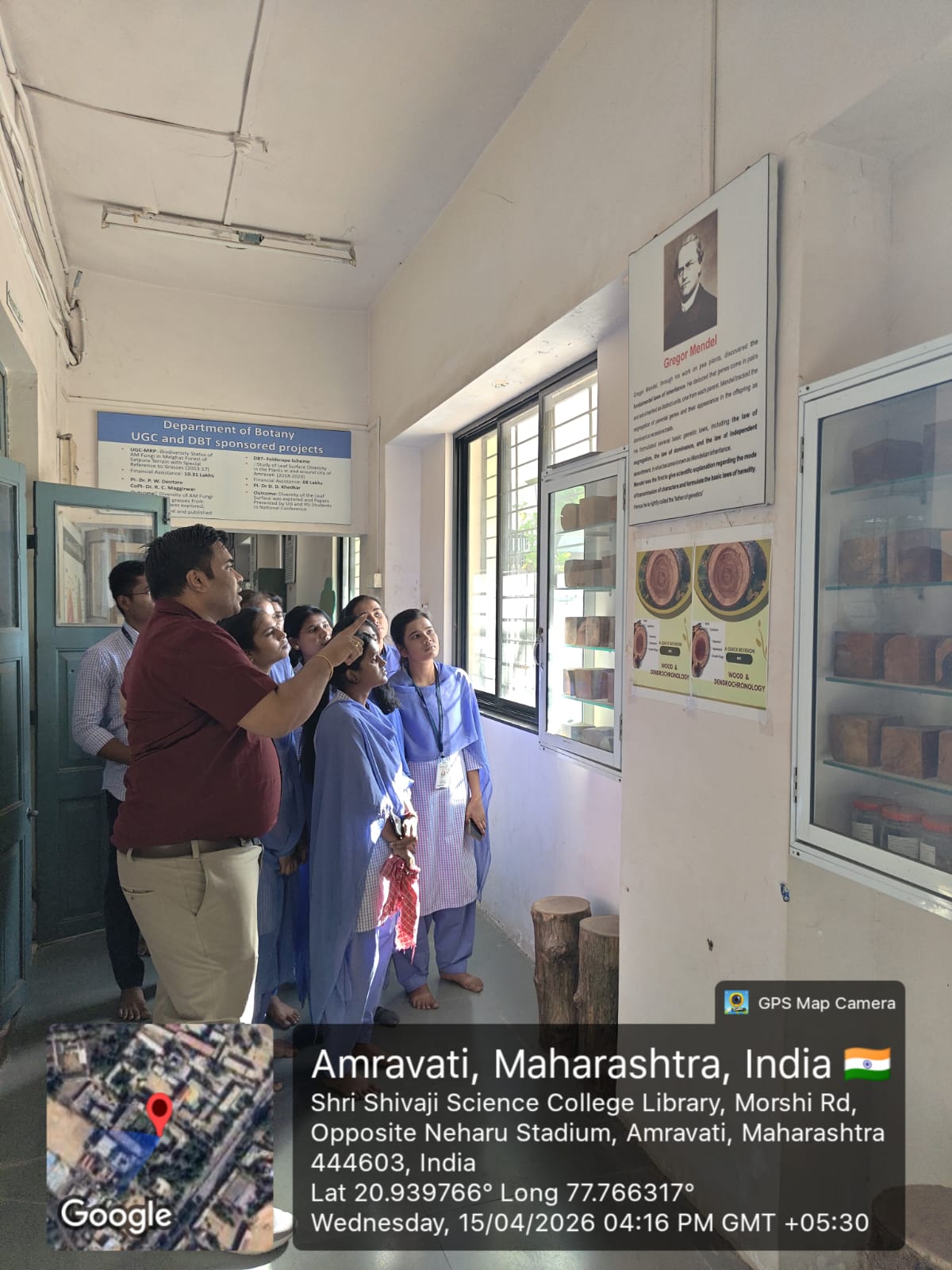 Dr. Ankit Kale explaining the wood types and their nature | 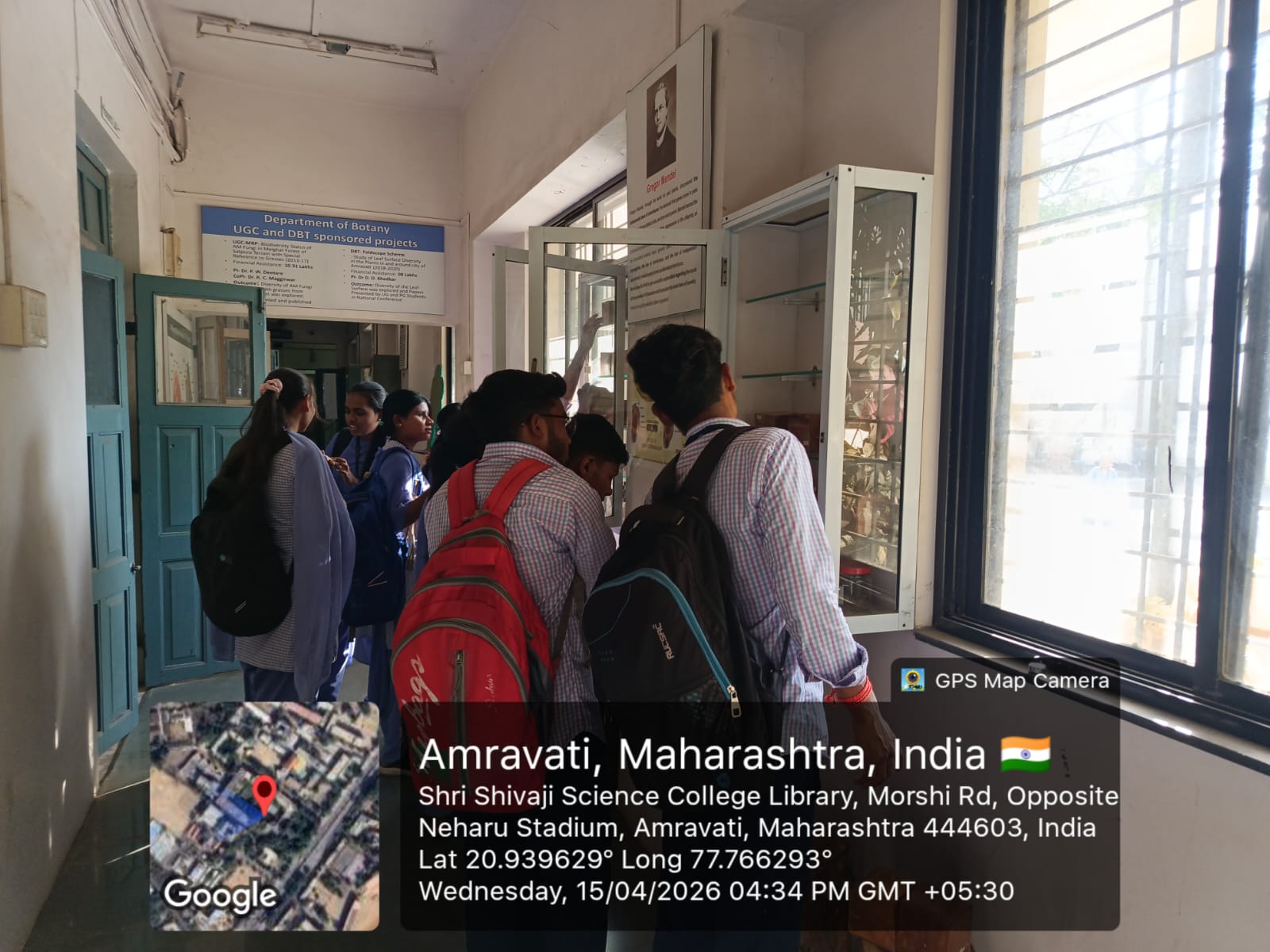 Students visit to see wood gallary |
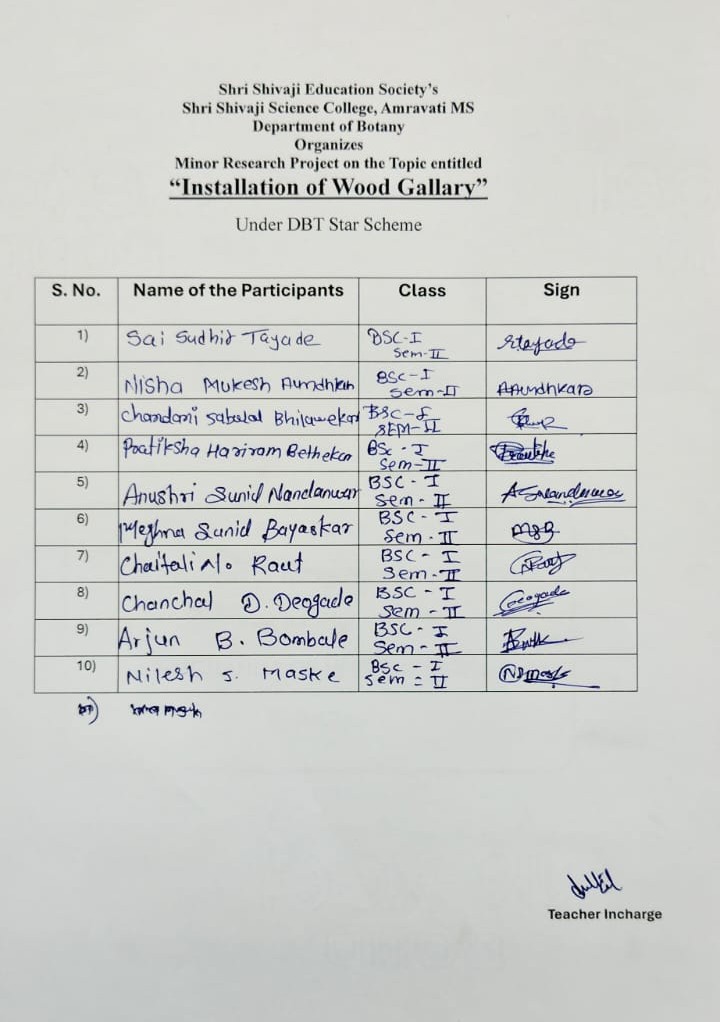
Attendance Sheet:
 |