SHRI SHIVAJI SCIENCE COLLEGE, AMRAVATI
DBT STAR COLLEGE PROJECT ACTIVITY
ACTIVITY REPORT
Guest Lecture & Hands on Training on Microbiology Technique
Activity Dates: 28th March 2026
Type of Activity: Students Workshop
Organizing Department: Department of Zoology
Program Coordinators: Dr. G. A. Wagh, Dr. S. V. Gawande & Dr. P. M. Ramteke
Head of the Department: Dr. J. D. Dhote
External Collaborator (if any): -
Objectives:
- To provide fundamental knowledge of microbiological techniques and their applications.
- To demonstrate the proper use of autoclave for sterilization of media and equipment.
- To train participants in handling laminar air flow for maintaining aseptic conditions.
- To develop skills in sterilization methods and contamination control.
- To enable participants to prepare and sterilize culture media effectively.
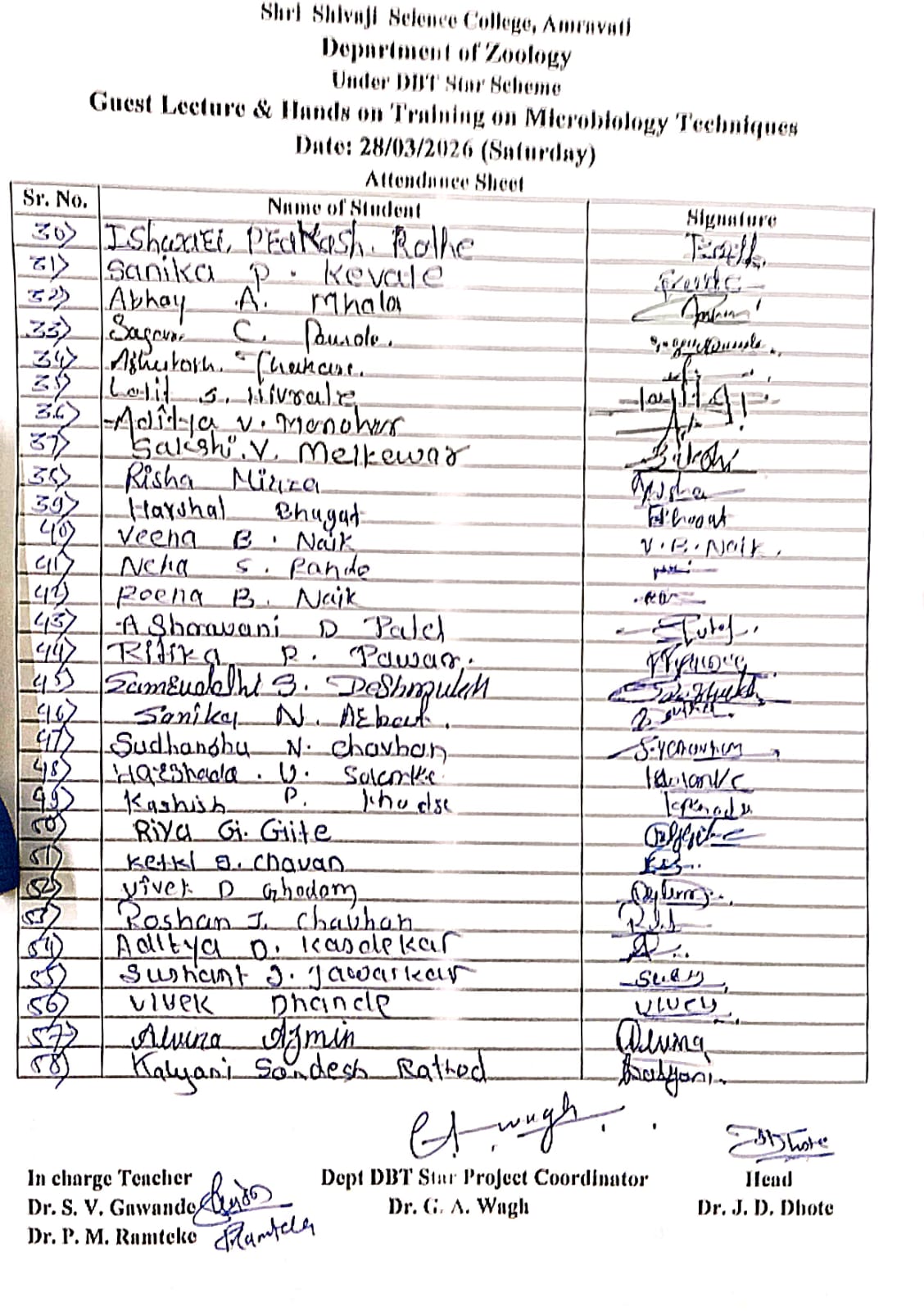
No of Beneficieries: 58 Students
Classes Involved: B.Sc. III Year Students
Venue of the Activity: Department of Zoology, Shri Shivaji Science College, Amravati
Activity Report:
The Department of Zoology, Shri Shivaji Science College, Amravati, under the DBT Star College Scheme, successfully organized a Guest Lecture and Hands-on Training Program on Microbiology Techniques for B.Sc. students. The primary objective of this program was to provide students with both theoretical knowledge and practical exposure to essential microbiological techniques such as autoclaving, laminar air flow operation, sterilization methods, and preparation of culture media. The program proved to be highly beneficial in enhancing the scientific temperament and laboratory skills of the participating students.
The program was conducted under the guidance of Dr. J. D. Dhote, Head of the Department of Zoology, who emphasized the importance of practical learning in life sciences. In his address, he highlighted that microbiology is a fundamental branch of biology that requires not only conceptual understanding but also technical proficiency. He encouraged students to take full advantage of such training programs, as they play a crucial role in shaping their academic and research careers.
Dr. G. A. Wagh, Department Coordinator of the DBT Star College Scheme, also addressed the students and explained the significance of the DBT Star Scheme in strengthening undergraduate science education. He elaborated on how the scheme provides financial support and infrastructure to promote hands-on training and skill development among students. His guidance and coordination ensured the smooth execution of the entire program.
The activity was effectively managed by the Activity In-charges, Dr. S. V. Gawande and Dr. P. M. Ramteke. They were actively involved in organizing and supervising the lecture as well as the practical training sessions. Their constant support and encouragement motivated students to participate actively and gain maximum benefit from the program. Their efforts ensured that the training was conducted in a systematic and student-friendly manner.
The guest speaker for the session was Ms. Vaishnavi Kuralkar, a Research Student from the Department of Zoology, Shri Shivaji Science College, Amravati. She delivered an insightful and informative lecture on microbiology techniques. In her lecture, she explained the fundamental concepts of microbiology, including the importance of maintaining aseptic conditions, the role of sterilization in preventing contamination, and the applications of microbiological techniques in research and diagnostics. Her presentation was clear, engaging, and highly informative, which helped students understand complex concepts in a simple manner.
Following the lecture, a hands-on training session was conducted to provide practical exposure to students. During this session, students were trained in the operation and use of an autoclave, which is an essential instrument used for sterilizing culture media, glassware, and laboratory equipment. They learned about the working principle of the autoclave, including the role of temperature, pressure, and time in achieving effective sterilization. Safety precautions and proper handling techniques were also emphasized.
Students were also introduced to the laminar air flow cabinet, which is used to maintain aseptic conditions during microbiological work. They were trained in the correct procedures for working inside the laminar air flow to avoid contamination. The importance of maintaining a sterile environment and following standard aseptic techniques was clearly demonstrated.
In addition, the training included different methods of sterilization such as dry heat sterilization and chemical sterilization. Students learned how to select appropriate sterilization methods depending on the type of materials and laboratory requirements. They were also guided on how to identify and control possible sources of contamination in the laboratory.
Another important component of the training was the preparation of culture media. Students were taught the correct methods of preparing, measuring, mixing, and sterilizing different types of media used for microbial growth. This practical exposure helped them understand the importance of accuracy and standardization in laboratory procedures.
The program witnessed active participation from B.Sc. students, who showed great enthusiasm and interest throughout the session. They actively engaged in the lecture as well as the practical training, asked questions, and clarified their doubts. The hands-on experience significantly enhanced their understanding and confidence in performing microbiological techniques.
The aims and objectives of the program were clearly achieved. The program aimed to provide fundamental knowledge of microbiological techniques and their applications, demonstrate the proper use of autoclave for sterilization of media and equipment, train participants in handling laminar air flow for maintaining aseptic conditions, develop skills in sterilization methods and contamination control, and enable participants to prepare and sterilize culture media effectively.
The outcomes of the program were also noteworthy. Students developed the ability to select appropriate sterilization methods based on the nature of materials and laboratory requirements. They demonstrated the ability to maintain and monitor aseptic conditions and identify sources of contamination. They gained skills in standardizing and preparing specialized culture media for microbial studies. They also learned to handle, maintain, and troubleshoot laboratory instruments such as autoclave and laminar air flow systems. Moreover, students acquired the competence to design and perform basic microbiological experiments independently by following standard protocols.
Overall, the Guest Lecture and Hands-on Training Program on Microbiology Techniques were highly successful and fruitful. It provided a valuable platform for students to enhance their knowledge, develop practical skills, and gain confidence in laboratory work. Such initiatives play a significant role in improving the quality of science education and preparing students for future academic and research opportunities in microbiology and related fields.
Outcomes:
- Students will be able to select appropriate sterilization methods based on the nature of materials and laboratory requirements.
- Students will demonstrate the ability to maintain and monitor aseptic conditions and identify sources of contamination.
- Students will develop skills in standardizing and preparing specialized culture media for microbial studies.
- Students will be able to handle, maintain, and troubleshoot laboratory instruments like autoclave and laminar air flow systems.
- Students will gain the competence to design and perform basic microbiological experiments independently following standard protocols.
Photos:
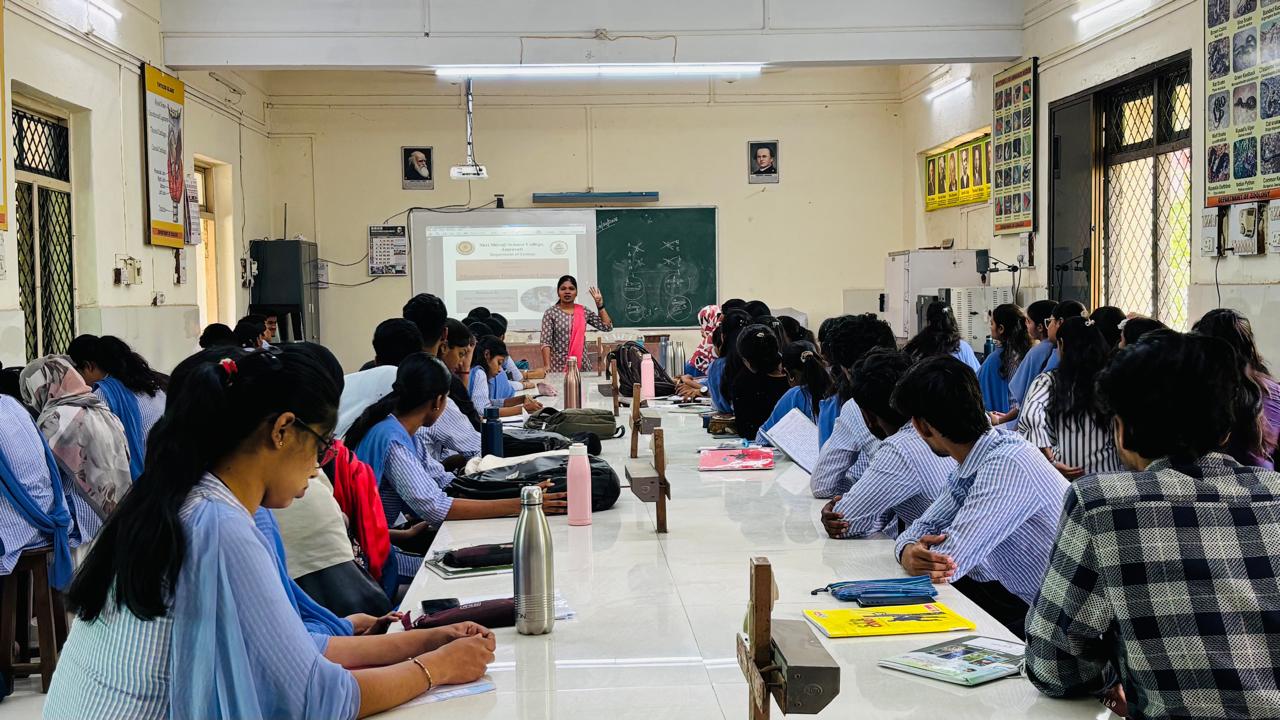 Guest Lecture on Microbiological Techniques | 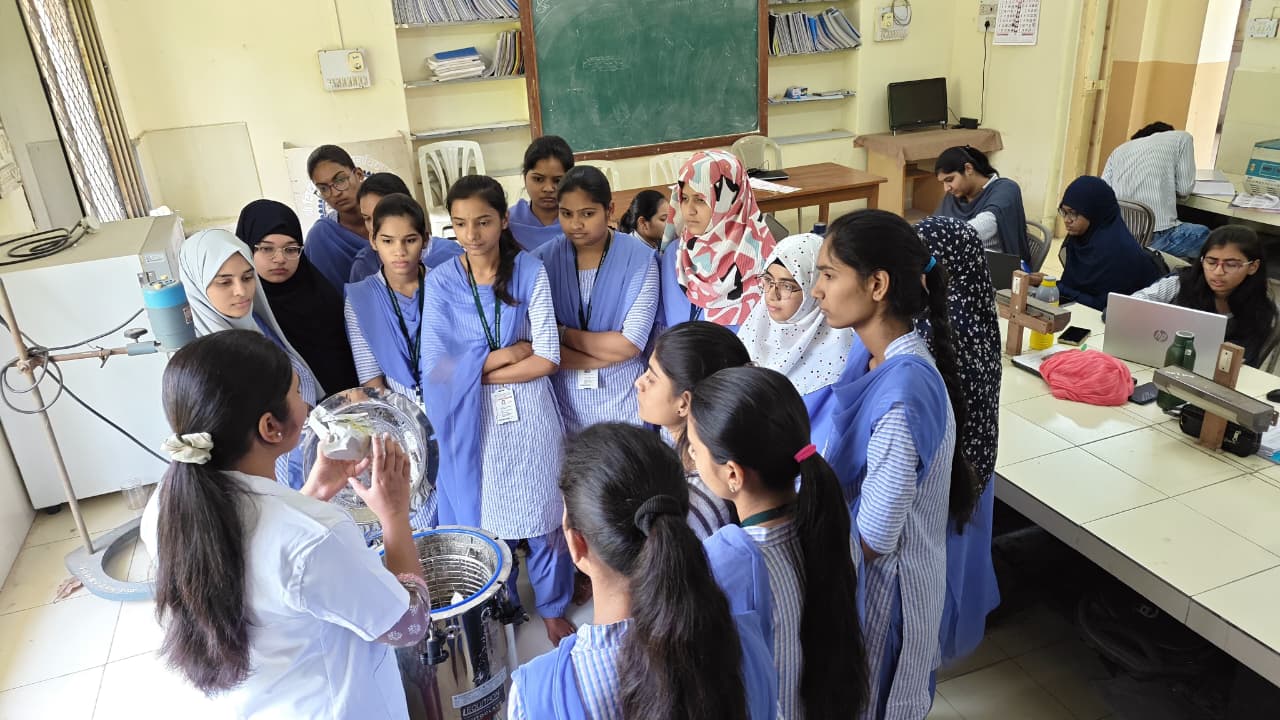 Miss Vaishnvi Kuralkar conducting hands-on training |
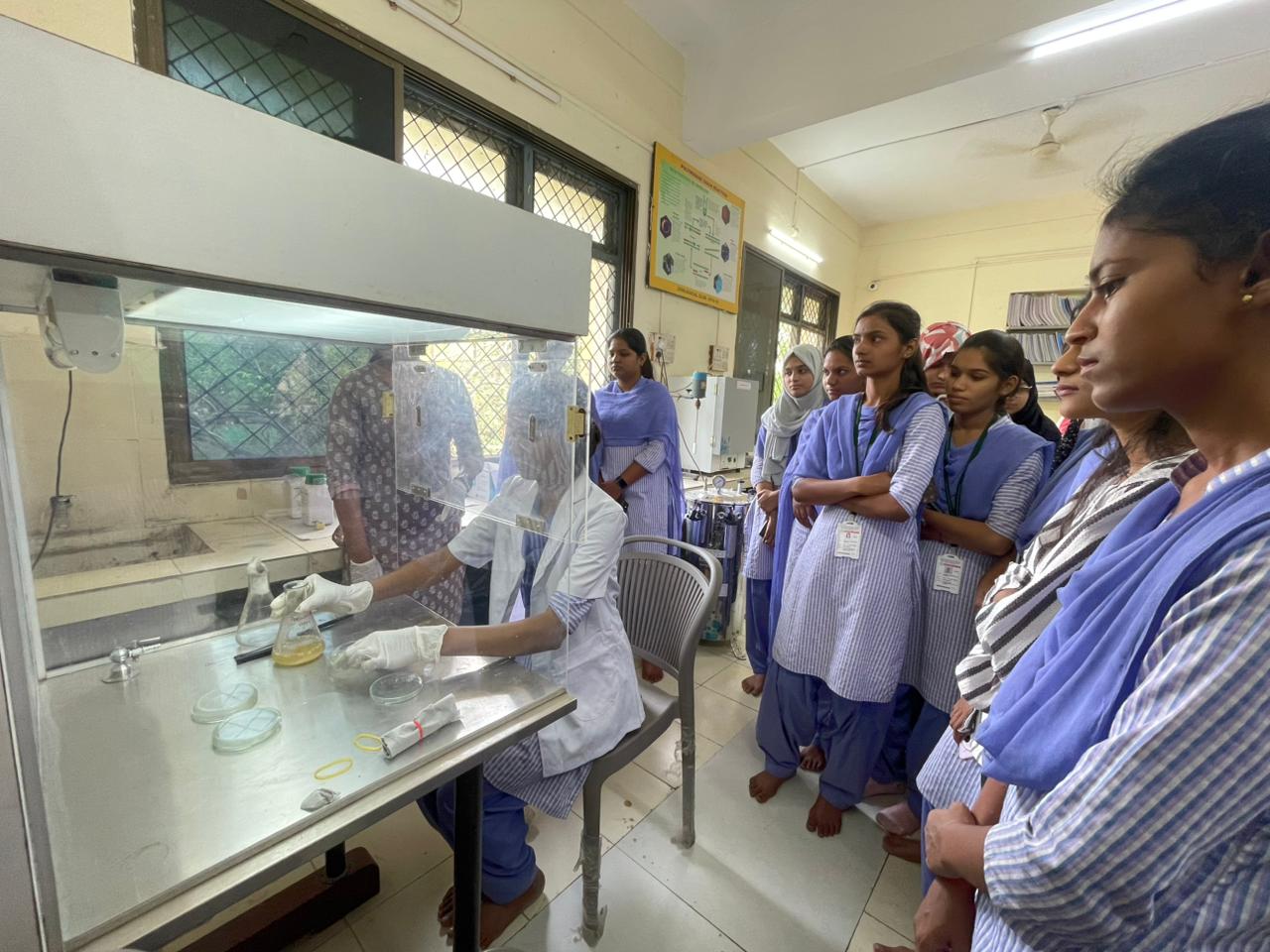 Students operating a laminar air flow | 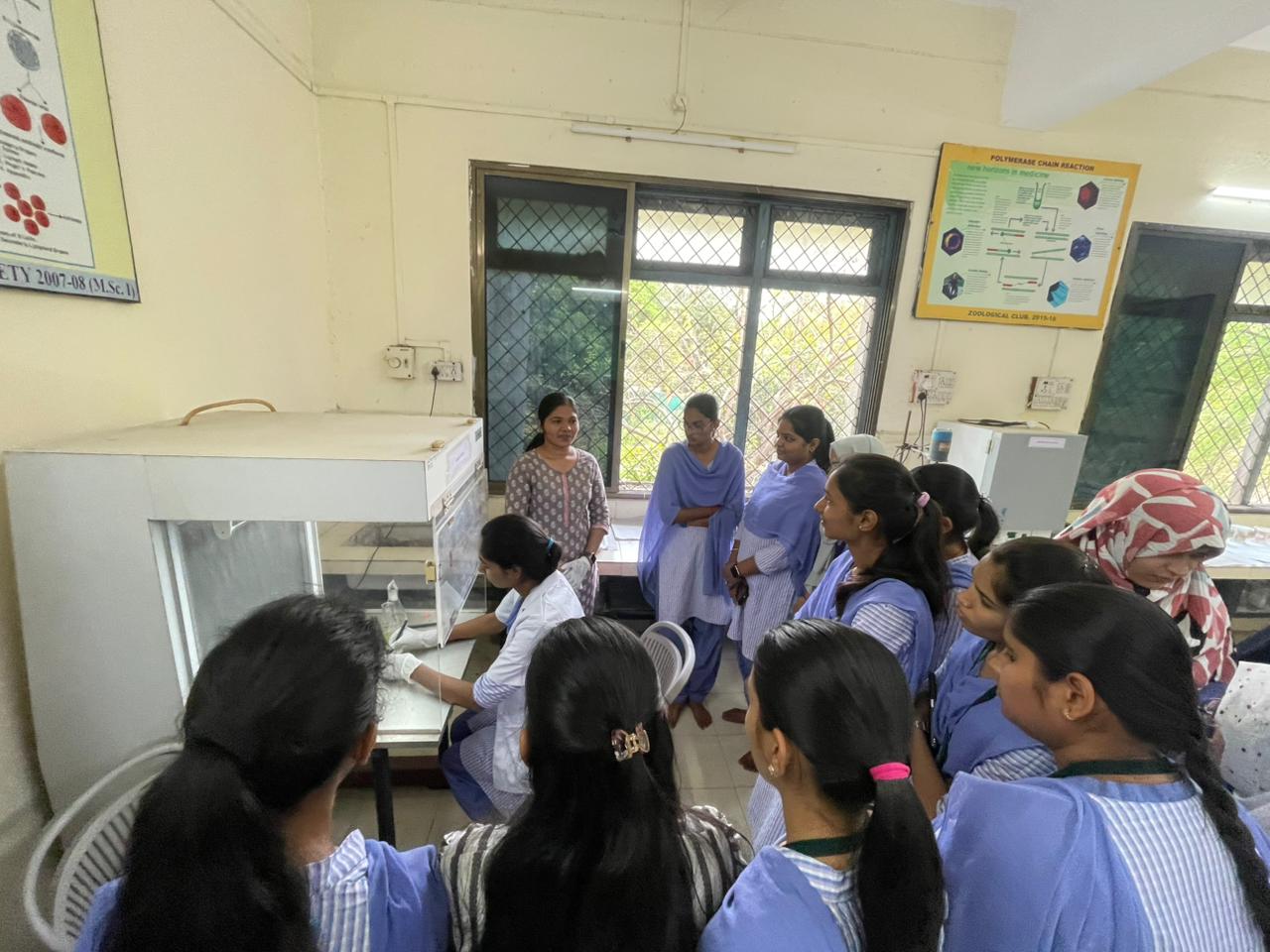 Students preparing culture media |
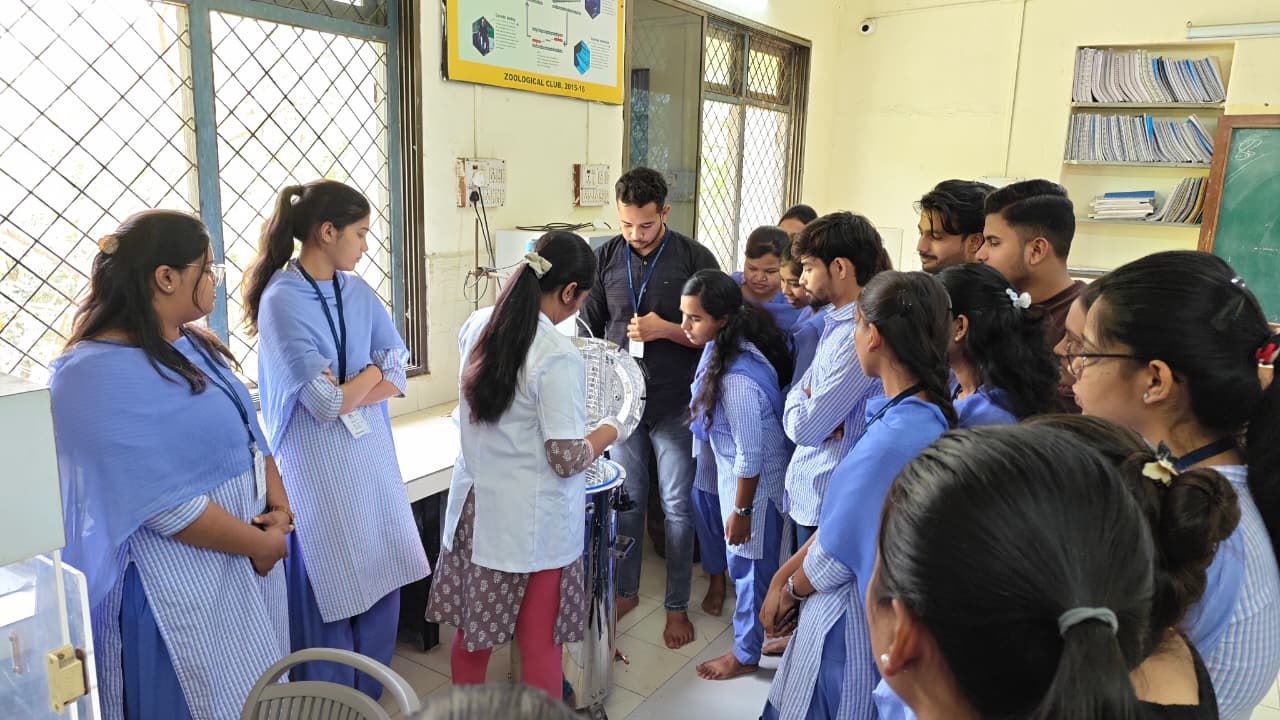 Students operating an Autoclave | 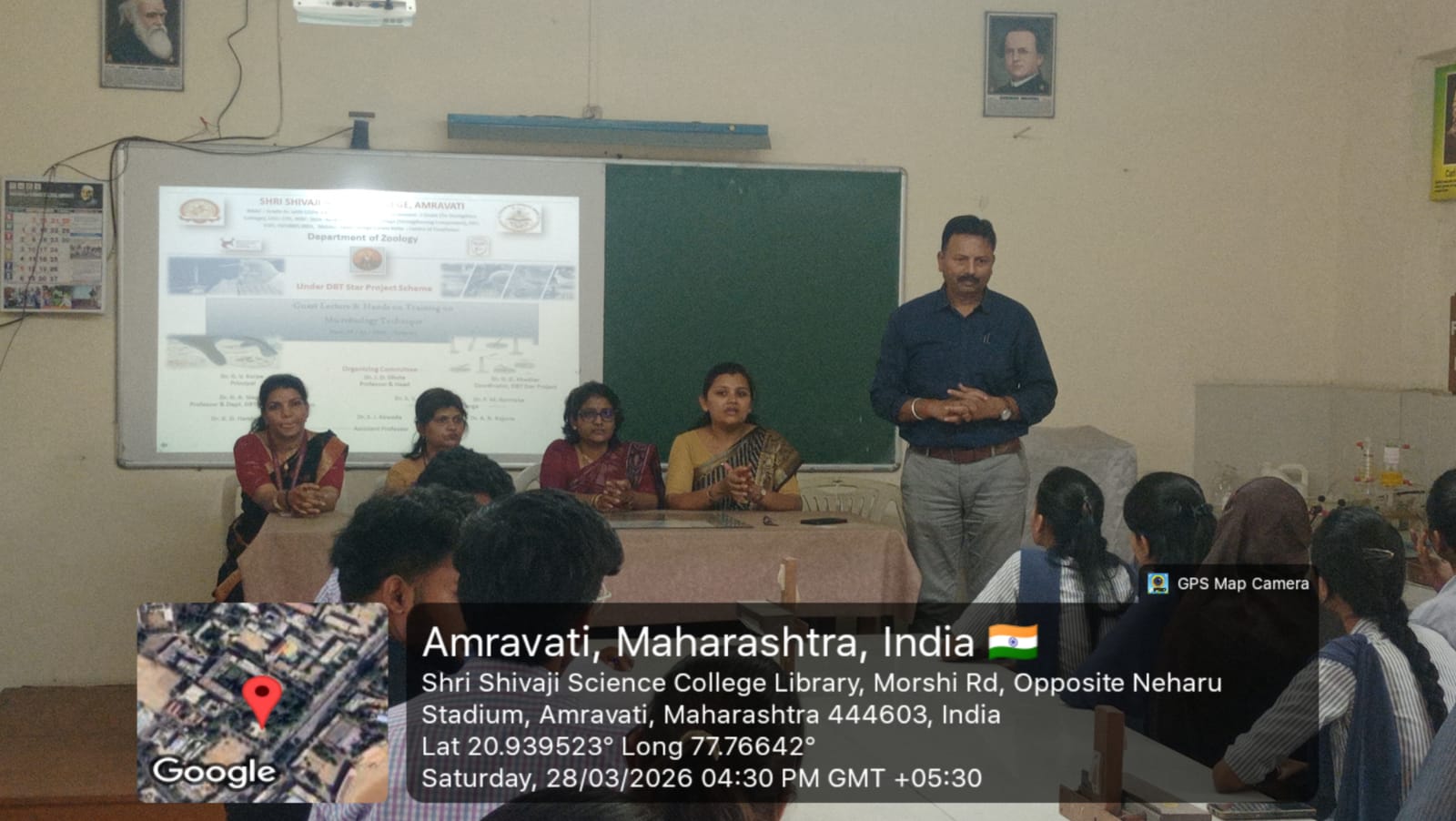 Dr. G. A. Wagh Interact with Student after Hands on training |
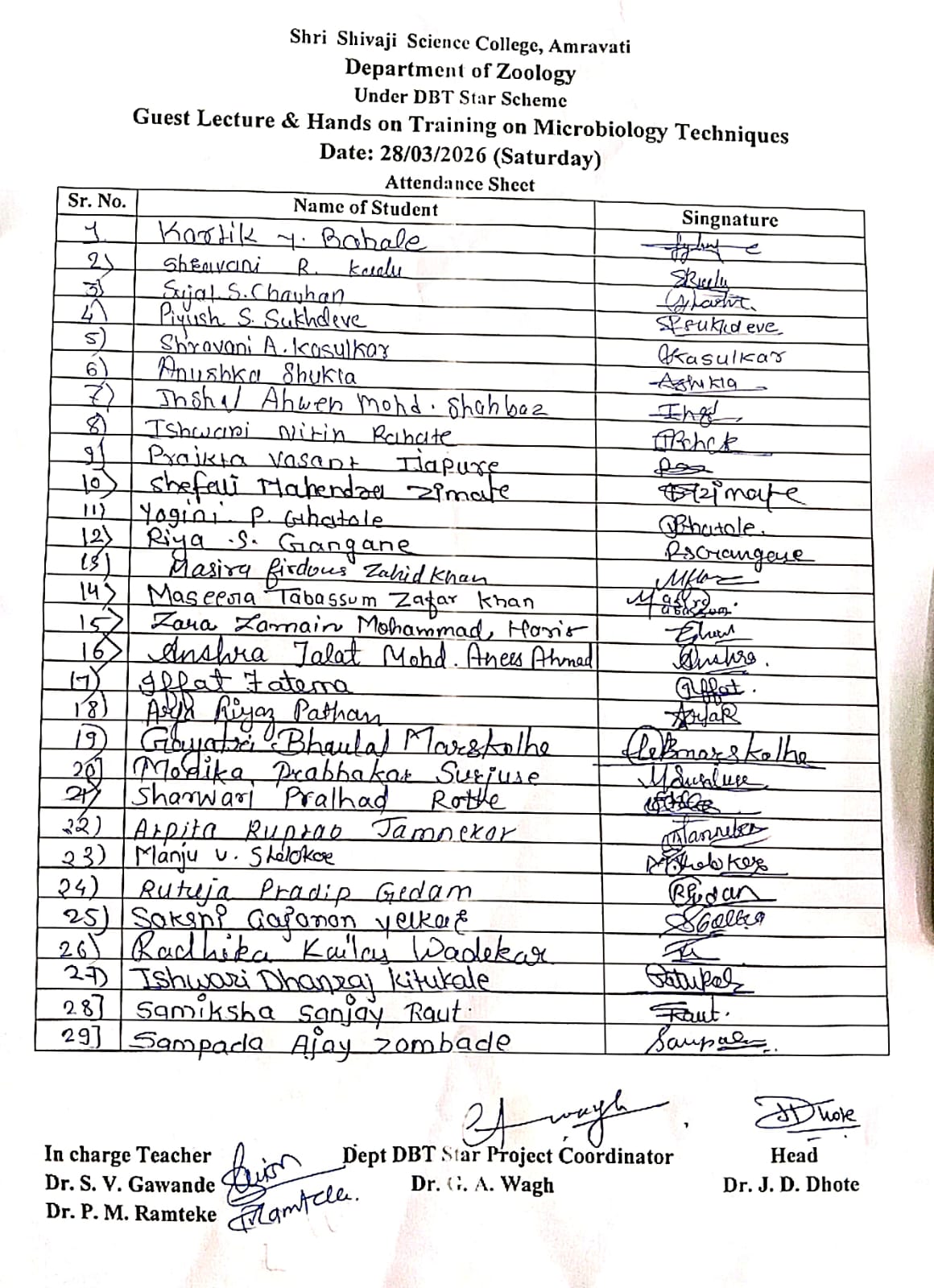
Attendance Sheet:
 |
 |