SHRI SHIVAJI SCIENCE COLLEGE, AMRAVATI
DBT STAR COLLEGE PROJECT ACTIVITY
ACTIVITY REPORT
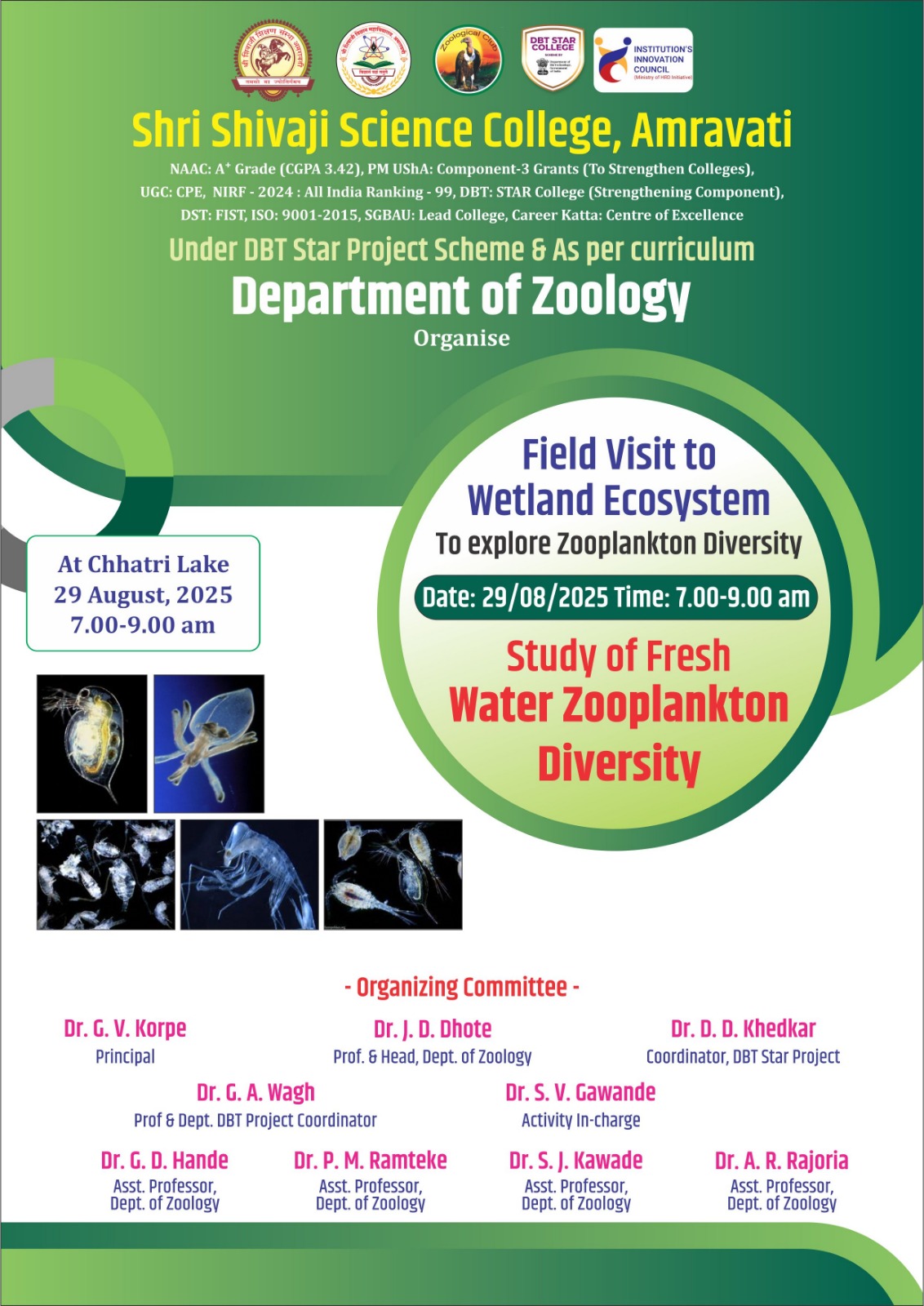
Minor Project: Study of fresh water Zooplankton Diversity of Chhatri Lake, Amravati City (MS).
Activity Dates: 29th August 2025
Type of Activity: Minor Research Project
Organizing Department: Department of Zoology
Program Coordinators: Dr. G. A. Wagh, Dr. S. V. Gawande
Head of the Department: Dr. J. D. Dhote
External Collaborator (if any): -
Objectives:
- To study the biodiversity of freshwater zooplankton in Chhatri Lake
- To familiarize students with field sampling and water quality monitors techniques.
- To analyse the correlation between zooplankton population and water quality parameters.
- To provide practical exposure to laboratory identification of aquatic organisms.
- To promote scientific thinking and teamwork among undergraduate students.
No of Beneficieries: 20
Classes Involved: B.Sc. I Year Students
Venue of the Activity: Chhatri Lake, Amravati City & Department of Zoology, Shri Shivaji Science College, Amravati
Activity Report:
Introduction
Freshwater ecosystems are among the most diverse and productive habitats on Earth. They provide essential ecosystem services and are home to numerous aquatic organisms, including zooplankton, which are small, often microscopic animals floating or swimming weakly in water bodies. Zooplanktons serve as key indicators of water quality and are an essential component of aquatic food webs.
This minor project aimed to introduce first-year B.Sc. students to freshwater biodiversity studies, focusing on zooplankton diversity in Chhatri Lake, a prominent water body in Amravati City. The activity was conducted as part of experiential learning under the DBT Star College Scheme, integrating fieldwork and laboratory analysis to offer students hands-on experience in environmental biology. During this visit, Dr. G. A. Wagh from the DBT Star Project Department, Dr. S. V. Gawande Activity in charge, Dr. S. J. Kawade organising committee member and Mangesh Solanke were present.
Aims of the Study
1. To study the biodiversity of freshwater zooplankton in Chhatri Lake.
2. To familiarize students with field sampling and water quality monitoring techniques.
3. To analyse the correlation between zooplankton population and water quality parameters.
4. To provide practical exposure to laboratory identification of aquatic organisms.
5. To promote scientific thinking and teamwork among undergraduate students.
Objectives
1. To collect water and zooplankton samples from different zones of Chhatri Lake.
2. To identify and classify the collected zooplankton under a microscope.
3. To analyse water quality parameters like pH, temperature, turbidity, and dissolved oxygen.
4. To record species diversity and understand its ecological significance.
5. To enable students to interpret biological data and draw scientific conclusions.
Methodology
A. Formation of Student Pairs
A total of 64 students were involved in the activity. They were divided into 32 pairs, with each pair assigned a specific task. Grouping in pairs helped ensure better focus, active participation, and easier supervision during both field and lab work.
Each pair was allocated one of the following tasks:
Pair Task Description
Sample Collection Collect water samples from inlet, middle, and outlet areas of the lake.
Zooplankton Netting Use plankton nets for sampling microscopic organisms.
On-site Testing Measure pH, temperature, DO using field kits.
Microscopic Observation Observe zooplankton under the microscope.
Identification & Sketching Identify species and sketch key features.
Water Analysis Perform lab-based testing of turbidity and chemical properties.
B. Field Visit at Chhatri Lake
Students visited Chhatri Lake in the morning session, where they:
• Collected water samples in sterilized bottles from three distinct zones.
• Collected plankton using plankton net.
• Measured on-site parameters such as:
o Temperature (thermometer)
o pH (portable pH meter)
o Dissolved Oxygen (DO)
All samples were properly labelled, preserved in 4% formalin, and brought to the laboratory for further analysis
Laboratory Work
Back at the Department of Zoology, students conducted laboratory analysis under the supervision of Dr. S. V. Gawande and Mr. Saket Wankhade.
A. Microscopic Study of Zooplankton
• Samples were concentrated and placed on glass slides.
• Students used compound microscopes to observe and identify various types of zooplankton.
• Identification was done using standard taxonomic keys.
• Sketches and photographs were taken to record observations.
Common Zooplankton Identified:
Group Species Examples
Rotifera Brachionus, Keratella, Asplanchna
Cladocera Daphnia, Moina
Copepoda Cyclops, Diaptomus
Ostracoda Cypris
B. Water Quality Analysis (Laboratory-Based)
Students analysed the following parameters using simple lab techniques:
Parameter Method Used Observed Range
pH Digital pH meter 7.2 – 8.1
Temperature Thermometer 26°C – 29°C
Turbidity Turbidity meter 22 – 34 NTU
Dissolved Oxygen Winkler’s Method 6.0 – 7.5 mg/L
The observed parameters were found to be within the permissible range for freshwater ecosystems, supporting healthy zooplankton growth.
Results and Discussion
• The lake exhibited rich zooplankton diversity, especially rotifers and cladocerans, indicating moderate productivity and water quality.
• Higher DO and neutral pH correlated positively with species richness.
• Slight turbidity in certain areas could be attributed to surface runoff and minor organic pollution.
• The presence of indicator species like Brachionus suggests that the lake is mesotrophic in nature.
Students presented their findings using charts during the classroom session. Each pair gave a short oral presentation, promoting scientific communication skills.
Outcomes
The minor project significantly benefited students by:
• Enhancing practical skills in field sampling and microscopy.
• Introducing them to ecological research and taxonomy.
• Developing analytical and observational abilities.
• Encouraging collaborative learning through pair work.
• Creating awareness about aquatic biodiversity conservation.
Students gained confidence in handling scientific equipment, interpreting biological data, and working as part of a team.
Conclusion
The minor project on freshwater zooplankton diversity provided a holistic learning experience, blending theoretical knowledge with practical application. Chhatri Lake, as an urban freshwater body, showed good ecological health based on zooplankton diversity and water quality analysis. The activity was a successful demonstration of student-cantered learning under the DBT Star Project Scheme.
Such field-based activities not only help in understanding the importance of freshwater ecosystems but also inspire students to pursue future research in environmental and biological sciences.
Outcomes:
- Enhancing practical skills in field sampling and microscopy.
- Introducing them to ecological research and taxonomy.
- Developing analytical and observational abilities.
- Encouraging collaborative learning through pair work.
- Creating awareness about aquatic biodiversity conservation.
Photos:
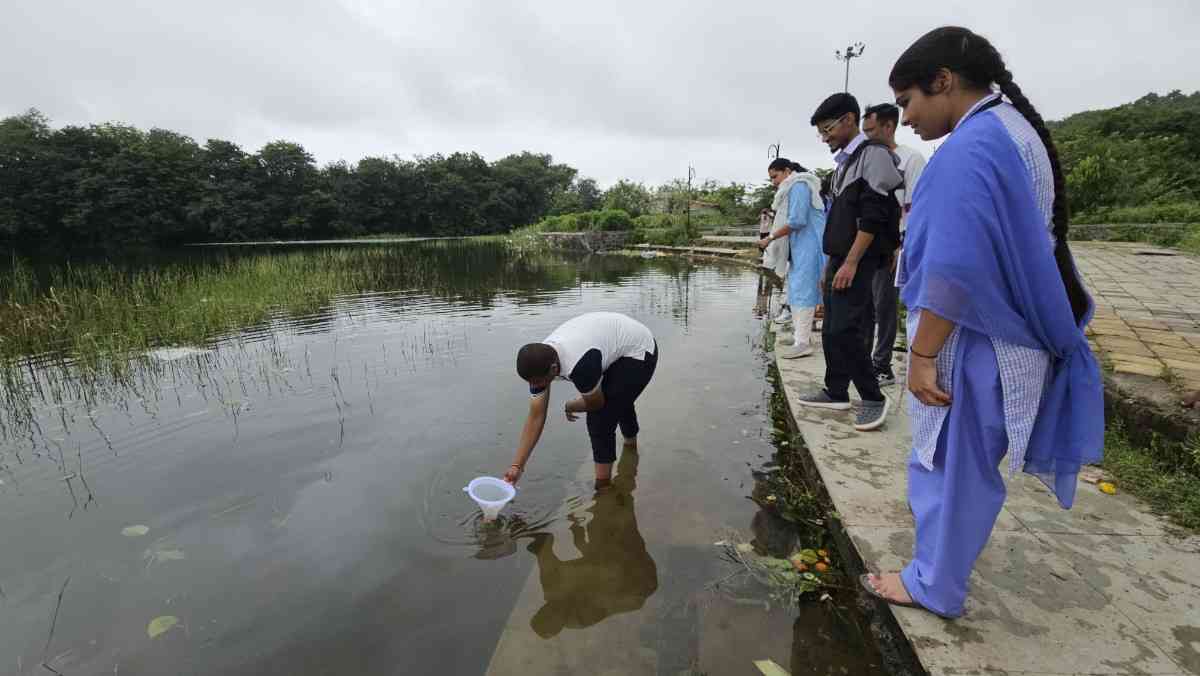 Students collecting samples at Chhatri Lake | 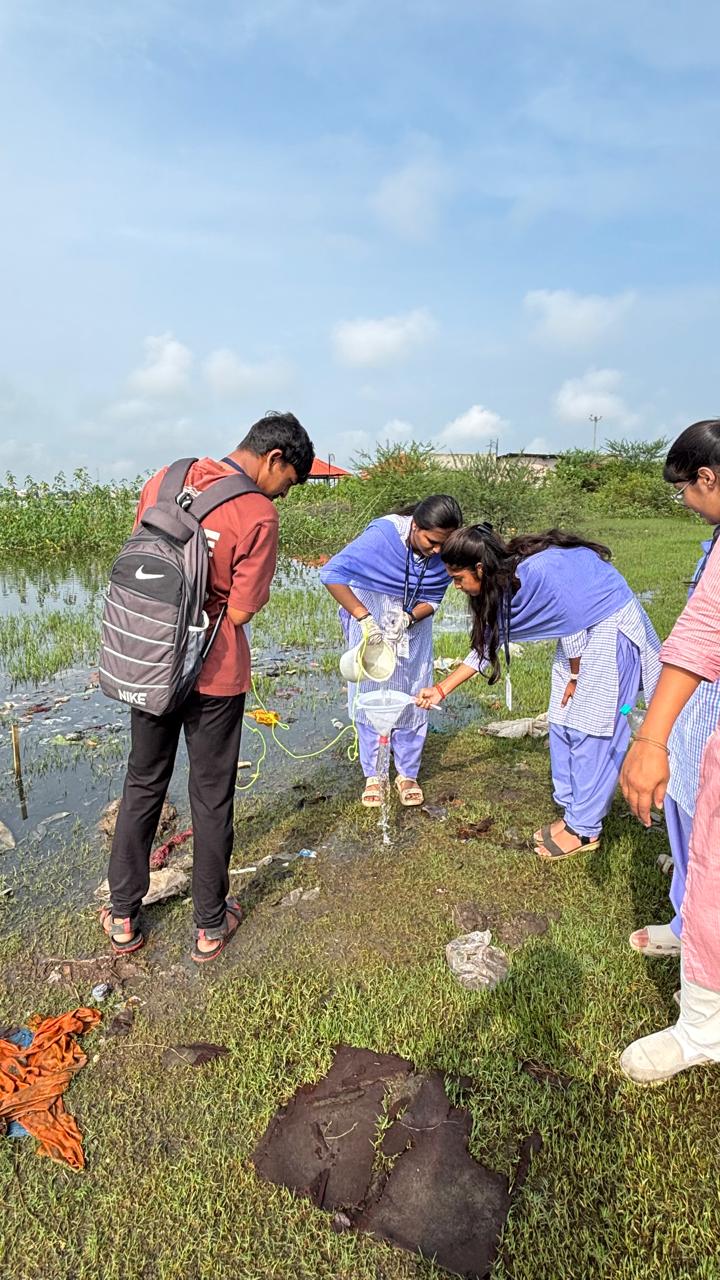 Student Collecting Samples(1) for Zooplankton/Phytoplankton |
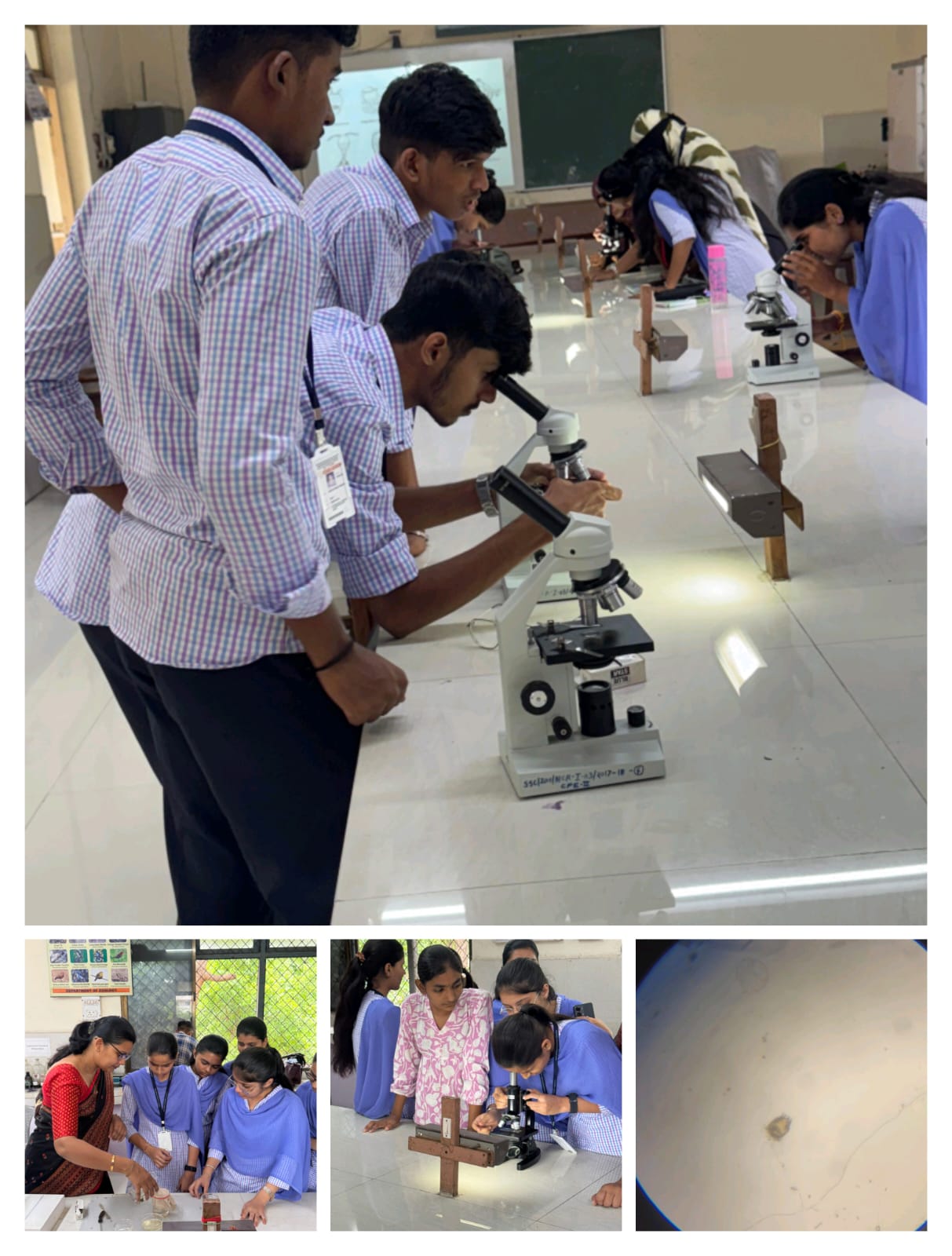 Student observed water Samples (Zooplankton) | 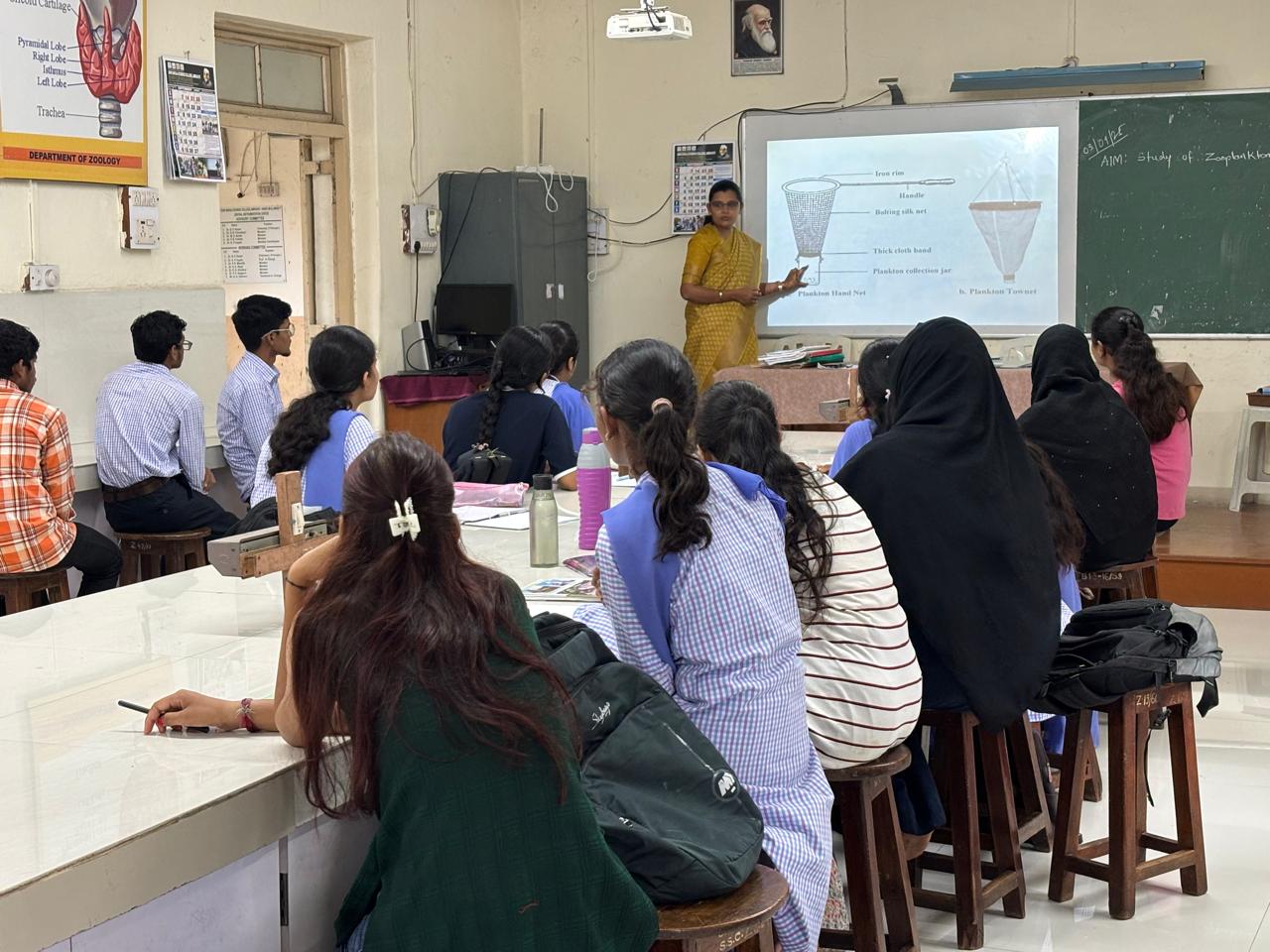 Dr. S. V. Gawande explaining the study of zooplankton to students |
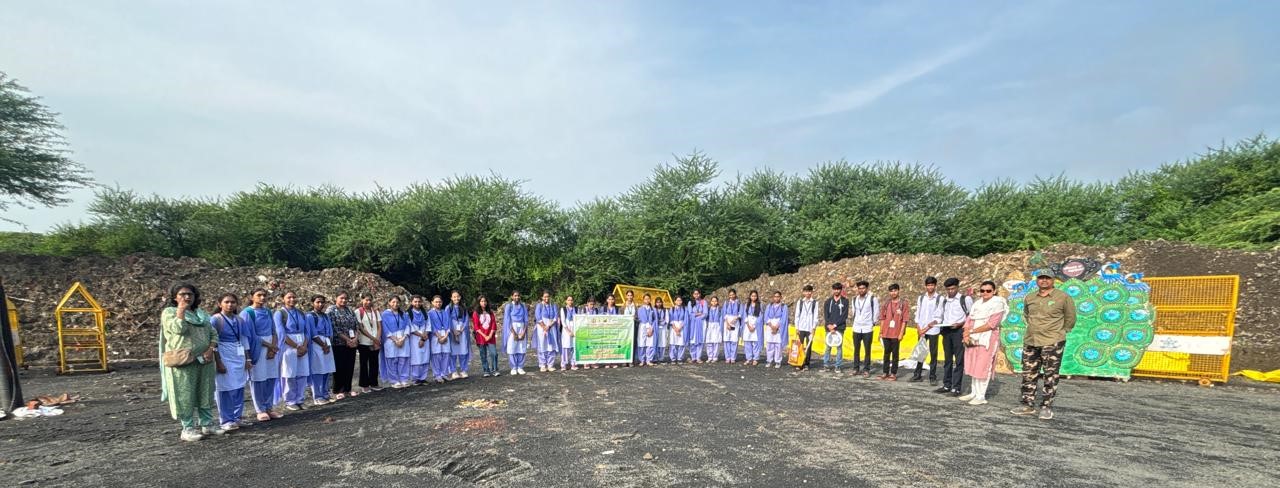 Student Group Photo Visit to Chhatri Lake | 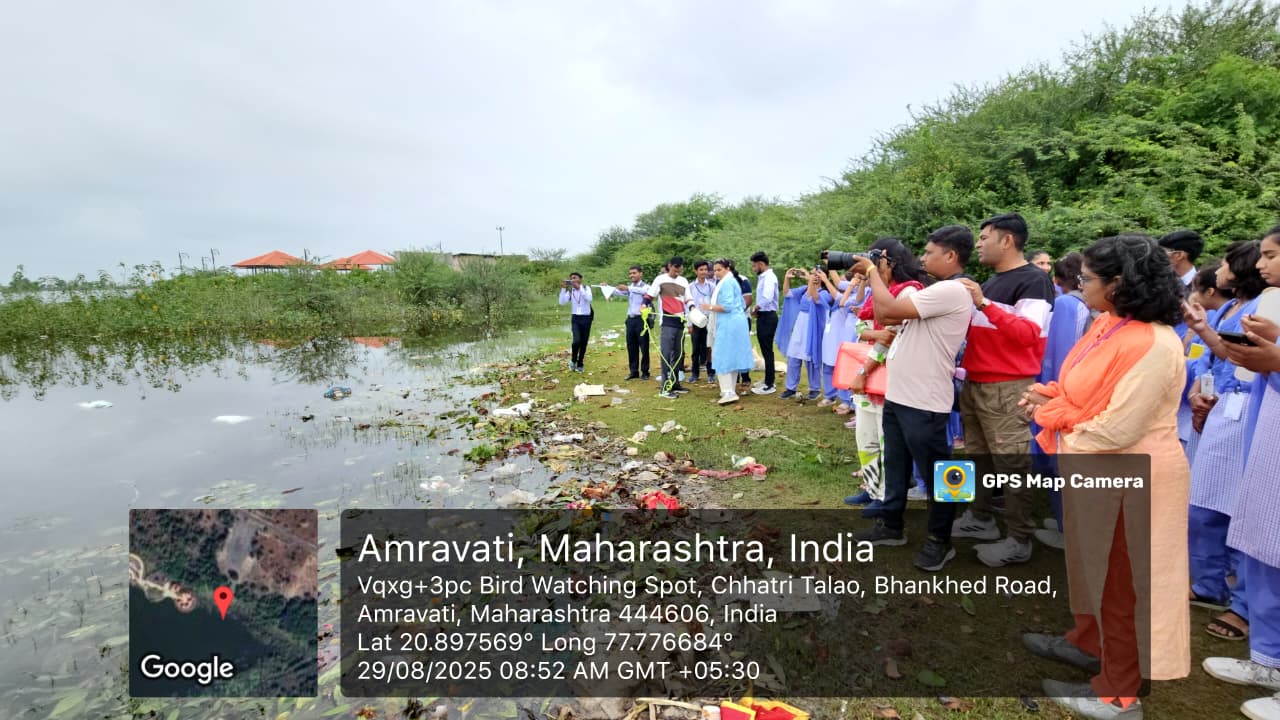 Water samples collected from Chhatri Lake and used items |
Attendance Sheet:
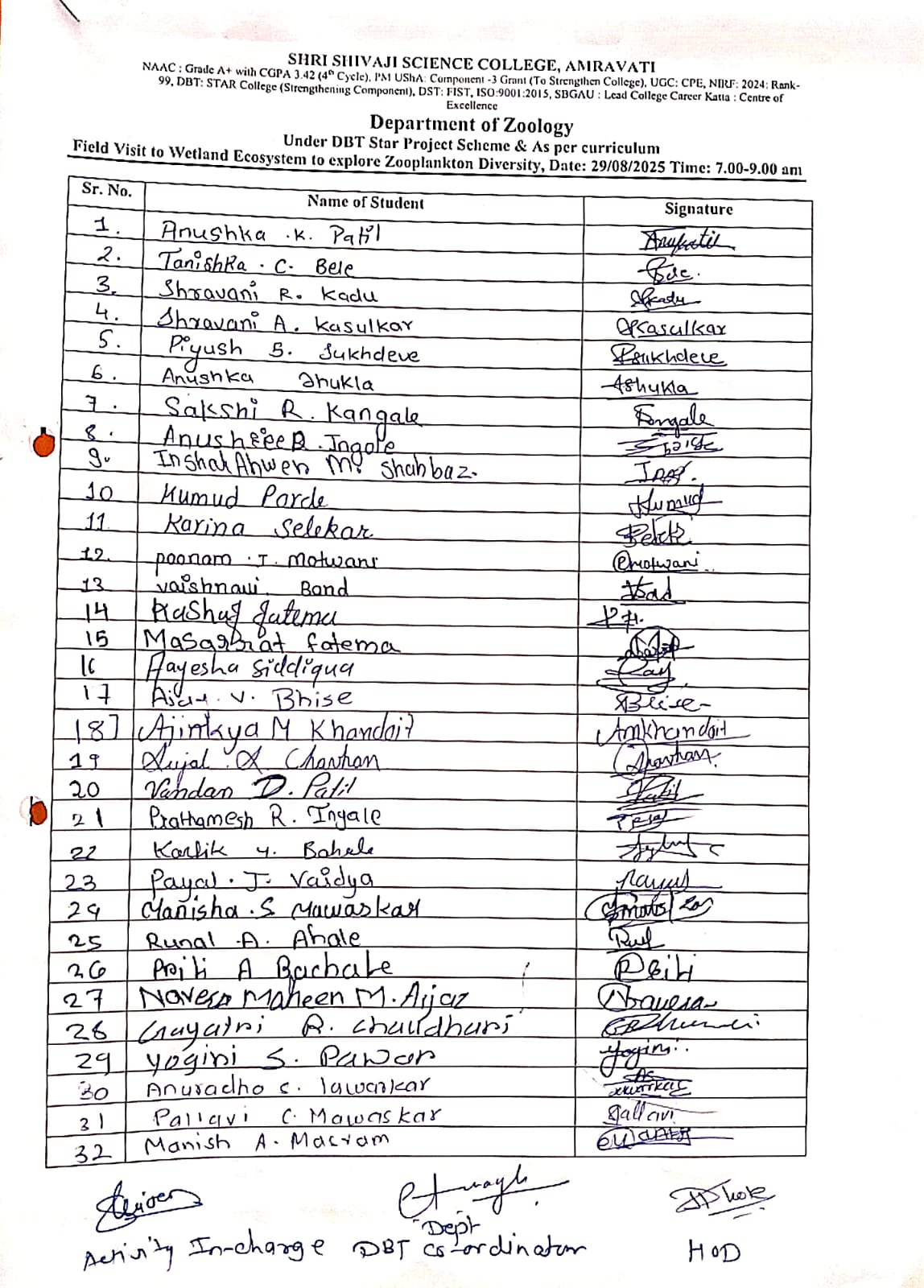 Sheet |
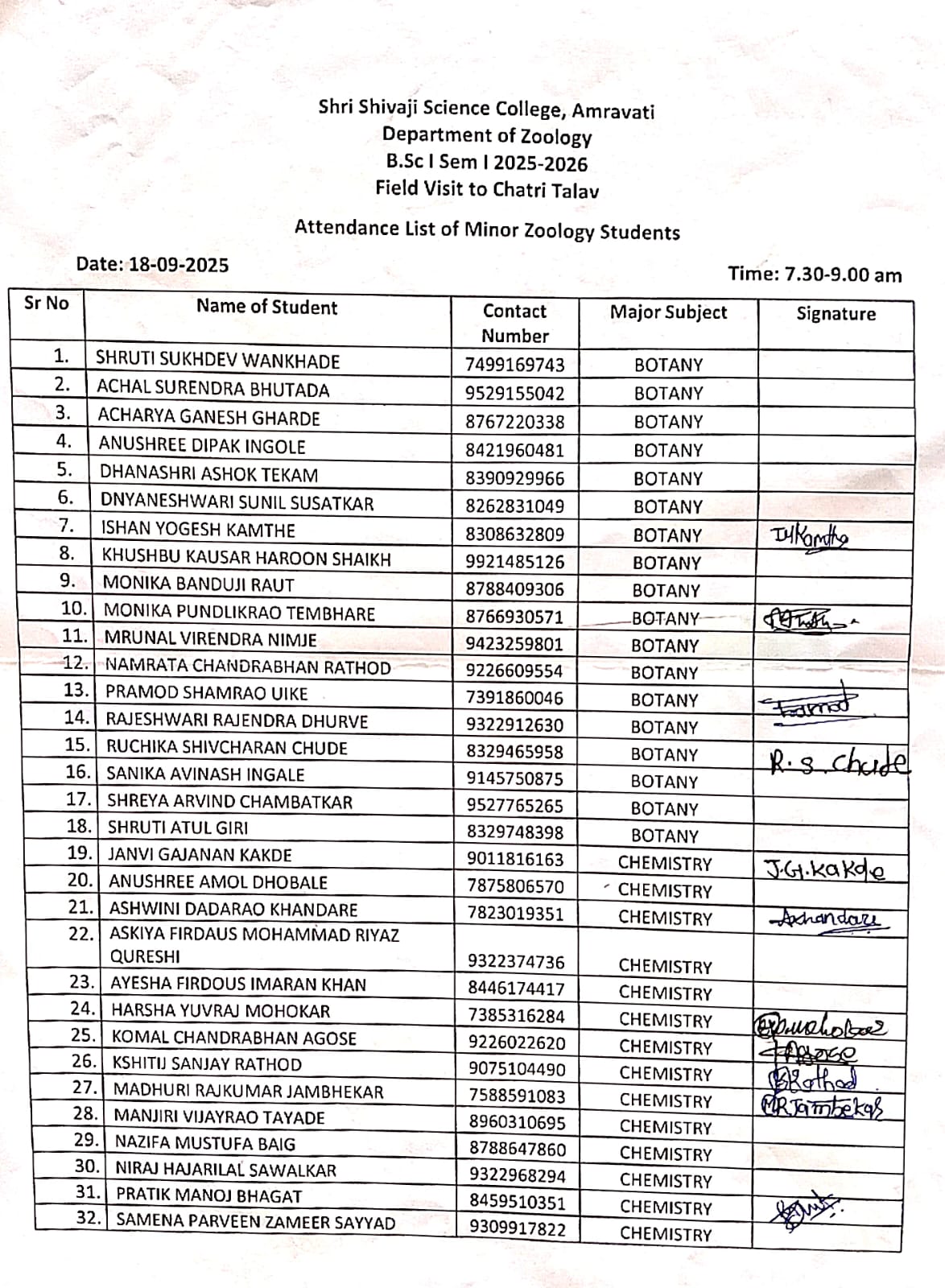 Sheet |
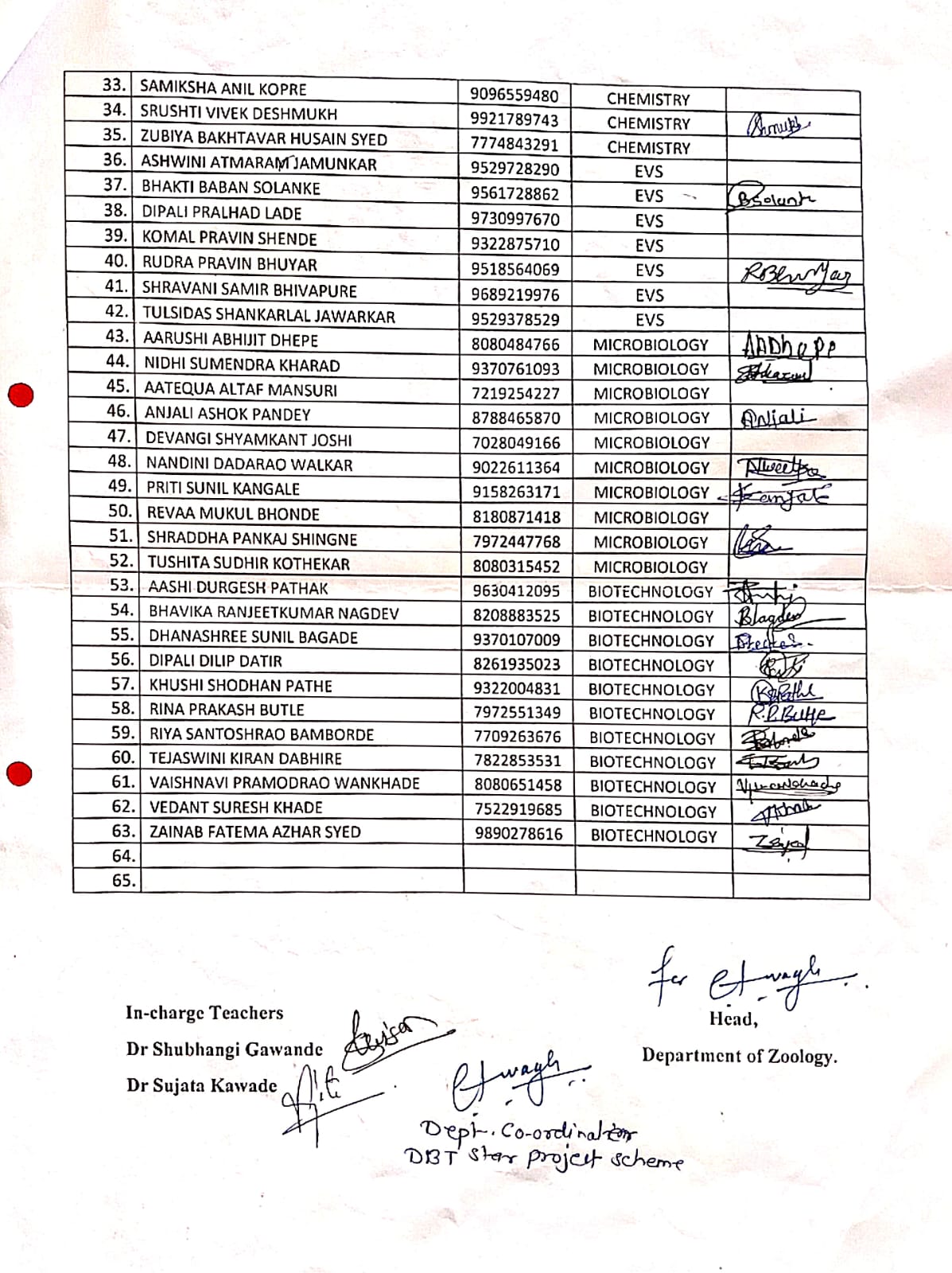 Sheet |