SHRI SHIVAJI SCIENCE COLLEGE, AMRAVATI
DBT STAR COLLEGE PROJECT ACTIVITY
ACTIVITY REPORT
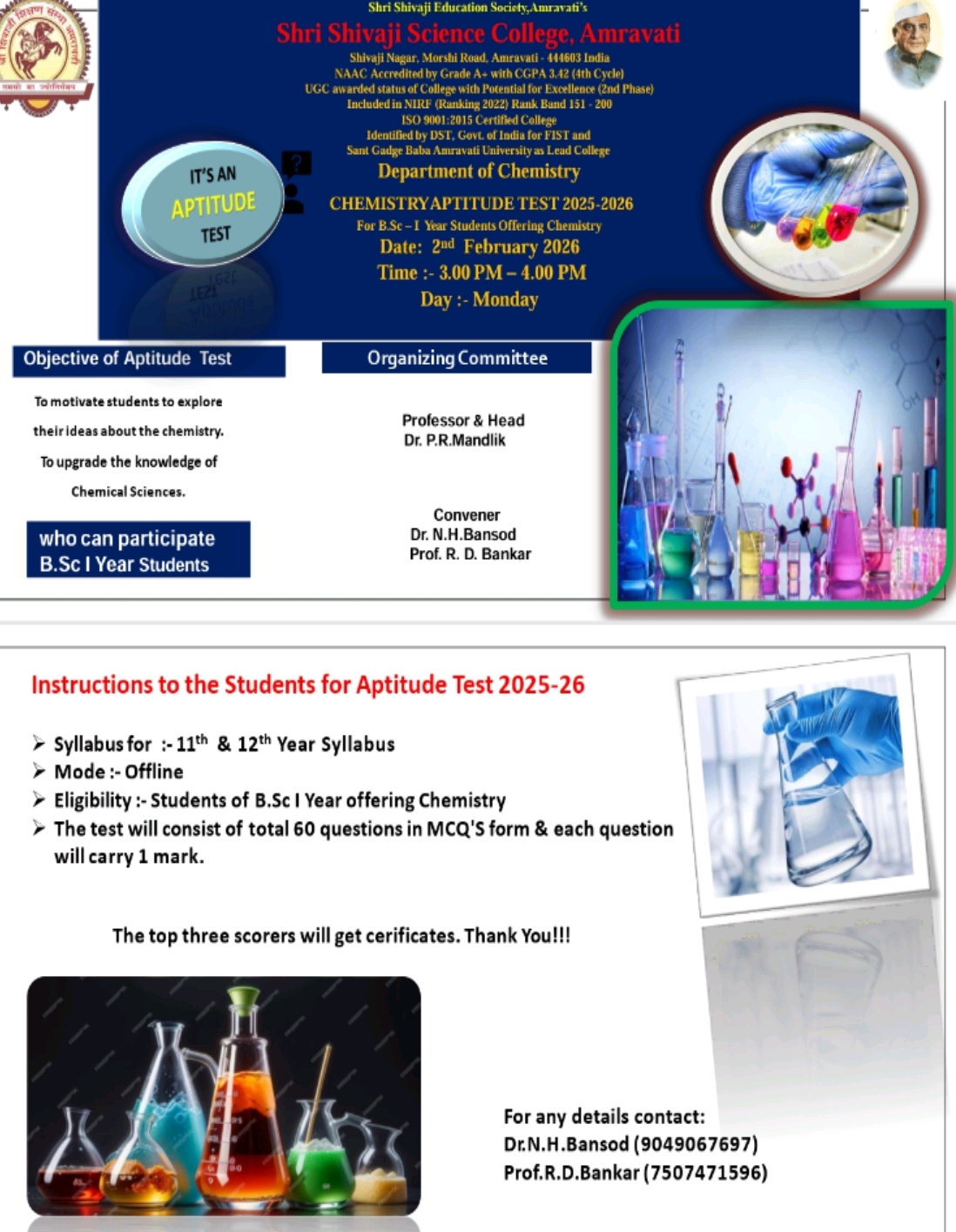
APTITUDE TEST IN CHEMISTRY 2026
Activity Dates: 2nd of February 2026
Type of Activity: Other
Organizing Department: Department of Chemistry
Program Coordinators: Dr N.H Bansod, Ms. R. D. Bankar
Head of the Department: Dr. P.R. Mandlik
External Collaborator (if any): NA
Objectives:
- 1. To motivate students to explore their ideas about the chemistry
- 2. To upgrade the knowledge of Chemical Sciences.
- 3. To evaluating foundational knowledge, analytical reasoning, and practical application of chemical principles.
- 4. These tests assess understanding of core topics like atomic structure, periodic trends, chemical bonding, and stoichiometry.
- 5. Ensuring students possess the quantitative foundation necessary for success in introductory or advanced chemistry courses.
No of Beneficieries: 100
Classes Involved: B.Sc I Year
Venue of the Activity: G5 & G6 Classroom
Activity Report:
Every year the department of chemistry has organized the aptitude test in Chemistry for BSc 1st year student. The aim behind the organization of this aptitude test is to
1. Inculcate concept of chemistry among the student
2. To face the future challenge future challenge of competitional chemistry.
The test is based on 11thand 12thclass Chemistry syllabus that is consist of 50 multiple choice question and duration of 1 hour.
on 2nd of February 2026 the test was scheduled at 3.00 PM at G5 & G6 classroom of new building. The huge response from the students for this test. Almost 105 students actively participated actively in this test.
The first eight rankers were selected for the intracollegiate quiz competition which will schedule in April -2026. The team of two student will be representing our college Intracollegiate quiz competition -2026.
Dr N.H Bansod, Ms. R. D. Bankar in Charge of activity, and HOD Dr. P.R. Mandlik, Motivated the students for active participation in this activity.
Outcomes:
- 1. To focus on assessing a candidate's potential to understand, apply, and analyze chemical concepts rather than just memorizing facts.
- 2. To clearer understanding of basic concepts such as atomic structure, chemical bonding (ionic, covalent), and the periodic table.
- 3. To improve their ability to solve complex numerical problems, such as stoichiometry, molarity, normality, and titration calculations.
- 4. To test the help link theoretical knowledge to practical scenarios, such as understanding pH calculations, buffer solutions, and reaction kinetics.
- 5. To gain the skills in analyzing experimental data, graphs, and tables, which is crucial for chemical analysis.
Photos:
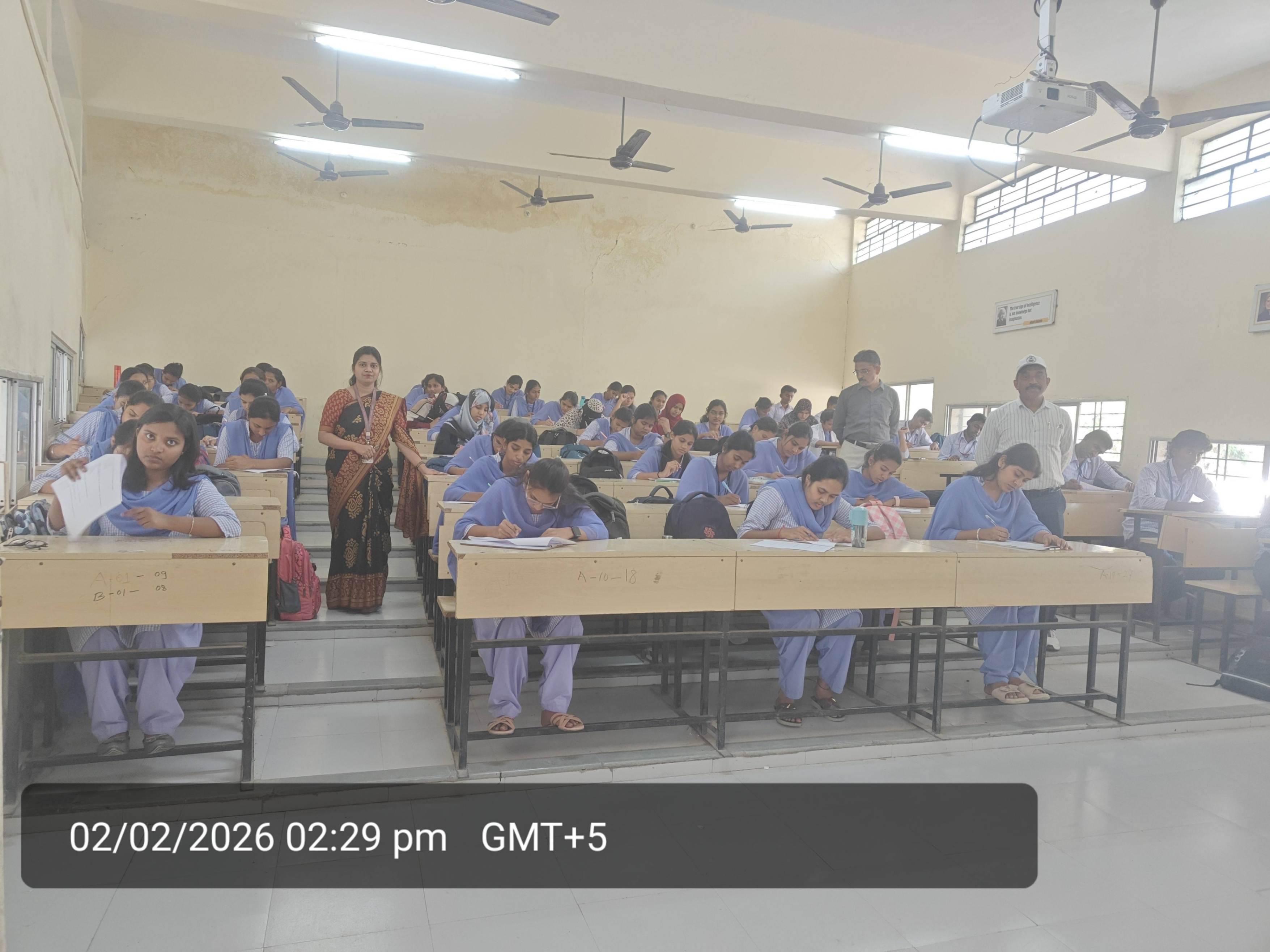 Group Photo | 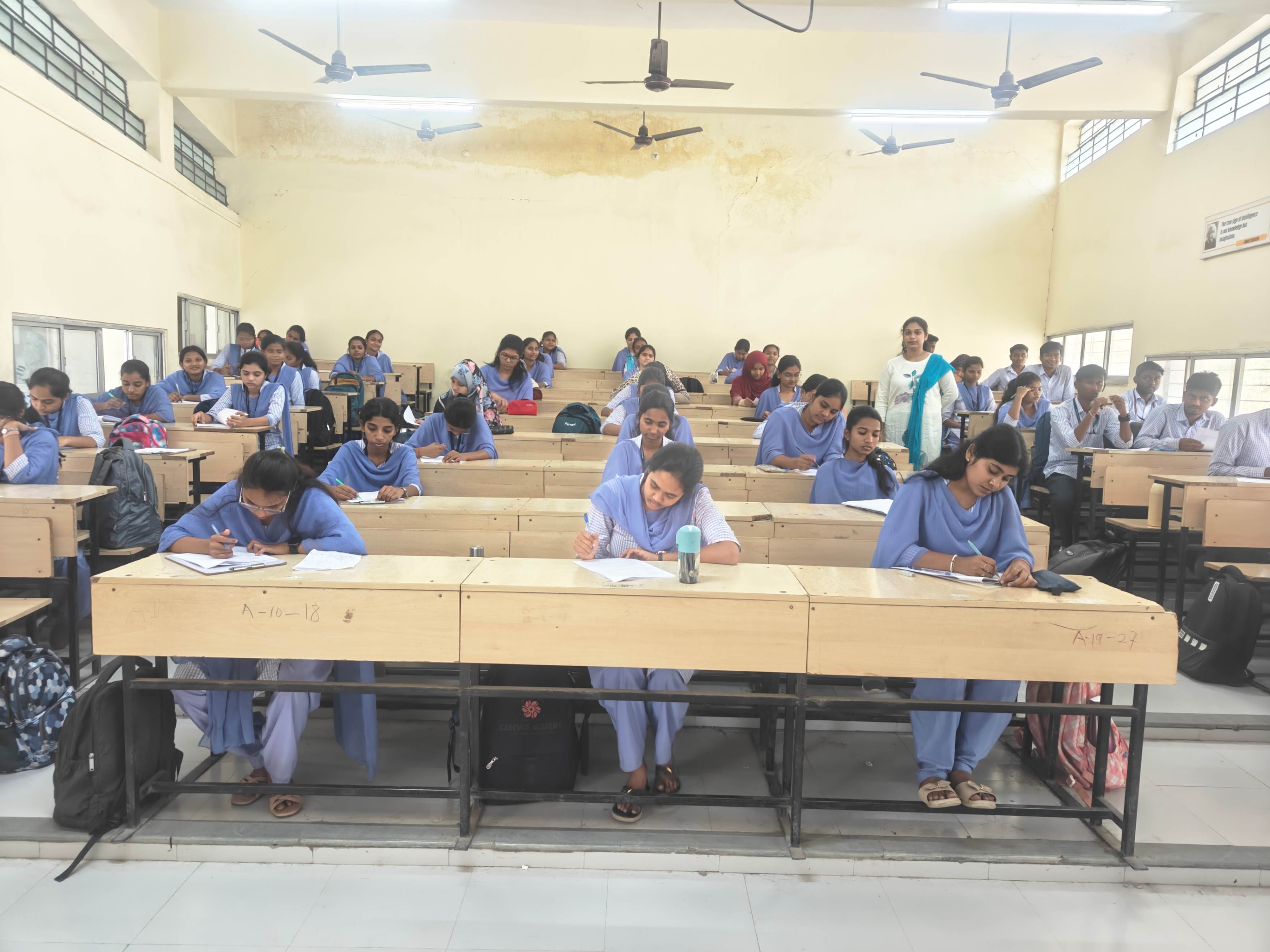 Photo 2 |
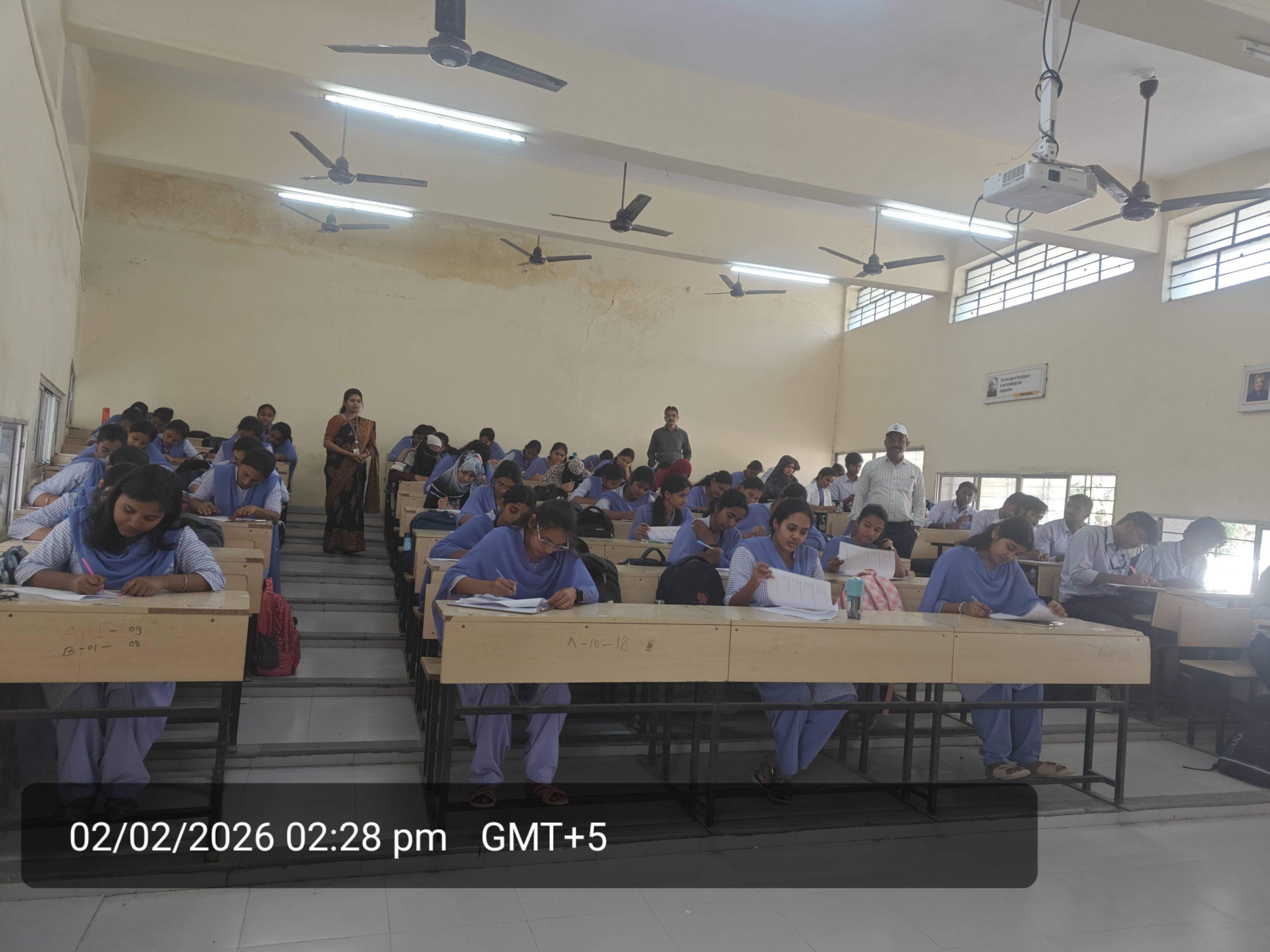 Phot 3 | 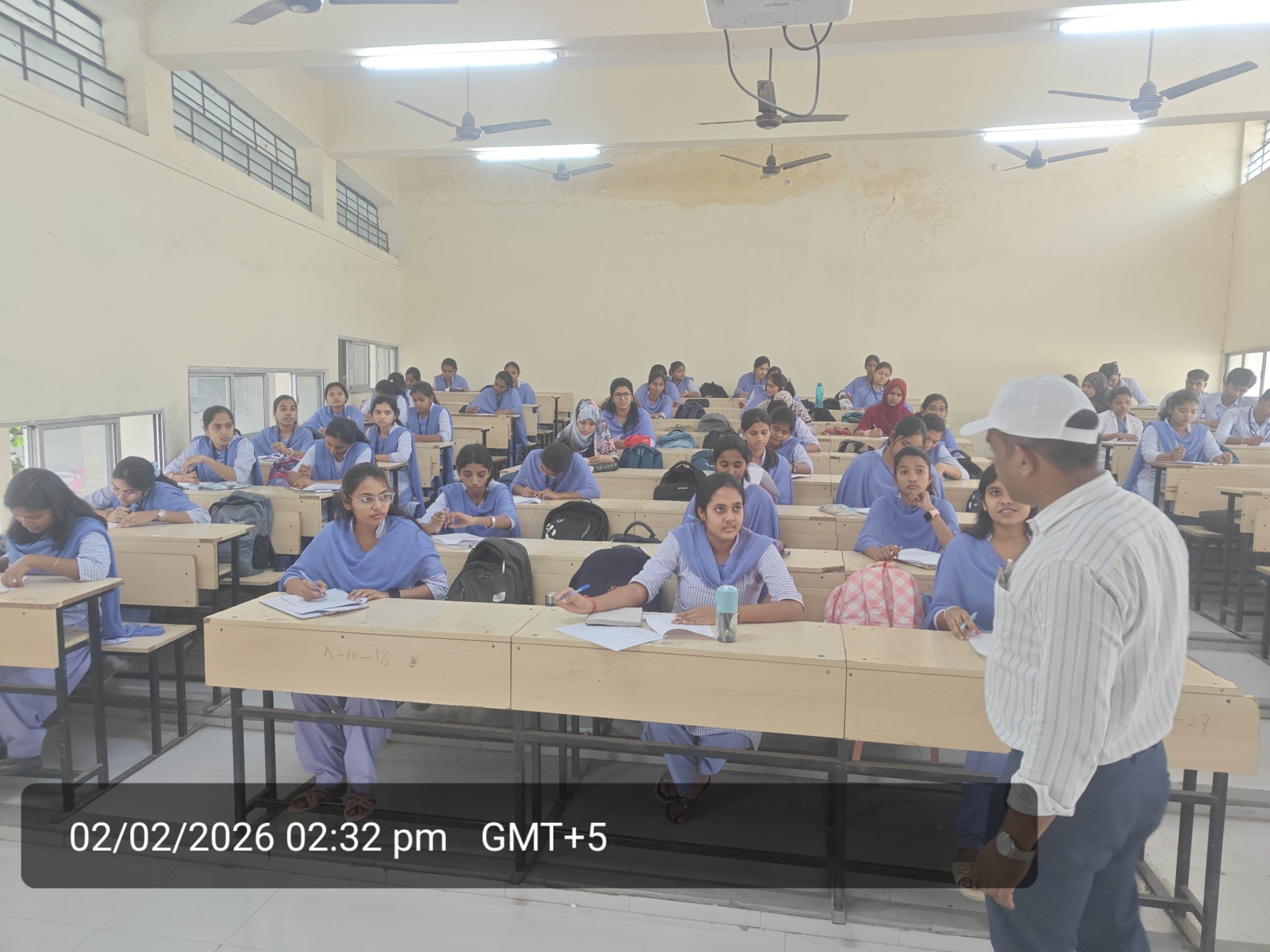 Photo 4 |
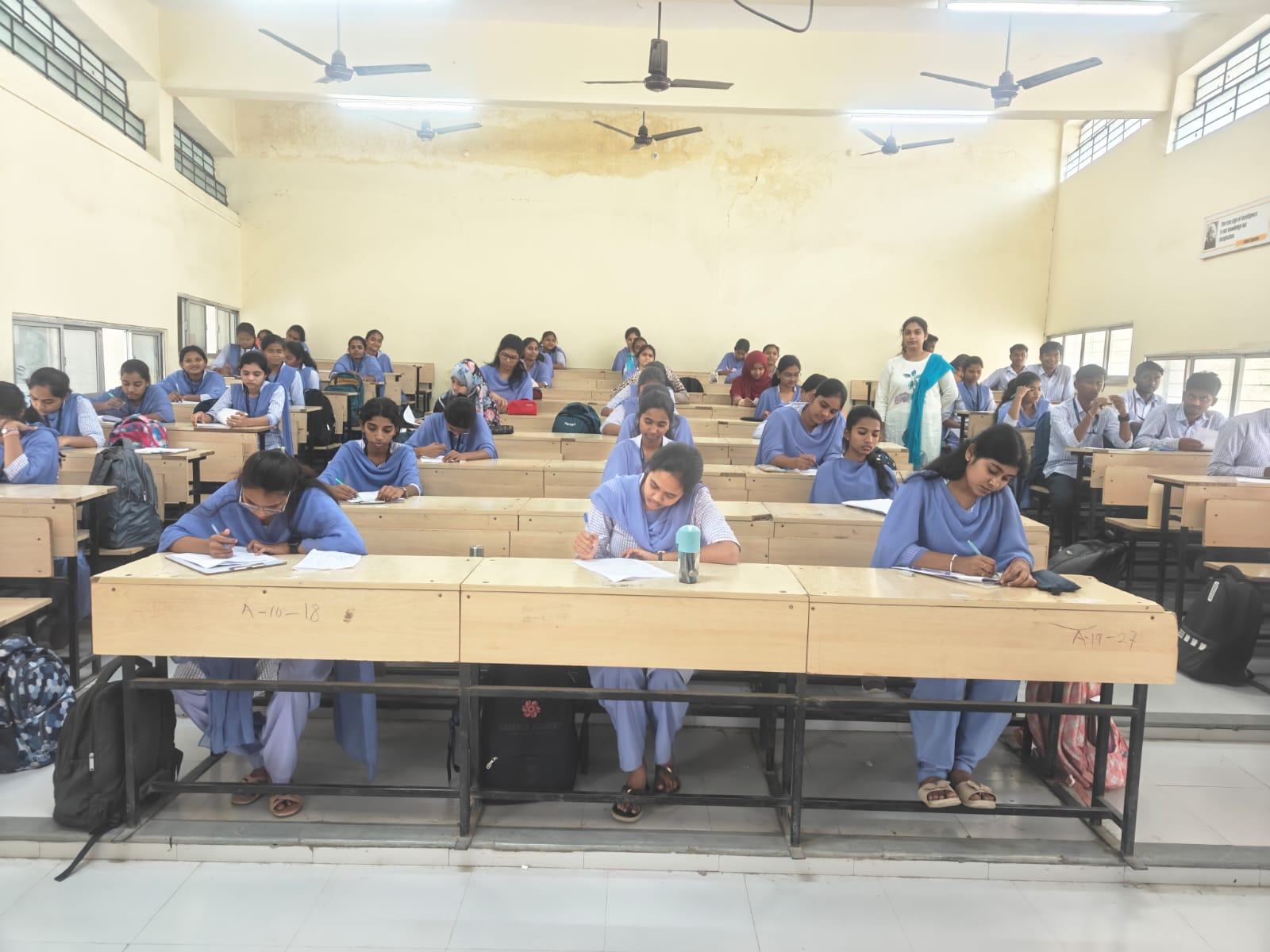 Photo 5 | 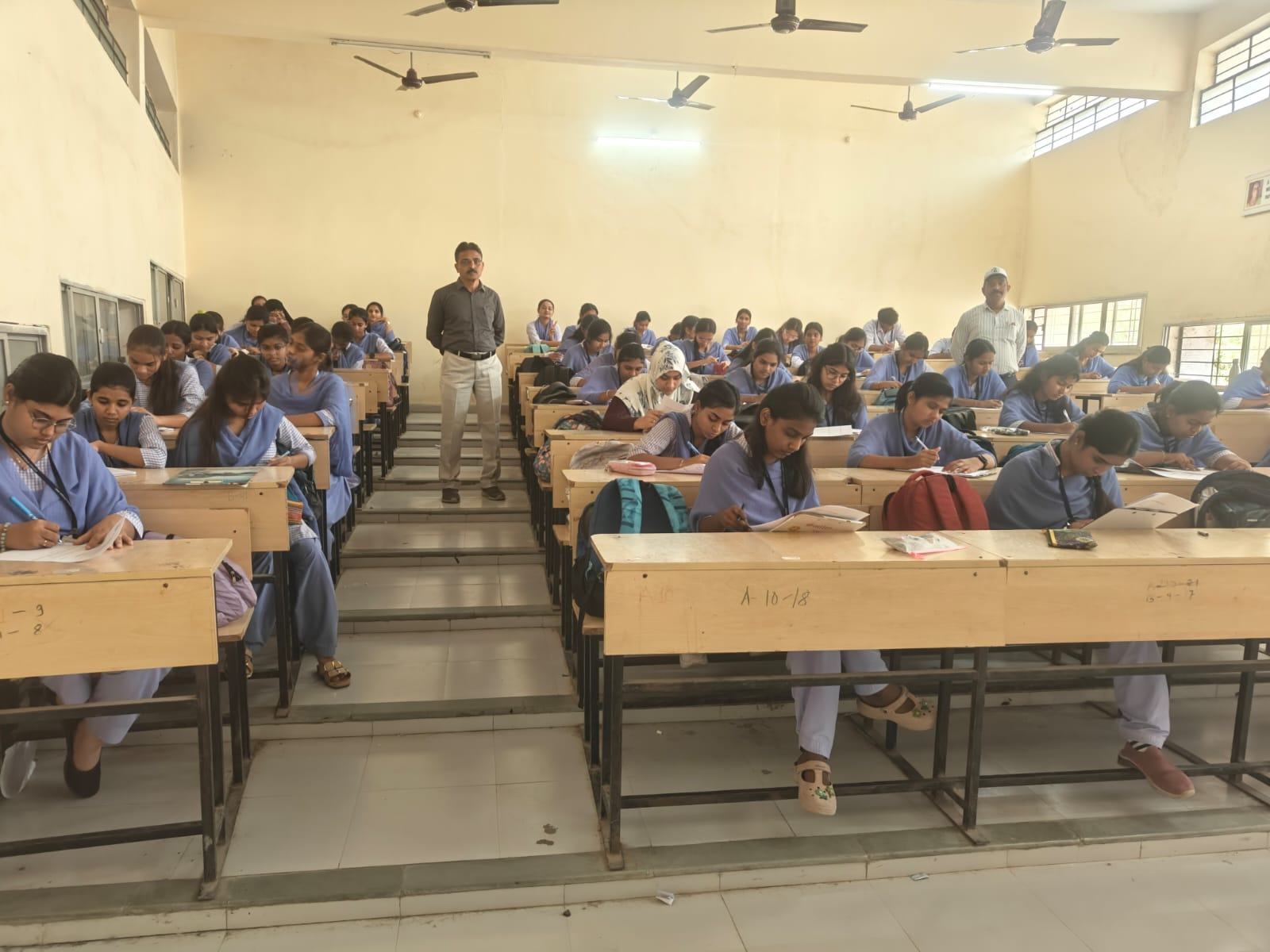 Photo 6 |
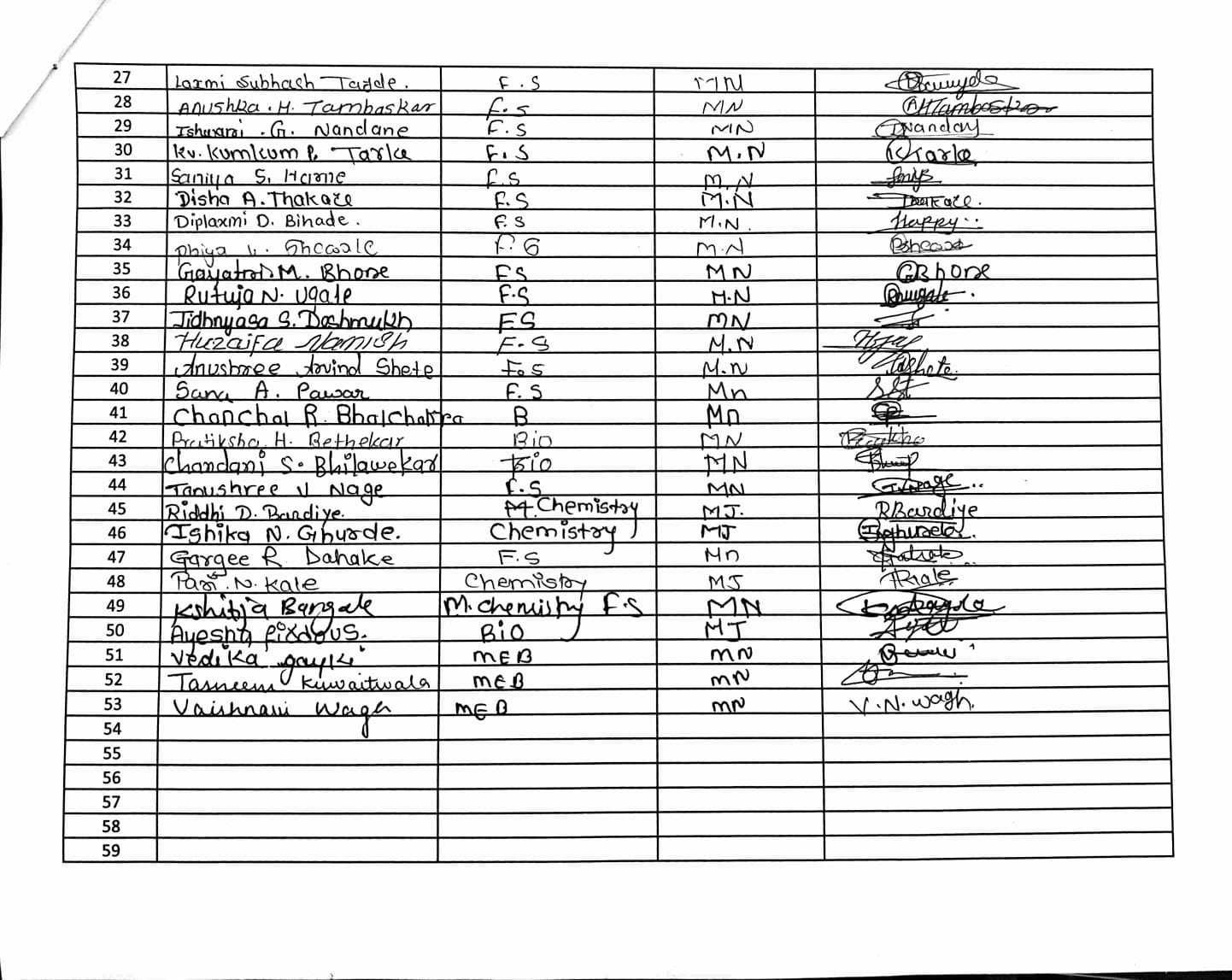
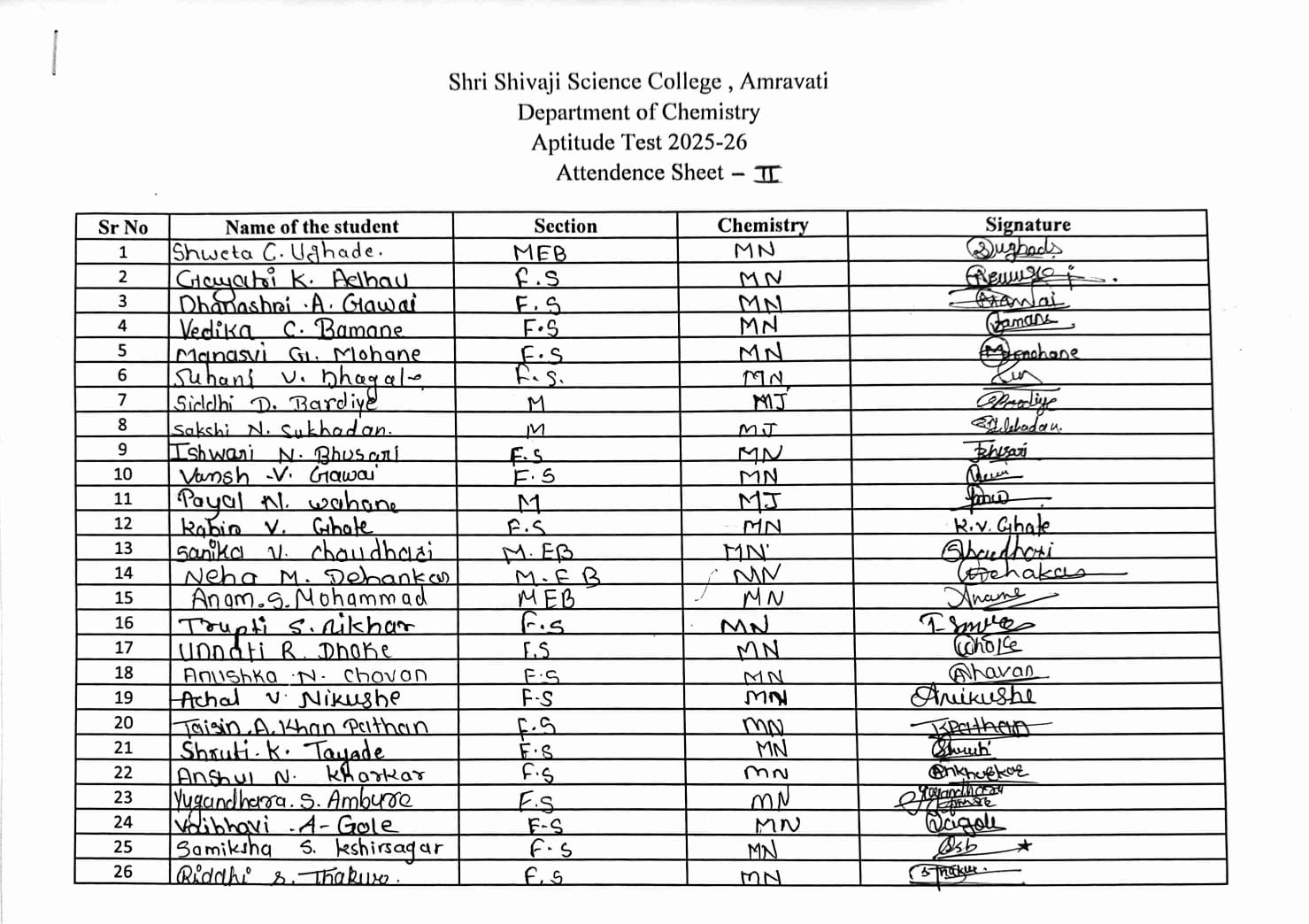
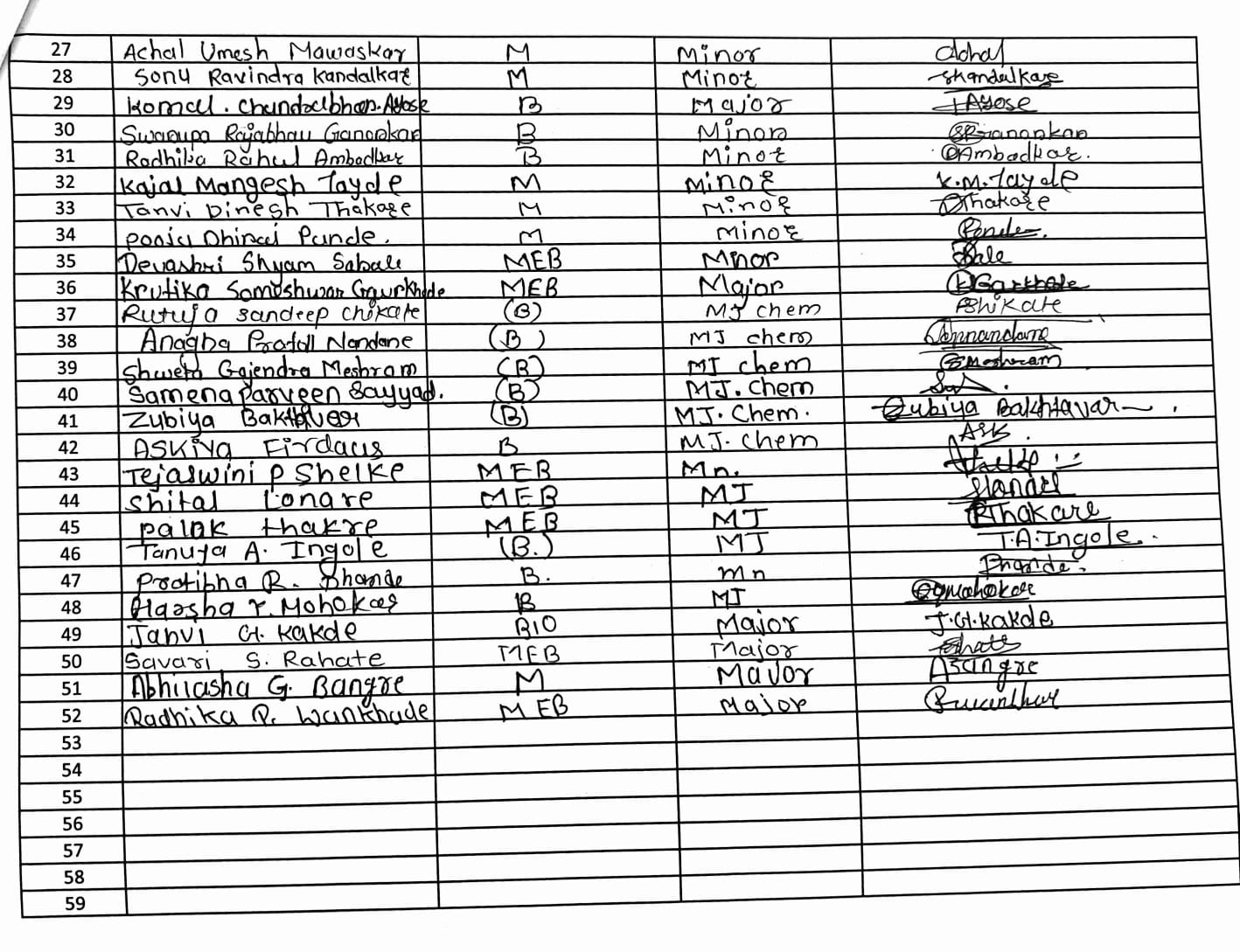
Attendance Sheet:
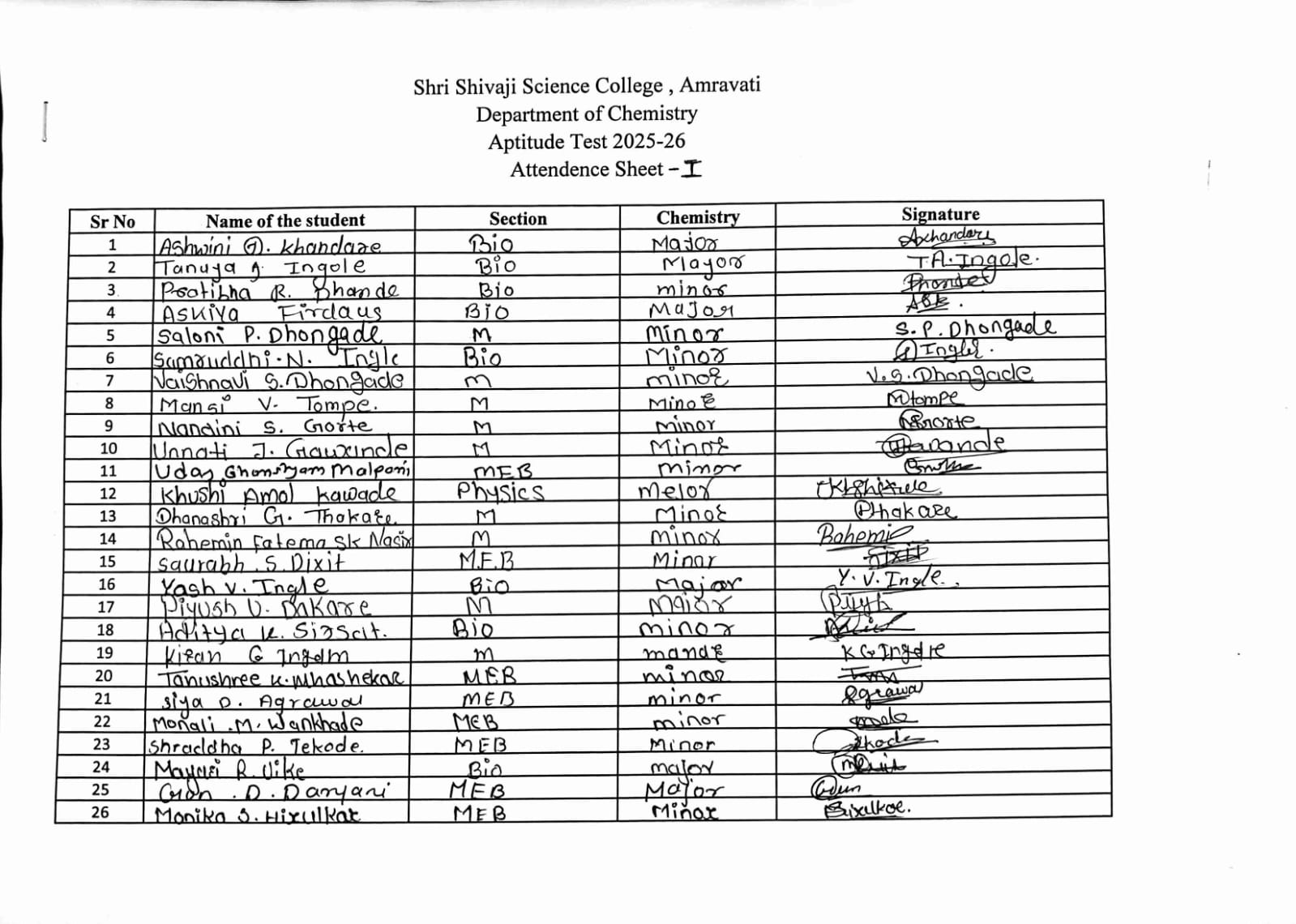 Sheet |
 Sheet |
 Sheet |
 Sheet |