SHRI SHIVAJI SCIENCE COLLEGE, AMRAVATI
DBT STAR COLLEGE PROJECT ACTIVITY
ACTIVITY REPORT
Industrial Visit to Sri Bhagirathi Textiles Pvt. Ltd., Nagpur
Activity Dates: 17/01/2026
Type of Activity: Field Studies
Organizing Department: Department of Physics
Program Coordinators: • Dr. S. S. Arsad and Dr. S. M. Butte
Head of the Department: Dr. P.A. Nagpure
External Collaborator (if any): DBT Star Sponsored
Objectives:
- To provide practical exposure to real industrial working environments.
- To understand manufacturing processes and industrial applications of theoretical concepts.
- To enhance experiential learning in line with the objectives of the DBT-STAR College Scheme.
- To observe quality control methods and safety practices followed in industry.
- To develop awareness about modern technology, professional work culture, and career opportunities in industrial fields
No of Beneficieries: 29
Classes Involved: B.Sc. III And M.Sc. I , M.Sc. II
Venue of the Activity: Sri Bhagirathi Textiles Pvt. Ltd., Nagpur
Activity Report:
Details of the Activity
An industrial visit to Bhagirathi Textiles, Nagpur was organized on 17 January 2026 for 30 students UG and PG students. under the DBT-STAR program. The visit was conducted under the guidance of the accompanying faculty members with the cooperation of industry officials. Students were introduced to the structure, functioning, and importance of the textile industry.
Description of the activity
Under the DBT-STAR College Scheme, an industrial visit to Bhagirathi Textiles, Nagpur was organized on 17 January 2026 to provide undergraduate students with meaningful industrial exposure and experiential learning. The visit was conducted under the guidance of Dr. S. S. Arsad, Ms. S. M. Butte, and Mr. S. M. Chinche, with active cooperation from the industry personnel.
On arrival, the students were welcomed by the officials of Bhagirathi Textiles, who provided an introductory briefing about the industry, its organizational structure, production capacity, and role in the textile sector. The students were informed about the importance of textiles in industrial manufacturing and the need for efficiency, quality assurance, and safety in large-scale production.
The visit began with a guided tour of the spinning section, where students observed the conversion of raw fibers into yarn. The complete spinning process, including fiber preparation, carding, drawing, roving, and final spinning, was explained in detail. The functioning of modern spinning machinery and the significance of uniformity, twist, and tension in producing quality yarn were highlighted.
The yarn produced was then traced to the weaving section, where students observed the formation of fabric through the interlacing of warp and weft threads. The operation of automatic looms and the role of various loom components were demonstrated. Different weaving patterns and their influence on fabric properties such as strength, texture, and appearance were also explained.
Students were further introduced to quality control and safety practices followed in the industry. Officials explained inspection techniques used to identify defects at various stages of production and emphasized the importance of maintaining safety standards, proper machine handling, and disciplined work culture. Environmental considerations and waste management practices were also briefly discussed.
An interactive session with technical staff and supervisors allowed students to ask questions and gain insights into industrial challenges, technological advancements, and career opportunities in the textile sector. This interaction enhanced students’ understanding of industrial expectations and skill requirements.
Overall, the activity was well-organized and highly informative. The industrial visit provided students with practical knowledge of textile manufacturing processes and helped them relate theoretical concepts to real-world industrial applications, fulfilling the objectives of experiential learning under the DBT-STAR College Scheme.
Twisting Process
• Twisting is the insertion of helical turns into a strand of fibers or yarn to impart mechanical strength and cohesion.
• The amount of twist is quantified as Turns Per Inch (TPI) or Twists Per Meter (TPM) and directly influences yarn strength, flexibility, and handle.
• Twist generates frictional forces between fibers, preventing fiber slippage under tensile stress.
• An optimum twist level exists at which yarn tensile strength is maximum; beyond this, excessive twist increases rigidity and reduces strength.
• Twisting also affects yarn diameter, hairiness, and abrasion resistance, which are critical during weaving.
• Twist direction is classified as S-twist or Z-twist, and it influences fabric surface characteristics and appearance.
• Twisting is primarily introduced during ring spinning, rotor spinning, or twisting frame operations.
Twining / Twinning (Plying) Process
• Twining, also known as plying, involves twisting two or more single yarns together to form a balanced and stronger plied yarn.
• The plying twist is applied in the opposite direction to the original twist of the single yarns to improve yarn stability.
• This process reduces yarn torque and snarling tendency, leading to improved processability during weaving.
• Twined yarns exhibit enhanced tensile strength, evenness, and dimensional stability.
• Plying helps in minimizing mass irregularities and twist variations present in single yarns.
• Twined yarns show better abrasion resistance and fatigue behavior, making them suitable for high-quality and heavy-duty fabrics.
• The process is typically carried out using doubling or twisting machines.
Spinning and Weaving Section
The spinning and weaving sections together formed the core of the textile manufacturing process observed during the industrial visit to Bhagirathi Textiles. These sections demonstrated the transformation of raw fibers into finished fabric through systematic and controlled operations.
In the spinning section, students observed the conversion of raw fibers into yarn. The process began with fiber preparation, where impurities were removed and fibers were opened and aligned using blow room and carding machines. Carding converted the fibers into slivers and ensured cleanliness and uniformity. The slivers were further processed through drawing frames to improve fiber alignment and consistency. In the roving stage, the sliver was lightly twisted and wound onto bobbins. Finally, ring spinning machines were used to produce yarn of the required strength and thickness. The importance of twist, tension, and spindle speed in determining yarn quality was clearly explained.
The yarn produced in the spinning section was then supplied to the weaving section, where it was converted into fabric by interlacing warp and weft threads. Students observed the operation of modern automatic looms, which ensured high production efficiency and uniform fabric quality. Industry experts explained the role of key loom components such as the warp beam, heddles, reed, shuttle or rapier mechanism, and take-up rollers. Different weave structures, including plain and twill weaves, were discussed, along with their influence on fabric strength, texture, and appearance.
Emphasis was placed on quality control and safety practices in both sections. Continuous inspection was carried out to detect defects such as yarn breakage, uneven thickness, or fabric faults during weaving. Proper machine maintenance, controlled working conditions, and the use of protective equipment were highlighted as essential for efficient and safe operations.
The integrated observation of spinning and weaving provided students with a comprehensive understanding of yarn and fabric formation. This exposure effectively linked theoretical knowledge with real-world industrial practices, fulfilling the experiential learning objectives of the DBT-STAR College Scheme.
Students actively participated in the visit, observed industrial operations keenly, and interacted with industry professionals, making the activity informative and engaging.
Conclusion
The industrial visit to Bhagirathi Textiles proved to be a successful and meaningful activity under the DBT-STAR College Scheme. It enriched the students’ learning experience by providing hands-on industrial exposure and effectively complemented classroom teaching. Such visits play a vital role in promoting skill-based and experiential education.
Outcomes:
- Enhanced practical understanding of textile manufacturing processes
- Improved awareness of industrial safety and quality assurance
- Better understanding of industrial work culture and discipline
- Students developed observational, analytical, and problem-solving skills through experiential learning.
- The visit motivated students towards career opportunities in industry, research, and technology fields.
Photos:
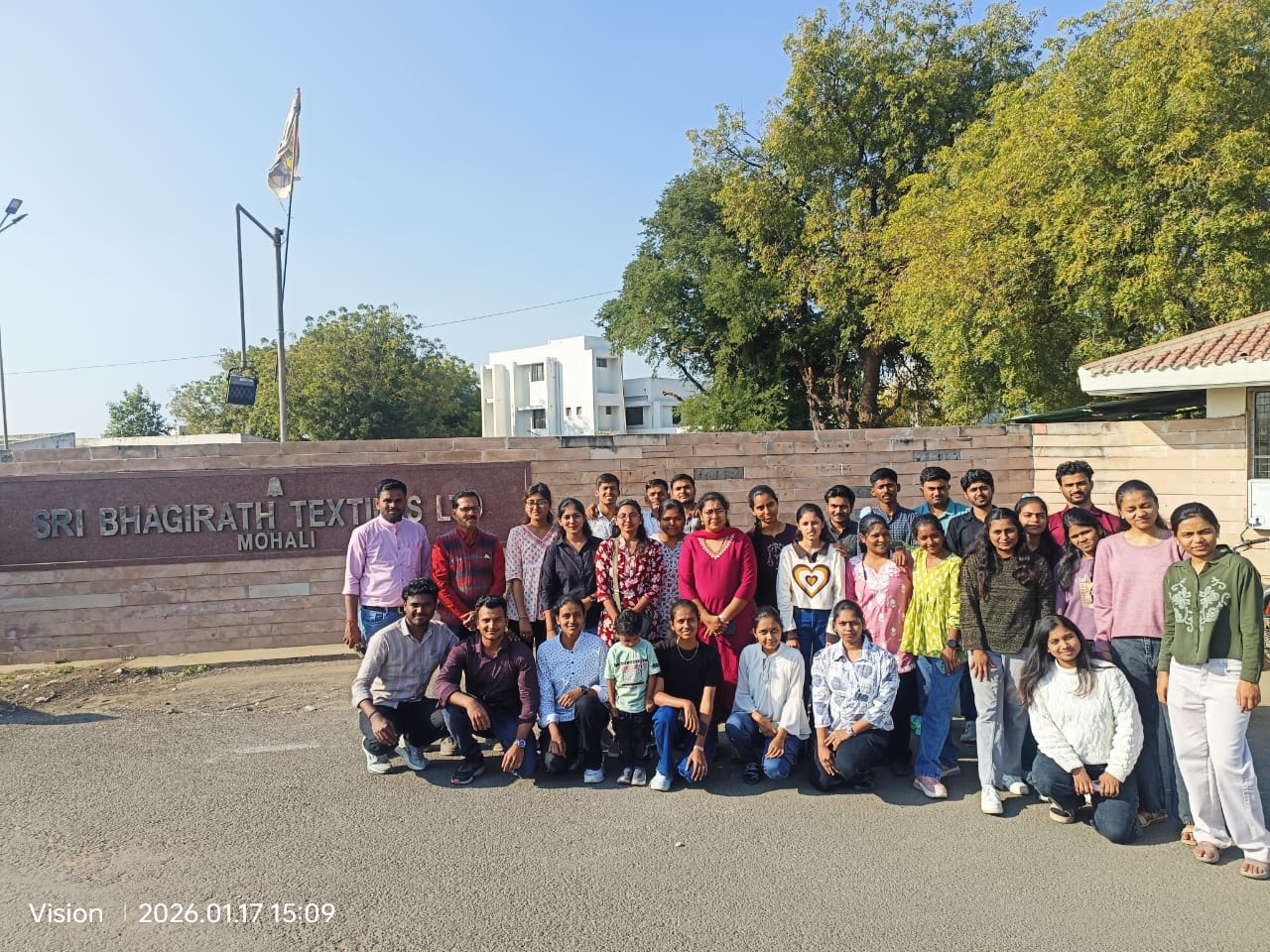 Group photograph of students and faculty during the industrial visit to Sri Bhagirath Textiles | 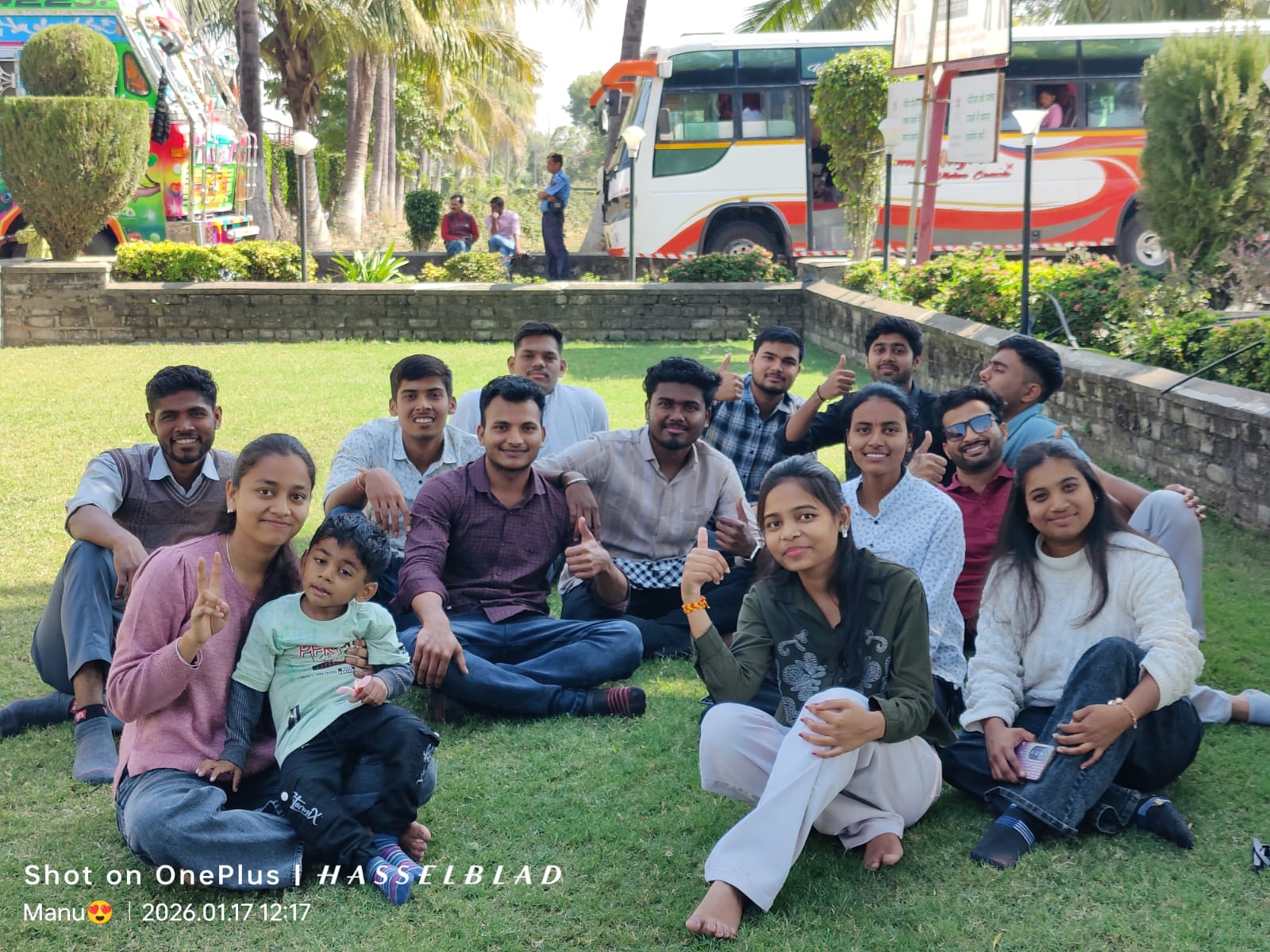 Students during a break in the industrial visit |
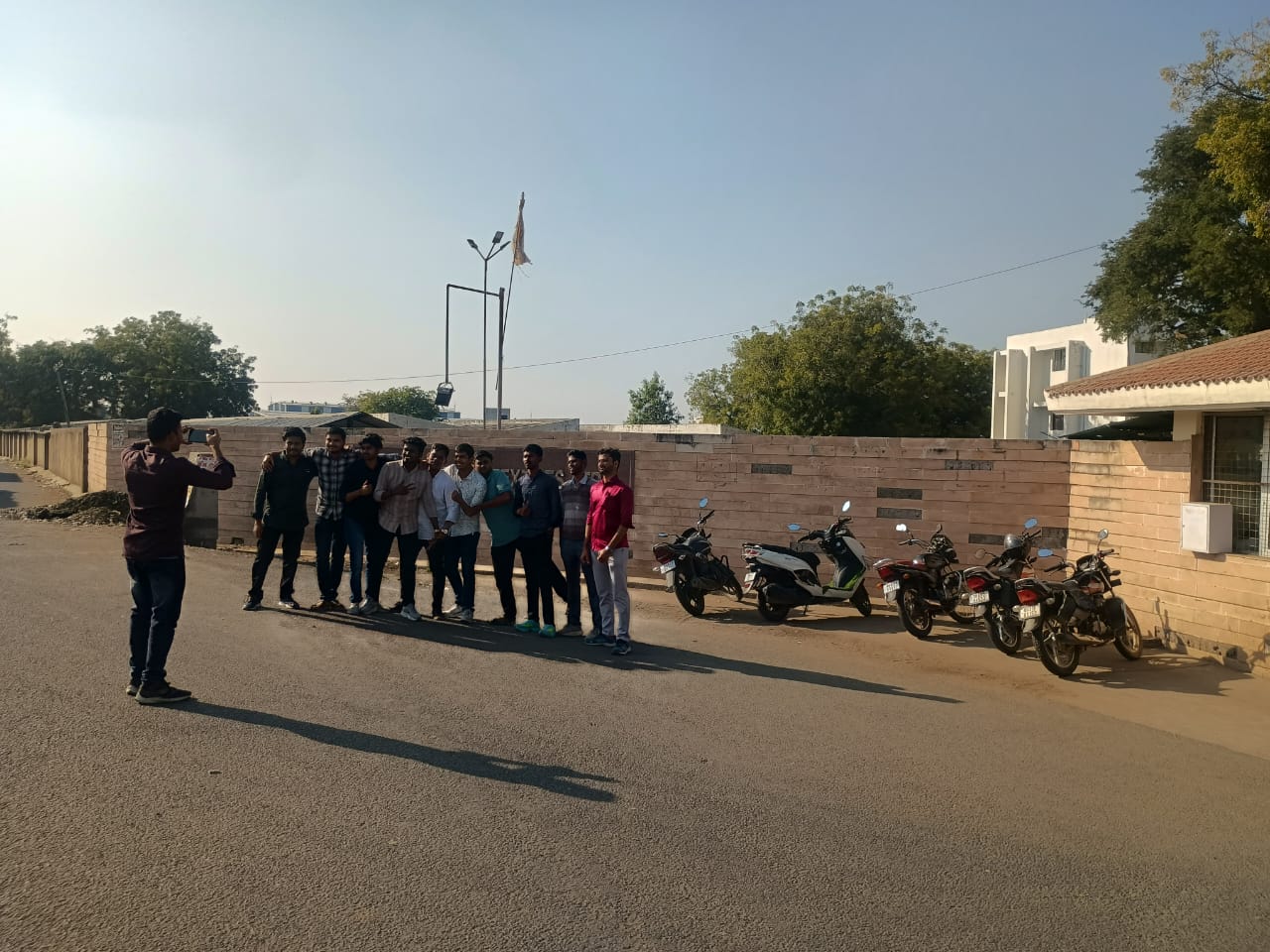 Photograph at entry gate | 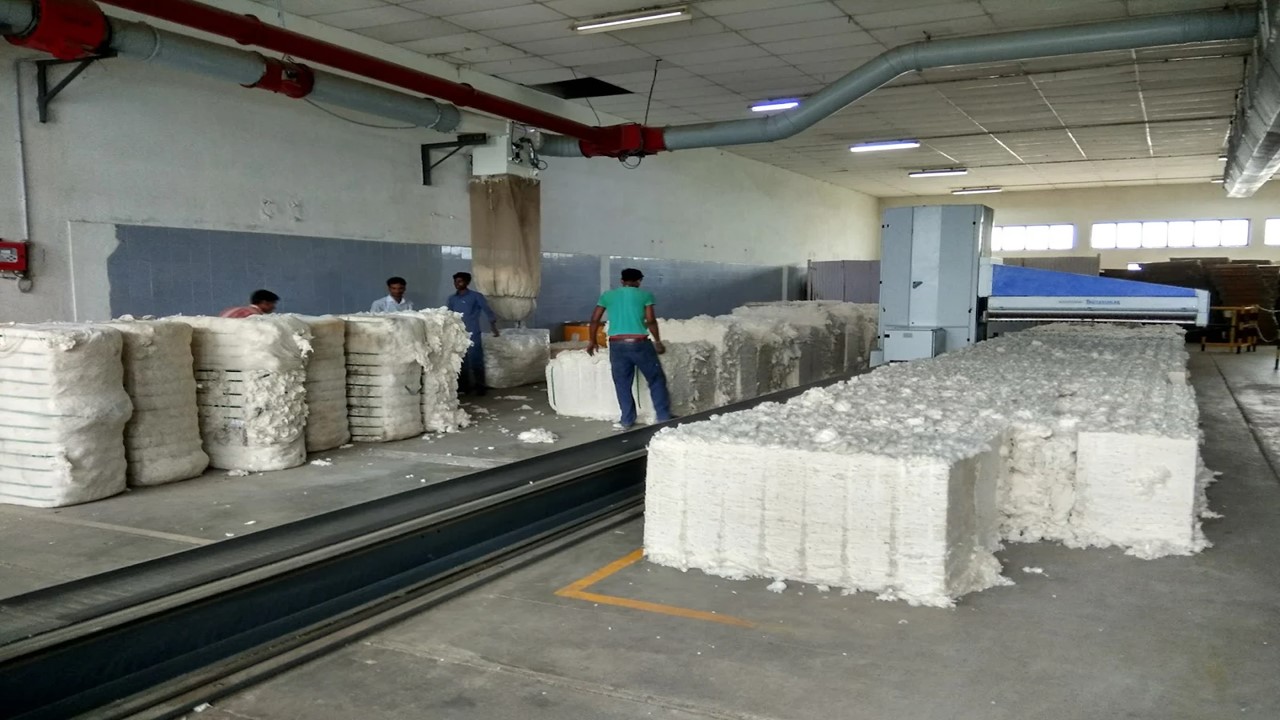 Cotton storage and processing section observed during the visit to Sri Bhagirath Textiles. |
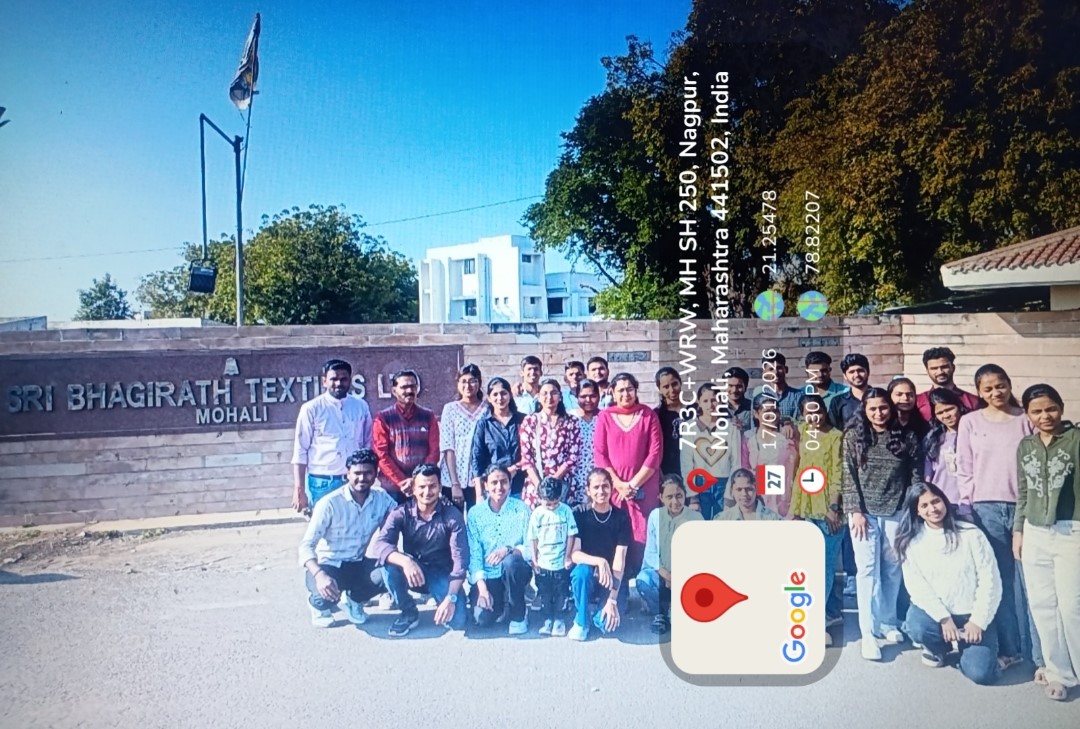 GPS Location Information Photograph | 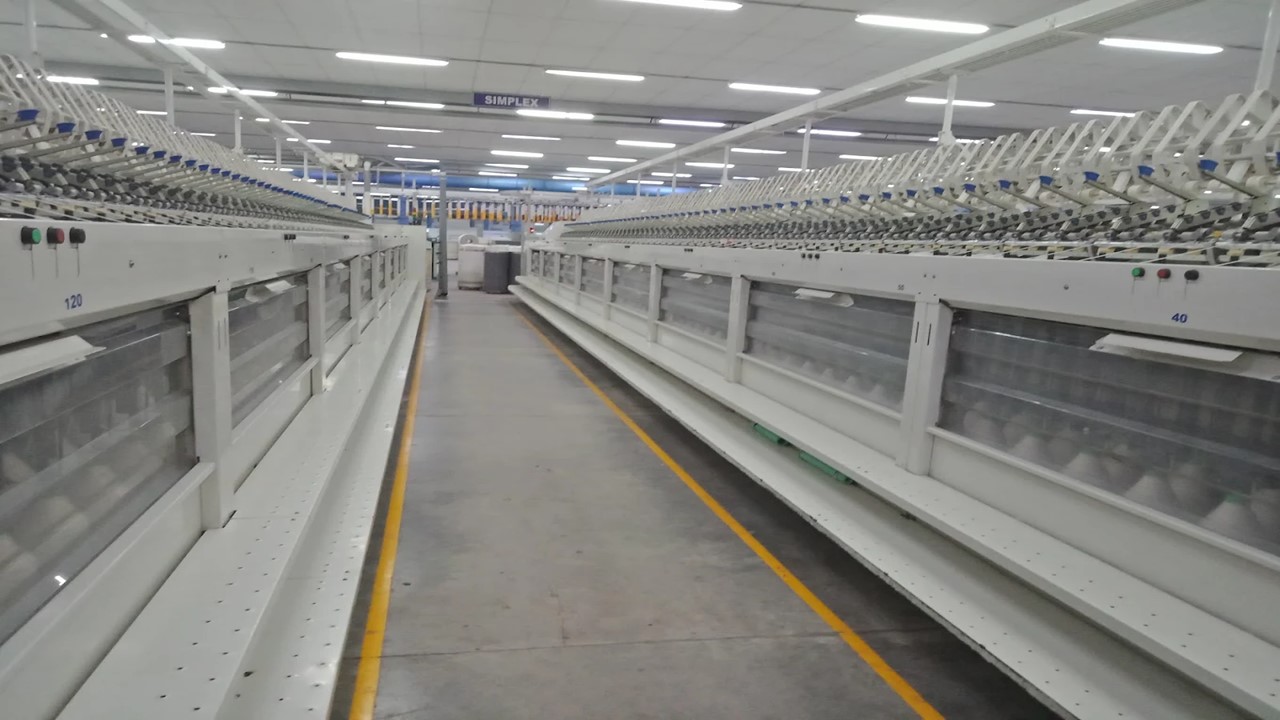 Spinning section machinery observed during the visit |
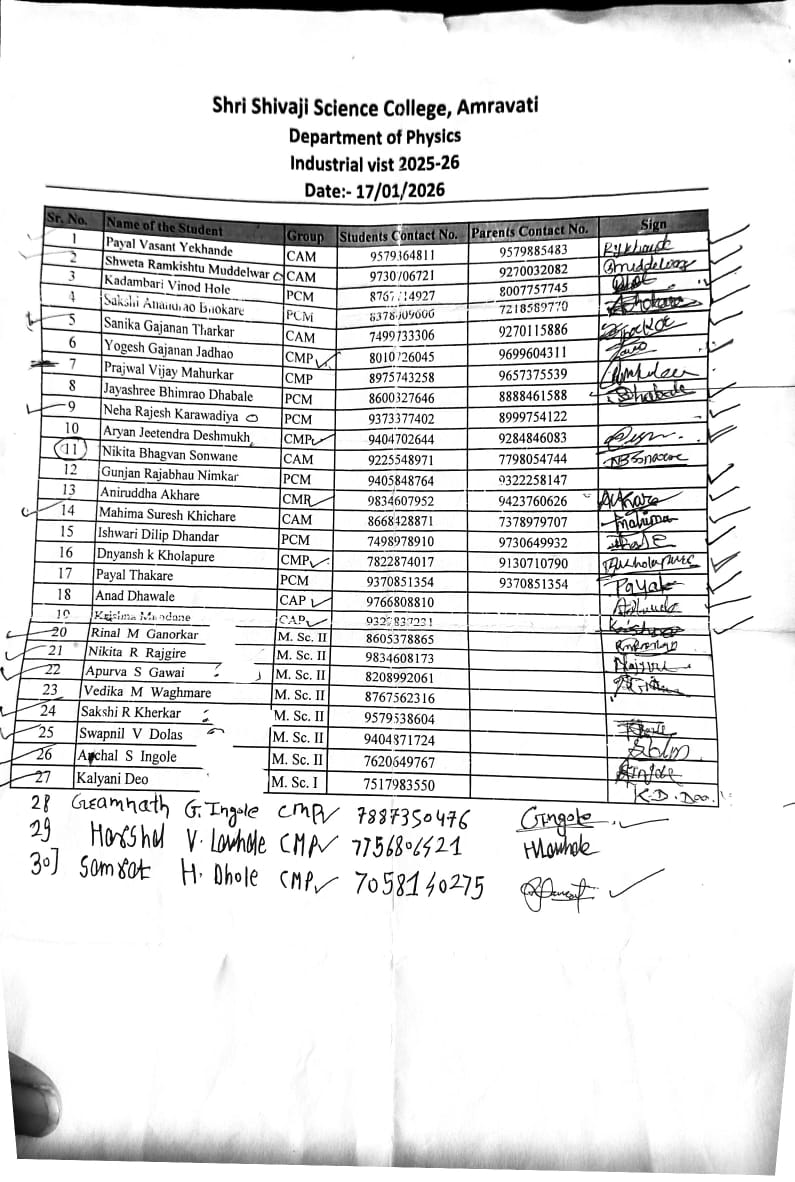
Attendance Sheet:
 |